Leather Business Card Holder
CN → US| HS Code | Tariff Rate | Origin | Destination | Doc |
|---|---|---|---|---|
| 4820300040 | 35.0% | CN | US | Official Doc |
| 4820900000 | 35.0% | CN | US | Official Doc |
| 4202316000 | 43.0% | CN | US | Official Doc |
| 3926908700 | 40.3% | CN | US | Official Doc |
| 3926909989 | 22.8% | CN | US | Official Doc |
Product Images
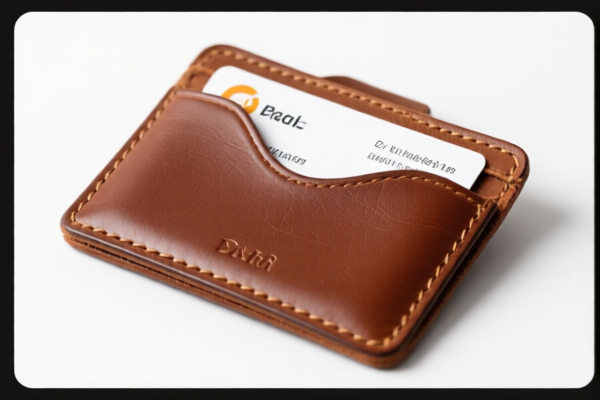
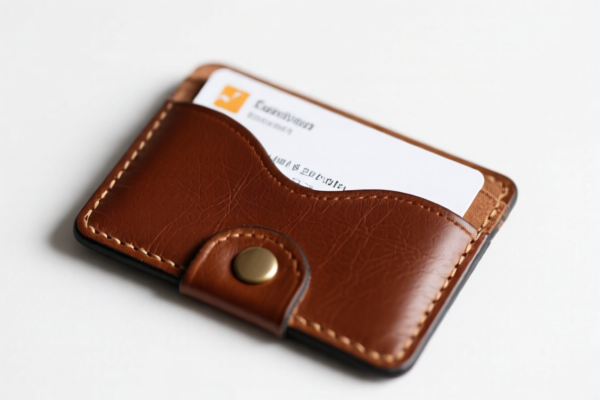
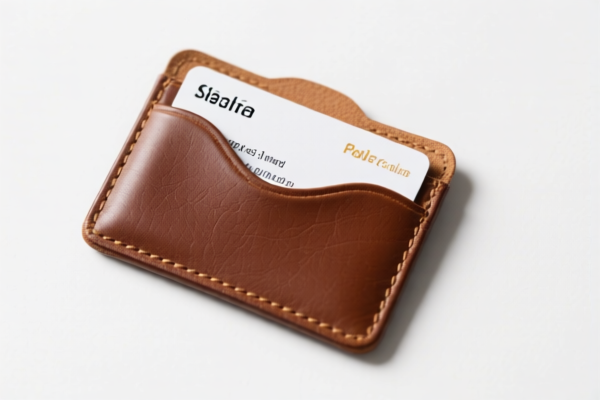
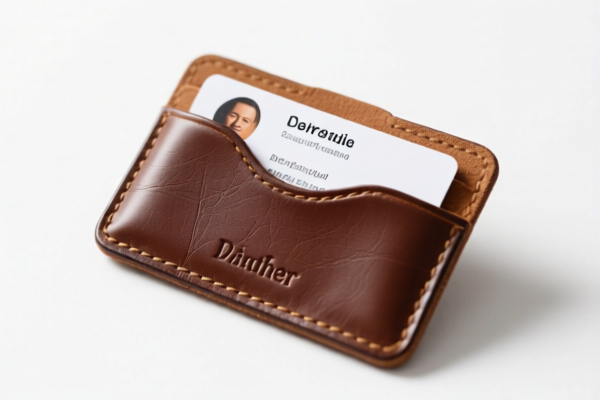
AI Analysis
🎴 Leather Business Card Holder (Faux Leather)
🌐 HS Code Reference & Clearance Guide | 2026 Latest Tariff Analysis | Professional Clearance Strategy
📌 1. Product Definition & Classification: What is a "Leather Business Card Holder"?
A Faux Leather Business Card Holder (also known as a business card case or holder) is a small container designed to carry and protect business cards. In international trade, the classification depends heavily on the material composition and design form.
Since the input specifies "Faux Leather" (synthetic leather, typically PVC, PU, or similar polymer materials), the classification is often disputed between: 1. Paper/Cardboard Articles (if the core structure is paper-based with a leather-like coating). 2. Plastic Articles (if made entirely of synthetic polymers). 3. Leather/Luggage Articles (if it resembles a small leather accessory, though "faux" makes this harder to classify under true leather headings).
⚠️ Key Distinction Point:
- If the backing/core is paper/cardboard and the "faux leather" is just a surface coating → Chapter 48 (Paper).
- If the entire structure is made of plastic/PVC/PU sheets → Chapter 39 (Plastics).
- If it is designed to be carried in a pocket or purse and mimics leather goods → Chapter 42 (Leather Articles) [Note: High risk for faux leather, often challenged].
📦 2. HS Code Classification Details (2026 Latest Tariff Authority Comparison)
| HS Code | Product Description | Application Scenario | Material Basis |
|---|---|---|---|
4820.30.00.40 |
Paper/Cardboard Business Card Holders, with surface decoration | Holders with a paper/cardboard core covered with faux leather for appearance | ✅ Paper/Cardboard Core |
4820.90.00.00 |
Other Paper/Cardboard Stationery Articles | General cardboard stationery items, inferred as cardboard support structure | ✅ Paper/Cardboard Core |
4202.31.60.00 |
Articles of Luggage or Small Leather Goods (Faux Leather) | Mimics leather goods; shape fits in pocket/bag. High Risk/High Tax | ⚠️ Claimed Leather-like Surface |
3926.90.87.00 |
Other Plastic Articles | Made of synthetic materials like PVC or PU sheets, no paper core | ✅ Plastic/Polymer |
3926.90.99.89 |
Other Plastic Articles (Unspecified) | Plastic/Polyurethane items not elsewhere specified | ✅ Plastic/Polymer |
🔍 Important Reminder:
- Chapter 42 (4202.31.60.00) is the most expensive option due to the "Leather" classification, even for faux leather. Customs may reject this if the material is clearly synthetic plastic without a leather substrate.
- Chapter 48 (4820.30.00.40) is the cheapest option if the product has a paper/cardboard base.
- Chapter 39 (3926.90.87.00/3926.90.99.89) applies if it is a solid plastic item.
💰 3. 2026 Latest Tariff Rate Details (Including Additional Taxes & Policy Surcharges)
✅ Applicable Country: United States (US)
✅ Origin: China (CN)
✅ Effective Time: November 10, 2025 onwards (including subsequent imports)
🎯 1. 4820.30.00.40 —— Paper/Cardboard Business Card Holder (with Decoration)
| Item | Details |
|---|---|
| Base Tariff | 0.0% |
| USITC Section 301 Surcharge | +25.0% |
| IEEPA Surcharge (Section 122/China) | +10.0% |
| Total Tariff Rate | 35.0% |
| Tax Calculation | CIF Value × 35% |
| De Minimis Exemption? | ❌ Not Eligible (Section 301 & IEEPA surcharges generally apply regardless of value) |
| Legal Path | USITC:4820.30.00.40 → Footnote 9903.88.01 (301) + IEEPA:9903.01.25 (122/China) |
📌 Explanation:
- This is the lowest tax burden among the options, provided the product has a paper/cardboard core.
- The "0% base" is offset by the 35% additional taxes.
🎯 2. 4820.90.00.00 —— Other Paper/Cardboard Stationery
| Item | Details |
|---|---|
| Base Tariff | 0.0% |
| USITC Section 301 Surcharge | +25.0% |
| IEEPA Surcharge (Section 122/China) | +10.0% |
| Total Tariff Rate | 35.0% |
| Tax Calculation | CIF Value × 35% |
| De Minimis Exemption? | ❌ Not Eligible |
| Legal Path | USITC:4820.90.00.00 → Footnote 9903.88.01 + IEEPA:9903.01.24 |
📌 Note:
- Same tax rate as4820.30.00.40. Use this if the item is a generic cardboard stationery piece without specific "business card holder" designation.
🎯 3. 4202.31.60.00 —— Luggage/Small Leather Goods (Faux Leather)
| Item | Details |
|---|---|
| Base Tariff | 8.0% |
| USITC Section 301 Surcharge | +25.0% |
| IEEPA Surcharge (Section 122/China) | +10.0% |
| Total Tariff Rate | 43.0% |
| Tax Calculation | CIF Value × 43% |
| De Minimis Exemption? | ❌ Not Eligible |
| Legal Path | USITC:4202.31.60.00 → Footnote 9903.88.01 + IEEPA:9903.01.25 |
📌 Warning:
- Highest Tax Rate (43%).
- Customs may reject this classification for "Faux Leather" if the material is clearly PVC/PU. If accepted, it incurs the highest cost.
- Only use if the product is specifically marketed and constructed as a "small leather good" alternative.
🎯 4. 3926.90.87.00 —— Other Plastic Articles
| Item | Details |
|---|---|
| Base Tariff | 5.3% |
| USITC Section 301 Surcharge | +25.0% |
| IEEPA Surcharge (Section 122/China) | +10.0% |
| Total Tariff Rate | 40.3% |
| Tax Calculation | CIF Value × 40.3% |
| De Minimis Exemption? | ❌ Not Eligible |
| Legal Path | USITC:3926.90.87.00 → Footnote 9903.88.01 + IEEPA:9903.01.25 |
📌 Note:
- Applies if the holder is made of solid plastic (PVC/PU) without paper backing.
- Higher than paper classification but lower than leather classification.
🎯 5. 3926.90.99.89 —— Other Plastic Articles (Unspecified)
| Item | Details |
|---|---|
| Base Tariff | 5.3% |
| USITC Section 301 Surcharge | +7.5% |
| IEEPA Surcharge (Section 122/China) | +10.0% |
| Total Tariff Rate | 22.8% |
| Tax Calculation | CIF Value × 22.8% |
| De Minimis Exemption? | ❌ Not Eligible |
| Legal Path | USITC:3926.90.99.89 → Footnote 9901.25 (7.5%) + IEEPA:9903.01.24 |
📌 Special Note:
- Lowest Tax Rate (22.8%) among all options!
- This code often has a reduced Section 301 surcharge (7.5%) compared to the standard 25%.
- However, it is for "unspecified" plastic articles. It must be defensible that the item does not fit more specific plastic codes. If Customs rejects this, they may reclassify to3926.90.87.00(40.3%).
- Best Case Scenario: If eligible, this offers significant savings.
🛠️ 4. Clearance Operational Advice (Practical Pitfall Avoidance)
✅ 1. Documentation Checklist (Essential)
| Document | Required | Description |
|---|---|---|
| ✅ Product Specification Sheet | ✔️ | Must detail material composition (e.g., "Polyurethane coating on cardboard base"). |
| ✅ Material Composition Breakdown | ✔️ | Crucial for distinguishing between Chapter 48 (Paper) and Chapter 39 (Plastic). |
| ✅ Product Photos (Clear) | ✔️ | Show interior structure (is there paper inside?) and exterior texture. |
| ✅ Commercial Invoice | ✔️ | Description should match the HS Code rationale (e.g., "Cardboard Business Card Holder with PU Finish"). |
| ✅ Material Safety Data Sheet (MSDS) | ✔️ | If claiming plastic, prove it is PVC/PU. |
| ✅ Packing List | ✔️ | Standard for customs verification. |
✅ 2. Declaration Strategy (Key Mantra)
🔥 "Core Defines Code, Surface Defines Look, Paper is Cheaper, Plastic is Risky, Leather is Expensive!"
| Scenario | Correct Declaration | Wrong Declaration |
|---|---|---|
| Paper Core + Faux Leather Surface | 4820.30.00.40 (35%) |
4202.31.60.00 (43%) → Overpay 8% |
| Solid Plastic (PVC/PU) Body | 3926.90.99.89 (22.8%) or 3926.90.87.00 (40.3%) |
4820.90.00.00 (35%) → Risk of Rejection |
| Generic "Stationery" Item | 4820.90.00.00 (35%) |
3926.90.87.00 (40.3%) → Unnecessary Cost |
| Mimicry of Leather Goods | Avoid 4202.31.60.00 unless specifically approved |
Declare as "Plastic" if it's actually plastic |
✅ 3. Special Handling Cases
| Situation | Handling Advice |
|---|---|
| Mixed Materials (Paper + Plastic Layer) | Default to Chapter 48 if paper provides structural integrity. This saves 7.2% vs. Plastic (3926.90.87.00) and 20.2% vs. Leather (4202.31.60.00). |
| Customs Challenge on "Faux Leather" | Provide evidence that the material is synthetic polymer (PU/PVC) and not genuine leather. If customs insists on Chapter 39, negotiate for 3926.90.99.89 (22.8%) if eligible. |
| Sample Shipments | Even for samples, the 301 Tariff (25%) and IEEPA (10%) apply. Do not expect de minimis exemptions for China-origin goods under these surcharges. |
| Re-export from Third Country | If re-exported from Vietnam/Mexico, IEEPA surcharges may be waived, significantly reducing costs. Check Rules of Origin carefully. |
🌍 5. Global Market Comparison (2026 Latest)
| Country/Region | Recommended HS Code | Tariff (China Origin) | Certification | Notes |
|---|---|---|---|---|
| 🇺🇸 USA | 4820.30.00.40 / 3926.90.99.89 |
35% / 22.8% | None specific | 301 + IEEPA taxes apply. Paper is preferred for lower duty if structurally valid. |
| 🇨🇳 China | 4820.30.00.40 |
~10-15% | None | Lower base duties. No 301/IEEPA. |
| 🇪🇺 EU | 4820.30.00 |
6% | CE (if applicable) | No retaliatory tariffs. Simple duty. |
| 🇬🇧 UK | 4820.30.00 |
6% | UKCA | Post-Brexit tariffs similar to EU pre-Brexit levels. |
| 🇦🇺 Australia | 4820.30.00 |
5% | None | Low duty, straightforward clearance. |
📌 Conclusion:
- USA is the most complex market due to Section 301 and IEEPA surcharges.
- Minimizing Duty in USA: Aim for4820.30.00.40(35%) if paper-based, or3926.90.99.89(22.8%) if plastic-based and eligible.
- Avoid4202.31.60.00unless you have a specific legal ruling, as it incurs the highest total duty (43%).
📌 6. Common Errors & Pitfall Guide (Lessons Learned)
❌ Mistake 1: Classifying Faux Leather as Genuine Leather (4202.31.60.00)
👉 Consequence: Pay 43% instead of 35% or 22.8%. Customs may also penalize for misclassification.
❌ Mistake 2: Ignoring the Core Material
👉 Consequence: If you declare as Plastic (3926) but the core is cardboard, Customs may reclassify to Paper (4820), leading to audit and back taxes.
❌ Mistake 3: Assuming De Minimis Applies
👉 Consequence: For China-origin goods, Section 301 (25%) and IEEPA (10%) apply regardless of value. Do not use DHL/USPS de minimis routes for cost savings on these taxes.
❌ Mistake 4: Using Vague Descriptions like "Business Card Holder"
👉 Consequence: Customs will assign the worst-case HS Code based on their interpretation. Always specify "Paper Core with PU Coating" or "Solid PVC Card Holder".
✅ Correct Practice:
"Business Card Holder, Paper Core, Faux Leather (PU) Exterior Coating, Model XYZ"
→ Declared as4820.30.00.40
🎯 7. Conclusion: Professional Declaration, Cost Savings!
🎯 Remember the Mantra:
🔹 "Paper Core, 35% Duty; Plastic Core, 22.8% or 40.3%; Leather Mimic, 43% Duty!"
🔹 "Check the Core, Check the Material, Avoid the Leather Trap!"
📌 Pro Tip:
If you have flexibility in design, consider all-paper/cardboard designs or solid plastic designs to avoid the "Faux Leather" ambiguity that often triggers the higher 4202 classification. Always apply for an Advance Ruling if the material is borderline.
📣 Immediate Action:
📞 Contact your customs broker with material composition sheets.
🚀 Optimize your HS Code to save 7% - 20% in duties!
✨ Professional clearance starts with accurate classification!
💼 Every dollar saved in tariffs is pure profit!
Customer Reviews
About HS Code Classification
The Harmonized System (HS) is an internationally standardized nomenclature developed by the World Customs Organization (WCO) to classify traded products. Over 200 countries use the HS system as the basis for customs tariffs, trade statistics, and import/export regulations.
Each HS code follows a hierarchical structure:
- Chapter (2 digits) — Broad category of goods (e.g., Chapter 84: Machinery and Mechanical Appliances)
- Heading (4 digits) — More specific grouping within the chapter
- Subheading (6 digits) — Internationally standardized breakdown, used by all WCO member countries
- National subdivisions (8-10 digits) — Country-specific extensions for further classification, such as US HTSUS 10-digit codes
Correct HS code classification is essential for smooth customs clearance, accurate duty payment, and compliance with trade regulations. Misclassification can lead to customs delays, overpayment of duties, or penalties.
When importing from CN to US, the applicable tariff rates may include:
- Most-Favored-Nation (MFN) rate — The standard duty rate applied to WTO members
- General rate — Applied to countries without trade agreements
- Trade remedy duties — Additional tariffs such as Section 301 (anti-dumping), Section 232 (national security), or countervailing duties
The information provided on this page is for reference purposes only. For official classification, please consult with your local customs authority or a licensed customs broker.