Leather Card Wallet
CN → US| HS Code | Tariff Rate | Origin | Destination | Doc |
|---|---|---|---|---|
| 4205008000 | 35.0% | CN | US | Official Doc |
| 3926901000 | 20.9% | CN | US | Official Doc |
| 4202316000 | 43.0% | CN | US | Official Doc |
| 3926904800 | 13.4% | CN | US | Official Doc |
| 4202399000 | 55.0% | CN | US | Official Doc |
Product Images
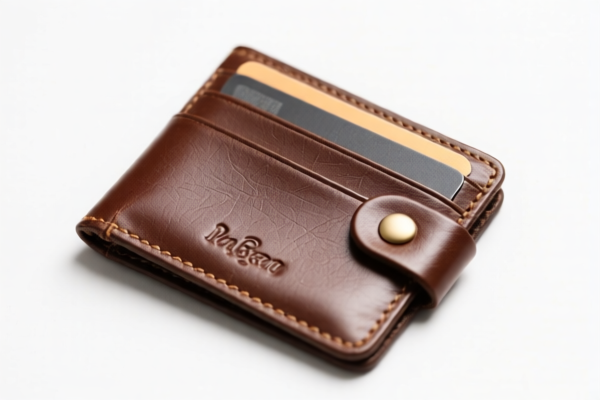
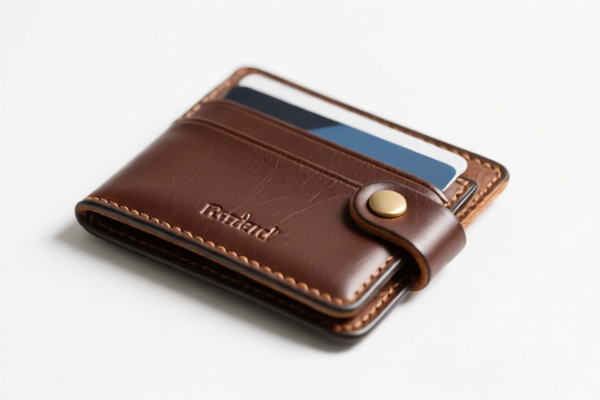
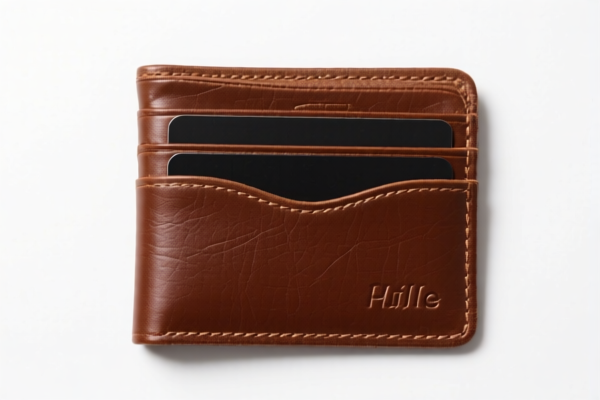
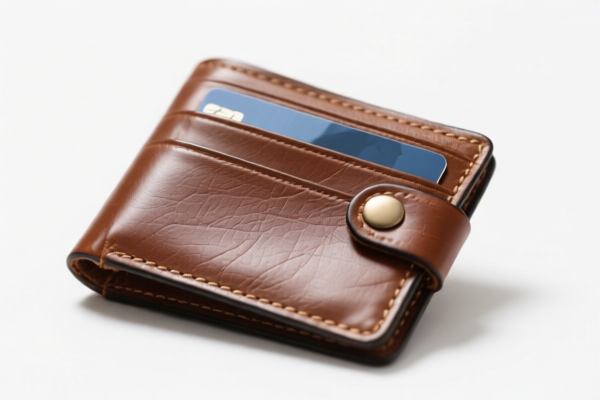
AI Analysis
👜 Leather Card Wallet (Business Card Holder)
🌐 HS Code Reference & Customs Clearance Guide | 2026 Latest Tariff Analysis | Professional Clearance Strategy
📌 I. Product Definition & Classification: Do You Really Know What a "Leather Card Wallet" Is?
A Leather Card Wallet is typically a slim accessory designed to hold business cards, ID cards, or credit cards in pockets or handbags. In international trade, its classification depends heavily on material composition and structural design.
It is generally divided into two main categories:
1. Leather Goods (Chapter 42): Made from genuine leather, artificial leather (PU), or regenerated leather. These are classified under headings like 4202 (Articles of apparel or clothing accessories) or 4205 (Other articles of leather).
2. Plastic/Synthetic Goods (Chapter 39): Made entirely from plastic, synthetic resin, or PVC "leather." These fall under 3926 (Other articles of plastics).
⚠️ Key Distinction Point:
- If the product is made of genuine leather or high-quality artificial leather and is designed as a "container for pocket/handbag," it usually falls under Chapter 42.
- If the product is made of cheap PVC/synthetic plastic and lacks the structural integrity of a leather good, it may be classified under Chapter 39 (Plastics).
- Critical Note: Even if called "Leather," if it's >50% plastic by weight or lacks leather backing, customs may reclassify it as plastic.
📦 II. HS Code Classification Details (2026 Latest Tariff Authority Comparison)
| HS Code | Product Description | Applicable Scenario | Material Composition |
|---|---|---|---|
4205.00.80.00 |
Other leather or composition leather articles | Generic artificial leather (PU) card holders, non-specific use | ✅ Artificial Leather/Composition Leather |
3926.90.10.00 |
Other plastic articles | Low-cost PVC/plastic card holders, synthetic leather without leather base | ✅ Plastic/Synthetic Material |
4202.31.60.00 |
Articles of a kind normally carried in pocket/handbag (Leather) | Genuine leather or high-grade artificial leather card wallets | ✅ Genuine/Regenerated Leather |
3926.90.48.00 |
Other plastic goods (Consumer Goods) | Plastic card holders, resin-based, not specific to other headings | ✅ Plastic/Synthetic Resin |
4202.39.90.00 |
Other articles carried in pocket/handbag | Mixed materials (leather + textile/plastic), general purpose | ✅ Mixed/Composite Materials |
🔍 Key Reminder:
- Genuine Leather items go to 4202/4205.
- Artificial Leather (PU) can go to 4205 (if classified as "composition leather") or 3926 (if deemed purely plastic).
- Pure Plastic/PVC goes to 3926.
- Mixed Materials: If leather is dominant, it often stays in Ch. 42; if plastic dominates, it goes to Ch. 39.
💰 III. 2026 Latest Tariff Rate Breakdown (Including Additional Taxes & Policy Surcharges)
✅ Applicable Country: United States (US)
✅ Origin: China (CN)
✅ Effective Date: From Nov 10, 2025 (for subsequent imports)
🎯 1. 4205.00.80.00 – Other Leather or Composition Leather Articles
(Typically for generic Artificial Leather/PU Card Wallets)
| Item | Content |
|---|---|
| Base Rate | 0% (ad valorem) |
| USITC Additional Tax | +25% (Under Section 301 Tariffs) |
| Section 122 Tariff | +10% (Under IEEPA, targeting specific Chinese goods) |
| Total Tax Rate | 35.0% |
| Tax Calculation | CIF Value × 35% |
| De Minimis Exemption? | ❌ NO (Section 301 & 122 taxes apply regardless of value) |
| Legal Basis Path | USITC:4205.00.80.00 → Section 301: 25% → IEEPA Section 122: 10% |
📌 Explanation:
- Even if the base duty is 0%, the 25% Section 301 tariff and 10% Section 122 tariff are imposed on most Chinese-made leather-like goods.
- Total 35% is high. Ensure your product is clearly described as "Artificial Leather" to avoid being misclassified as genuine leather (which may have different surcharge rules).
🎯 2. 3926.90.10.00 – Other Plastic Articles
(For PVC/Synthetic Leather Card Holders)
| Item | Content |
|---|---|
| Base Rate | 3.4% |
| USITC Additional Tax | +7.5% (Reduced Section 301 rate for some plastic items) |
| Section 122 Tariff | +10% |
| Total Tax Rate | 20.9% |
| Tax Calculation | CIF Value × 20.9% |
| De Minimis Exemption? | ❌ NO |
| Legal Basis Path | USITC:3926.90.10.00 → Section 301: 7.5% → IEEPA Section 122: 10% |
📌 Note:
- If your "leather" wallet is actually PVC or synthetic plastic, it may qualify for this lower tax rate (20.9% vs. 35% or 55%).
- Strategic Tip: If the material is not genuine leather, declaring it as "Plastic Article" can save significant duty costs.
🎯 3. 4202.31.60.00 – Articles of a Kind Normally Carried in Pocket/Handbag (Leather)
(For Genuine or High-Grade Leather Card Wallets)
| Item | Content |
|---|---|
| Base Rate | 8.0% |
| USITC Additional Tax | +25% (Standard Section 301 rate) |
| Section 122 Tariff | +10% |
| Total Tax Rate | 43.0% |
| Tax Calculation | CIF Value × 43.0% |
| De Minimis Exemption? | ❌ NO |
| Legal Basis Path | USITC:4202.31.60.00 → Section 301: 25% → IEEPA Section 122: 10% |
📌 Warning:
- Genuine leather items face the full 25% Section 301 tariff + 8% base duty.
- Total 43% is very high. Consider if your product can be classified as "Artificial Leather" under4205.00.80.00(35%) or "Plastic" under3926.90.10.00(20.9%).
🎯 4. 3926.90.48.00 – Other Plastic Goods (Consumer Goods)
(For Specific Plastic/Resin Card Holders)
| Item | Content |
|---|---|
| Base Rate | 3.4% |
| USITC Additional Tax | 0.0% (Exempt or excluded from Section 301 surcharge in some cases) |
| Section 122 Tariff | +10% |
| Total Tax Rate | 13.4% |
| Tax Calculation | CIF Value × 13.4% |
| De Minimis Exemption? | ❌ NO (Section 122 still applies) |
| Legal Basis Path | USITC:3926.90.48.00 → Section 122: 10% |
📌 Best Case Scenario:
- If your product is made of plastic/resin and fits this specific subheading, the tax burden is the lowest (13.4%).
- This requires precise material declaration and possibly third-party testing to prove it is not "leather."
🎯 5. 4202.39.90.00 – Other Articles Carried in Pocket/Handbag
(Mixed Materials: Leather + Plastic + Textile)
| Item | Content |
|---|---|
| Base Rate | 20.0% |
| USITC Additional Tax | +25% (Full Section 301 rate) |
| Section 122 Tariff | +10% |
| Total Tax Rate | 55.0% |
| Tax Calculation | CIF Value × 55.0% |
| De Minimis Exemption? | ❌ NO |
| Legal Basis Path | USITC:4202.39.90.00 → Section 301: 25% → IEEPA Section 122: 10% |
🚨 Highest Risk:
- Mixed-material products are often flagged for full 20% base duty + 25% tariff.
- Avoid this code unless absolutely necessary. Simplify material composition to qualify for lower rates.
🛠️ IV. Customs Clearance Practical Advice (Battle-Tested Pitfall Guide)
✅ 1. Required Documentation Checklist (Non-Negotiable)
| Document | Must Provide | Description |
|---|---|---|
| ✅ Product Specification Sheet | ✔️ | Detailed material breakdown (e.g., "100% PU Leather," "PVC Body") |
| ✅ Material Test Report | ✔️ | Third-party lab report proving synthetic vs. genuine leather |
| ✅ Product Photos | ✔️ | Clear shots of inner lining, texture, and label |
| ✅ Commercial Invoice | ✔️ | Accurate description: "Artificial Leather Card Holder" NOT just "Leather Wallet" |
| ✅ Packing List | ✔️ | Show quantity and weight per unit |
| ✅ Certificate of Origin | ✔️ | For potential exemptions (if not China origin) |
✅ 2. Declaration Tips (Key Mantra)
🔥 "Material is King, Description is Queen, Don't Split, Don't Lie!"
| Scenario | Correct Declaration | Wrong Practice |
|---|---|---|
| PU/Artificial Leather | Declare as "Artificial Leather" or "Synthetic Leather" under 4205.00.80.00 or 3926.90.10.00 |
Calling it "Genuine Leather" → 43-55% tax |
| PVC/Synthetic | Declare as "Plastic Article" under 3926.90.48.00 |
Calling it "Leather" → 35%+ tax |
| Mixed Materials | Choose the dominant material | Complex mixed description → 55% tax |
| Genuine Leather | Declare as "Genuine Leather" under 4202.31.60.00 |
Hiding material → Penalty + Back Taxes |
✅ 3. Special Cases Handling
| Situation | Handling Advice |
|---|---|
| OEM Custom Card Holder | Provide design file + material spec sheet to prove it's not "standard leather good" |
| "Leather-Look" Plastic | Use test reports to prove it's PVC/Plastic → Aim for 3926.90.48.00 (13.4%) |
| Gift Sets (Wallet + Pen) | Declare separately if possible. Pen may have different HS Code. Don't bundle if it complicates classification. |
| Small Quantity Samples | Still subject to 301/122 tariffs. No de minimis exemption for Section 301 goods. |
🌍 V. Global Market Clearance Comparison (2026 Latest)
| Country/Region | Recommended HS Code | Tariff (China Origin) | Certification Required | Notes |
|---|---|---|---|---|
| 🇺🇸 USA | 3926.90.48.00 or 4205.00.80.00 |
13.4% ~ 35% | No specific cert needed | Section 122 (10%) applies to all Chinese leather/plastic goods |
| 🇨🇳 China (Import) | 4205.00.80.00 |
8% | None | Lower duty for domestic import |
| 🇪🇺 EU | 4202.31 or 3926.90 |
4% ~ 6% | CE (if electronic components) | No Section 301/122 equivalent. Stable rates. |
| 🇬🇧 UK | 4202.31 |
4% | UKCA | Post-Brexit alignment with EU |
| 🇨🇦 Canada | 4202.31 |
0% ~ 6.4% | None | CUSMA benefits if Canadian origin |
📌 Conclusion:
- USA is the most complex market due to Section 301 (25%) and Section 122 (10%) surcharges.
- EU/UK/Canada offer more predictable and lower tariffs.
- Strategy: If selling to the US, optimize material composition (e.g., use synthetic/plastic) to target3926.90.48.00(13.4%) instead of4202(43-55%).
📌 VI. Common Mistakes & Pitfall Guide (Lessons Learned)
❌ Mistake 1: Calling a PVC card holder "Genuine Leather"
👉 Result: Customs reclassifies to 4202.39.90.00 or imposes penalties for misdeclaration → 55% tax + fines!
❌ Mistake 2: Splitting a "Wallet + Pen" set into two invoices
👉 Result: Customs views it as a single commercial unit → Back taxes on full value.
❌ Mistake 3: Ignoring Section 122 Tariff
👉 Result: Even if Section 301 is 0%, 10% Section 122 still applies to most Chinese goods → Unexpected cost.
❌ Mistake 4: Using vague descriptions like "Card Holder"
👉 Result: Customs has discretion to classify as "Leather" → Higher tax bracket.
✅ Correct Approach:
"Artificial Leather Card Holder, PU Material, for Business Use, Model XYZ, Made in China"
(Be specific!)
🎯 VII. Conclusion: Precision Classification Saves Money!
🎯 Remember the Mantra:
🔹 "Plastic is Cheaper (13.4%), Artificial Leather is Medium (35%), Genuine Leather is Expensive (43%+)."
🔹 "Section 122 (10%) is universal for China. Don't ignore it!"
🔹 "Test your material! If it's not real leather, declare it as such to save 10-30%."
📌 Pro Tip:
If your product is 100% Synthetic/Plastic, aim for
3926.90.48.00(13.4%).
If it's Artificial Leather, aim for4205.00.80.00(35%).
Avoid4202unless it's high-end genuine leather, as taxes exceed 43%.
📣 Immediate Action:
📞 Consult a customs broker with material test reports.
🚀 Apply for an Advance Ruling if importing large volumes to lock in your HS Code.
💡 Your profit margin depends on accurate classification!
✨ Professional Customs Clearance Starts with Precise Classification!
💼 Every percentage point counts in international trade!
Customer Reviews
About HS Code Classification
The Harmonized System (HS) is an internationally standardized nomenclature developed by the World Customs Organization (WCO) to classify traded products. Over 200 countries use the HS system as the basis for customs tariffs, trade statistics, and import/export regulations.
Each HS code follows a hierarchical structure:
- Chapter (2 digits) — Broad category of goods (e.g., Chapter 84: Machinery and Mechanical Appliances)
- Heading (4 digits) — More specific grouping within the chapter
- Subheading (6 digits) — Internationally standardized breakdown, used by all WCO member countries
- National subdivisions (8-10 digits) — Country-specific extensions for further classification, such as US HTSUS 10-digit codes
Correct HS code classification is essential for smooth customs clearance, accurate duty payment, and compliance with trade regulations. Misclassification can lead to customs delays, overpayment of duties, or penalties.
When importing from CN to US, the applicable tariff rates may include:
- Most-Favored-Nation (MFN) rate — The standard duty rate applied to WTO members
- General rate — Applied to countries without trade agreements
- Trade remedy duties — Additional tariffs such as Section 301 (anti-dumping), Section 232 (national security), or countervailing duties
The information provided on this page is for reference purposes only. For official classification, please consult with your local customs authority or a licensed customs broker.