Leather Custom Accessories
CN → US| HS Code | Tariff Rate | Origin | Destination | Doc |
|---|---|---|---|---|
| 3926903500 | 24.0% | CN | US | Official Doc |
| 4202128980 | 52.6% | CN | US | Official Doc |
| 5903102010 | 35.0% | CN | US | Official Doc |
| 5903102090 | 35.0% | CN | US | Official Doc |
| 3926903300 | 16.5% | CN | US | Official Doc |
Product Images
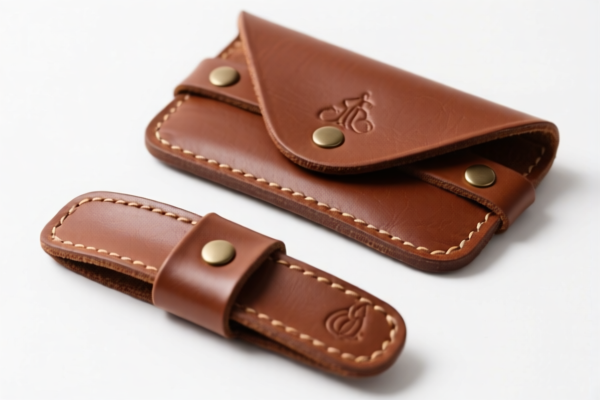
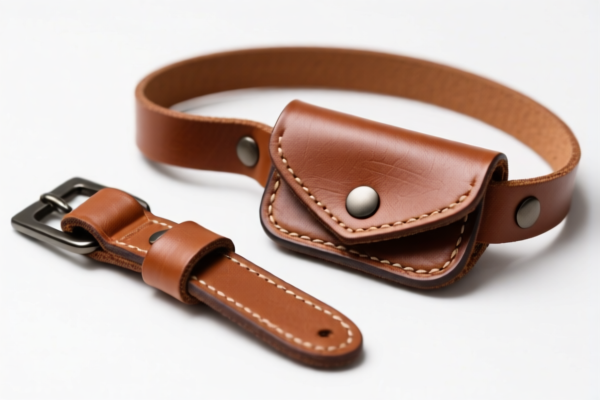
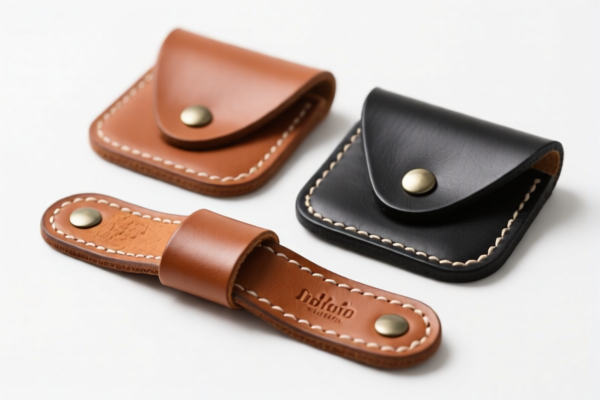
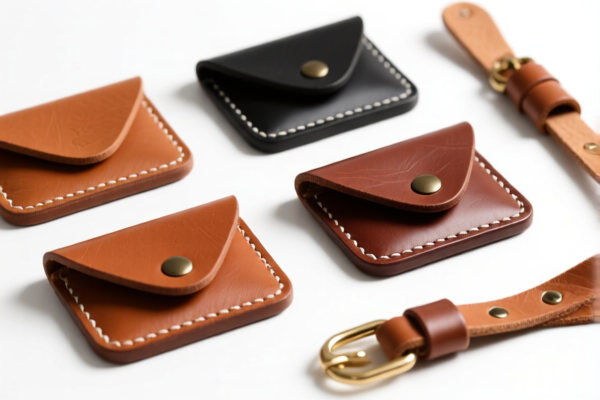
AI Analysis
👜 Leather Custom Accessories: The Ultimate HS Code & Tax Strategy Guide | 2026 Update
🌐 HS Code Reference & Customs Clearance Guide | 2026 Latest Tariff Analysis | Professional Clearance Strategy
📌 I. Product Definition & Classification: Do You Really Understand "Leather Custom Accessories"?
"Leather Custom Accessories" is a broad category in international trade. The core challenge lies in distinguishing between natural leather, artificial leather (synthetic/resin-based), and textile-based accessories. The customs classification (HS Code) and subsequent tax liability vary drastically based on the material composition and final form.
⚠️ Key Distinction Point:
- If made from natural animal hide (tanned/finished) → Likely Chapter 42 (Articles of Leather);
- If made from synthetic/resin materials (e.g., PVC, PU) → Likely Chapter 39 (Plastics/Resins) or Chapter 59 (Impregnated Textiles);
- The specific "Accessory" form (e.g., handle, strap, patch) determines the sub-heading.
📦 II. HS Code Classification Details (2026 Latest Tariff Authority Comparison)
Based on the provided data for "Leather Custom Accessories", here are the five possible HS Codes, their reasoning, and tax implications. Note that "Artificial Leather" (人造革) is the key driver here, placing it often in plastic/resin or impregnated textile categories rather than natural leather.
| HS Code | Product Description & Logic | Taxation Status (US Origin: China) | Total Tax Rate |
|---|---|---|---|
3926.90.35.00 |
Plastic Accessory: Artificial leather is classified under plastics/resins. As an accessory/part, it falls under "Other" plastic articles. | Base: 6.5%, Sec 301: 7.5%, 122 Clause: 10% | 24.0% |
4202.12.89.80 |
Leather Article Part: If classified as a part/component of leather goods (e.g., bag handle, strap). Artificial leather fits "synthetic material" definition for parts. | Base: 17.6%, Sec 301: 25.0%, 122 Clause: 10% | 52.6% |
5903.10.20.10 |
PVC Impregnated Material: Inferred as PVC-based artificial leather. Classified under other accessories/parts made from plastic-impregnated textile. | Base: 0.0%, Sec 301: 25.0%, 122 Clause: 10% | 35.0% |
5903.10.20.90 |
Other Plastic-Textile Composite: Fallback category for material (artificial leather = plastic/synthetic) + form (accessory/part). | Base: 0.0%, Sec 301: 25.0%, 122 Clause: 10% | 35.0% |
3926.90.33.00 |
Other Plastic Articles (Lower Risk): Artificial leather as plastic/resin material, accessory form. Specific sub-category for other plastic制品/parts. | Base: 6.5%, Sec 301: 0.0%, 122 Clause: 10% | 16.5% |
🔍 Critical Insight:
- HS Code4202.12.89.80carries the highest tax burden (52.6%) because it treats the item as a "part of a leather good," triggering higher base duties and Section 301 tariffs.
- HS Code3926.90.33.00offers the lowest tax burden (16.5%) by classifying it strictly as a "plastic article" with zero Section 301 tariff.
- HS Codes5903.10.20.10&5903.10.20.90offer a middle ground (35.0%) with zero base duty but high Section 301 tariff.
💰 III. 2026 Latest Tariff Rate Breakdown (Detailed Policy Add-ons)
✅ Applicable Country: United States (US)
✅ Origin: China (CN)
✅ Effective Date: Current 2026 Tariff Structure
🎯 1. 3926.90.35.00 —— Plastic Accessory (Artificial Leather as Plastic)
| Item | Detail |
|---|---|
| Base Duty | 6.5% |
| Sec 301 Tariff | +7.5% |
| Section 122 Tariff | +10% |
| Total Tax Rate | 24.0% |
| Calculation | CIF Value × 24% |
| Legal Basis | Standard plastic article classification + 122 Clause |
📌 Explanation:
- This code treats artificial leather primarily as a plastic product.
- The Section 301 tariff is 7.5%, not 25%, making it significantly cheaper than the "Leather Part" classification.
- Suitable for rigid or semi-rigid plastic-like artificial leather accessories.
🎯 2. 4202.12.89.80 —— Part of Leather Good (Highest Risk)
| Item | Detail |
|---|---|
| Base Duty | 17.6% |
| Sec 301 Tariff | +25.0% |
| Section 122 Tariff | +10% |
| Total Tax Rate | 52.6% |
| Calculation | CIF Value × 52.6% |
| Legal Basis | Chapter 42 (Leather Articles) + Parts/Accessories |
📌 Explanation:
- Highest Tax Burden!
- Base duty is 17.6%, and Sec 301 is 25%.
- Only use this if the item is indisputably a part of a finished leather good (e.g., a bag handle) AND customs insists on Chapter 42.
- Avoid this code unless necessary due to high cost.
🎯 3. 5903.10.20.10 & 5903.10.20.90 —— PVC-Impregnated Textile
| Item | Detail |
|---|---|
| Base Duty | 0.0% |
| Sec 301 Tariff | +25.0% |
| Section 122 Tariff | +10% |
| Total Tax Rate | 35.0% |
| Calculation | CIF Value × 35.0% |
| Legal Basis | Chapter 59 (Impregnated Textiles) + Sec 301 |
📌 Explanation:
- Zero Base Duty is attractive, but the 25% Sec 301 tariff makes it more expensive than3926.90.35.00(24.0%).
- Suitable for soft, flexible artificial leather (e.g., PVC-coated fabric).
- Differentiation between.10and.90is often subtle;.10may be for specific PVC types,.90is a fallback.
🎯 4. 3926.90.33.00 —— Other Plastic Articles (Lowest Tax!)
| Item | Detail |
|---|---|
| Base Duty | 6.5% |
| Sec 301 Tariff | 0.0% |
| Section 122 Tariff | +10% |
| Total Tax Rate | 16.5% |
| Calculation | CIF Value × 16.5% |
| Legal Basis | Chapter 39 (Plastics) + Specific Exemption |
📌 Explanation:
- Lowest Tax Rate in the list!
- Zero Sec 301 Tariff is the key advantage.
- This code classifies the item strictly as a plastic article under a specific sub-category that avoids the 25% penalty.
- Recommendation: If your product can be reasonably justified as a "plastic accessory" rather than a "leather part," this is the optimal code.
🛠️ IV. Customs Clearance Practical Advice (Avoiding Pitfalls)
✅ 1. Material Documentation is Critical
| Document | Requirement | Purpose |
|---|---|---|
| ✅ Material Composition Report | Must specify % of PVC, PU, Polyester backing, etc. | Determines if it's "Plastic" (Ch 39/59) or "Leather" (Ch 42). |
| ✅ Product Photos | Show texture, backing, and finish. | Helps distinguish between natural leather (Ch 41/42) and artificial leather (Ch 39/59). |
| ✅ Usage Description | "Accessory for Bag" vs. "Plastic Component". | "Part of Leather Good" triggers higher duties; "Plastic Accessory" may lower them. |
| ✅ Supplier Declaration | Explicitly state "Artificial Leather / Synthetic Material". | Prevents misclassification as Natural Leather. |
✅ 2. Strategic Declaration Tips
🔥 "Plastic Over Leather, Sec 301 Avoidance is Key!"
| Scenario | Recommended HS Code | Tax Rate | Strategy |
|---|---|---|---|
| Rigid Plastic-like Artificial Leather | 3926.90.35.00 |
24.0% | Low Sec 301 (7.5%). Good balance. |
| Soft PVC/PU Fabric Leather | 5903.10.20.10 |
35.0% | Zero Base Duty, but high Sec 301 (25%). |
| Optimal Cost Reduction | 3926.90.33.00 |
16.5% | Best Choice. Zero Sec 301. Justify as "Plastic Article". |
| High-Value Fashion Accessory | 4202.12.89.80 |
52.6% | Avoid. Only use if legally required as "Leather Part". |
📌 Key Advice:
- Argue for Chapter 39: If the artificial leather is predominantly plastic/resin-based, argue for classification under HS Code3926.90.33.00to save 36.1% in taxes compared to the leather part code.
- Avoid Chapter 42: Unless the product is undeniably a "part of a leather article" and you are willing to pay the premium.
- Check Section 122: All codes include a 10% Section 122 tariff, which is mandatory for most Chinese-origin plastic/textile goods. Do not miss this.
🌍 V. Global Market Comparison (2026 Update)
| Market | Recommended HS Code | Est. Tax Rate | Notes |
|---|---|---|---|
| 🇺🇸 USA | 3926.90.33.00 |
16.5% | Best Option. Avoid 4202 due to 52.6% tax. |
| 🇨🇳 China | 4202.12.89.80 |
~5-10% | Lower import duty, but focus on domestic sales. |
| 🇪🇺 EU | 3926.90.35.00 |
~5-9% | No Sec 301 or 122 tariffs. Easier classification. |
| 🇬🇧 UK | 5903.10.20.10 |
~5-9% | Post-Brexit, no Section 122. Base duty applies. |
📌 Conclusion for US Imports:
- The US market is the most challenging due to Section 301 and Section 122 tariffs.
- Optimization Strategy: Classify as Plastic Article (3926.90.33.00) to achieve the lowest possible tax rate (16.5%).
- Do Not Use4202.12.89.80unless absolutely necessary, as it increases costs by over 30 percentage points.
📌 VI. Common Errors & Pitfalls (Lessons Learned)
❌ Error 1: Classifying Artificial Leather as Natural Leather (4202)
👉 Consequence: Higher base duty + 25% Sec 301 tariff → 52.6% Tax.
✅ Fix: Provide material test reports proving it is PVC/PU.
❌ Error 2: Ignoring Section 122 Tariff
👉 Consequence: Under-declaration → Penalties + Back Taxes.
✅ Fix: Always include 10% Section 122 in calculations for all HS codes listed.
❌ Error 3: Over-complicating PVC Classification
👉 Consequence: Choosing 5903.10.20.90 (35.0%) when 3926.90.33.00 (16.5%) is applicable.
✅ Fix: If the item is a finished accessory and not a textile composite, argue for Chapter 39.
❌ Error 4: Vague Product Description
👉 Consequence: Customs delays, potential reclassification to higher tax code.
✅ Fix: Use precise terms: "PVC Artificial Leather Accessory, Plastic-Based, Non-Leather".
🎯 VII. Conclusion: Optimize Your Tax Strategy Today!
🎯 Key Takeaway:
🔹 "Artificial Leather = Plastic? Claim
3926.90.33.00for 16.5% Tax!"
🔹 "Avoid4202Unless Necessary: 52.6% Tax is Too High!"
🔹 "Section 122 (10%) Applies to All: Don't Forget It!"
📌 Pro Tip:
- Request a Binding Tariff Information (BTI) or US CBP Ruling before shipping.
- Ensure your supplier’s commercial invoice clearly states "Artificial Leather / Synthetic Material" and "HS Code: 3926.90.33.00" to support your declaration.
📣 Act Now:
📞 Consult a Customs Broker + Submit Material Reports + Optimize HS Code to
3926.90.33.00
🚀 Save 36.1% in Taxes! Clear Smoother, Profit Higher!
✨ Professional Classification Saves Money!
💼 Every Dollar in Tariffs is a Dollar Lost in Margin!
Customer Reviews
About HS Code Classification
The Harmonized System (HS) is an internationally standardized nomenclature developed by the World Customs Organization (WCO) to classify traded products. Over 200 countries use the HS system as the basis for customs tariffs, trade statistics, and import/export regulations.
Each HS code follows a hierarchical structure:
- Chapter (2 digits) — Broad category of goods (e.g., Chapter 84: Machinery and Mechanical Appliances)
- Heading (4 digits) — More specific grouping within the chapter
- Subheading (6 digits) — Internationally standardized breakdown, used by all WCO member countries
- National subdivisions (8-10 digits) — Country-specific extensions for further classification, such as US HTSUS 10-digit codes
Correct HS code classification is essential for smooth customs clearance, accurate duty payment, and compliance with trade regulations. Misclassification can lead to customs delays, overpayment of duties, or penalties.
When importing from CN to US, the applicable tariff rates may include:
- Most-Favored-Nation (MFN) rate — The standard duty rate applied to WTO members
- General rate — Applied to countries without trade agreements
- Trade remedy duties — Additional tariffs such as Section 301 (anti-dumping), Section 232 (national security), or countervailing duties
The information provided on this page is for reference purposes only. For official classification, please consult with your local customs authority or a licensed customs broker.