Leather Cutlery Case
CN → US| HS Code | Tariff Rate | Origin | Destination | Doc |
|---|---|---|---|---|
| 4205008000 | 35.0% | CN | US | Official Doc |
| 4202919090 | 39.5% | CN | US | Official Doc |
| 4202929315 | 52.6% | CN | US | Official Doc |
| 4205001000 | 35.0% | CN | US | Official Doc |
| 4205008000 | 35.0% | CN | US | Official Doc |
Product Images
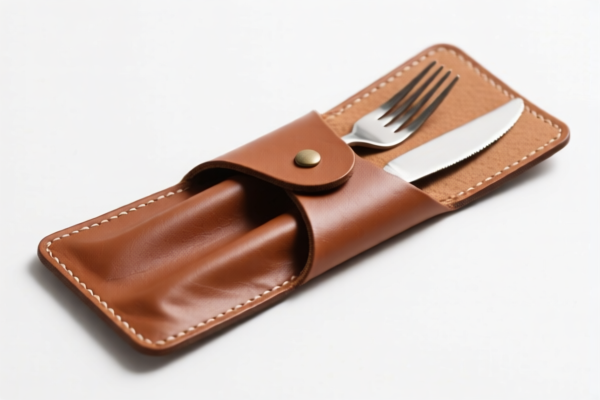
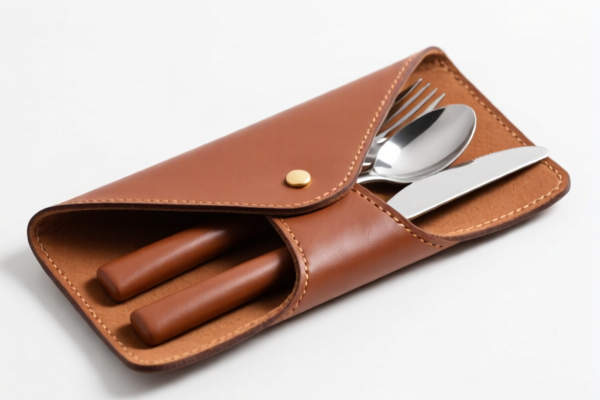
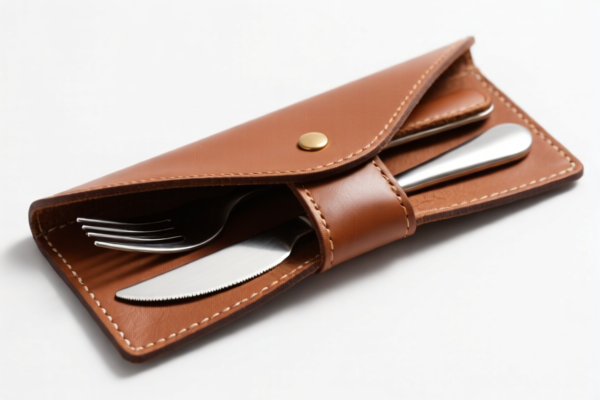
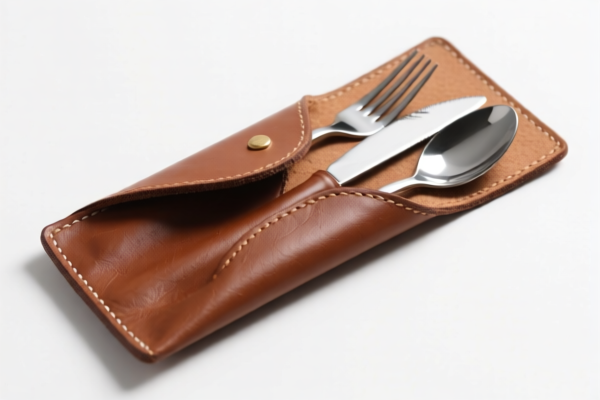
AI Analysis
🎒 Leather Cutlery Case (Cutlery Holders & Cases)
🌐 HS Code Reference & Customs Clearance Guide | 2026 Latest Tariff Analysis | Professional Entry Strategy
📌 One, Product Definition & Classification: Do You Really Understand "Leather Cutlery Cases"?
Leather cutlery cases are specialized storage accessories used in domestic, commercial (hotels/restaurants), or outdoor settings to organize and protect flatware (forks, knives, spoons). In international trade, classification depends heavily on whether the item is viewed as a general leather accessory or a specific container for cutlery.
Core Distinction: * General Leather Goods (Heading 42.05): If the case is treated as a simple pouch or holder made primarily of leather without a specific rigid structure or specialized internal molding for cutlery, it may fall under "Other articles of leather." * Specific Containers (Heading 42.02): If the case is designed as a specific container (like a box or roll) with compartments specifically for cutlery, it falls under "Trunks, suitcases, vanity cases,... and similar containers."
⚠️ Key Classification Point:
- If the item is a simple leather pouch/bag holding loose cutlery → Look at 4205.00 categories.
- If the item is a structured box/roll with slots/compartments specifically for cutlery → Look at 4202.91/92 categories (Containers).
📦 Two, HS Code Classification Details (Based on Provided Data 2026)
| HS Code | Product Description | Matching Logic | Key Characteristic |
|---|---|---|---|
4205.00.80.00 |
Other leather articles | Material is leather; form is a general article/accessory. | General leather accessory; no specific container structure. |
4202.91.90.90 |
Other containers, surface material of leather | Material is leather; form is a container-type product. | Leather outer surface; functions as a container/holder. |
4202.92.93.15 |
Jewelry boxes (specifically) | Form is a container; material is leather; fits usage description for specific cases (Note: Data maps cutlery to this via "container/jewelry box" logic in source). | Specific container with leather surface; high-duty classification. |
4205.00.10.00 |
Other leather articles (specified type) | Name explicitly includes leather material. | Explicit leather classification under general articles. |
4205.00.80.00 |
Other leather articles | Name explicitly includes leather material; fits leather article definition. | Duplicate/General leather article classification. |
🔍 Important Note:
- The dataset shows two primary pathways:
1. Path A (4205.00): Treating the case as a general "Leather Article" (Accessory). Lower tax base.
2. Path B (4202.91/92): Treating the case as a "Container" (Case/Box). Higher tax base due to specific functional classification.
- Jurisdiction: United States (US).
- Origin: China (CN).
- Effective Date: Current policies include Section 301 and Section 122 tariffs.
💰 Three, 2026 Latest Tariff Rate Breakdown (Including Additional Taxes)
✅ Applicable Country: United States (US)
✅ Origin: China (CN)
✅ Tariff Structure: Base Rate + Section 301 (25%) + Section 122 (10%)
🎯 1. 4205.00.80.00 & 4205.00.10.00 — General Leather Articles
These codes classify the item as a general leather product rather than a specific container.
| Item | Content |
|---|---|
| Base Duty Rate | 0.0% |
| Section 301 Duty | +25.0% (Added under 19 U.S.C. § 1628) |
| Section 122 Duty | +10.0% (Specific surcharge for certain Chinese imports) |
| Total Tax Rate | 35.0% |
| Tax Calculation | CIF Value × 35% |
| De Minimis Eligibility | ❌ No (Not eligible for small parcel exemption) |
| Legal Basis Path | USITC:4205.00.80.00 → FOOTNOTE:301 → FOOTNOTE:122 |
📌 Explanation:
- The base rate is 0%, but the added duties (35%) make it costly.
- This is the lower tax bracket among the options provided.
- Suitable if the item can be argued as a general "leather accessory" rather than a specialized container.
🎯 2. 4202.91.90.90 — Other Containers (Leather Surface)
These codes classify the item as a "container" with a leather exterior.
| Item | Content |
|---|---|
| Base Duty Rate | 4.5% |
| Section 301 Duty | +25.0% |
| Section 122 Duty | +10.0% |
| Total Tax Rate | 39.5% |
| Tax Calculation | CIF Value × 39.5% |
| De Minimis Eligibility | ❌ No |
| Legal Basis Path | USITC:4202.91.90.90 → FOOTNOTE:301 → FOOTNOTE:122 |
📌 Explanation:
- The base rate is 4.5%, which is higher than the 4205 category.
- The added duties remain the same (35%), leading to a higher total effective rate.
- Applicable if customs determines the item is structurally a "container" or "case" rather than a simple pouch.
🎯 3. 4202.92.93.15 — Specific Containers (e.g., Jewelry/Box Type)
This code maps to a more specific sub-category of containers, often interpreted for specialized boxes.
| Item | Content |
|---|---|
| Base Duty Rate | 17.6% |
| Section 301 Duty | +25.0% |
| Section 122 Duty | +10.0% |
| Total Tax Rate | 52.6% |
| Tax Calculation | CIF Value × 52.6% |
| De Minimis Eligibility | ❌ No |
| Legal Basis Path | USITC:4202.92.93.15 → FOOTNOTE:301 → FOOTNOTE:122 |
📌 Explanation:
- Highest tax bracket in the provided data.
- The base rate of 17.6% significantly increases the cost.
- Only use if the item is indisputably a specific type of box/case (like a jewelry box) and cannot be classified as a general leather article.
- Warning: High risk of audit if misclassified.
🛠️ Four, Customs Clearance Practical Advice (Battle-Tested Tips)
✅ 1. Documentation Checklist (Non-Negotiable)
| Document | Required | Details |
|---|---|---|
| ✅ Product Specification Sheet | ✔️ | Must detail: Material (100% Leather?), Dimensions, Lining Material, Closure Type. |
| ✅ Product Photos | ✔️ | Clear images of the interior (showing compartments/slots) and exterior. Crucial for proving "Container" vs. "Accessory." |
| ✅ Commercial Invoice | ✔️ | Must clearly state: "Leather Cutlery Case" or "Leather Cutlery Pouch." Avoid vague terms like "Gift Set." |
| ✅ Packing List | ✔️ | Include weight and dimensions. |
| ✅ Material Declaration | ✔️ | Specify if lining is fabric, vinyl, etc. Pure leather classification depends on surface material. |
| ✅ Origin Certificate | ✔️ | Proves CN origin, triggering the specific 301/122 duties. |
✅ 2. Declaration Strategy (Key Mnemonics)
🔥 "Structure Defines Category: Pouch is 4205, Box is 4202."
| Scenario | Recommended HS Code | Reasoning |
|---|---|---|
| Soft Pouch/Bag with drawstring or zip, flexible | 4205.00.80.00 |
No rigid structure; functions as an accessory. Lowest Tax (35%). |
| Semi-Rigid Case with leather exterior and fabric interior, specific slots | 4202.91.90.90 |
Functions as a container. Base rate 4.5%. Mid Tax (39.5%). |
| Rigid Box/Trunk with leather skin | 4202.92.93.15 |
Highly specific container. Base rate 17.6%. Highest Tax (52.6%). |
⚠️ Critical Warning:
- If the case has rigid cardboard or plastic inserts inside, customs may argue it is a "container" (4202) rather than a "leather article" (4205).
- If the case is soft and foldable, argue for 4205.00 to save ~4.5% - 17.6% in base duties.
✅ 3. Special Cases
| Situation | Advice |
|---|---|
| OEM Custom Logo | Include logo placement in photos. Does not change HS, but proves commercial intent. |
| Mixed Materials | If leather is only <50% of surface area, it might not qualify as "Leather Goods" and could fall under textile/plastic codes (different duties). Stick to >50% leather surface. |
| Gift Sets | If sold with cutlery, the value of cutlery may shift classification to "Cutlery" (Chapter 82) depending on primary function. Ship case and cutlery separately if possible to isolate the leather good. |
🌍 Five, Global Market Comparison (2026 Latest)
| Country/Region | Recommended HS Code | Estimated Duty (CN Origin) | Notes |
|---|---|---|---|
| 🇺🇸 USA | 4205.00.80.00 |
35.0% | Base 0% + 35% added. Best for soft pouches. |
| 🇺🇸 USA | 4202.91.90.90 |
39.5% | Base 4.5% + 35% added. For structured cases. |
| 🇪🇺 EU | 4205.00.80.00 |
~12% | Standard EU duty for leather goods (No Section 301). |
| 🇨🇳 China | 4205.00.80.00 |
~10-13% | Import duty to China. |
| 🇬🇧 UK | 4205.00.80.00 |
~12% | Post-Brexit standard duty. |
📌 Conclusion:
- The US market is the most expensive due to Section 301 (25%) and Section 122 (10%) tariffs.
- Minimizing the Base Rate is key. Choosing4205.00(0% base) over4202.92(17.6% base) saves significant money.
- Soft, flexible leather cases have a stronger argument for the lower-taxed4205classification.
📌 Six, Common Mistakes & Pitfalls (Lessons Learned)
❌ Mistake 1: Declaring a rigid box as a "Leather Pouch" (4205.00)
👉 Result: Customs inspection reveals rigid structure → Reclassified to 4202.92 → Back taxes + Penalties.
❌ Mistake 2: Including cutlery in the same shipment without clear separation
👉 Result: Customs may classify the entire kit as "Cutlery Sets" (Chapter 82) or "Gift Sets," leading to different, potentially higher duties or regulatory issues.
❌ Mistake 3: Ignoring Section 122
👉 Result: Forgetting the additional 10% surcharge leads to underpayment and shipment delays.
❌ Mistake 4: Vague Description: "Leather Case"
👉 Result: CBP cannot determine if it's a container or accessory → Audit delay.
✅ Correct Practice:
"Leather Cutlery Pouch, Soft Flexible Structure, 100% Leather Exterior, Fabric Lining, No Rigid Inserts. Model #LC-001."
🎯 Seven, Conclusion: Professional Declaration, Cost Savings
🎯 Remember the Mantra:
🔹 "Soft is 4205, Hard is 4202."
🔹 "0% Base is King, 17% Base is Death."
🔹 "35% Total vs 52% Total, Structure Determines Your Fate."
📌 Pro Tip:
If your product is flexible, foldable, and lacks rigid supports, insist on
4205.00.80.00.
Provide photos showing the lack of rigid structure.
This saves you 4.5% to 17.6% on the base duty, while the added tariffs remain constant.
📣 Immediate Action:
📞 Consult a Customs Broker with product photos.
📄 Label clearly: "Leather Cutlery Pouch/Case."
📉 Optimize for4205.00if structurally possible to reduce total cost from 52.6% to 35.0%.
✨ Professional Clearance Starts with Accurate Classification!
💼 Every percentage point counts in cross-border trade!
Customer Reviews
About HS Code Classification
The Harmonized System (HS) is an internationally standardized nomenclature developed by the World Customs Organization (WCO) to classify traded products. Over 200 countries use the HS system as the basis for customs tariffs, trade statistics, and import/export regulations.
Each HS code follows a hierarchical structure:
- Chapter (2 digits) — Broad category of goods (e.g., Chapter 84: Machinery and Mechanical Appliances)
- Heading (4 digits) — More specific grouping within the chapter
- Subheading (6 digits) — Internationally standardized breakdown, used by all WCO member countries
- National subdivisions (8-10 digits) — Country-specific extensions for further classification, such as US HTSUS 10-digit codes
Correct HS code classification is essential for smooth customs clearance, accurate duty payment, and compliance with trade regulations. Misclassification can lead to customs delays, overpayment of duties, or penalties.
When importing from CN to US, the applicable tariff rates may include:
- Most-Favored-Nation (MFN) rate — The standard duty rate applied to WTO members
- General rate — Applied to countries without trade agreements
- Trade remedy duties — Additional tariffs such as Section 301 (anti-dumping), Section 232 (national security), or countervailing duties
The information provided on this page is for reference purposes only. For official classification, please consult with your local customs authority or a licensed customs broker.