Leather Diary
CN → US| HS Code | Tariff Rate | Origin | Destination | Doc |
|---|---|---|---|---|
| 4820102060 | 35.0% | CN | US | Official Doc |
| 4202316000 | 43.0% | CN | US | Official Doc |
| 4820102010 | 35.0% | CN | US | Official Doc |
Product Images
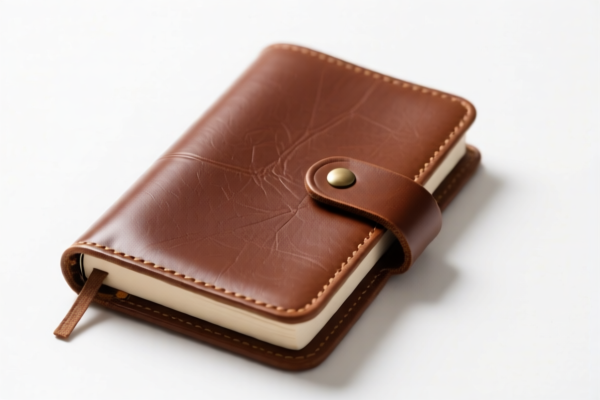
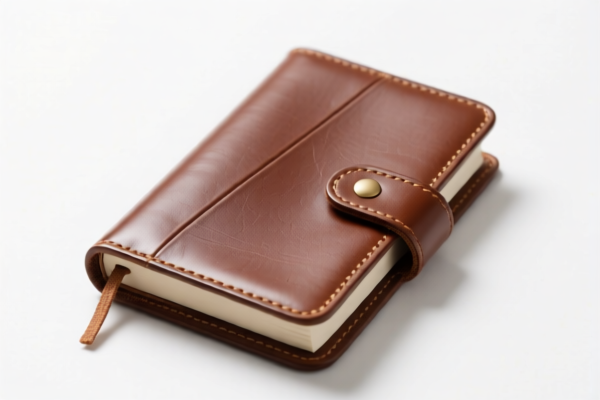


AI Analysis
📔 Leather Diary (Leather-covered Notebook/Journal)
🌐 HS Code Reference & Customs Clearance Guide | 2026 Latest Tariff Analysis | Strategic Classification for US Imports
📌 I. Product Definition & Classification: Do You Know Where "Leather Diary" Belongs?
A "Leather Diary" is a complex consumer good that sits at the intersection of paper products and leather goods. In international trade, its classification depends heavily on how you define its primary material and function. It is generally categorized into two main camps:
1. Paper-based Class (Notebooks/Stationery):
- If the diary is primarily viewed as a written item, with leather serving merely as a binding cover, it falls under Chapter 48 (Paper and Paperboard).
2. Leather Goods Class (Containers/Articles):
- If the diary is viewed as a portable container or accessory made predominantly of leather, it falls under Chapter 42 (Articles of Leather).
⚠️ Key Distinction Point:
- If the core value and function are "writing/recording" →归类 to Chapter 48 (Paper Products)
- If the core value is "leather craftsmanship/portable accessory" → 归类 to Chapter 42 (Leather Goods)
📦 II. HS Code Classification Details (2026 Latest Tariff Authority Comparison)
Based on the provided data, here are the three most relevant HS Codes for US imports from China:
| HS Code | Product Description | Classification Logic | Total Tax Rate |
|---|---|---|---|
4820.10.20.60 |
Leather-bound Diary (Paper Category) | Diary is a "ledger/notebook"; leather is deemed a reasonable binding material. | 35.0% |
4202.31.60.00 |
Leather Diary (Leather Goods Category) | "Leather-covered" meets material reqs; "Diary" seen as a portable small container/article. | 43.0% |
4820.10.20.10 |
Leather-bound Diary (Standard Paper Category) | Form/Function (Diary) is the primary determinant; leather material doesn't change the classification. | 35.0% |
🔍 Critical Note:
-4820.10.20.60and4820.10.20.10both result in a 35% total tax rate. They differ slightly in specific sub-descriptions but share the same tariff burden.
-4202.31.60.00results in a 43% total tax rate. This is 8% higher than the paper-based classification.
- Strategy: Unless the diary is a high-end luxury leather item where the leatherwork is the primary selling point, Classifying under Chapter 48 (Paper) is generally more cost-effective.
💰 III. 2026 Latest Tariff Rate Breakdown (Including Additional Taxes & Policy Surcharges)
✅ Applicable Country: United States (US)
✅ Country of Origin: China (CN)
✅ Effective Date: From November 10, 2025 (and subsequent imports)
🎯 1. HS Code 4820.10.20.60 & 4820.10.20.10 —— Paper-Based Leather Diaries
| Item | Content |
|---|---|
| Base Duty Rate | 0.0% (Ad valorem) |
| Section 301 Additional Duty | +25.0% |
| Section 122 Duty (IEEPA) | +10.0% (Targeting China/HK products, effective Nov 10, 2025) |
| Total Tax Rate | 35.0% |
| Tax Calculation | CIF Value × 35% |
| De Minimis Exemption | ❌ Not Applicable (Subject to high duties) |
| Legal Basis Path | Section 301 → IEEPA Section 122 → USITC:4820.10.20.60/10 |
📌 Explanation:
- Although the base duty for notebooks is often 0%, the Section 301 tariff (25%) and the new Section 122 tariff (10%) apply.
- Total 35% is significant for low-margin stationery items.
- The "Leather" cover does not exempt it from these additional duties because the classification remains under Chapter 48.
🎯 2. HS Code 4202.31.60.00 —— Leather Goods Category Diary
| Item | Content |
|---|---|
| Base Duty Rate | 8.0% |
| Section 301 Additional Duty | +25.0% |
| Section 122 Duty (IEEPA) | +10.0% (Targeting China/HK products, effective Nov 10, 2025) |
| Total Tax Rate | 43.0% |
| Tax Calculation | CIF Value × 43% |
| De Minimis Exemption | ❌ Not Applicable |
| Legal Basis Path | Base Tariff 4202 → Section 301 → IEEPA Section 122 |
📌 Explanation:
- The base duty for leather articles is higher (8%).
- Adding the same 25% and 10% surcharges results in a 43% total rate.
- This classification is less favorable from a cost perspective unless the item is explicitly marketed as a "Leather Accessory" rather than a "Notebook."
🛠️ IV. Customs Clearance Practical Advice (Real-World Pitfall Avoidance Guide)
✅ 1. Preparation Checklist (Essential Documents)
| Document | Required | Description |
|---|---|---|
| ✅ Product Specifications | ✔️ | Must detail: Paper type, leather type (genuine/faux), binding method, page count. |
| ✅ Commercial Invoice | ✔️ | Clearly state "Leather Diary" or "Notebook with Leather Cover". Avoid vague terms like "Gift Set" if it contains only a diary. |
| ✅ Product Photos | ✔️ | Show the entire item, including any leather labels or stamps. |
| ✅ Material Composition Statement | ✔️ | Specify percentage of paper vs. leather. If paper is >50% by weight/volume, argue for Chapter 48. |
| ✅ HS Code Pre-Ruling Request | ✔️ | Highly recommended for high-volume shipments to lock in the 35% rate vs. 43% risk. |
✅ 2. Declaration Strategy (Key Mantra)
🔥 "Focus on Function, Not Just Material: Paper Diary = 35%, Leather Bag = 43%!"
| Scenario | Recommended Declaration | Wrong Practice | Consequence |
|---|---|---|---|
| Standard Diary with Leather Cover | 4820.10.20.60 (Notebook) |
Classify as "Leather Case" → 4202.31.60.00 |
Pay 8% extra tax unnecessarily. |
| Luxury Leather Journal (Art Piece) | 4202.31.60.00 (Leather Good) |
Classify as "Notebook" | Risk of reclassification, but base duty is higher anyway. |
| Paper Notebook with Synthetic Leather Cover | 4820.10.20.60 |
Misdeclare as "Genuine Leather" | Fraud risk if inspected. |
📌 Key Tip:
- If the diary is primarily for writing, emphasize "Notebook", "Journal", or "Ledger" in the description.
- Avoid using terms like "Leather Case," "Leather Portfolio," or "Leather Holder" unless it is empty or contains other items.
✅ 3. Special Situations Handling
| Situation | Handling Advice |
|---|---|
| Set with Pen & Diary | If the pen is secondary, declare the whole set as a "Notebook Set." If the pen is high-value, consider splitting if possible, but usually, the diary determines the classification. |
| Faux Leather Cover | Definitely classify under 4820.10.20.xx (Chapter 48). It cannot be classified as leather goods if the cover is PU/Synthetic. |
| High-End Leather Binding | Even with expensive leather, if the primary function is writing, customs may still accept Chapter 48 if you provide strong evidence (e.g., internal paper quality, branding as a stationery product). |
🌍 V. Global Market Comparison (2026 Update)
| Country/Region | Recommended HS Code | Estimated Total Duty | Notes |
|---|---|---|---|
| 🇺🇸 USA | 4820.10.20.60 |
35.0% | High surcharges (25% + 10%). Best to use this code. |
| 🇨🇳 China | 4820.10.20.60 |
~6-12% | Import duty is lower; VAT applies. |
| 🇪🇺 EU | 4820.10.20 |
0% (Usually) | No Section 301/122 equivalent. VAT varies by country (19-27%). |
| 🇬🇧 UK | 4820.10.20 |
0% | Post-Brexit tariff is often 0% for notebooks. |
📌 Conclusion:
- The US market is the most expensive for Chinese-made leather diaries due to the 35% total burden.
- European and UK markets are significantly more favorable, with 0% base duty on paper notebooks.
📌 VI. Common Mistakes & Pitfalls (Lessons Learned)
❌ Mistake 1: Classifying a standard diary as "Leather Case" to avoid Section 301.
👉 Result: Customs will reclassify to Chapter 48, apply 25% + 10% + 0% = 35%, plus penalties for misdeclaration.
❌ Mistake 2: Ignoring the "Section 122" 10% tariff.
👉 Result: Since Nov 10, 2025, this 10% is mandatory for most Chinese imports. Failing to account for it leads to unexpected costs.
❌ Mistake 3: Using "Leather Diary" in the description without specifying "Notebook."
👉 Result: Ambiguity may trigger customs to choose the worst-case scenario (43%) or delay clearance for further inquiry.
✅ Correct Practice:
"Paper Notebook with Leather Cover, 120 Pages, Lined Paper, For Journaling, Model XYZ"
🎯 VII. Conclusion: Professional Declaration, Cost Optimization!
🎯 Remember the Mantra:
🔹 "Function First: Write = 35%, Carry = 43%."
🔹 "Don't Let Leather Trick You: If It Writes, It's Paper!"
🔹 "Section 301 + Section 122 = 35% Minimum for Notebooks."
📌 Pro Tip:
If you are importing large volumes, consider:
1. HS Code Pre-Ruling: File with CBP to secure the 35% rate.
2. Supply Chain Diversification: Consider sourcing from Vietnam or Mexico to avoid Section 301/122 tariffs entirely.
📣 Take Action Now:
📞 Consult a Licensed Customs Broker
📄 Prepare Detailed Product Specs
🚀 Optimize Your HS Code for Maximum Profit!
✨ Professional Clearance, Precise Classification, Lower Costs!
💼 Your Diary, Your Margin, Get It Right!
Customer Reviews
About HS Code Classification
The Harmonized System (HS) is an internationally standardized nomenclature developed by the World Customs Organization (WCO) to classify traded products. Over 200 countries use the HS system as the basis for customs tariffs, trade statistics, and import/export regulations.
Each HS code follows a hierarchical structure:
- Chapter (2 digits) — Broad category of goods (e.g., Chapter 84: Machinery and Mechanical Appliances)
- Heading (4 digits) — More specific grouping within the chapter
- Subheading (6 digits) — Internationally standardized breakdown, used by all WCO member countries
- National subdivisions (8-10 digits) — Country-specific extensions for further classification, such as US HTSUS 10-digit codes
Correct HS code classification is essential for smooth customs clearance, accurate duty payment, and compliance with trade regulations. Misclassification can lead to customs delays, overpayment of duties, or penalties.
When importing from CN to US, the applicable tariff rates may include:
- Most-Favored-Nation (MFN) rate — The standard duty rate applied to WTO members
- General rate — Applied to countries without trade agreements
- Trade remedy duties — Additional tariffs such as Section 301 (anti-dumping), Section 232 (national security), or countervailing duties
The information provided on this page is for reference purposes only. For official classification, please consult with your local customs authority or a licensed customs broker.