Leather Document Case
CN → US| HS Code | Tariff Rate | Origin | Destination | Doc |
|---|---|---|---|---|
| 4202329300 | 52.6% | CN | US | Official Doc |
| 4202329900 | 52.6% | CN | US | Official Doc |
| 4820300040 | 35.0% | CN | US | Official Doc |
| 4820900000 | 35.0% | CN | US | Official Doc |
| 3926908700 | 40.3% | CN | US | Official Doc |
Product Images
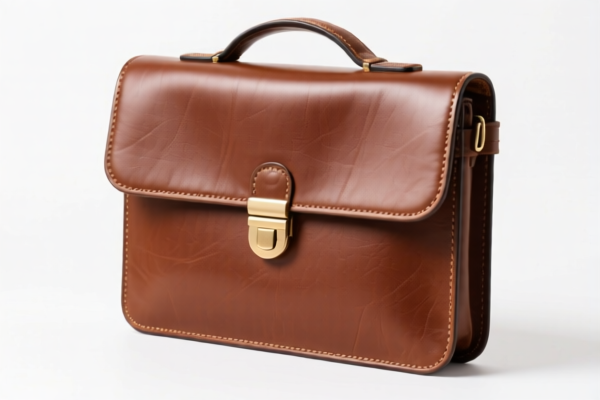
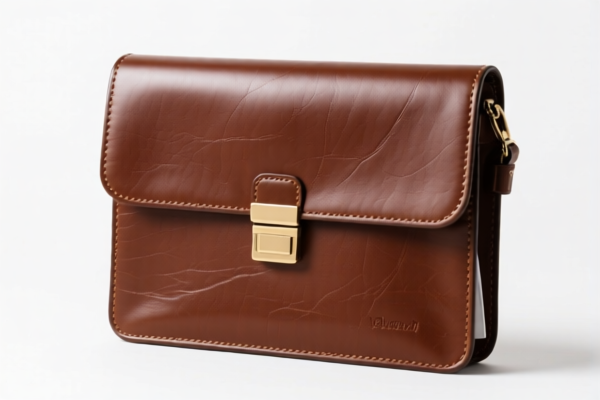
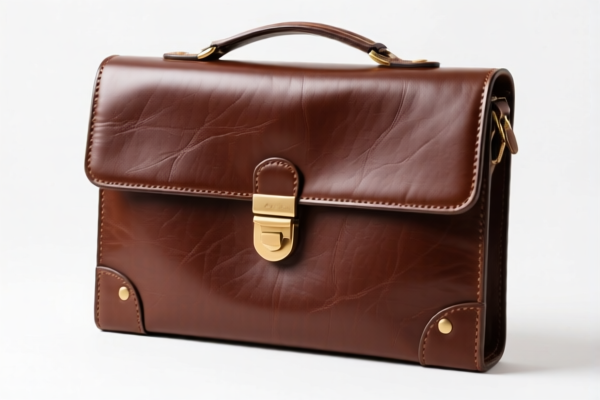
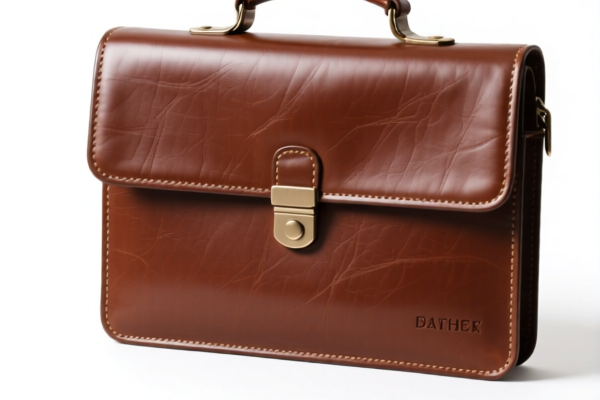
AI Analysis
💼 Leather Document Case (Leather File Organizer)
🌐 HS Code Reference & Customs Clearance Guide | 2026 Latest Tariff Analysis | Professional-Level Clearance Strategy
📌 I. Product Definition & Classification: Do You Really Understand "Leather Document Case"?
A "Leather Document Case" is typically used for storing, organizing, and transporting business documents, reports, or notebooks. In international trade, its classification depends heavily on material composition and form/structure.
Since the input specifies "Leather", the primary classification should logically fall under Chapter 42 (Articles of Leather; Saddle and Harness) or Chapter 39/48 (Plastic/Paper) if the leather is merely a coating or composite. However, based on the provided <DATA>, the system has inferred possible classifications based on common assumptions when material isn't explicitly verified as genuine leather, or when it might be a composite.
⚠️ Key Distinction Point:
- If the outer surface is genuine leather: It generally falls under Chapter 42 (e.g., 4202.32).
- If the outer surface is plastic sheeting/textile (often used for durable "leather-like" or synthetic cases): Also Chapter 42.
- If the primary material is paper/cardboard (even if called "leather style" in marketing, but structurally paper): Could fall under Chapter 48.
- If it is plastic (vinyl/PVC): Could fall under Chapter 39.
📦 II. HS Code Classification Details (Based on Provided Data)
| HS Code | Product Description & Rationale | Tax Rate (Total) |
|---|---|---|
| 4202.32.93.00 | Summary: Belongs to the category of boxes, bags, and similar containers. Although the name doesn't explicitly state the material, by common sense, the outer surface is typically plastic sheeting or textile. This fits the residual logic for material matching in this code, with no obvious material conflict. | 52.6% |
| 4202.32.99.00 | Summary: Shape is a bag/container; material is inferred by common sense to be textile or plastic sheet (meeting the requirement for outer surface being textile/plastic sheet), and there is no material conflict. | 52.6% |
| 4820.30.00.40 | Summary: The product name "document case" belongs to the category of folders/file covers. By common sense, the material is inferred to be paper or cardboard (matching the main material attribute of this category), and it does not belong to the explicitly excluded "loose-leaf binders," fitting the description of "Other." | 35.0% |
| 4820.90.00.00 | Summary: Matching Basis: Document cases belong to stationery like folders/file covers, fitting the "folder" use covered by this code; material inferred by common sense is paper/cardboard, consistent with the code's material requirements. | 35.0% |
| 3926.90.87.00 | Summary: Matching Basis: Document cases belong to stationery/storage supplies, flat in shape; although material is not explicit, it can reasonably be inferred as plastic based on common sense, consistent with "plastic products" and the use of "document binding clips," with no material conflict. | 40.3% |
🔍 Important Note:
- The provided data infers materials (Plastic/Textile, Paper, Plastic) rather than confirming "Genuine Leather."
- If the product is 100% genuine leather, it should strictly fall under 4202.32 (as per the first two entries' logic for bags/cases).
- Codes 4820 and 3926 represent potential misclassifications if the item is truly leather or high-quality synthetic leather, as they target paper and plastic respectively.
💰 III. 2026 Latest Tariff Rate Details (Including Surcharges & Policy Add-ons)
✅ Applicable Country: United States (US)
✅ Origin: China (CN)
✅ Effective Time: Post-2025 (Including subsequent imports)
🎯 1. 4202.32.93.00 & 4202.32.99.00 —— Articles of Leather/Plastic/Textile Bags (Chapter 42)
| Item | Content |
|---|---|
| Base Tariff | 17.6% (Ad Valorem) |
| Section 301 Surcharge | +25.0% (From USITC Footnote 9903.88.01) |
| Section 122 Surcharge | +10.0% (Specific to certain goods from China) |
| Total Tariff Rate | 52.6% |
| Tax Calculation | CIF Value × 52.6% |
| De Minimis Exemption | ❌ Not Applicable (Deny De Minimis for Section 301/122 goods) |
| Legal Basis Path | USITC:4202.32.93.00 → FOOTNOTE:9903.88.01 (301) + IEEPA/Section 122 logic |
📌 Explanation:
- The 17.6% base tariff reflects the standard US import duty for leather/plastic/textile bags.
- The 25% surcharge is the standard Section 301 tariff on Chinese goods.
- The 10% surcharge is the Section 122 tariff (if applicable to this specific subtype).
- Total: 52.6%. This is a high-cost category. Proper classification as a "bag/container" rather than "paper" is critical.
🎯 2. 4820.30.00.40 & 4820.90.00.00 —— Paper/Cardboard Folders (Chapter 48)
| Item | Content |
|---|---|
| Base Tariff | 0.0% (Ad Valorem) |
| Section 301 Surcharge | +25.0% |
| Section 122 Surcharge | +10.0% |
| Total Tariff Rate | 35.0% |
| Tax Calculation | CIF Value × 35.0% |
| De Minimis Exemption | ❌ Not Applicable |
| Legal Basis Path | USITC:4820.xxxx → FOOTNOTE:9903.88.01 (301) + Section 122 |
📌 Note:
- While the base tariff is 0%, the 35% total is still significant due to surcharges.
- Risk: If the item is actually leather/plastic but declared as paper (4820), it constitutes misclassification. Customs may assess the correct rate (52.6%) plus penalties. Only use this if the item is indeed made of paper/cardboard.
🎯 3. 3926.90.87.00 —— Other Plastic Articles (Chapter 39)
| Item | Content |
|---|---|
| Base Tariff | 5.3% (Ad Valorem) |
| Section 301 Surcharge | +25.0% |
| Section 122 Surcharge | +10.0% |
| Total Tariff Rate | 40.3% |
| Tax Calculation | CIF Value × 40.3% |
| De Minimis Exemption | ❌ Not Applicable |
| Legal Basis Path | USITC:3926.90.87.00 → FOOTNOTE:9903.88.01 (301) + Section 122 |
📌 Note:
- This applies if the document case is predominantly plastic (e.g., PVC, vinyl).
- Risk: If marketed as "Leather" but is plastic, declare as plastic (3926) but be prepared for customs verification. If it's genuine leather, this is a wrong classification.
🛠️ IV. Customs Clearance Practical Advice (Battle-Tested Pitfall Avoidance Guide)
✅ 1. Preparation Checklist (None Are Optional)
| Material | Required | Explanation |
|---|---|---|
| ✅ Product Specification Sheet | ✔️ | Must specify material composition: % Leather, % Plastic, % Textile, % Paper. |
| ✅ Material Sample/Photo | ✔️ | Clear photos showing texture (grain for leather vs. smooth for plastic). |
| ✅ Composition Declaration | ✔️ | Explicitly state: "Outer Surface: Genuine Leather" OR "Synthetic Leather/Plastic" OR "Paper". |
| ✅ Commercial Invoice | ✔️ | Must match the HS Code description exactly. |
| ✅ Packing List | ✔️ | Show weight and dimensions for valuation. |
| ✅ Test Report (Optional but Recommended) | ✔️ | If disputed, a material test report can confirm leather vs. plastic. |
✅ 2. Declaration Strategy (Key Mantras)
🔥 "Material Determines Code, Don't Guess, Verify!"
| Scenario | Correct Declaration | Wrong Action |
|---|---|---|
| Genuine Leather Case | 4202.32.93.00 or 4202.32.99.00 | Declaring as Paper (4820) to save tax → High Risk of Penalty |
| Synthetic Leather (PU/PVC) | 4202.32.93.00 (if textile/plastic backing) or 3926.90.87.00 (if pure plastic) | Declaring as "Leather" if it's plastic → Misdeclaration |
| Paper/Cardboard File | 4820.30.00.40 or 4820.90.00.00 | Declaring as Leather |
| Mixed Material (e.g., Leather Cover + Paper Interior) | 4202.32 (Primary characteristic determines class) | Splitting declaration |
✅ 3. Special Situations Handling
| Situation | Handling Advice |
|---|---|
| "Leather-Like" Synthetic | If it's PU/PVC, declare as 4202 (if constructed like a bag) or 3926 (if simple plastic article). Do not claim "Genuine Leather." |
| Embroidered/Decorated Cases | Decoration does not change the primary material classification. Stick to base material. |
| Custom-Branded Cases | Provide branding agreement to show commercial nature, but material still rules HS code. |
| Samples vs. Commercial Goods | Samples may still be subject to duties if not declared properly as "Non-Commercial Samples" (though de minimis may not apply due to surcharges). |
🌍 V. Global Market Comparison (2026 Latest)
| Country/Region | Recommended HS Code | Tariff (China Origin) | Notes |
|---|---|---|---|
| 🇺🇸 USA | 4202.32.93.00 |
52.6% | High due to 301 + 122 tariffs. |
| 🇨🇳 China | 4202.32.93.00 |
10-20% (Varies) | Lower base, no US surcharges. |
| 🇪🇺 EU | 4202.32.00 |
4% - 6% | No Section 301 equivalent. |
| 🇬🇧 UK | 4202.32.00 |
4% - 6% | Post-Brexit tariffs similar to EU. |
| 🇯🇵 Japan | 4202.32.00 |
10% | Lower surcharges, but base is higher. |
📌 Conclusion:
- USA is the most expensive market for document cases due to aggressive tariffs.
- EU/UK/Japan offer more favorable rates for the same goods.
- Diversification: Consider sourcing from non-China origins if targeting the US market heavily.
📌 VI. Common Errors & Pitfalls (Lessons Learned)
❌ Mistake 1: Declaring a Leather Case as Paper Folder (4820) to avoid 25% tariff.
👉 Consequence: Customs inspection reveals material discrepancy → Seizure, fines, back taxes at 52.6%.
❌ Mistake 2: Using "Leather Document Case" in invoice but declaring 3926 (Plastic).
👉 Consequence: If it's not plastic, it's a misdeclaration. If it IS plastic, the name should reflect "Synthetic Leather Case" to avoid "Leather" claims.
❌ Mistake 3: Ignoring Section 122 Tariff.
👉 Consequence: Underpaying by 10% → Penalties and interest.
❌ Mistake 4: Assuming De Minimis applies.
👉 Consequence: Section 301 and 122 goods are excluded from de minimis exemption, even for small shipments.
✅ Correct Approach:
"Leather Document Case, Genuine Leather Outer, Fabric Lining, Model XYZ, Origin: China"
HS Code:4202.32.93.00
Rate: 52.6%
🎯 VII. Conclusion: Professional Classification, Cost Control, Efficiency!
🎯 Remember the Mantra:
🔹 "Material First, Code Second, Surcharges Third, Total Cost Fourth!"
🔹 "Leather = 52.6%, Paper = 35%, Plastic = 40.3%. Choose wisely!"
🔹 "Don't hide the material, declare it clearly!"
📌 Pro Tip:
If your document cases are made of Synthetic Leather (PU/PVC), consider classifying under 4202.32.99.00 or 3926.90.87.00 based on construction.
If you are exporting to the US, pre-clearance with a customs broker is highly recommended to confirm the exact material classification.
📣 Immediate Action:
📞 Consult a Customs Broker + Provide Material Samples + Apply for Advance Ruling if value is high.
🚀 Ensure your document cases clear customs smoothly, avoid penalties, and protect your profit margins!
✨ Professional Clearance Starts with Accurate Classification!
💼 Every cent of tax cost deserves precise calculation!
Customer Reviews
About HS Code Classification
The Harmonized System (HS) is an internationally standardized nomenclature developed by the World Customs Organization (WCO) to classify traded products. Over 200 countries use the HS system as the basis for customs tariffs, trade statistics, and import/export regulations.
Each HS code follows a hierarchical structure:
- Chapter (2 digits) — Broad category of goods (e.g., Chapter 84: Machinery and Mechanical Appliances)
- Heading (4 digits) — More specific grouping within the chapter
- Subheading (6 digits) — Internationally standardized breakdown, used by all WCO member countries
- National subdivisions (8-10 digits) — Country-specific extensions for further classification, such as US HTSUS 10-digit codes
Correct HS code classification is essential for smooth customs clearance, accurate duty payment, and compliance with trade regulations. Misclassification can lead to customs delays, overpayment of duties, or penalties.
When importing from CN to US, the applicable tariff rates may include:
- Most-Favored-Nation (MFN) rate — The standard duty rate applied to WTO members
- General rate — Applied to countries without trade agreements
- Trade remedy duties — Additional tariffs such as Section 301 (anti-dumping), Section 232 (national security), or countervailing duties
The information provided on this page is for reference purposes only. For official classification, please consult with your local customs authority or a licensed customs broker.