Leather Dyeing Oil Resistant Agent
CN → US| HS Code | Tariff Rate | Origin | Destination | Doc |
|---|---|---|---|---|
| 3403915000 | 41.5% | CN | US | Official Doc |
| 3307490000 | 41.0% | CN | US | Official Doc |
| 3307900000 | 40.4% | CN | US | Official Doc |
| 3403115000 | 36.4% | CN | US | Official Doc |
| 3403915000 | 41.5% | CN | US | Official Doc |
Product Images

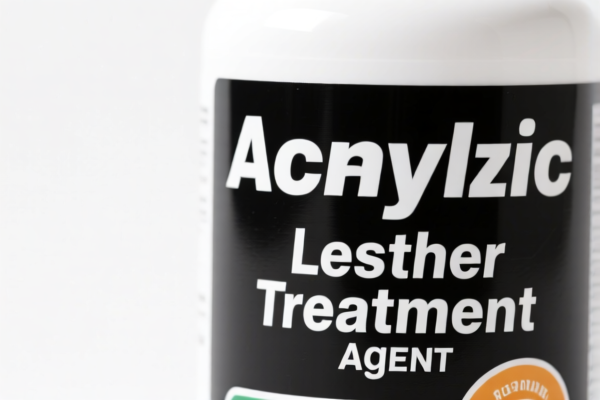
AI Analysis
🧴 Leather Dyeing Oil Resistant Agent (皮革耐油染色助剂/皮革处理制剂)
🌐 HS Code Reference & Customs Clearance Guide | 2026 Latest Tariff Analysis | Professional Clearance Strategy
📌 I. Product Definition & Classification: Do You Really Understand "Leather Treatment Agents"?
A Leather Dyeing Oil Resistant Agent is a chemical formulation used in the leather processing industry. Its primary function is to enhance the resistance of leather to oil and grease while facilitating even dye uptake. In international trade, these agents are complex chemical mixtures that can fall under multiple HS codes depending on their base composition and primary function.
Key Distinction Criteria: * Chemical Basis: Is it primarily an oil/grease base (Chapter 34.03) or an organic chemical/perfume/cosmetic base (Chapter 33)? * Primary Function: Is it specifically for leather treatment (Chapter 34.03) or a general air freshener/deodorant (Chapter 33.07)? * Formulation: Is it a simple oil blend or a complex cosmetic-style preparation?
⚠️ Critical Classification Point:
- If the agent is an oil-based emulsion specifically for treating leather surfaces → 3403.91.50.00 or 3403.11.50.00.
- If the agent contains fragrance components for room/leather scenting → 3307.49.00.00.
- If it’s a general chemical cosmetic/conditioner not strictly defined as "leather oil" → 3307.90.00.00.
📦 II. HS Code Classification Details (2026 Latest Tariff Authority对照)
Based on the provided data, here are the 4 potential HS Codes with their specific descriptions and tax implications. Note that 3403.91.50.00 appears twice in the source data with the same description, indicating its high relevance.
| HS Code | Product Description (Summary) | Key Characteristics | Total Tax Rate |
|---|---|---|---|
3403.91.50.00 |
Preparations for treating leather (Anti-cracking purpose) | Specifically formulated to prevent leather cracking; likely emulsion-based. | 41.5% |
3307.49.00.00 |
Other preparations for rooms or deodorizing, applicable to leather care | Contains fragrance/deodorizing agents; used for scenting leather or rooms. | 41.0% |
3307.90.00.00 |
Other perfumes, cosmetics or toilet preparations | General chemical护理 agents; broader category for chemical care preparations. | 40.4% |
3403.11.50.00 |
Preparations for treating leather... classified as oils or greases | Oil/grease base; specifically for leather, fur, or other materials. | 36.4% |
3403.91.50.00 |
Preparations for treating leather (Anti-cracking purpose) | Duplicate Entry: Same as first row. Confirms this is a major classification path. | 41.5% |
🔍 Key Takeaway:
- 3403 codes (Leather Treatment) generally carry a higher total tax (41.5% or 36.4%) due to the 122 Clause Tariff.
- 3307 codes (Cosmetics/Deodorizers) carry a slightly lower total tax (40.4% - 41.0%), but may be scrutinized for misclassification if the primary function is industrial leather treatment rather than cosmetic scenting.
- 3403.11.50.00 offers the lowest total tax (36.4%) but requires the product to be definitively classified as an oil/grease preparation.
💰 III. 2026 Latest Tariff Rate Breakdown (Including Additional Taxes & Policies)
✅ Applicable Country: USA (US)
✅ Origin: China (CN)
✅ Effective Date: From 2025/2026 (Post-Trade War Era)
🎯 1. 3403.91.50.00 – Preparations for Treating Leather (Anti-Cracking)
| Item | Content |
|---|---|
| Base Duty | 6.5% (Ad Valorem) |
| Section 301 Additional Duty | +25.0% (From USITC Footnote 9903.88.01) |
| Section 122 Tariff | +10.0% (Targeted China-specific levy) |
| Total Effective Rate | 41.5% |
| Tax Calculation | CIF Value × 41.5% |
| De Minimis Exemption | ❌ Not Eligible (deny_de_minimis) |
| Legal Path | USITC:3403.91.50.00 → SECTION_301:25% → SECTION_122:10% |
📌 Explanation:
- The 6.5% base duty is standard for leather treatment preparations.
- The 25% Section 301 duty applies to most Chinese industrial chemicals.
- The 10% Section 122 duty is a specific additional levy on certain chemical/leather goods from China.
- Total 41.5% is a significant cost driver.
🎯 2. 3307.49.00.00 – Other Room Fragrance/Deodorizing Preparations
| Item | Content |
|---|---|
| Base Duty | 6.0% (Ad Valorem) |
| Section 301 Additional Duty | +25.0% |
| Section 122 Tariff | +10.0% |
| Total Effective Rate | 41.0% |
| Tax Calculation | CIF Value × 41.0% |
| De Minimis Exemption | ❌ Not Eligible |
| Legal Path | USITC:3307.49.00.00 → SECTION_301:25% → SECTION_122:10% |
📌 Note:
- Slightly lower base duty (6.0% vs 6.5%) results in a 0.5% lower total tax.
- Risk: If customs determines the product is not primarily a deodorizer but a leather treatment agent, this classification may be challenged, leading to penalties and reclassification to 3403.91.50.00 (higher tax).
🎯 3. 3307.90.00.00 – Other Perfumes/Cosmetics/Toilet Preparations
| Item | Content |
|---|---|
| Base Duty | 5.4% (Ad Valorem) |
| Section 301 Additional Duty | +25.0% |
| Section 122 Tariff | +10.0% |
| Total Effective Rate | 40.4% |
| Tax Calculation | CIF Value × 40.4% |
| De Minimis Exemption | ❌ Not Eligible |
| Legal Path | USITC:3307.90.00.00 → SECTION_301:25% → SECTION_122:10% |
📌 Note:
- Lowest total tax (40.4%) among the 3307 options.
- Risk: High risk of misclassification if the product is clearly an industrial leather agent rather than a cosmetic. Must ensure labeling/marketing aligns with "cosmetic/toilet preparation."
🎯 4. 3403.11.50.00 – Oils/Greases for Leather Treatment
| Item | Content |
|---|---|
| Base Duty | 1.4% (Ad Valorem) |
| Section 301 Additional Duty | +25.0% |
| Section 122 Tariff | +10.0% |
| Total Effective Rate | 36.4% |
| Tax Calculation | CIF Value × 36.4% |
| De Minimis Exemption | ❌ Not Eligible |
| Legal Path | USITC:3403.11.50.00 → SECTION_301:25% → SECTION_122:10% |
📌 Note:
- Lowest overall tax (36.4%).
- Condition: The product must be proven to be an oil or grease (e.g., mineral oil, vegetable oil base) and not a water-based emulsion or complex cosmetic mixture.
- If the agent is an emulsion (water + oil), it may not qualify for 3403.11 and may be forced into 3403.91 (higher tax).
🛠️ IV. Customs Clearance Practical Advice (实战避坑指南)
✅ 1. Documentation Checklist (Essential)
| Document | Required | Description |
|---|---|---|
| ✅ Product SDS (Safety Data Sheet) | ✔️ | Critical for determining if it’s an oil, emulsion, or cosmetic. |
| ✅ Technical Data Sheet (TDS) | ✔️ | Specifies ingredients, function (oil-resistant vs. fragrance), and base composition. |
| ✅ Product Photos (Label & Container) | ✔️ | Clear view of INCI name, usage instructions, and brand. |
| ✅ Commercial Invoice | ✔️ | Must clearly state "Leather Treatment Agent" or "Deodorizing Spray" based on classification. |
| ✅ Certificate of Origin (CO) | ✔️ | For China origin verification. |
| ✅ Packaging List | ✔️ | Details net/gross weight, volume. |
✅ 2. Declaration Strategy (Key Rules)
🔥 “Base Matters, Function Defines, Label Aligns!”
| Scenario | Correct Declaration | Wrong Declaration | Consequence |
|---|---|---|---|
| Product is oil-based (e.g., mineral oil + dye) | 3403.11.50.00 |
3307.90.00.00 |
Risk of penalty if not truly an oil/grease. |
| Product is emulsion for anti-cracking | 3403.91.50.00 |
3403.11.50.00 |
Misclassification → 41.5% vs 36.4% + penalties. |
| Product is scented spray for leather | 3307.49.00.00 |
3403.91.50.00 |
Possible if fragrance is primary; otherwise, reclassified. |
| Product is general chemical conditioner | 3307.90.00.00 |
3403.91.50.00 |
Lower tax, but must prove cosmetic/toilet nature. |
✅ 3. Special Case Handling
| Situation | Advice |
|---|---|
| Emulsion vs. Oil | If your agent is water-based (emulsion), it cannot be classified as 3403.11 (Oils/Greases). You must use 3403.91.50.00 (41.5%). |
| Fragrance Dominance | If the product is primarily sold as a "Leather Scent Spray" with minor treatment properties, try 3307.49.00.00. If it’s a "Treatment Agent" with light scent, stick to 3403.91.50.00. |
| Pre-Ruling Application | Highly Recommended: Apply for an Advance Ruling (Pre-Ruling) with CBP. Provide SDS and TDS to get a binding decision on the correct HS Code. This saves time and avoids audits. |
🌍 V. Global Market Comparison (2026 Latest)
| Country/Region | Recommended HS Code | Duty Rate | Certification | Remarks |
|---|---|---|---|---|
| 🇺🇸 USA | 3403.91.50.00 |
41.5% | OSHA SDS | High tariffs due to 301 & 122 clauses. |
| 🇨🇳 China | 3403.91.50.00 |
6.5% | None | Lower duty, no 301/122. |
| 🇪🇺 EU | 3403.91.50.00 |
6.5% | REACH | No Section 301/122. |
| 🇬🇧 UK | 3403.91.50.00 |
6.5% | UK REACH | Post-Brexit, similar to EU. |
📌 Conclusion:
- USA is the most expensive market for this product due to Section 301 (25%) and Section 122 (10%) tariffs.
- Total tax ranges from 36.4% to 41.5%.
- Strategy: Minimize base duty by correctly identifying if the product is an oil (3403.11) or a cosmetic (3307), but ensure compliance to avoid penalties.
📌 VI. Common Mistakes & Pitfalls (Blood-Teaching Lessons)
❌ Mistake 1: Calling an emulsion "Leather Oil" to get 3403.11.50.00 (36.4%)
👉 Consequence: Customs detects water content → Rejected → Reclassified to 3403.91.50.00 (41.5%) + fines.
❌ Mistake 2: Declaring a treatment agent as "Perfume" (3307.90.00.00) to save 1%
👉 Consequence: If functional claims show "treatment" or "anti-cracking," it’s misclassified. Penalty for undervaluation of duty.
❌ Mistake 3: Ignoring Section 122 Tariff
👉 Consequence: All 4 codes have a +10% Section 122 levy. Failing to account for it leads to unexpected tax bills.
❌ Mistake 4: Using vague descriptions like "Chemical Spray"
👉 Consequence: Customs delays shipment for clarification → Demurrage charges.
✅ Correct Approach:
"Leather Treatment Emulsion, Oil-Resistant, Anti-Cracking, HS 3403.91.50.00, SDS Provided, Section 301 & 122 Duties Applicable."
🎯 VII. Conclusion: Professional Declaration, Save Costs!
🎯 Remember the Golden Rule:
🔹 "Oil Base = 3403.11 (36.4%) | Emulsion = 3403.91 (41.5%) | Scent = 3307.49 (41.0%) | Cosmetic = 3307.90 (40.4%)"
🔹 "Base determines Chapter, Function determines Subheading, Section 301 & 122 Add 35%!"
📌 Pro Tip:
If your product is originating from Vietnam, Mexico, or Thailand, you may be eligible for Section 301/122 exemptions.
Recommendation:
1. Get the SDS/TDS from your supplier.
2. Consult a Customs Broker to apply for an Advance Ruling.
3. Label accurately to match the chosen HS Code.
📣 Take Action Now:
📞 Contact a professional freight forwarder + Provide SDS + Apply for HS Pre-Ruling
🚀 Ensure your Leather Agents clear US Customs smoothly, legally, and cost-effectively!
✨ Professional Clearance Starts with Accurate Classification!
💼 Every Percent of Tax Matters in International Trade!
Customer Reviews
About HS Code Classification
The Harmonized System (HS) is an internationally standardized nomenclature developed by the World Customs Organization (WCO) to classify traded products. Over 200 countries use the HS system as the basis for customs tariffs, trade statistics, and import/export regulations.
Each HS code follows a hierarchical structure:
- Chapter (2 digits) — Broad category of goods (e.g., Chapter 84: Machinery and Mechanical Appliances)
- Heading (4 digits) — More specific grouping within the chapter
- Subheading (6 digits) — Internationally standardized breakdown, used by all WCO member countries
- National subdivisions (8-10 digits) — Country-specific extensions for further classification, such as US HTSUS 10-digit codes
Correct HS code classification is essential for smooth customs clearance, accurate duty payment, and compliance with trade regulations. Misclassification can lead to customs delays, overpayment of duties, or penalties.
When importing from CN to US, the applicable tariff rates may include:
- Most-Favored-Nation (MFN) rate — The standard duty rate applied to WTO members
- General rate — Applied to countries without trade agreements
- Trade remedy duties — Additional tariffs such as Section 301 (anti-dumping), Section 232 (national security), or countervailing duties
The information provided on this page is for reference purposes only. For official classification, please consult with your local customs authority or a licensed customs broker.