Leather Edge Cutting Material
CN → USProduct Images
AI Analysis
🛠️ Leather Edge Cutting Material (Edge Paint/Cement & Preparation Tools)
🌐 HS Code Reference & Customs Clearance Guide | 2026 Latest Tariff Analysis | Professional Leveling Strategy for Leather Accessories
📌 I. Product Definition & Classification: Do You Really Know "Edge Cutting Materials"?
In the leather goods industry, "Leather Edge Cutting Material" is not a single item but a category comprising three distinct types of products with vastly different HS codes and tax implications. Misclassification here is the most common cause of customs seizures or excessive tariffs for leather bag/shoe exporters.
1. Edge Paint/Pigment (Liquid/Viscous)
Used for sealing and coloring the cut edges of leather. Usually contains acrylic, solvent, or water-based binders.
2. Edge Cement/Adhesive (Glue)
Used to bond edge wrapping tape or fold edges before painting. Solvent-based or polyurethane-based.
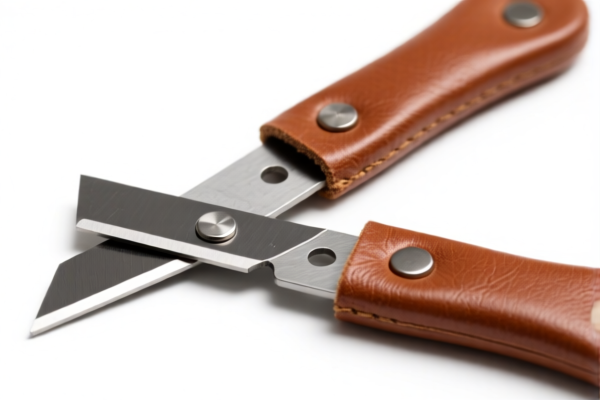
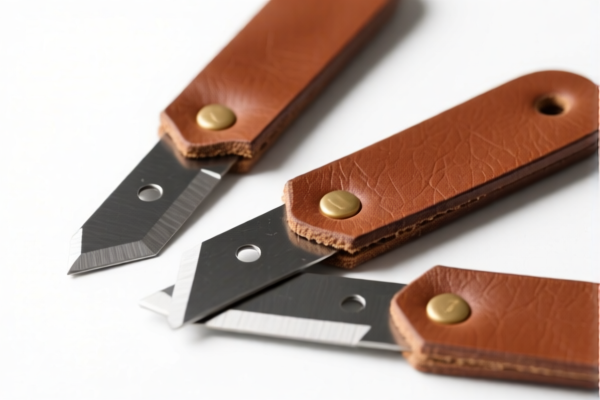
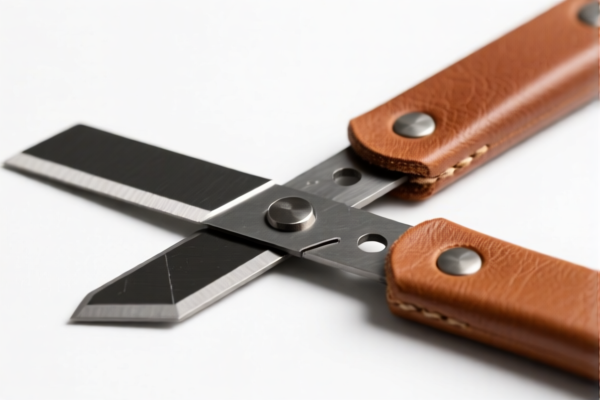
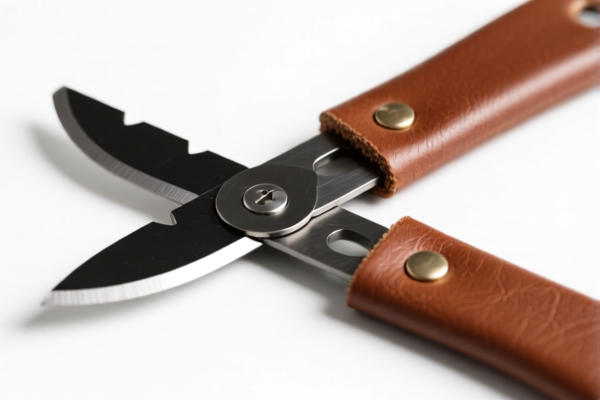
3. Edge Trimmers/Tools (Mechanical)
Physical tools like edge trimmers, bevelers, or skiving knives used to cut or shape the leather edge before finishing.
⚠️ Critical Distinction Point:
- If it is a liquid/paste → Classified under Chapter 32 (Tanning/Dyeing Extracts) or 35 (Albuminoids/Adhesives).
- If it is a mechanical tool → Classified under Chapter 82 (Tools) or 84/90 (depending on automation).
- Do NOT classify edge paint as "leather goods" (Chapter 42). This is a fatal error.
📦 II. HS Code Classification Details (2026 Latest Tariff Authority Comparison)
| HS Code | Product Description | Application Scenario | Physical Form | Key Characteristic |
|---|---|---|---|---|
3208.90.00.00 |
Paint and varnishes based on synthetic polymers, dissolved in non-aqueous media | Edge Paint (Solvent-based) | Liquid/Paste | Contains polymer binder, used for coloring/sealing |
3215.90.00.00 |
Other printing inks, paints and varnishes... | Edge Paint (Water-based/Acrylic) | Liquid | Often used for eco-friendly leather goods |
3506.91.00.00 |
Prepared glues and other prepared adhesives... | Edge Cement (Solvent/PU) | Liquid/Viscous | Designed for bonding leather to tape or itself |
3906.90.90.00 |
Acrylic polymers in primary forms | Raw Edge Wrap Tape | Solid Film | If selling the tape itself, not the glue |
8207.30.00.00 |
Tools for drilling, chipping, punching... | Edge Trimmer/Beveler (Metal Head) | Solid Tool | Replaceable cutting heads for leather edge shaping |
8205.59.00.00 |
Other hand tools | Edge Skiving Knife | Solid Hand Tool | Manual knives for trimming leather thickness |
🔍 Key Reminder:
- Edge Paint is considered a chemical product, not a leather accessory.
- Edge Cement is an adhesive, governed by Chapter 35.
- Mechanical Trimmers are tools, governed by Chapter 82.
- Taxes vary drastically: Chemicals may face 0-2.5% MFN, while tools may face 0-6.5%. However, Section 301 Tariffs (USA) may apply differently.
💰 III. 2026 Latest Tariff Rate Details (Including Additional Taxes)
✅ Applicable Country: United States (US)
✅ Country of Origin: China (CN)
✅ Effective Date: 2025-11-10 onwards (Subject to ongoing USITC reviews)
🎯 1. 3208.90.00.00 / 3215.90.00.00 —— Leather Edge Paint (Solvent/Acrylic)
| Item | Content |
|---|---|
| Base MFN Rate | 0% - 2.5% (ad valorem) |
| USITC Footnote 9903.88.01 | +25% (Section 301 Tariff on Chinese Chemicals) |
| IEEPA Tariff | +10% (China-specific additional tariff) |
| Total Rate | 35% - 37.5% |
| Calculation | CIF Value × 35%+ |
| De Minimis Exemption | ❌ Not Eligible (Deny_de_minimis for chemical products under $800 is strictly enforced for HS 32/35) |
| Legal Basis | IEEPA:9903.01.25 → USITC:3208.90.00.00 → FOOTNOTE:9903.88.01 |
📌 Explanation:
- Although the base MFN rate is low, the Section 301 Tariff and IEEPA Tariff significantly increase the cost.
- Warning: Many buyers mistakenly declare edge paint as "Leather Samples" to use De Minimis, but Customs increasingly audits chemical products under $800. If found, back taxes + penalties will apply.
🎯 2. 3506.91.00.00 —— Leather Edge Cement (Adhesive)
| Item | Content |
|---|---|
| Base MFN Rate | 0% (ad valorem) |
| USITC Footnote 9903.88.01 | +25% (Section 301 Tariff on Adhesives) |
| IEEPA Tariff | +10% |
| Total Rate | 35% |
| Calculation | CIF Value × 35% |
| De Minimis Exemption | ❌ Not Eligible (Adhesives are high-risk for de minimis) |
| Legal Basis | IEEPA:9901.25 → USITC:3506.91.00.00 → FOOTNOTE:9903.88.01 |
📌 Note:
- Edge cement is often misunderstood as "simple glue" with lower taxes, but solvent-based adhesives from China face the full 35% burden.
- Water-based adhesives (HS 3506.93) may have slightly different footnote applications, but 2026 trends show tightening.
🎯 3. 8207.30.00.00 / 8205.59.00.00 —— Edge Trimming Tools
| Item | Content |
|---|---|
| Base MFN Rate | 0% - 6.5% |
| USITC Footnote | May Apply (Check specific HS for Section 301 inclusion) |
| IEEPA Tariff | +10% |
| Total Rate | 10% - 16.5% (Typically lower than chemicals) |
| Calculation | CIF Value × (MFN + 10%) |
| De Minimis Exemption | ✅ Potentially Eligible (If not on restricted tool list) |
| Legal Basis | IEEPA:9903.01.24 → USITC:8207.30.00.00 |
📌 Strategy:
- Tools often have lower total tariffs than chemicals.
- If exporting small sets of edge trimmers, De Minimis ($800) may apply if not explicitly restricted. Verify latest USITC exclusions.
🛠️ IV. Customs Clearance Practical Advice (Real-World Pitfall Avoidance)
✅ 1. Documentation Checklist (Non-Negotiable)
| Document | Required | Explanation |
|---|---|---|
| ✅ Safety Data Sheet (SDS) | ✔️ | Crucial for Edge Paint/Cement. Must show flash point, ingredients, and hazard class (e.g., Class 3 Flammable Liquid). |
| ✅ Product Composition Sheet | ✔️ | Specify % of solvent, polymer, pigment. Customs will verify against HS Code criteria. |
| ✅ Material Safety Data Label | ✔️ | Photos of packaging showing hazard symbols (GHS) are mandatory for chemical imports. |
| ✅ Commercial Invoice | ✔️ | Must state "Edge Paint for Leather Finishing" or "Leather Adhesive", NOT "Leather Sample". |
| ✅ Harmonized System Code Declaration | ✔️ | Explicitly declare HS Code on invoice. |
✅ 2. Declaration Tips (Golden Rules)
🔥 "Chemicals Need SDS, Tools Need Specs, Never Call Glue 'Sample'!"
| Scenario | Correct Declaration | Wrong Practice |
|---|---|---|
| Solvent-based Edge Paint | 3208.90.00.00 + SDS |
Declaring as "Leather Care Kit" (0%) → High Audit Risk |
| Water-based Edge Paint | 3215.90.00.00 |
Declaring as "Paint for Walls" → Misclassification Penalty |
| Edge Cement | 3506.91.00.00 |
Declaring as "General Glue" (HS 3506.91) is fine, but ensure it's for leather. |
| Edge Trimmer Head | 8207.30.00.00 |
Declaring as "Hardware Part" → May delay inspection for tool classification |
| Edge Wrapping Tape (Solid) | 3906.90.90.00 |
Declaring as "Plastic Film" → Correct, but specify "For Leather Edge Finishing" |
✅ 3. Special Situation Handling
| Situation | Handling Advice |
|---|---|
| Shipping Edge Paint via Air | Must declare Dangerous Goods (DG). IATA DGR compliance required. Higher freight cost but safer for clearance. |
| Small Batches (< $800) | Avoid De Minimis for chemicals unless certain it's excluded from Section 301. Risk of seizure is high. Use formal entry. |
| Mixed Orders (Tools + Paint) | Do NOT mix in one HS Code. Declare separately. If mixed in one package, Customs may tax the entire value at the highest rate (paint's rate). |
| OEM Private Label | Provide brand authorization if using recognized brands (e.g., Angelus, Bickmore). Counterfeit risks lead to immediate seizure. |
🌍 V. Global Market Clearance Comparison (2026 Latest)
| Country/Region | Recommended HS Code | Tariff (China Origin) | Certification | Notes |
|---|---|---|---|---|
| 🇺🇸 USA | 3208.90 / 3506.91 |
35-37.5% (incl. 301+IEEPA) | SDS + Hazmat Declaration | High audit rate for <$800 chemical shipments. |
| 🇨🇳 China | 3208.90 / 3506.91 |
0% - 5% | MSDS + Labeling | Import taxes are low, but environmental regulations are strict. |
| 🇪🇺 EU | 3208.90 / 3506.91 |
0% (MFN) | CLP Labeling + REACH Compliance | REACH Registration is mandatory for chemicals. No Section 301. |
| 🇬🇧 UK | 3208.90 / 3506.91 |
0% | UK REACH + CLP | Post-Brexit UK REACH required. |
| 🇦🇺 Australia | 3208.90 / 3506.91 |
0% | GHS Labeling | Low tariff, but strict biosecurity for organic ingredients. |
📌 Conclusion:
- USA is the most expensive market due to 35%+ tariffs.
- EU/UK require REACH compliance, which is a high barrier to entry but has 0% tariff.
- De Minimis abuse in the US for these items is now under heavy scrutiny by CBP.
📌 VI. Common Errors & Pitfalls (Blood & Tears Lessons)
❌ Error 1: Declaring Solvent-based Edge Paint as "Leather Sample" under De Minimis ($800)
👉 Consequence: CBP issues a 10-day hold, then charges back taxes + 10% penalty + storage fees. Account may be suspended.
❌ Error 2: Mixing Edge Cement (HS 3506) and Edge Trimmer (HS 8207) in one line item
👉 Consequence: Customs may apply the higher tariff rate to the entire shipment value.
❌ Error 3: Shipping Edge Paint without SDS (Safety Data Sheet)
👉 Consequence: Rejected at port. Must return to origin or destroy. Freight loss + customs fines.
❌ Error 4: Using "General Glue" for Edge Cement without specifying Leather Application
👉 Consequence: Risk of misclassification. While HS 3506.91 is correct, vague descriptions trigger audits.
✅ Correct Approach:
"Solvent-based Leather Edge Paint, 100ml bottle, Acrylic Resin Based, HS 3208.90, SDS Attached, For Leather Goods Finishing Only"
🎯 VII. Conclusion: Precision Classification Saves Money!
🎯 Remember the Motto:
🔹 "Chemicals Need SDS, Tools Need Specs, Never Hide Glue!"
🔹 "35% US Tariff is Real, De Minimis is a Trap for Paint!"
📌 Pro Tip:
If your edge paint is water-based (Acrylic), it falls under HS 3215.90. Check if it still attracts the full Section 301 Tariff. Sometimes, water-based formulations may have different footnote applications or exemptions. Always verify with a licensed customs broker in the US.
📣 Immediate Action:
📞 Get SDS Ready + Verify HS Code + Apply for Pre-Ruling if Shipments > $800
🚀 Ensure Smooth Clearance, Avoid Seizures, Maximize Margins!
✨ Professional Clearance Starts with Accurate Classification!
💼 Your Cost Control Depends on the First Line of the Invoice!
Customer Reviews
About HS Code Classification
The Harmonized System (HS) is an internationally standardized nomenclature developed by the World Customs Organization (WCO) to classify traded products. Over 200 countries use the HS system as the basis for customs tariffs, trade statistics, and import/export regulations.
Each HS code follows a hierarchical structure:
- Chapter (2 digits) — Broad category of goods (e.g., Chapter 84: Machinery and Mechanical Appliances)
- Heading (4 digits) — More specific grouping within the chapter
- Subheading (6 digits) — Internationally standardized breakdown, used by all WCO member countries
- National subdivisions (8-10 digits) — Country-specific extensions for further classification, such as US HTSUS 10-digit codes
Correct HS code classification is essential for smooth customs clearance, accurate duty payment, and compliance with trade regulations. Misclassification can lead to customs delays, overpayment of duties, or penalties.
When importing from CN to US, the applicable tariff rates may include:
- Most-Favored-Nation (MFN) rate — The standard duty rate applied to WTO members
- General rate — Applied to countries without trade agreements
- Trade remedy duties — Additional tariffs such as Section 301 (anti-dumping), Section 232 (national security), or countervailing duties
The information provided on this page is for reference purposes only. For official classification, please consult with your local customs authority or a licensed customs broker.