Leather Edge Cutting Material (Non 4114, Non patterned, Non glove/Apparel)
CN → US| HS Code | Tariff Rate | Origin | Destination | Doc |
|---|---|---|---|---|
| 4115200000 | 17.5% | CN | US | Official Doc |
| 4115100000 | 35.0% | CN | US | Official Doc |
| 4107997090 | 15.0% | CN | US | Official Doc |
| 4107192000 | 37.4% | CN | US | Official Doc |
| 4106920000 | 38.3% | CN | US | Official Doc |
Product Images
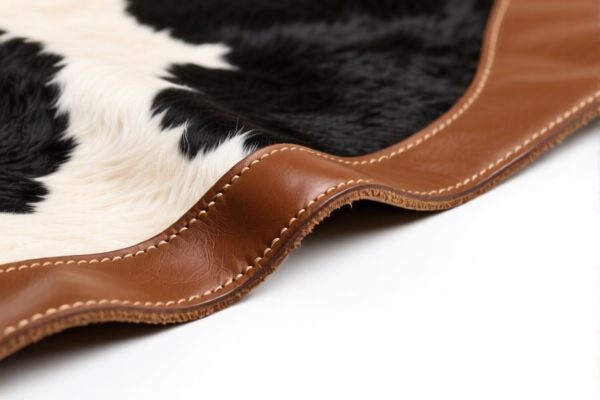
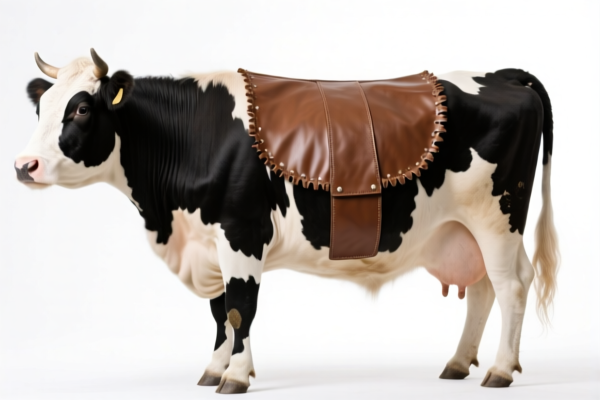
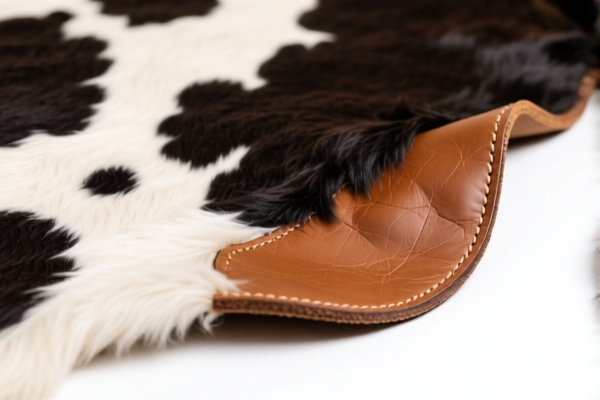
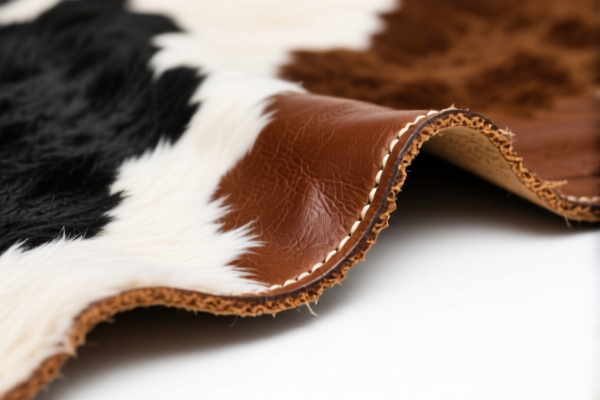
AI Analysis
🧵 Leather Edge Cutting Material (Non 4114, Non Patterned, Non Glove/Apparel)
🌐 HS Code Reference & Clearance Guide | 2026 Latest Tariff Analysis | Professional Customs Strategy
📌 Part I: Product Definition & Classification: Do You Truly Understand "Leather Waste"?
Leather Edge Cutting Material refers to the scraps, off-cuts, trimmings, and slices generated during the manufacturing process of leather goods. In international trade, precise classification is critical because these materials fall under Chapter 41 (Raw Hides and Skins; Leather), but their tax liability varies drastically based on their physical state and processing level.
For this specific query, the product is explicitly defined by three exclusions: 1. Not HS 4114: Not prepared with metal salts or other substances, not chromed-back or re-tanned, and not impregnated with metal powders (which would fall under 4114). 2. Non-Patterned: Not embossed with intricate patterns that would classify them as "patterned leather" under different subheadings. 3. Non-Glove/Apparel: Not intended for or already used as gloves, clothing, or fashion accessories.
⚠️ Key Distinction Point:
- If the material is raw scraps, slices, or off-cuts from the tanning/cutting process → It falls under 4115 (Leather Waste).
- If the material is finished, non-waste leather sheets that are not yet made into gloves/apparel → It falls under 4107 (Further Prepared Leather).
📦 Part II: HS Code Classification Details (2026 Latest Tariff Authority对照)
| HS Code | Product Description | Applicable Scenario | State of Material |
|---|---|---|---|
4115.20.00.00 |
Leather Offcuts and Other Waste; Non 4114 Class, Non Patterned, Non Glove/Apparel Use | Scrap pieces, irregular edges, trimmings from cutting | ✅ Waste/Offcut |
4115.10.00.00 |
Leather Base for Composite Leather or Slices/Trimmings; Non 4114 Class, Non Patterned, Non Glove/Apparel Use | Leather layers used as backing for composite materials, or specific industrial slices | ✅ Industrial Slice/Backing |
4107.99.70.90 |
Other Non-Patterned Leather; Non 4114 Class, Non Patterned, Non Glove/Apparel Use | Finished leather pieces not classified elsewhere (e.g., specific industrial uses) | ✅ Finished Leather |
4107.19.20.00 |
De-Haired Hides and Skins; Non 4114 Class, Non Luxury, Non Glove/Apparel Use | Raw de-haired hides/skins not yet tanned for apparel | ✅ Raw/De-haired |
4106.92.00.00 |
Other Animal Hides and Skins (Dry/Semi-Tanned); No Hair, Non-Further Processing Purpose | Rough, dried, or semi-tanned leather skins awaiting further processing | ✅ Semi-Processed Raw |
🔍 Key Reminder:
- "Waste" vs. "Finished Product":4115codes apply to waste/offcuts. If the material is still a usable sheet of leather (even if imperfect), it may fall under4107.
- Composite vs. Raw:4115.10is specific to bases for composite leather or slices. If it’s just general scrap,4115.20is more likely.
- Processing Level:4106(Raw/Semi-tanned) has a much higher base tax than4115(Waste) or4107(Finished).
💰 Part III: 2026 Latest Tariff Rate Breakdown (Including Additional Taxes, Policy Surcharges)
✅ Applicable Country: United States (US)
✅ Origin: China (CN)
✅ Effective Date: November 10, 2025 onwards (and subsequent imports)
🎯 1. 4115.20.00.00 —— Leather Offcuts and Waste (Most Common for "Edges")
| Item | Content |
|---|---|
| Base Tariff | 0.0% (ad valorem) |
| USITC Additional Tax | +7.5% (Section 301 Footnote) |
| IEEPA Additional Tax | +10.0% (China-specific, Effective Nov 2025) |
| Total Tariff Rate | 17.5% |
| Tax Calculation | CIF Value × 17.5% |
| De Minimis Eligibility | ❌ No (deny_de_minimis for Section 301/IEEPA goods) |
| Legal Basis Path | USITC:4115.20.00.00 → FOOTNOTE:301.03 → IEEPA:9903.01.25 |
📌 Explanation:
- Although the base tariff is 0%, the 17.5% total burden is significant due to the new 10% IEEPA surcharge added in late 2025.
- This is the lowest-cost option among the five codes provided.
- Critical for Clearance: Must prove the item is "waste" or "offcut," not a "product."
🎯 2. 4115.10.00.00 —— Leather Base for Composite / Slices
| Item | Content |
|---|---|
| Base Tariff | 0.0% |
| USITC Additional Tax | +25.0% (Section 301 High Tier) |
| IEEPA Additional Tax | +10.0% |
| Total Tariff Rate | 35.0% |
| Tax Calculation | CIF Value × 35.0% |
| De Minimis Eligibility | ❌ No |
| Legal Basis Path | USITC:4115.10.00.00 → FOOTNOTE:301.03 → IEEPA:9903.01.25 |
📌 Note:
- The base tariff is also 0%, but the USITC surcharge is 25% (higher than 7.5% for waste).
- This applies if the "edge material" is specifically used as a substrate for composite leather production.
🎯 3. 4107.99.70.90 —— Other Non-Patterned Leather
| Item | Content |
|---|---|
| Base Tariff | 5.0% |
| USITC Additional Tax | 0.0% |
| IEEPA Additional Tax | +10.0% |
| Total Tariff Rate | 15.0% |
| Tax Calculation | CIF Value × 15.0% |
| De Minimis Eligibility | ❌ No |
| Legal Basis Path | USITC:4107.99.70.90 → IEEPA:9903.01.24 |
📌 Important:
- This is a finished leather category. The base tariff is 5%.
- It avoids the high 301 USITC surcharge (hence 0% here), but the 10% IEEPA still applies.
- Total 15%, which is cheaper than4115.20(17.5%) if the item can be legally classified as "finished leather" rather than "waste."
🎯 4. 4107.19.20.00 —— De-Haired Hides and Skins
| Item | Content |
|---|---|
| Base Tariff | 2.4% |
| USITC Additional Tax | +25.0% |
| IEEPA Additional Tax | +10.0% |
| Total Tariff Rate | 37.4% |
| Tax Calculation | CIF Value × 37.4% |
| De Minimis Eligibility | ❌ No |
| Legal Basis Path | USITC:4107.19.20.00 → FOOTNOTE:301.03 → IEEPA:9903.01.25 |
📌 Note:
- High total rate due to 25% USITC surcharge + 10% IEEPA + 2.4% Base.
- Only apply if the material is de-haired raw hide, not finished.
🎯 5. 4106.92.00.00 —— Other Animal Hides (Dry/Semi-Tanned)
| Item | Content |
|---|---|
| Base Tariff | 3.3% |
| USITC Additional Tax | +25.0% |
| IEEPA Additional Tax | +10.0% |
| Total Tariff Rate | 38.3% |
| Tax Calculation | CIF Value × 38.3% |
| De Minimis Eligibility | ❌ No |
| Legal Basis Path | USITC:4106.92.00.00 → FOOTNOTE:301.03 → IEEPA:9903.01.25 |
📌 Note:
- Highest Tariff in this set.
- Applies to raw, unprocessed, or semi-processed skins.
- Only use if the "edge material" is actually raw hide scraps, not processed leather waste.
🛠️ Part IV: Customs Clearance Practical Advice (Battle-Tested Pitfall Guide)
✅ 1. Documentation Checklist (Non-Negotiable)
| Document | Required | Explanation |
|---|---|---|
| ✅ Product Specification | ✔️ | Must clearly state "Leather Offcuts," "Scrap," or "Trim." |
| ✅ Photos of Product | ✔️ | Show irregular shapes, edges, non-uniform pieces. Avoid photos that look like finished squares. |
| ✅ Certificate of Origin | ✔️ | Must declare China origin to trigger IEEPA/301 correctly. |
| ✅ Commercial Invoice | ✔️ | Description must match HS Code. E.g., "Leather Scrap for Recycling" vs. "Leather Sheet." |
| ✅ Packing List | ✔️ | Detail weight, quantity, and packaging type. |
| ✅ Declaration of Non-Use | ✔️ | Explicitly state: "Not for Gloves, Apparel, or HS 4114." |
✅ 2. Declaration Strategy (Key Mantra)
🔥 "Waste is 17.5%, Finish is 15%, Raw is 38%+! Declare State Accurately!"
| Scenario | Correct HS Code | Risk if Misclassified |
|---|---|---|
| Irregular Scrap/Trim | 4115.20.00.00 (17.5%) |
If declared as 4107 (15%), Customs may audit and impose penalties for "wrong classification." |
| Composite Base/Slice | 4115.10.00.00 (35.0%) |
If declared as 4115.20, risk of 17.5% penalty + back taxes. |
| Finished Leather Sheets | 4107.99.70.90 (15.0%) |
If declared as 4115, Customs will reject as "not waste." |
| Raw Hide Scraps | 4106.92.00.00 (38.3%) |
High tax. Ensure material is truly raw/unprocessed. |
📌 Critical Insight:
-4107.99.70.90(15%) is the LOWEST TARIFF if the material can be legally considered "finished leather" rather than "waste."
-4115.20.00.00(17.5%) is the SAFE BET for typical "edge cutting material" (scrap).
- DO NOT use4115if the material is still usable for apparel/gloves, as it violates the "Non Glove/Apparel" condition.
✅ 3. Special Situation Handling
| Situation | Handling Advice |
|---|---|
| Mixed Batches | If batch contains both usable leather and waste, split declaration. Waste goes to 4115, usable to 4107. |
| Labeling | Label packages clearly as "LEATHER SCRAP" or "OFFCUTS." Avoid terms like "Grade A Leather." |
| Recycling Use | If destined for recycling, provide a Letter of Intent from the recycler. |
| Composite Leather Production | If used as a base, provide Technical Data Sheet explaining its role in composite manufacturing. |
🌍 Part V: Global Market Clearance Comparison (2026 Latest)
| Country/Region | Recommended HS Code | Tariff (China Origin) | Certification Requirement | Note |
|---|---|---|---|---|
| 🇺🇸 USA | 4115.20.00.00 |
17.5% | None specific | Highest risk of audit; ensure "waste" status. |
| 🇨🇳 China | 4115.20.00.00 |
0% - 5% | N/A | No additional 301/IEEPA taxes. |
| 🇪🇺 EU | 4115.20.00.00 |
0% | REACH (if chemicals used) | No Section 301 equivalent. |
| 🇦🇺 Australia | 4115.20.00.00 |
0% - 5% | N/A | Liberal free trade with China. |
| 🇯🇵 Japan | 4115.20.00.00 |
0% | JIS (if applicable) | JETPA free trade. |
📌 Conclusion:
- USA is the only market with significant additional tariffs (IEEPA 10% + 301).
- EU, Japan, Australia, China have 0% or very low tariffs on leather waste.
- Strategy for USA: If possible, try to classify as4107.99.70.90(15%) if the material is finished leather, not waste. If it is truly waste,4115.20(17.5%) is unavoidable.
📌 Part VI: Common Errors & Pitfall Guide (Blood Lessons)
❌ Error 1: Declaring "Leather Scrap" as "Leather Goods" or "Finished Leather"
👉 Consequence: If Customs decides it’s waste, they may impose 17.5% instead of a lower rate, or if it’s considered unfinished, 38.3%.
👉 Result: Back taxes + penalties.
❌ Error 2: Using "Leather Waste" for finished leather pieces
👉 Consequence: Customs will reject 4115 classification because the material is not "waste."
👉 Result: Delay, re-inspection, and forced reclassification to 4107 (15% or 35%).
❌ Error 3: Ignoring the "Non-4114" clause
👉 Consequence: If the leather is treated with metal salts (e.g., chrome-tanned with specific finishes), it might fall under 4114, which has different tariffs.
👉 Result: Wrong HS Code, potential fine.
❌ Error 4: Misdeclaring "Non-Glove/Apparel"
👉 Consequence: If the scrap is suitable for glove manufacturing, Customs may scrutinize the declaration.
👉 Result: Additional verification, potential delay.
✅ Correct Practice:
"Leather Offcuts, Irregular Shape, Non-Patterned, Not for Apparel/Gloves, HS 4115.20.00.00"
🎯 Part VII: Conclusion: Professional Declaration Saves Money!
🎯 Remember the Mantra:
🔹 "Waste 17.5%, Finish 15%, Raw 38%+! Choose Wisely!"
🔹 "IEEPA 10% + 301 is the Pain, Structure is the Gain!"
📌 Pro Tip:
If your leather edge material is from Vietnam, Thailand, or Indonesia, it may be exempt from IEEPA/301, resulting in 0% - 5% total tariff.
Suggest Supply Chain Diversification to avoid US tariffs.
📣 Immediate Action:
📞 Contact a Certified Customs Broker + Provide Product Photos + Apply for Pre-Ruling if unsure.
🚀 Ensure Clear Documentation, Accurate Classification, and Cost Optimization!
✨ Professional Clearance Starts with Precise Classification!
💼 Every Percent of Tax Matters to Your Bottom Line!
Customer Reviews
About HS Code Classification
The Harmonized System (HS) is an internationally standardized nomenclature developed by the World Customs Organization (WCO) to classify traded products. Over 200 countries use the HS system as the basis for customs tariffs, trade statistics, and import/export regulations.
Each HS code follows a hierarchical structure:
- Chapter (2 digits) — Broad category of goods (e.g., Chapter 84: Machinery and Mechanical Appliances)
- Heading (4 digits) — More specific grouping within the chapter
- Subheading (6 digits) — Internationally standardized breakdown, used by all WCO member countries
- National subdivisions (8-10 digits) — Country-specific extensions for further classification, such as US HTSUS 10-digit codes
Correct HS code classification is essential for smooth customs clearance, accurate duty payment, and compliance with trade regulations. Misclassification can lead to customs delays, overpayment of duties, or penalties.
When importing from CN to US, the applicable tariff rates may include:
- Most-Favored-Nation (MFN) rate — The standard duty rate applied to WTO members
- General rate — Applied to countries without trade agreements
- Trade remedy duties — Additional tariffs such as Section 301 (anti-dumping), Section 232 (national security), or countervailing duties
The information provided on this page is for reference purposes only. For official classification, please consult with your local customs authority or a licensed customs broker.