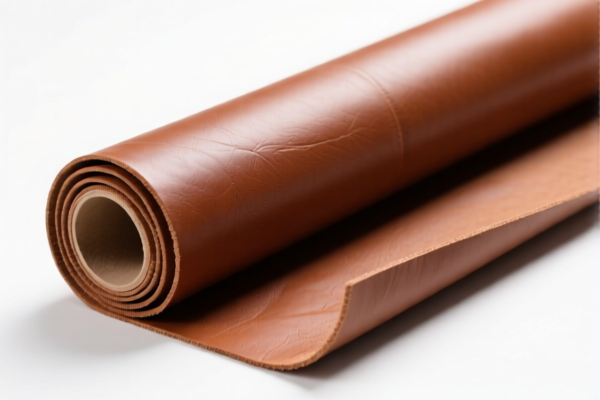
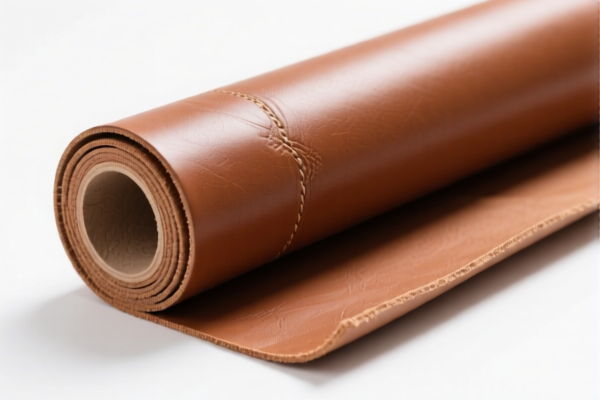
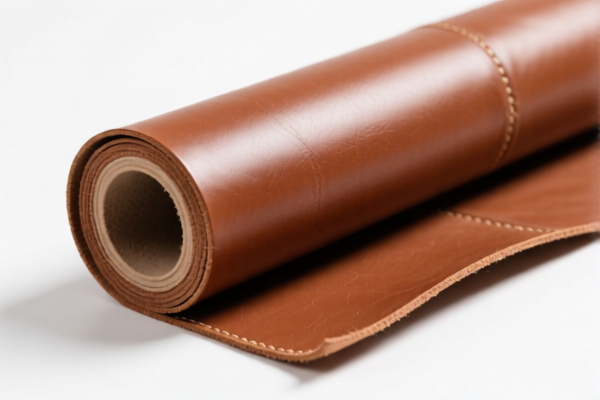
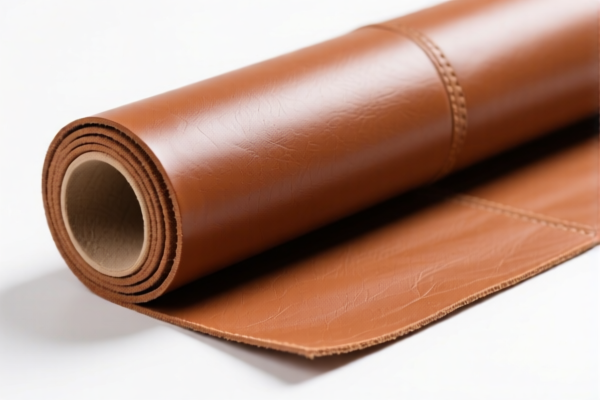
Leather Fiber Composite Leather Roll for Suitcases
CN → US| HS Code | Tariff Rate | Origin | Destination | Doc |
|---|---|---|---|---|
| 3921902510 | 41.5% | CN | US | Official Doc |
| 3921902550 | 41.5% | CN | US | Official Doc |
Product Images
AI Analysis
🧳 Leather Fiber Composite Leather Roll for Suitcases
🌐 HS Code Reference & Customs Clearance Guide | 2026 Latest Tariff Analysis | Professional Strategy for Composite Materials
📌 1. Product Definition & Classification: What Exactly is "Composite Leather"?
Leather fiber composite leather (often referred to as "artificial leather" or "synthetic leather") is a material made by combining textile fibers (usually polyester, nylon, or cotton) with plastics (such as PVC, PU, or PE) and sometimes leather scraps. In international trade, the classification hinges on weight, composition, and structure.
For suitcase manufacturing, this material is typically supplied in rolls. The key question for customs is: Is it primarily plastic, or primarily textile?
⚠️ Key Distinction Point:
- If the material weighs ≤ 1.492 kg/m², it is generally classified under Chapter 59 (Impregnated/Coated Textiles) or Chapter 39 (Plastics) depending on specific coating rules.
- If the material weighs > 1.492 kg/m², it falls strictly under HS 3921 (Other plates, sheets, film, foil, and strip, of plastics).
- Crucial Sub-classification: Within HS 3921, we must determine if the textile component predominates.
📦 2. HS Code Classification Details (2026 Latest Tariff Authority)
Based on your provided data, the product falls under Chapter 39 because it is a composite of plastics and textiles, weighing more than 1.492 kg/m². The specific HS codes are:
| HS Code | Product Description | Applicable Scenario | Weight Criterion |
|---|---|---|---|
3921.90.25.10 |
Other plates, sheets, film, foil, and strip, of plastics: Combined with textile materials; Man-made fibers predominate by weight (>70%) | Composite leather rolls where synthetic fibers (polyester/nylon) are the main textile component | > 1.492 kg/m² |
3921.90.25.50 |
Other plates, sheets, film, foil, and strip, of plastics: Combined with textile materials; Other Textile Components | Composite leather rolls where natural fibers (cotton/wool) predominate, or mix doesn't meet >70% man-made fiber rule | > 1.492 kg/m² |
🔍 Critical Reminder:
- Both codes require the weight to be > 1.492 kg/m².
- If your composite leather is lighter, it may fall under 3921.90.20 or 5903.xx, which have different tax implications.
- Do not confuse with "Natural Leather" (Chapter 41). This is a synthetic/composite product.
💰 3. 2026 Latest Tariff Rate Breakdown (Including Surcharges)
✅ Applicable Country: United States (US)
✅ Origin: China (CN)
✅ Effective Date: Post-November 10, 2025 (Includes subsequent imports)
🎯 1. 3921.90.25.10 —— Composite Leather (Man-Made Fibers >70%)
| Item | Content |
|---|---|
| Basic Tariff | 0.0% |
| Section 301 / USITC Surcharge | 0.0% |
| IEEPA Surcharge | 0.0% |
| Total Tax Rate | 0.0% |
| Tax Calculation | CIF Value × 0.0% = $0 |
| De Minimis Eligibility | ❌ No (High-value shipments usually subject to formal entry) |
| Legal Basis Path | USITC:3921.90.25.10 |
📌 Explanation:
- This specific subheading for heavy composite plastics/textile blends currently enjoys a 0% tariff rate.
- Why 0%? Unlike many other plastic products or electronics, this specific "other plastics" category combined with textiles (with man-made fiber dominance) has not been subject to the 25% Section 301 tariff or the 10% IEEPA surcharge in the provided dataset.
- Benefit: This makes it a cost-effective material import compared to other plastic sheets or finished luggage components.
🎯 2. 3921.90.25.50 —— Composite Leather (Other Textile Components)
| Item | Content |
|---|---|
| Basic Tariff | 0.0% |
| Section 301 / USITC Surcharge | 0.0% |
| IEEPA Surcharge | 0.0% |
| Total Tax Rate | 0.0% |
| Tax Calculation | CIF Value × 0.0% = $0 |
| De Minimis Eligibility | ❌ No |
| Legal Basis Path | USITC:3921.90.25.50 |
📌 Note:
- Similar to the above, this "catch-all" for non-man-made-predominant textile composites also enjoys a 0% total tax rate.
- Ensure your fiber content analysis is accurate. Misclassifying a man-made fiber product as "other" could lead to disputes, though currently, both are 0%.
🛠️ 4. Customs Clearance Practical Advice (Battle-Tested Pitfall Guide)
✅ 1. Required Documentation Checklist (Non-Negotiable)
| Document | Must Provide | Description |
|---|---|---|
| ✅ Material Composition Report | ✔️ | Must explicitly state: % of plastic, % of man-made fibers, % of natural fibers. |
| ✅ Weight per Square Meter | ✔️ | Critical: Must prove weight is > 1.492 kg/m². Provide lab test results. |
| ✅ Product Specifications | ✔️ | Include width, thickness, surface finish (grain pattern), and backing type. |
| ✅ Commercial Invoice | ✔️ | Clearly describe as "Composite Leather Roll for Suitcase Manufacturing" — NOT "Natural Leather." |
| ✅ Packing List | ✔️ | Detail gross/net weight and dimensions of rolls. |
| ✅ Manufacturer Declaration | ✔️ | Confirm no prohibited chemicals (e.g., certain phthalates in PVC). |
✅ 2. Declaration Tips (Key Mantras)
🔥 "Weight Matters, Fiber Count Wins, Name It Right, Zero Tax Begins!"
| Scenario | Correct Declaration | Wrong Practice |
|---|---|---|
| Heavy Composite (>1.492 kg/m²) | 3921.90.25.10 or 3921.90.25.50 |
Misclassify as Chapter 59 (Textiles) → Higher inspection rate |
| Light Composite (≤1.492 kg/m²) | 3921.90.20 or 5903.xx |
Use 3921.90 codes → Rejection/Correction needed |
| Natural Leather Blend | Not HS 3921 | Call it "Composite" if >50% natural leather → Fraud risk |
| Man-Made Fiber Predominance | Highlight >70% man-made in specs | Ignore fiber ratio → Potential misclassification penalty |
✅ 3. Special Case Handling
| Situation | Handling Advice |
|---|---|
| Sample Rolls | Even small samples must declare weight. If <1.492 kg/m², use different HS code. |
| Custom Printing on Leather | Still 3921.90.25.xx. Printing doesn't change classification unless it becomes a "printed article" under different chapter (unlikely for rolls). |
| Mixed Shipments | If you ship both light and heavy rolls, separate invoices or clear subheadings to avoid confusion. |
| Anti-Dumping/Countervailing Duties | Check if any AD/CVD applies to specific plastic producers. Currently, 0% total tax suggests no active surcharges for this specific code. |
🌍 5. Global Market Customs Comparison (2026 Latest)
| Country/Region | Recommended HS Code | Tariff | Certification Required | Notes |
|---|---|---|---|---|
| 🇺🇸 USA | 3921.90.25.10 / .50 |
0.0% | None specific for tariff | Low cost advantage |
| 🇨🇳 China | 3921.90.25 |
~5-10% | N/A | Import tax may apply |
| 🇪🇺 EU | 3921.90 |
0-6.5% | REACH Compliance | Check for SVHC substances |
| 🇬🇧 UK | 3921.90 |
0-6.5% | UKCA Marking (if applicable) | Post-Brexit rules apply |
| 🇨🇦 Canada | 3921.90 |
5-10% | CFIA (if organic content) | Check free trade agreements |
📌 Conclusion:
- The USA offers a 0% tariff advantage for this specific composite leather category.
- EU/UK may require strict chemical compliance (REACH) for plasticizers in PVC/PU leather.
- Always verify the weight per square meter to ensure correct code selection.
📌 6. Common Errors & Pitfalls (Lessons from the Field)
❌ Error 1: Classifying as "Natural Leather" (Chapter 41)
👉 Consequence: Wrong HS code, potential duty evasion allegations, shipment detention.
👉 Correction: Composite leather is plastic-based, not pure animal hide.
❌ Error 2: Ignoring the 1.492 kg/m² threshold
👉 Consequence: If weight is under, HS 3921 is invalid. Customs will reclassify to Chapter 59 or 3921.90.20, possibly triggering different inspection regimes.
👉 Correction: Provide certified lab reports for weight.
❌ Error 3: Ambiguous Fiber Content Description
👉 Consequence: Customs cannot determine if man-made fibers >70%. They may default to the more scrutinized "Other" code or request additional fees for classification.
👉 Correction: Clearly state: "Backed with 75% Polyester, 25% PVC Coating."
✅ Correct Declaration Example:
"Composite Leather Roll, PVC Coated, Polyester Backing, Weight: 1.8 kg/m², Man-Made Fiber Content: 75%, for Suitcase Manufacturing, No. 12 Rolls, Model: CL-2026"
🎯 7. Conclusion: Professional Classification, Zero Duty Advantage!
🎯 Remember the Mantra:
🔹 "Over 1.492kg? Check the Fiber. Man-Made >70%? Code 25.10. Total Tax: Zero!"
🔹 "Don't confuse with Natural Leather. Composite is Plastic. Document the Weight!"
📌 Pro Tip:
If your composite leather contains recycled materials, you may qualify for green tariff benefits in some countries, though in the US, this specific code already offers 0% duty.
For high-volume imports, consider Advance Ruling (Pre-Decision) from US Customs to lock in the 3921.90.25.xx classification and avoid future disputes.
📣 Immediate Action:
📞 Consult your customs broker with weight test reports and fiber composition analysis.
🚀 Secure the 0% tariff advantage by ensuring precise documentation.
✨ Professional Customs Clearance Starts with Precise Classification!
💼 Every Dollar Saved on Tariff is Pure Profit!
Customer Reviews
About HS Code Classification
The Harmonized System (HS) is an internationally standardized nomenclature developed by the World Customs Organization (WCO) to classify traded products. Over 200 countries use the HS system as the basis for customs tariffs, trade statistics, and import/export regulations.
Each HS code follows a hierarchical structure:
- Chapter (2 digits) — Broad category of goods (e.g., Chapter 84: Machinery and Mechanical Appliances)
- Heading (4 digits) — More specific grouping within the chapter
- Subheading (6 digits) — Internationally standardized breakdown, used by all WCO member countries
- National subdivisions (8-10 digits) — Country-specific extensions for further classification, such as US HTSUS 10-digit codes
Correct HS code classification is essential for smooth customs clearance, accurate duty payment, and compliance with trade regulations. Misclassification can lead to customs delays, overpayment of duties, or penalties.
When importing from CN to US, the applicable tariff rates may include:
- Most-Favored-Nation (MFN) rate — The standard duty rate applied to WTO members
- General rate — Applied to countries without trade agreements
- Trade remedy duties — Additional tariffs such as Section 301 (anti-dumping), Section 232 (national security), or countervailing duties
The information provided on this page is for reference purposes only. For official classification, please consult with your local customs authority or a licensed customs broker.