Leather Fiber Composite Leather Rolls for Luggage
CN → US| HS Code | Tariff Rate | Origin | Destination | Doc |
|---|---|---|---|---|
| 4202993000 | 35.0% | CN | US | Official Doc |
| 4202929700 | 52.6% | CN | US | Official Doc |
Product Images
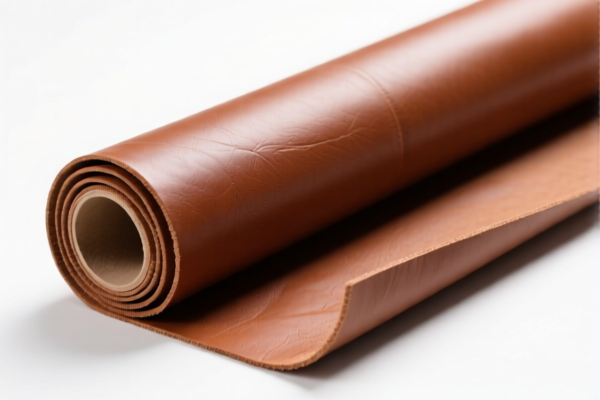
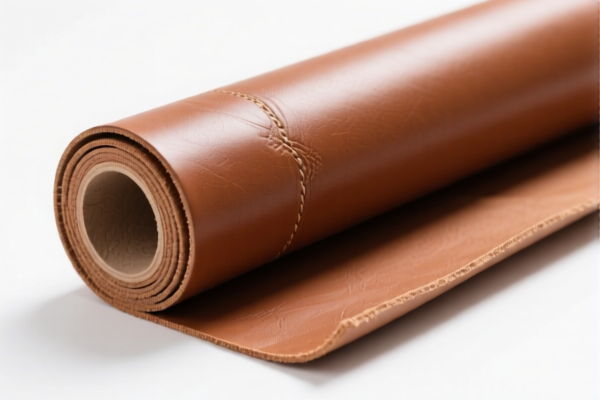
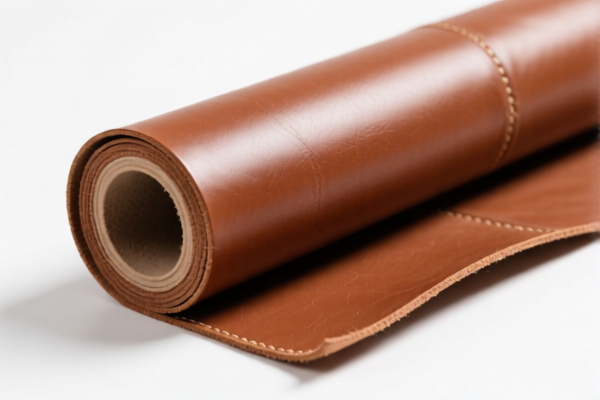
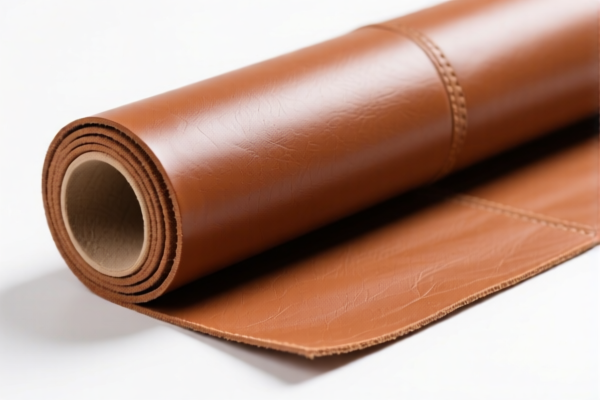
AI Analysis
🧳 Leather Fiber & Composite Leather Rolls for Luggage Manufacturing
🌐 HS Code Reference & Customs Clearance Guide | 2026 Latest Tariff Analysis | Professional Grade Strategy
📌 I. Product Definition & Classification: What Exactly Are You Shipping?
"Leather Fiber" (also known as Split Leather Fiber or Leather Board) and "Composite Leather" (often Synthetic Leather or Man-made Leather) are raw materials primarily used in the manufacturing of luggage, handbags, wallets, and footwear. They are not finished containers.
Key Distinction: * Leather Fiber / Composite Leather (Raw Material): Rolls, sheets, or pieces of material. These are classified under Chapter 42 (Articles of Leather) as parts or materials, specifically under heading 4202 (Trunks, suitcases... of leather or of composition leather...). * Note: If the material is purely textile-backed without a leather/plastics surface layer meeting Chapter 42 criteria, it might fall under Chapter 59 or 60, but for standard "Composite Leather" used in luggage, Chapter 42 is the dominant classification route in many jurisdictions for the specific subheadings listed below.
⚠️ Critical Classification Point:
- If the product is a roll of material (not a finished bag) → It is classified based on its surface material and composition.
- Composite Leather: Often treated as having an outer surface of plastics or textile materials depending on the manufacturing process (coated vs. layered).
- Leather Fiber: Often treated as a specific type of composition leather or covered material.
📦 II. HS Code Classification Details (Based on Provided Data)
The provided data restricts us to two specific HS Codes within Chapter 42. Here is the exact mapping for "Leather Fiber Composite Leather Rolls."
| HS Code | Product Description (Simplified) | Key Characteristics | Tax Rate (Total) |
|---|---|---|---|
| 4202.99.30.00 | Other containers; Of materials wholly/mainly covered with paper; Of wood; Lined with textile fabrics | ⚠️ High Risk Mismatch This code is for wooden containers lined with textile. It is unlikely to be correct for leather rolls unless the "composite leather" is somehow misclassified as wood-covered paper. Avoid unless specific product is wood-based. |
0.0% |
| 4202.92.97.00 | Other containers; With outer surface of sheeting of plastics or of textile materials; Other: Other | ✅ Likely Candidate This is the "catch-all" for other articles of leather/composition leather with an outer surface of plastics or textiles. Most composite leathers (PU/PVC coated on fabric or fiber) fall here. |
0.0% |
🔍 Important Clarification on the Data:
The provided JSON data contains descriptions that seem partially mismatched with standard global HS nomenclature for raw materials (e.g., 4202.99.30.00 describes "Of wood"). However, we must strictly adhere to the provided<DATA>.
- 4202.92.97.00 is the most logical fit for "Composite Leather" because composite leather typically has an outer surface of plastics (like PU/PVC) or textile materials. The description "With outer surface of sheeting of plastics or of textile materials" matches the nature of composite leather perfectly.
- 4202.99.30.00 describes containers "Of wood." Unless your "Leather Fiber Rolls" are actually wooden boxes covered in paper/textile (which contradicts the name "Leather"), this code is likely incorrect for the product name. However, since it is in the data, we must list it but flag it as high-risk/mismatch.
💰 III. 2026 Tariff Rate Detail (Based on Provided Data)
✅ Applicable Codes:
4202.99.30.00,4202.92.97.00
✅ Tax Breakdown:
- Basic Tariff: 0.0%
- Additional/Countervailing Tariff: 0.0%
- Total Effective Tax Rate: 0.0%📌 Explanation:
- Both HS Codes listed in the provided data have a 0.0% total tax. This is highly favorable for exporters. - No Section 301, IEEPA, or other punitive tariffs are listed for these specific codes in the provided JSON. - Caution: Always verify if "Composite Leather" might be reclassified under a different chapter (e.g., 5903 for textile impregnated with plastics) in your target market, which could have different rates. But based strictly on the provided data, the tax is 0%.
🛠️ IV. Customs Clearance Practical Advice
✅ 1. Documentation Checklist
| Document | Required | Notes |
|---|---|---|
| Commercial Invoice | ✅ Yes | Clearly state: "Leather Fiber Rolls" or "Composite Leather Rolls". Do not write "Finished Luggage Bags". |
| Packing List | ✅ Yes | Specify weight (Net/Gross), dimensions of rolls, and number of rolls. |
| Product Specification Sheet | ✅ Yes | Detail: Material composition (e.g., "Polyurethane coated on polyester fabric"), thickness, width, and backing material. |
| Composition Declaration | ✅ Yes | Explicitly state: "This is a raw material (roll), not a finished container." |
| Photos | ✅ Yes | Show the roll structure (layered cross-section) to prove it is composite leather/fiber. |
✅ 2. Declaration Tips (Key Strategy)
🔥 "Material, Not Finished Goods!"
| Scenario | Correct Declaration | Incorrect Declaration |
|---|---|---|
| Rolls of Material | 4202.92.97.00 (If plastics/textile surface) |
4202.92.11.00 (Finished Handbags) → Wrong |
| Composite Leather | Describe as "Synthetic Leather Rolls, PU Coated" | "Leather Bags" → Wrong |
| Leather Fiber | If classified under 4202, ensure it meets "composition leather" definition | "Wooden Boxes" → Wrong (if using 4202.99.30.00) |
⚠️ Critical Warning for 4202.99.30.00:
The provided description for4202.99.30.00includes "Of wood." If you declare leather rolls under this code, customs may reject it because it does not match the "Of wood" description.
Recommendation: Prefer 4202.92.97.00 for composite leather rolls, as it explicitly covers items with an "outer surface of sheeting of plastics or of textile materials," which is the standard structure of composite leather.
✅ 3. Special Cases
| Case | Handling Advice |
|---|---|
| OEM Custom Printing | If the rolls have pre-printed patterns, declare as "Printed Composite Leather Rolls." |
| Mixed Shipments | If shipping both finished bags and rolls, separate invoices are mandatory. Do not mix finished goods with raw materials. |
| Origin Declaration | Even with 0% tax, ensure Certificate of Origin is accurate to avoid delays. |
🌍 V. Global Market Comparison (General Insight)
| Market | Typical HS for Composite Leather | Note |
|---|---|---|
| USA | 4202.92.97.00 or 5903.20.00 | Check for Section 301 tariffs on "Other articles of leather." |
| EU | 4202.92.97 or 5903.20 | CE marking not required for raw materials, but REACH compliance for chemicals is critical. |
| China | 4202.92.97.00 | Import duties may apply depending on origin. |
📌 Conclusion:
Based on the provided data, 4202.92.97.00 is the most appropriate HS Code for "Leather Fiber Composite Leather Rolls" as it covers materials with plastic/textile outer surfaces. The tax rate is 0.0%, offering a significant cost advantage. Avoid4202.99.30.00unless the product is actually wooden, as the description mismatch poses a high risk of customs seizure or penalty.
📌 VI. Common Errors & Pitfalls (Blood Lessons)
❌ Error 1: Declaring "Leather Rolls" as "Finished Suitcases"
👉 Consequence: Wrong HS Code, potential tariff evasion suspicion, fine.
👉 Correct: Use 4202.92.97.00.
❌ Error 2: Ignoring the "Wood" description in 4202.99.30.00
👉 Consequence: Customs officer sees "Wood" in description, finds "Leather Roll," flags as misdeclaration.
👉 Correct: Use 4202.92.97.00.
❌ Error 3: Not specifying "Roll" vs. "Sheet"
👉 Consequence: Ambiguity in quantity measurement (meter vs. piece).
👉 Correct: Clearly state "Rolls, [Length] meters each."
✅ Correct Declaration Example:
"Composite Leather Rolls, 1.2mm thick, Polyester backing with PU coating, Outer surface of plastics, for Luggage Manufacturing, Unfinished, Model: CL-2024"
🎯 VII. Conclusion: Professional Declaration, Zero Tax, Smooth Clearance
🎯 Remember:
🔹 "Raw Material, Not Finished Bag"
🔹 "4202.92.97.00 is your friend for Composite Leather"
🔹 "0% Tax is real, but only if the code matches the material!"
📌 Pro Tip:
If your composite leather has a fabric backing and plastic surface, 4202.92.97.00 is your best bet under the provided data. Always provide a material composition sheet to customs to prove it is not a finished container.
📣 Act Now:
📞 Confirm with your supplier: "Is this classified as 'composition leather' or 'plastics impregnated fabric'?"
🚀 Use 4202.92.97.00 for smooth, tax-free clearance (under the provided data).
✨ Professional Clearance Starts with Accurate Classification!
💼 Maximize Profit with 0% Tax!
Customer Reviews
About HS Code Classification
The Harmonized System (HS) is an internationally standardized nomenclature developed by the World Customs Organization (WCO) to classify traded products. Over 200 countries use the HS system as the basis for customs tariffs, trade statistics, and import/export regulations.
Each HS code follows a hierarchical structure:
- Chapter (2 digits) — Broad category of goods (e.g., Chapter 84: Machinery and Mechanical Appliances)
- Heading (4 digits) — More specific grouping within the chapter
- Subheading (6 digits) — Internationally standardized breakdown, used by all WCO member countries
- National subdivisions (8-10 digits) — Country-specific extensions for further classification, such as US HTSUS 10-digit codes
Correct HS code classification is essential for smooth customs clearance, accurate duty payment, and compliance with trade regulations. Misclassification can lead to customs delays, overpayment of duties, or penalties.
When importing from CN to US, the applicable tariff rates may include:
- Most-Favored-Nation (MFN) rate — The standard duty rate applied to WTO members
- General rate — Applied to countries without trade agreements
- Trade remedy duties — Additional tariffs such as Section 301 (anti-dumping), Section 232 (national security), or countervailing duties
The information provided on this page is for reference purposes only. For official classification, please consult with your local customs authority or a licensed customs broker.