Leather Folder
CN → US| HS Code | Tariff Rate | Origin | Destination | Doc |
|---|---|---|---|---|
| 4820300040 | 35.0% | CN | US | Official Doc |
| 4202110030 | 43.0% | CN | US | Official Doc |
| 4202110090 | 43.0% | CN | US | Official Doc |
Product Images
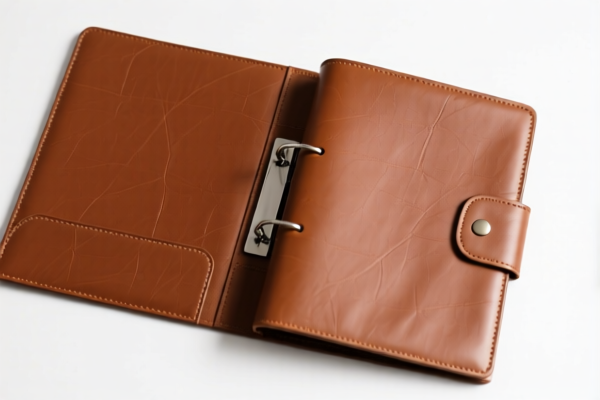
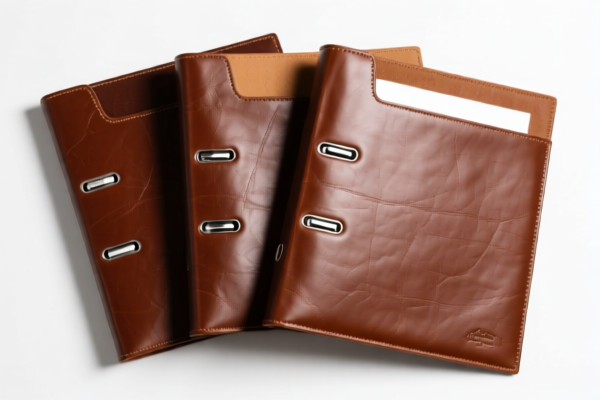
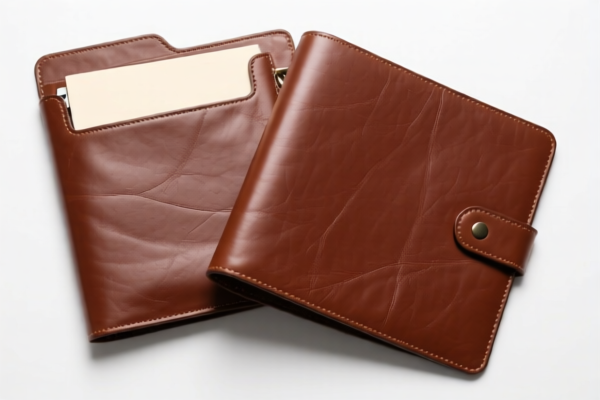
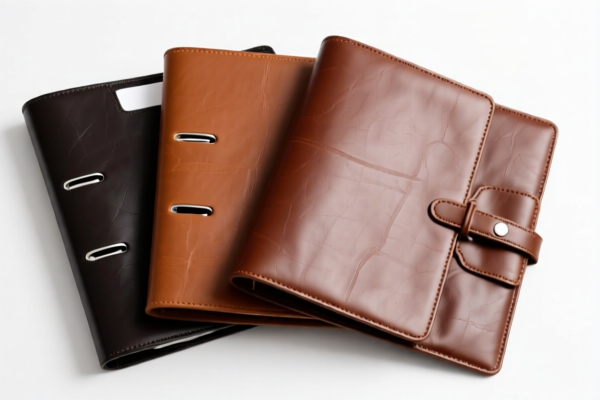
AI Analysis
📂 Leather Folder (Folders & Document Covers)
🌐 HS Code Reference & Customs Clearance Guide | 2026 Latest Tariff Analysis | Professional Entry Strategy
📌 I. Product Definition & Classification: Do You Really Know the "Leather Folder"?
A Leather Folder is a common stationery or office accessory used for organizing documents. In international trade, its classification depends strictly on the outer surface material and the primary structure. It is crucial to distinguish between "leather-like" containers and paper-based stationery, as this determines the tariff burden.
⚠️ Key Distinction Point:
- If the outer surface is leather (or composition leather) → Classified under Chapter 42 (Articles of Leather).
- If the structure is primarily cardboard/paper with minimal leather trim → Classified under Chapter 48 (Paper & Paperboard).
📦 II. HS Code Classification Details (2026 Latest Tariff Authority Match)
Based on the provided data, the following HS Codes apply to Leather Folders. Note: All entries below are subject to significant additional tariffs (Section 301/122) for goods originating from China entering the US.
| HS Code | Product Description | Material Key | Application Scenario | Total Tax Rate* |
|---|---|---|---|---|
| 4202.11.00.30 | Similar containers with outer surface of leather; usage: Folder | Outer Surface: Leather | High-end leather folders, genuine leather document holders | 43.0% |
| 4202.11.00.90 | Similar containers with outer surface of leather or composition leather; form: Folder | Outer Surface: Leather or Synth. Leather | Folders made of synthetic leather (PU/PVC) or genuine leather | 43.0% |
| 4820.30.00.40 | Folders and file covers; typically contains cardboard support structure | Primary: Cardboard/Paper | Paper-based folders, cheap promotional folders, lightweight organizers | 35.0% |
🔍 Critical Reminder:
- Chapter 42 (Codes .30 & .90) applies when the outer surface defines the product's character. Even if the inside is paper, if the outside is leather/synthetic leather, it falls here. - Chapter 48 (Code .40) applies if the folder is essentially a paper/cardboard product (e.g., a file cover with only a leather strip or label). Do not misclassify paper folders as leather goods to avoid customs audits.
💰 III. 2026 Latest Tariff Rate Breakdown (Including Surcharges & Policy Add-ons)
✅ Applicable Country: United States (US)
✅ Origin: China (CN)
✅ Effective Date: Rates apply to imports subject to Section 301 and Section 122 tariffs.
🎯 1. 4202.11.00.30 & 4202.11.00.90 —— Leather/Leather-like Folders
| Item | Content |
|---|---|
| Basic MFN Rate | 8.0% (Ad Valorem) |
| Section 301 Surcharge | +25.0% (Specific to HS Code 4202.11) |
| Section 122 Surcharge | +10.0% (On specific Chinese imports) |
| Total Effective Tax Rate | 43.0% |
| Tax Calculation | CIF Value × 43.0% |
| De Minimis Exemption | ❌ Not Applicable (High tariff value exceeds de minimis thresholds for duty-free entry) |
| Legal Basis Path | HTSUS:4202.11.00 → Section 301 Footnote → Section 122 Directive |
📌 Explanation:
- "Basic 8%": The standard Most Favored Nation (MFN) rate for leather articles. - "Section 301: 25%": The primary punitive tariff imposed on Chinese goods to address trade imbalances. - "Section 122: 10%": An additional surcharge targeting specific manufacturing sectors, including certain leather goods and stationery from China. - Total 43% is a very high barrier. Profit margins are severely impacted.
🎯 2. 4820.30.00.40 —— Paper/Cardboard Folders
| Item | Content |
|---|---|
| Basic MFN Rate | 0.0% (Ad Valorem) |
| Section 301 Surcharge | +25.0% |
| Section 122 Surcharge | +10.0% |
| Total Effective Tax Rate | 35.0% |
| Tax Calculation | CIF Value × 35.0% |
| De Minimis Exemption | ❌ Not Applicable (Though base is lower, surcharges still apply) |
| Legal Basis Path | HTSUS:4820.30.00 → Section 301 Footnote → Section 122 Directive |
📌 Note:
- While the base rate is 0%, the total 35% is still substantial. - This code is cheaper than leather folders by 8 percentage points, but only if the product truly qualifies as "cardboard/paper" based.
🛠️ IV. Customs Clearance Practical Advice (Real-World Pitfall Avoidance)
✅ 1. Essential Documentation Checklist (缺一不可)
| Document | Required | Description |
|---|---|---|
| ✅ Product Composition Statement | ✔️ | Must specify % of Leather vs. Paper/Cardboard. Critical for Chapter 42 vs. 48. |
| ✅ Photographs | ✔️ | Clear images of the outer surface texture and material. |
| ✅ Commercial Invoice | ✔️ | Must state "Folder" and material explicitly (e.g., "PU Leather Folder" vs. "Cardboard Folder"). |
| ✅ Packing List | ✔️ | Weight and dimensions per unit. |
| ✅ Supplier Declaration | ✔️ | Confirming no prohibited content or restricted materials. |
✅ 2. Declaration Tips (Key Mnemonics)
🔥 "Material Defines the Chapter, Structure Defines the Code!"
| Scenario | Correct HS Code | Wrong Action | Consequence |
|---|---|---|---|
| Genuine Leather Outer | 4202.11.00.30 |
Declare as paper | Audit Risk: Customs will inspect, reclassify, and charge 43% + penalties. |
| Synthetic Leather (PU/PVC) | 4202.11.00.90 |
Declare as 4820... |
Audit Risk: Synthetic leather falls under Ch 42. High risk of misdeclaration. |
| Cardboard Folder with Leather Label | 4820.30.00.40 |
Declare as leather | Overpayment: You pay 43% instead of 35%. Save money by correct classification! |
| Complete Leather Binder (Not just folder) | Check 4202.92 |
Force into folder code | Rejection: If it has rings/spine, it may not be a "folder" but a "briefcase/binder". |
✅ 3. Special Handling for Mixed Materials
| Situation | Handling Advice |
|---|---|
| Leather + Plastic Components | If the outer surface is still leather/leather-like, it remains 4202.11. Plastic parts are incidental. |
| Fabric-covered Folder | Not Leather! Check Chapter 59 or 63. Different tariff rules may apply. |
| "Leather-like" (Faux Leather) | Crucial: If it is PVC/PU, it is 4202.11.00.90, NOT 4820.30. Do not assume "fake leather" = "paper". |
🌍 V. Global Market Comparison (2026 Latest)
| Country/Region | Recommended HS Code | Total Tax (China Origin) | Certification | Notes |
|---|---|---|---|---|
| 🇺🇸 USA | 4202.11.00.30/.90 |
43% | None specific | High tariff due to Sec 301/122. |
| 🇺🇸 USA | 4820.30.00.40 |
35% | None specific | Lower rate if cardboard-based. |
| 🇨🇳 China (Import) | 4202.11.00 |
~8-10% | CCC (if applicable) | Standard MFN rates. |
| 🇪🇺 EU | 4202.11.00 |
~5-7% | CE (if electronic) | No US-style punitive tariffs. |
| 🇬🇧 UK | 4202.11.00 |
~5-7% | UKCA | Post-Brexit standards. |
📌 Conclusion:
- The US market is the most expensive for Chinese-made folders due to layered tariffs. - 43% is the standard burden for leather/synthetic leather folders. - 35% is the burden for paper/cardboard folders.
📌 VI. Common Mistakes & Pitfall Guide (Blood & Tears Lessons)
❌ Mistake 1: Declaring a PU Leather Folder as 4820.30.00.40 (Cardboard)
👉 Consequence: Customs will reject it, impose 43% tax, and may fine you for misdeclaration. PU is NOT paper.
❌ Mistake 2: Ignoring the Section 122 Tariff in cost calculations
👉 Consequence: Your profit margin is wiped out. You planned for 25% (Sec 301) but owe 43%. Always budget for 122 if applicable.
❌ Mistake 3: Using vague terms like "Stationery" or "File" without specifying material
👉 Consequence: Customs has the right to classify as the highest duty rate or demand extensive inspection. Be specific: "Outer Surface: Synthetic Leather".
❌ Mistake 4: Assuming "Leather Folder" means only genuine leather
👉 Consequence: Missing the 4202.11.00.90 category for synthetic materials. Ensure your supplier clarifies "Genuine" vs. "Artificial".
✅ Correct Approach:
"Synthetic Leather Folder, Model ABC, Outer Surface: PVC, Inner: Cardboard, HS Code: 4202.11.00.90"
🎯 VII. Conclusion: Precise Classification Saves Money!
🎯 Remember the Golden Rule:
🔹 "Leather Outside = Ch 42 (43% Tax)"
🔹 "Cardboard Outside = Ch 48 (35% Tax)"
🔹 "Synthetic Leather is Still Leather in Customs!"
🔹 "Total Tax = Basic + 25% + 10% = 35-43%"
📌 Pro Tip:
If your products are originating from Vietnam, Thailand, or Mexico, you may avoid Section 301/122 tariffs entirely.
Consider supply chain diversification to countries with FTAs (Free Trade Agreements) with the US to reduce tax from 43% to ~0-5%.
📣 Immediate Action:
📞 Contact a licensed customs broker.
📤 Submit product photos and material specs for HS Code Pre-ruling if importing large volumes.
🚀 Accurate declaration ensures smooth clearance and maximizes profit!
✨ Professional Clearance Starts with Accurate Classification!
💼 Every percentage point of tax saved is pure profit!
Customer Reviews
About HS Code Classification
The Harmonized System (HS) is an internationally standardized nomenclature developed by the World Customs Organization (WCO) to classify traded products. Over 200 countries use the HS system as the basis for customs tariffs, trade statistics, and import/export regulations.
Each HS code follows a hierarchical structure:
- Chapter (2 digits) — Broad category of goods (e.g., Chapter 84: Machinery and Mechanical Appliances)
- Heading (4 digits) — More specific grouping within the chapter
- Subheading (6 digits) — Internationally standardized breakdown, used by all WCO member countries
- National subdivisions (8-10 digits) — Country-specific extensions for further classification, such as US HTSUS 10-digit codes
Correct HS code classification is essential for smooth customs clearance, accurate duty payment, and compliance with trade regulations. Misclassification can lead to customs delays, overpayment of duties, or penalties.
When importing from CN to US, the applicable tariff rates may include:
- Most-Favored-Nation (MFN) rate — The standard duty rate applied to WTO members
- General rate — Applied to countries without trade agreements
- Trade remedy duties — Additional tariffs such as Section 301 (anti-dumping), Section 232 (national security), or countervailing duties
The information provided on this page is for reference purposes only. For official classification, please consult with your local customs authority or a licensed customs broker.