Leather Garments
CN → US| HS Code | Tariff Rate | Origin | Destination | Doc |
|---|---|---|---|---|
| 4203104085 | 41.0% | CN | US | Official Doc |
| 4203104095 | 41.0% | CN | US | Official Doc |
| 4202110090 | 43.0% | CN | US | Official Doc |
| 4202219000 | 44.0% | CN | US | Official Doc |
| 4203406000 | 35.0% | CN | US | Official Doc |
Product Images
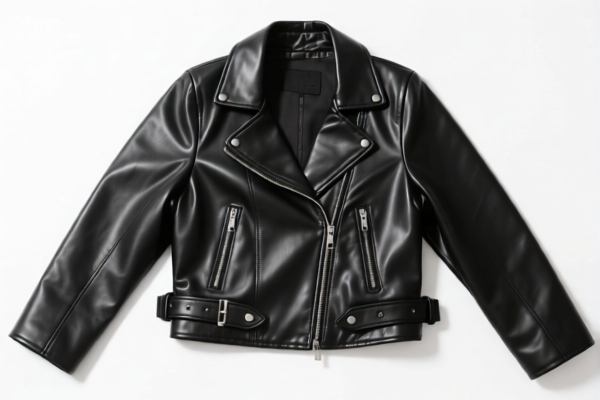

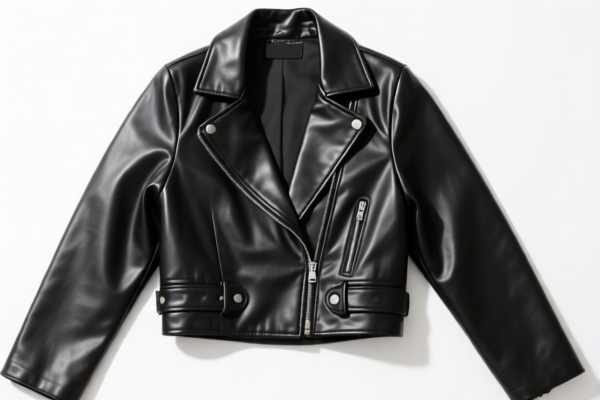
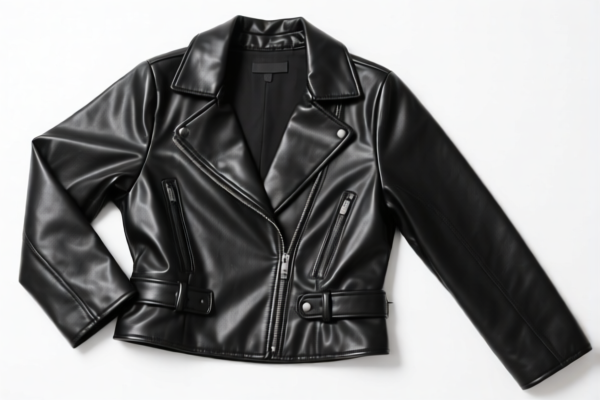
AI Analysis
🧥 Leather Garments (皮制服装)
🌐 HS Code Reference & Customs Clearance Guide | 2026 Latest Tariff Analysis | Professional Compliance Strategy
📌 Part 1: Product Definition & Classification: Do You Truly Understand "Leather Garments"?
Leather Garments refer to clothing items made primarily from animal hides or skins (leather). In international trade, the classification depends heavily on the exact form (outerwear, suits, vests, accessories) and the material composition. Misclassification is a common pitfall because "leather products" can fall into chapters for apparel (Ch. 42) or general articles (Ch. 42/61/62 depending on material).
⚠️ Key Distinction:
- If the item is a full garment (jacket, coat, suit, vest) → It typically falls under HS Code 4203.10 (Articles of apparel and clothing accessories, of leather).
- If the item is a bag, suitcase, or briefcase made of leather → It falls under HS Code 4202 (Travel goods, handbags, etc.).
- If it is an accessory (belt, gloves, wallet) → It may fall under 4203.40 or other subheadings.
📦 Part 2: HS Code Classification Details (2026 Latest Tariff Authority Comparison)
Based on the provided data, here are the potential HS Codes for products described as "Leather" or "Leather Garments/Products":
| HS Code | Product Description | Application Scenario | Material/Format Match |
|---|---|---|---|
4203.10.40.95 |
Leather Garments (Other than gloves/mittens) | Jackets, coats, suits made of leather. | ✅ Perfect Match: "Leather" matches "Leather articles"; "Garments" matches "Apparel". |
4203.10.40.85 |
Leather Garments (Specific Type/Style) | Specific style of leather apparel (e.g., specific cut or lining). | ✅ Perfect Match: Explicitly states "Leather Garments" meets material (leather) and form (garment) requirements. |
4202.11.00.90 |
Travel Goods, Handbags, etc. (Outer Surface: Leather) | Suitcases, backpacks, briefcases made of leather. | ⚠️ Partial Match: Matches "Leather" material. "Garments" keyword might be a misnomer if it's actually a bag. "Other" category applies if no specific conflict. |
4202.21.90.00 |
Handbags, Wallets, etc. (Outer Surface: Leather) | Handbags, clutches, small leather goods. | ⚠️ Partial Match: Matches "Leather". If the product is a bag, this is correct. If it's clothing, this is Wrong. |
4203.40.60.00 |
Clothing Accessories (Leather) | Belts, gloves, wallets, ties made of leather. | ⚠️ Specific Match: "Leather Products" fits here if they are accessories, not full garments. Lower tariff rate. |
🔍 Critical Warning:
- Garments vs. Accessories: If you declare "Leather Garments" but send belts or gloves, you risk being reclassified to 4203.40.60.00 (Accessories) or penalized for incorrect declaration. - Garments vs. Bags: If you declare "Leather Garments" but the item is a handbag, it must be declared as 4202 category. Misclassification can lead to delays or seizures.
💰 Part 3: 2026 Latest Tariff Rate Details (Including Surtaxes & Policy Add-ons)
✅ Applicable Country: United States (US)
✅ Origin: China (CN)
✅ Effective Date: From November 10, 2025 (and subsequent imports)
🎯 1. 4203.10.40.95 & 4203.10.40.85 — Leather Garments (Apparel)
| Item | Details |
|---|---|
| Base Tariff Rate | 6.0% (Ad Valorem) |
| Section 301 Surtax | +25.0% (USITC Footnote) |
| Section 122 Tariff | +10.0% (Specific China-related measure) |
| Total Tariff Rate | 41.0% |
| Tax Calculation | CIF Value × 41% |
| De Minimis Exemption | ❌ Not Applicable (Deny de minimis for these codes under current restrictions) |
| Legal Basis Path | HTSUS:4203.10.40 → Section 301: 25% → Section 122: 10% |
📌 Explanation:
- Base 6%: Standard MFN rate for leather apparel. - 301 Surtax 25%: Applies to most Chinese-origin goods under the Trump/Biden trade war tariffs. - Section 122 10%: Additional duty on certain Chinese goods (often related to intellectual property or national security concerns). - Total 41%: This is a high-cost category. Profit margins must absorb this significant tax burden.
🎯 2. 4202.11.00.90 — Travel Goods / Handbags (Leather Outer Surface)
| Item | Details |
|---|---|
| Base Tariff Rate | 8.0% (Ad Valorem) |
| Section 301 Surtax | +25.0% |
| Section 122 Tariff | +10.0% |
| Total Tariff Rate | 43.0% |
| Tax Calculation | CIF Value × 43% |
| De Minimis Exemption | ❌ Not Applicable |
| Legal Basis Path | HTSUS:4202.11.00 → Section 301: 25% → Section 122: 10% |
📌 Note:
- Higher base rate (8% vs 6%) makes this category slightly more expensive than standard leather garments. - Commonly used for luxury handbags or business briefcases.
🎯 3. 4202.21.90.00 — Handbags, Wallets (Leather)
| Item | Details |
|---|---|
| Base Tariff Rate | 9.0% (Ad Valorem) |
| Section 301 Surtax | +25.0% |
| Section 122 Tariff | +10.0% |
| Total Tariff Rate | 44.0% |
| Tax Calculation | CIF Value × 44% |
| De Minimis Exemption | ❌ Not Applicable |
| Legal Basis Path | HTSUS:4202.21.90 → Section 301: 25% → Section 122: 10% |
📌 Note:
- This is the highest total tariff (44%) among the listed options. - Typically applies to small leather goods like wallets, clutches, and handbags.
🎯 4. 4203.40.60.00 — Clothing Accessories (Leather)
| Item | Details |
|---|---|
| Base Tariff Rate | 0.0% (Ad Valorem) |
| Section 301 Surtax | +25.0% |
| Section 122 Tariff | +10.0% |
| Total Tariff Rate | 35.0% |
| Tax Calculation | CIF Value × 35% |
| De Minimis Exemption | ❌ Not Applicable |
| Legal Basis Path | HTSUS:4203.40.60 → Section 301: 25% → Section 122: 10% |
📌 Key Advantage:
- Lowest Total Rate (35%) due to 0% base tariff. - Applies to belts, gloves, ties, and other accessories. - Strategic Tip: If a product can be classified as an accessory (e.g., a leather scarf or belt) rather than a full garment, the savings are 6-9%.
🛠️ Part 4: Customs Clearance Practical Advice (Pitfall Avoidance Guide)
✅ 1. Documentation Checklist (Mandatory)
| Document | Required | Explanation |
|---|---|---|
| ✅ Product Specification Sheet | ✔️ | Must specify material composition (e.g., "100% Cowhide Leather") and item type (Garment vs. Bag vs. Accessory). |
| ✅ Commercial Invoice | ✔️ | Must clearly state "Leather Garments" or specific type (e.g., "Leather Jacket"). Do not use vague terms like "Leather Goods" if specific HS codes apply. |
| ✅ Packing List | ✔️ | Detail contents to avoid ambiguity (e.g., 1 Jacket + 1 Belt). |
| ✅ Material Certificates | ✔️ | Proof of leather type (genuine vs. synthetic) to confirm Chapter 42 eligibility. |
| ✅ Photos of Product & Label | ✔️ | Show tags, care labels, and overall appearance to verify "Garment" status. |
✅ 2. Declaration Tips (Key Mantra)
🔥 "Material First, Form Second, Accessory vs. Garment Distinction Matters!"
| Scenario | Correct Declaration | Wrong Practice |
|---|---|---|
| Leather Jacket/Coat | 4203.10.40.xx (Garments) |
Declaring as 4202 (Bag) → 43-44% tax |
| Leather Belt/Gloves | 4203.40.60.00 (Accessories) |
Declaring as 4203.10 (Garment) → 41% tax |
| Leather Handbag | 4202.11.00.90 or 4202.21.90.00 |
Declaring as "Garment" → Seizure/Reclassification |
| Mixed Package (Jacket + Belt) | Declare Separately | Bundling as one "Leather Goods" item → Complex valuation, risk of error |
✅ 3. Special Handling Cases
| Situation | Handling Advice |
|---|---|
| Artificial/Synthetic Leather | Must verify if it falls under Chapter 59 or 61/62 (textiles). If it's PVC/PU, it might not be "Leather" in the HS sense, changing the tariff code entirely. |
| Remodeled Leather | Ensure the definition of "Leather" meets the 4-character HS code requirement. Some remodeled hides may fall under different subheadings. |
| Samples/De Minimis | Do not rely on de minimis exemption for these items. The 301 and 122 surtaxes apply regardless of value. |
| Origin Marking | Ensure all leather goods are marked "Made in China" to facilitate 301/122 tariff enforcement. |
🌍 Part 5: Global Market Comparison (2026 Latest)
| Country/Region | Recommended HS Code (Leather Garments) | Total Tariff (China Origin) | Key Requirements | Notes |
|---|---|---|---|---|
| 🇺🇸 USA | 4203.10.40.xx |
41.0% | FCC/CE not needed, but Material Proof critical | Highest total tax due to 301+122 |
| 🇨🇳 China | 4203.10.40.xx |
5.0% (Import) | CCC (if applicable) | No surtaxes |
| 🇪🇺 EU | 4203.10.40.xx |
12.0% (General) | CE (if safety gear), REACH (chemicals) | No 301/122 equivalent |
| 🇬🇧 UK | 4203.10.40.xx |
12.0% | UKCA Mark (if applicable) | Post-Brexit rules apply |
| 🇯🇵 Japan | 4203.10.40.xx |
15.0% - 18.0%** | FSC (if synthetic) | No major surtaxes |
📌 Conclusion:
- USA is the most expensive market for leather garments due to 41% total tariffs. - EU and Japan offer more stable rates (~12-18%) but have stricter chemical/safety regulations (REACH, FSC). - Strategy: For US imports, consider classifying as Accessories (4203.40) if possible to save 6%.
📌 Part 6: Common Errors & Pitfall Guide (Lessons Learned)
❌ Error 1: Calling a Leather Belt a "Garment"
👉 Consequence: Pay 41% instead of 35%. Small error, big cost over time.
Fix: Declare as 4203.40.60.00 (Accessories).
❌ Error 2: Calling a Leather Handbag a "Garment"
👉 Consequence: Customs rejection, reclassification to 4202 (43-44% tax), or penalties.
Fix: Correctly classify as 4202.11.00.90 or 4202.21.90.00.
❌ Error 3: Vague Description "Leather Product"
👉 Consequence: Customs officer makes a worst-case classification (likely 4202 at 43-44%) or requests additional documentation.
Fix: Use precise terms: "Leather Jacket, Men's, Cowhide".
❌ Error 4: Ignoring Section 122 Tariff
👉 Consequence: Underpayment of duties, leading to audits and fines.
Fix: Ensure all China-origin leather goods account for the extra 10%.
✅ Correct Practice:
"Men's Leather Jacket, 100% Cowhide, Classify under HTSUS 4203.10.40.95, Country of Origin: China"
🎯 Part 7: Conclusion: Precise Classification Saves Money!
🎯 Key Takeaways:
🔹 "Garments are 41%, Accessories are 35%, Bags are 43-44%."
🔹 "Always distinguish between Garment, Accessory, and Bag."
🔹 "Section 301 (25%) + Section 122 (10%) = High Costs for China Origin."
📌 Pro Tip:
- If you are importing high-value leather goods, consider Advance Rulings from US Customs to confirm the correct HS Code.
- For leather accessories (belts, gloves), try to leverage the 35% rate by accurately declaring them as 4203.40.
📣 Immediate Action:
📞 Contact a Licensed Customs Broker to review your specific product photos and material sheets.
🚀 Optimize Your Supply Chain by factoring in the 41% tariff for US-bound leather garments.
💼 Profit Protection: Ensure your pricing strategy accounts for the highest possible duty burden.
✨ Professional Clearance, Starting with Accurate Classification!
💼 Every Percentage Point Saved is Pure Profit!
Customer Reviews
About HS Code Classification
The Harmonized System (HS) is an internationally standardized nomenclature developed by the World Customs Organization (WCO) to classify traded products. Over 200 countries use the HS system as the basis for customs tariffs, trade statistics, and import/export regulations.
Each HS code follows a hierarchical structure:
- Chapter (2 digits) — Broad category of goods (e.g., Chapter 84: Machinery and Mechanical Appliances)
- Heading (4 digits) — More specific grouping within the chapter
- Subheading (6 digits) — Internationally standardized breakdown, used by all WCO member countries
- National subdivisions (8-10 digits) — Country-specific extensions for further classification, such as US HTSUS 10-digit codes
Correct HS code classification is essential for smooth customs clearance, accurate duty payment, and compliance with trade regulations. Misclassification can lead to customs delays, overpayment of duties, or penalties.
When importing from CN to US, the applicable tariff rates may include:
- Most-Favored-Nation (MFN) rate — The standard duty rate applied to WTO members
- General rate — Applied to countries without trade agreements
- Trade remedy duties — Additional tariffs such as Section 301 (anti-dumping), Section 232 (national security), or countervailing duties
The information provided on this page is for reference purposes only. For official classification, please consult with your local customs authority or a licensed customs broker.