Leather Gloves (Molded, Seamless)
CN → US| HS Code | Tariff Rate | Origin | Destination | Doc |
|---|---|---|---|---|
| 6216009000 | 21.3% | CN | US | Official Doc |
| 4203292000 | 47.6% | CN | US | Official Doc |
| 4203290800 | 49.0% | CN | US | Official Doc |
| 4205006000 | 39.9% | CN | US | Official Doc |
| 4205008000 | 35.0% | CN | US | Official Doc |
Product Images
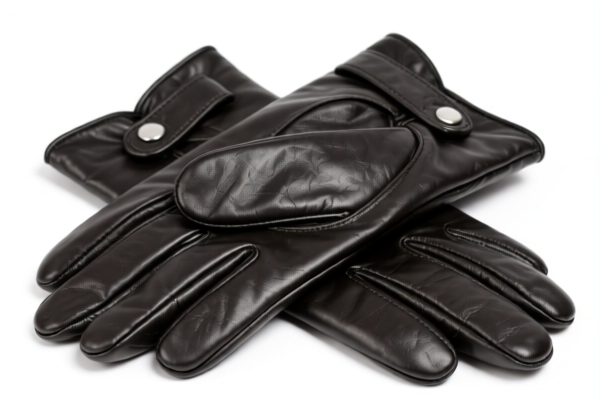
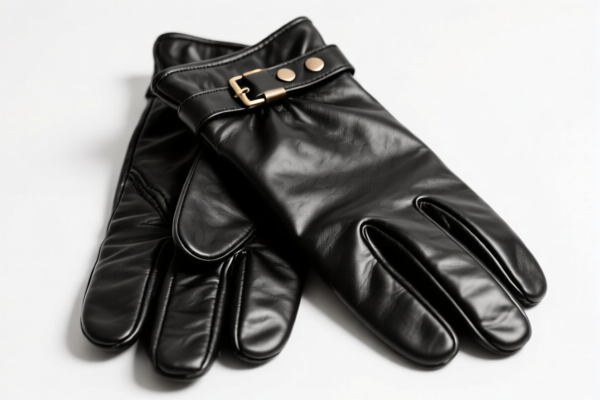
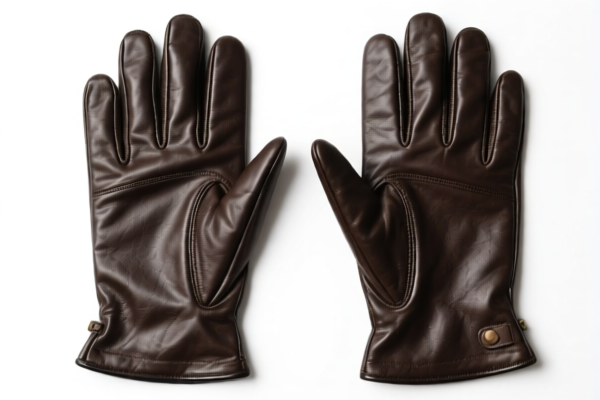
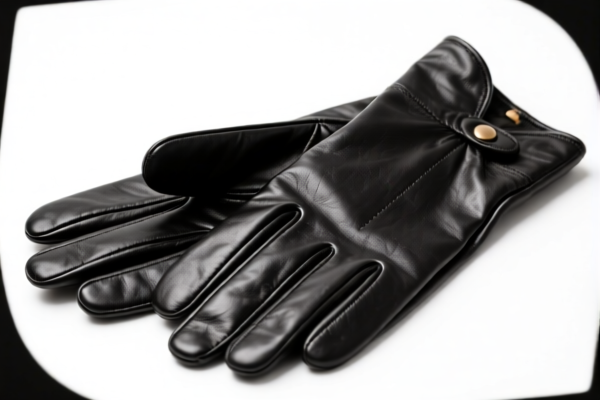
AI Analysis
🧤 Leather Gloves (Molded, Seamless): The Ultimate Cross-Border Clearance Guide
🌐 HS Code Classification & Duty Breakdown | 2026 Trade Compliance | Strategic Tariff Optimization
📌 Part 1: Product Definition & The "Seamless" Dilemma
Leather gloves are a high-value accessory in the global trade of apparel and accessories. However, the manufacturing process creates a critical classification fork:
1. Sewn Leather Gloves (Traditional)
Manufactured by cutting leather pieces and stitching them together. These fall under Chapter 42 (Articles of leather).
2. Molded/Seamless Leather Gloves
Manufactured by molding leather or using seamless knitting techniques. The presence of the term "Seamless" or "Molded" is the key differentiator that often pushes classification into Chapter 62 (Articles of apparel and clothing accessories, knitted or crocheted) or specific subcategories in Chapter 42 depending on the exact material structure.
⚠️ Key Distinction Point:
- If the glove is sewn/stitched from cut leather → Chapter 42 (Typically higher base duty).
- If the glove is seamless/molded (no seams visible, formed as one piece) → Chapter 62 (Often lower base duty, but specific exclusions apply).
- Warning: Customs may scrutinize "seamless" claims heavily. If seams are present (even hidden ones), classification may revert to Chapter 42.
📦 Part 2: HS Code Classification Matrix (Based on Provided Data)
| HS Code | Product Description | Key Classification Logic | Tax Rate Summary |
|---|---|---|---|
6216.00.90.00 |
Other Gloves (Knitted/Crocheted or Other Textile) | Material: Leather-like/Leather; Form: Seamless. Fits under "Gloves" category in Ch. 62. No obvious conflict with "Other" subheading. | 21.3% |
4203.29.20.00 |
Other Gloves (Leather) | Material: Leather; Form: Non-sewn/Seamless. Process characteristics fully meet the "non-sewn" limitation of Chapter 42. | 47.6% |
4203.29.08.00 |
Other Gloves (Leather) | Explicitly identified as "Leather" (Material) + "Gloves" (Form/Use). Fits description of leather gloves in Ch. 42. | 49.0% |
4205.00.60.00 |
Other Articles of Leather | Material: Leather (Reptile/Other); Form: Leather article. Fits "Other leather articles" material requirements. | 39.9% |
4205.00.80.00 |
Other Articles of Leather | Material: Leather; Form: Gloves (Leather article). Fits "Other leather articles" material requirements. | 35.0% |
🔍 Critical Observation:
- Cheapest Duty:6216.00.90.00at 21.3%. This suggests that if the gloves can be technically justified as "knitted/crocheted" or "other textile" items due to the seamless manufacturing process, they avoid the heavier Chapter 42 duties.
- Most Expensive Duty:4203.29.08.00at 49.0%. This is the standard "Leather Gloves" classification if seams are found or if the "seamless" claim is rejected.
- Middle Ground:4205.00.80.00at 35.0% treats them as "Other Leather Articles" rather than "Gloves" specifically, potentially leveraging a lower base rate.
💰 Part 3: Detailed Tariff Breakdown (2026 US Import Rules)
✅ Applicable Country: United States (US)
✅ Origin: China (CN) (Implied by "122 Clause" and typical trade context)
✅ Effective Date: 2025/2026 Period
🎯 1. 6216.00.90.00 – The Strategic Low-Tax Option
| Item | Detail |
|---|---|
| Base Duty | 3.8% |
| Section 301 (Added Duty) | 7.5% |
| Section 122 Clause Duty | 10% |
| Total Effective Rate | 21.3% |
| Calculation | CIF Value × 21.3% |
| De Minimis Eligibility | ❌ No (High duty rate prevents $800 exemption) |
| Legal Path | Ch. 62 → HTS 6216.00.90.00 |
📌 Explanation:
- This classification offers the lowest total tariff burden.
- To qualify, the importer must prove the gloves are not "sewn" in the traditional Chapter 42 sense.
- "Section 122": A specific additional duty applied to certain Chinese textile/apparel goods.
- Strategy: Ensure product descriptions emphasize "Seamless," "Molded," or "Knitted Structure" to support this classification.
🎯 2. 4203.29.20.00 – The "Non-Sewn Leather" Classification
| Item | Detail |
|---|---|
| Base Duty | 12.6% |
| Section 301 (Added Duty) | 25.0% |
| Section 122 Clause Duty | 10% |
| Total Effective Rate | 47.6% |
| Calculation | CIF Value × 47.6% |
| De Minimis Eligibility | ❌ No |
| Legal Path | Ch. 42 → HTS 4203.29.20.00 |
📌 Explanation:
- This classification acknowledges the item is Leather and Seamless/Non-sewn, but keeps it in Chapter 42.
- The 25% Section 301 duty is a major cost driver.
- Suitable if the material is unmistakably solid leather but molded without seams.
🎯 3. 4203.29.08.00 – Standard Leather Gloves
| Item | Detail |
|---|---|
| Base Duty | 14.0% |
| Section 301 (Added Duty) | 25.0% |
| Section 122 Clause Duty | 10% |
| Total Effective Rate | 49.0% |
| Calculation | CIF Value × 49.0% |
| De Minimis Eligibility | ❌ No |
| Legal Path | Ch. 42 → HTS 4203.29.08.00 |
📌 Explanation:
- This is the default classification for leather gloves unless "seamless" is strictly proven and accepted under a different subheading.
- Highest Cost: Avoid this unless no other classification is viable.
- Risk: High audit risk for misclassification.
🎯 4. 4205.00.60.00 – Other Leather Articles (Reptile/Other)
| Item | Detail |
|---|---|
| Base Duty | 4.9% |
| Section 301 (Added Duty) | 25.0% |
| Section 122 Clause Duty | 10% |
| Total Effective Rate | 39.9% |
| Calculation | CIF Value × 39.9% |
| De Minimis Eligibility | ❌ No |
| Legal Path | Ch. 42 → HTS 4205.00.60.00 |
📌 Explanation:
- Used if the gloves are made from reptile skin or specific other leathers not covered in Ch. 42.03.
- Lower base duty (4.9%) but still hit with high added tariffs.
🎯 5. 4205.00.80.00 – Other Leather Articles (General)
| Item | Detail |
|---|---|
| Base Duty | 0.0% |
| Section 301 (Added Duty) | 25.0% |
| Section 122 Clause Duty | 10% |
| Total Effective Rate | 35.0% |
| Calculation | CIF Value × 35.0% |
| De Minimis Eligibility | ❌ No |
| Legal Path | Ch. 42 → HTS 4205.00.80.00 |
📌 Explanation:
- Zero Base Duty makes this attractive if the gloves can be classified as "Other Leather Articles" rather than "Gloves."
- Risk: Customs may argue gloves are specifically "Gloves" (Ch. 42.03), not "Other Articles."
- Strategy: Use only if technical justification for "Other Article" is strong (e.g., unique shape, non-hand covering function).
🛠️ Part 4: Customs Clearance Operational Advice
✅ 1. Documentation Checklist (Must-Haves)
| Document | Required? | Purpose |
|---|---|---|
| Product Spec Sheet | ✔️ | Must explicitly state "Seamless," "Molded," or "Non-Sewn" construction. |
| Technical Diagrams | ✔️ | Show cross-sections proving no stitching/seams. |
| High-Res Photos | ✔️ | Clear images of interior/exterior showing absence of seams. |
| Bill of Lading | ✔️ | Consistent with HS Code description. |
| Commercial Invoice | ✔️ | Describe as "Seamless Leather Gloves" or "Molded Leather Handwear." |
| Country of Origin | ✔️ | Critical for Section 301 and 122 Clause application. |
✅ 2. Classification Strategy & Best Practices
🔥 "Seamless is Key, But Proof is King!"
| Scenario | Recommended HS Code | Rationale |
|---|---|---|
| True Seamless/Molded (No seams anywhere) | 6216.00.90.00 |
Lowest duty (21.3%). Best for profit margin. |
| Leather, No Seams (But not knitted) | 4203.29.20.00 |
Acceptable if Ch. 62 is rejected. Duty 47.6%. |
| Traditional Sewn Leather | 4203.29.08.00 |
Default for sewn gloves. Duty 49.0%. |
| Reptile/Exotic Leather | 4205.00.60.00 |
Specific material classification. Duty 39.9%. |
| Ambiguous "Other" Leather | 4205.00.80.00 |
High risk, but low base duty (0%). Duty 35.0%. |
📌 Critical Tip:
- Avoid "Gloves" in the product name if trying to use4205.00.80.00. Use "Leather Handwear" or "Leather Accessories."
- Emphasize "Seamless" to support6216.00.90.00.
- Pre-Ruling: For large shipments, consider applying for a Binding Ruling from US Customs to lock in the HS Code and avoid post-import audits.
✅ 3. Special Considerations
| Issue | Solution |
|---|---|
| Section 122 Clause | Applies to textile/apparel items. If classified under Ch. 62 (6216), this 10% duty is unavoidable. If Ch. 42, it may still apply depending on current trade rules. |
| Section 301 (25%) | Applies to most Chinese-origin goods. Check if any Exclusions apply (rare for apparel). |
| De Minimis ($800) | Not Applicable. All these classifications have high duty rates, so small packages will still incur duties. |
| Material Composition | If the "leather" is actually synthetic leather, classification may shift to Ch. 39 or Ch. 61, potentially altering duties. Verify material! |
🌍 Part 5: Global Market Comparison (Snapshot)
| Market | Recommended HS | Est. Total Duty | Notes |
|---|---|---|---|
| 🇺🇸 USA | 6216.00.90.00 |
21.3% | Best option. Includes 122 Clause. |
| 🇺🇸 USA | 4203.29.08.00 |
49.0% | High cost. Avoid if possible. |
| 🇪🇺 EU | Varies | ~4-12% | No Section 301/122. Lower duties. CE marking required. |
| 🇬🇧 UK | Varies | ~4-12% | Post-Brexit rules. Similar to EU. |
| 🇨🇦 Canada | Varies | ~0-12% | CUSMA/USMCA may apply if originated in NA. |
📌 Conclusion for US Importers:
- Optimize for6216.00.90.00if the product is truly seamless.
- Budget for ~35-50% total duty if classified under Chapter 42.
- Never assume De Minimis applies.
📌 Part 6: Common Pitfalls & Solutions
❌ Pitfall 1: Calling them "Sewn Gloves" in the invoice when they are seamless.
👉 Result: Customs may classify as 4203.29.08.00 (49.0%) or demand penalties for misrepresentation.
✅ Fix: Use "Seamless" or "Molded" in all documents.
❌ Pitfall 2: Claiming "Textile" for solid leather gloves.
👉 Result: Rejection by customs, forced to Chapter 42.
✅ Fix: If material is genuine leather, do not claim Ch. 61/62 unless the seamless construction is technically equivalent to knitting/crochet per HTS notes.
❌ Pitfall 3: Ignoring the "122 Clause."
👉 Result: Underpayment of duties, leading to back-taxes and interest.
✅ Fix: Always check if the 122 Clause applies to the specific HS Code and origin.
🎯 Final Verdict: Strategic Recommendation
For Leather Gloves (Molded, Seamless):
-
Best Case: Classify under
6216.00.90.00(21.3% total duty).- Action: Provide strong technical evidence of seamless manufacturing. Use "Seamless Leather Gloves" as the description.
-
Second Best: Classify under
4205.00.80.00(35.0% total duty).- Action: Describe as "Leather Handwear Accessories" to avoid "Gloves" label.
-
Worst Case: Classify under
4203.29.08.00(49.0% total duty).- Action: Avoid unless no other classification fits.
📢 Immediate Action Item:
- Audit your product photos to confirm "seamless" status.
- Review your supplier’s technical sheets for construction details.
- Consult a customs broker for a pre-filing ruling if shipment value is high.
✨ Smart Classification Saves Money!
💼 Don't let hidden duties eat your margins!
Customer Reviews
About HS Code Classification
The Harmonized System (HS) is an internationally standardized nomenclature developed by the World Customs Organization (WCO) to classify traded products. Over 200 countries use the HS system as the basis for customs tariffs, trade statistics, and import/export regulations.
Each HS code follows a hierarchical structure:
- Chapter (2 digits) — Broad category of goods (e.g., Chapter 84: Machinery and Mechanical Appliances)
- Heading (4 digits) — More specific grouping within the chapter
- Subheading (6 digits) — Internationally standardized breakdown, used by all WCO member countries
- National subdivisions (8-10 digits) — Country-specific extensions for further classification, such as US HTSUS 10-digit codes
Correct HS code classification is essential for smooth customs clearance, accurate duty payment, and compliance with trade regulations. Misclassification can lead to customs delays, overpayment of duties, or penalties.
When importing from CN to US, the applicable tariff rates may include:
- Most-Favored-Nation (MFN) rate — The standard duty rate applied to WTO members
- General rate — Applied to countries without trade agreements
- Trade remedy duties — Additional tariffs such as Section 301 (anti-dumping), Section 232 (national security), or countervailing duties
The information provided on this page is for reference purposes only. For official classification, please consult with your local customs authority or a licensed customs broker.