Leather Gloves (Single, Seamless)
CN → US| HS Code | Tariff Rate | Origin | Destination | Doc |
|---|---|---|---|---|
| 6216009000 | 21.3% | CN | US | Official Doc |
| 4205006000 | 39.9% | CN | US | Official Doc |
| 4205008000 | 35.0% | CN | US | Official Doc |
| 4203293010 | 49.0% | CN | US | Official Doc |
| 4203292000 | 47.6% | CN | US | Official Doc |
Product Images
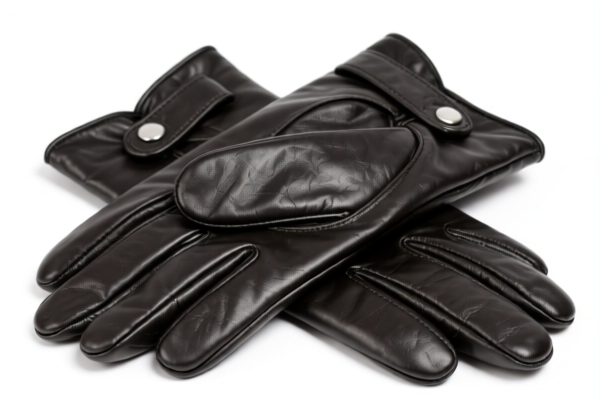
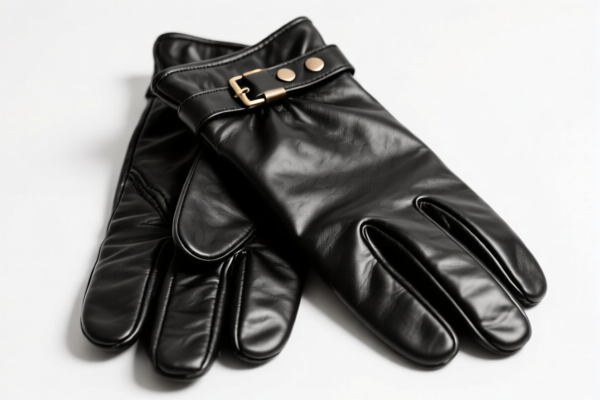
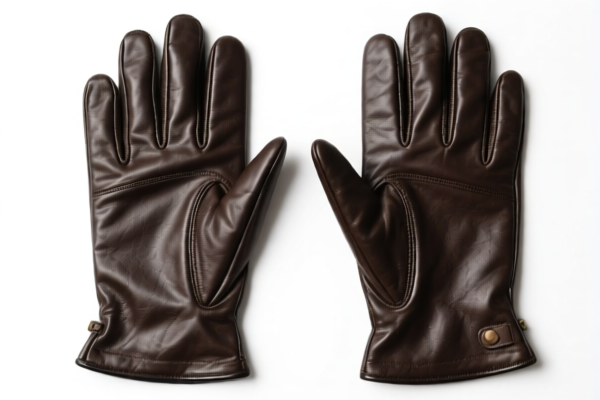
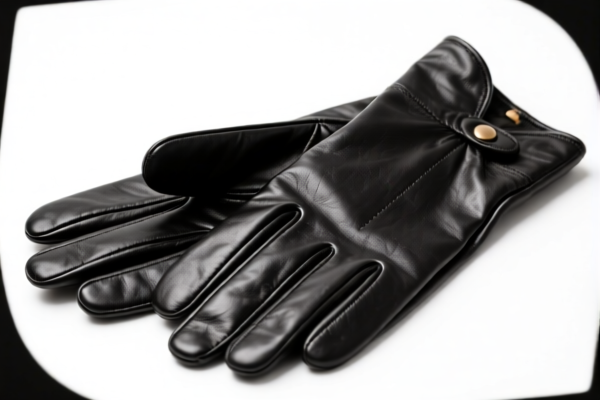
AI Analysis
🧤 Leather Gloves (Single, Seamless)
🌐 HS Code Reference & Customs Clearance Guide | 2026 Latest Tariff Analysis | Professional Clearance Strategy
📌 1. Product Definition & Classification: Do You Really Understand "Seamless Leather Gloves"?
Leather gloves, especially those described as "Single" and "Seamless," are high-end accessories often used for automotive driving, luxury fashion, or specialized industrial protection. In international trade, the classification is critical because "Seamless" (knitted or molded without distinct stitching lines) versus "Sewn/Stitched" triggers entirely different HS Code chapters and tax liabilities.
⚠️ Key Distinction Point:
- If the gloves are knitted, crocheted, or molded without visible external stitching (Seamless) → They generally fall under Chapter 61 (Articles of Apparel, Knitted or Crocheted) or specific leather subheadings depending on material construction.
- If the gloves are cut and sewn from leather pieces (even if minimalist) → They fall under Chapter 42 (Articles of Leather).
- "Single" implies they are not paired, which affects packaging declaration but not necessarily the HS Code, unless specified otherwise.
📦 2. HS Code Classification Details (2026 Latest Tariff Authority Comparison)
Based on the provided data, here are the five potential HS Codes for "Leather Gloves (Single, Seamless)" and their corresponding tax structures:
| HS Code | Product Description | Key Feature / Logic | Total Tax Rate |
|---|---|---|---|
6216.00.90.00 |
Leather Seamless Gloves | Knitted/Molded Logic: Fits the material characteristic of gloves without traditional stitching. | 21.3% |
4205.00.60.00 |
Leather Articles | Reptile/Special Leather: Meets requirements for reptile or other special leather articles. | 39.9% |
4205.00.80.00 |
Other Leather Articles | General Leather Logic: Follows the classification logic for other leather gloves. | 35.0% |
4203.29.30.10 |
Seamless Integrated Leather Gloves | Integrated Molded: Specifically classified as "seamless integrated" leather gloves. | 49.0% |
4203.29.20.00 |
Leather Seamless Gloves | Non-Sewn Characteristic: Classified based on the non-sewn/seamless feature. | 47.6% |
🔍 Critical Insight:
- The term "Seamless" is the primary driver for classification ambiguity.
- Chapter 62 (6216.00.90.00) offers the lowest tax burden (21.3%), suggesting that if the gloves can be proven to be knitted/molded rather than cut-and-sewn, this is the optimal code.
- Chapter 42 codes (4203...and4205...) impose significantly higher taxes (35%–49%) due to "Additional Tariffs" and "Section 301/122 Clauses."
💰 3. Detailed Tariff Rate Analysis (Including Additional Duties & Policy Surcharges)
✅ Applicable Country: United States (US)
✅ Origin: China (CN)
✅ Effective Time: Post-November 2025 (including subsequent imports)
🎯 1. 6216.00.90.00 – The "Lowest Tax" Option (Knitted/Molded Logic)
| Item | Content |
|---|---|
| Base Duty | 3.8% (Ad Valorem) |
| Additional Duty (Section 301) | +7.5% |
| Section 122 Duty | +10% |
| Total Tax Rate | 21.3% |
| Tax Calculation | CIF Value × 21.3% |
| De Minimis Exemption | ❌ Not Eligible |
| Legal Basis Path | Base Tariff: 3.8% → Add-on: 7.5% → Section 122: 10% |
📌 Explanation:
- This is the most favorable code if the gloves are technically "knitted" or "molded" leather (or leather-like material).
- The Section 122 Duty (+10%) is a specific surcharge often applied to consumer goods from China.
- The Section 301 Additional Duty is moderate at 7.5% for this specific subheading.
🎯 2. 4205.00.60.00 – Reptile/Special Leather
| Item | Content |
|---|---|
| Base Duty | 4.9% |
| Additional Duty (Section 301) | +25.0% |
| Section 122 Duty | +10% |
| Total Tax Rate | 39.9% |
| Tax Calculation | CIF Value × 39.9% |
| De Minimis Exemption | ❌ Not Eligible |
| Legal Basis Path | Base Tariff: 4.9% → Add-on: 25.0% → Section 122: 10% |
📌 Note:
- If the leather is reptile skin or a specific "other leather" category not covered under general gloves, this code applies.
- The 25% Additional Duty is a standard high tariff for many leather articles under Section 301.
🎯 3. 4205.00.80.00 – Other Leather Articles
| Item | Content |
|---|---|
| Base Duty | 0.0% |
| Additional Duty (Section 301) | +25.0% |
| Section 122 Duty | +10% |
| Total Tax Rate | 35.0% |
| Tax Calculation | CIF Value × 35.0% |
| De Minimis Exemption | ❌ Not Eligible |
| Legal Basis Path | Base Tariff: 0.0% → Add-on: 25.0% → Section 122: 10% |
📌 Note:
- Although the Base Duty is 0%, the high Additional Duty (25%) and Section 122 (10%) push the total to 35.0%.
- This is a "catch-all" for leather articles not elsewhere specified.
🎯 4. 4203.29.30.10 – Seamless Integrated Leather Gloves
| Item | Content |
|---|---|
| Base Duty | 14.0% |
| Additional Duty (Section 301) | +25.0% |
| Section 122 Duty | +10% |
| Total Tax Rate | 49.0% |
| Tax Calculation | CIF Value × 49.0% |
| De Minimis Exemption | ❌ Not Eligible |
| Legal Basis Path | Base Tariff: 14.0% → Add-on: 25.0% → Section 122: 10% |
📌 Warning:
- This is the highest tax rate (49.0%).
- It applies if the gloves are explicitly classified as "Integrated Seamless" under Chapter 42.
- The high Base Duty (14.0%) combined with standard Section 301 (25%) and Section 122 (10%) makes this the most expensive option.
🎯 5. 4203.29.20.00 – Leather Seamless Gloves (Non-Sewn)
| Item | Content |
|---|---|
| Base Duty | 12.6% |
| Additional Duty (Section 301) | +25.0% |
| Section 122 Duty | +10% |
| Total Tax Rate | 47.6% |
| Tax Calculation | CIF Value × 47.6% |
| De Minimis Exemption | ❌ Not Eligible |
| Legal Basis Path | Base Tariff: 12.6% → Add-on: 25.0% → Section 122: 10% |
📌 Note:
- Similar to the above, but with a slightly lower Base Duty (12.6%).
- Still results in a very high 47.6% total tax.
🛠️ 4. Customs Clearance Practical Advice (Avoid Pitfalls)
✅ 1. Documentation Checklist (Indispensable)
| Document | Must Provide | Description |
|---|---|---|
| ✅ Product Specification Sheet | ✔️ | Must clearly state "Seamless" construction method (knitted/molded vs. cut-and-sewn). |
| ✅ Photos of Inside/Outside | ✔️ | Show lack of stitching lines to support "Seamless" claim. |
| ✅ Material Composition Certificate | ✔️ | Confirm leather type (e.g., cowhide, sheepskin, reptile). |
| ✅ Commercial Invoice | ✔️ | Clearly describe as "Leather Gloves, Seamless, Single Pair" (or single). |
| ✅ Packing List | ✔️ | Specify if gloves are sold as pairs or singles. |
| ✅ Origin Certificate | ✔️ | Required for Section 301 and Section 122 applicability. |
✅ 2. Declaration Strategy (Key Mantra)
🔥 "Prove Seamless, Choose Ch 62, Avoid Ch 42, Save Tax!"
| Scenario | Correct Declaration | Risk |
|---|---|---|
| Knitted/Molded Leather | 6216.00.90.00 |
✅ Lowest Tax (21.3%) |
| Cut-and-Sewn Leather | 4203.29.20.00 or 4203.29.30.10 |
❌ High Tax (47.6%-49.0%) |
| Reptile Leather | 4205.00.60.00 |
⚠️ Medium-High Tax (39.9%) |
| General Leather Articles | 4205.00.80.00 |
⚠️ Medium Tax (35.0%) |
📌 Critical Tip:
- If your gloves are "Seamless," try to argue they are knitted or molded to qualify for Chapter 62.
- If they are clearly cut and assembled (even with hidden seams), they will likely be classified under Chapter 42, triggering the 47-49% tax.
✅ 3. Special Case Handling
| Case | Handling Advice |
|---|---|
| OEM Custom Gloves | Provide design files showing "seamless" manufacturing process (e.g., molding). |
| Leather Type | If reptile leather, use 4205.00.60.00. If general leather, choose between Ch 62 and Ch 42 based on construction. |
| "Single" Gloves | Declare as "Single" to avoid confusion, but ensure the HS Code is based on material/construction, not quantity. |
| Section 122 Duty | Remember, 10% is mandatory for most Chinese consumer goods, regardless of HS Code. |
🌍 5. Global Market Clearance Comparison (2026 Latest)
| Country/Region | Recommended HS Code | Tariff | Certification | Notes |
|---|---|---|---|---|
| 🇺🇸 USA | 6216.00.90.00 (if possible) |
21.3% | None specific | Highest risk if misclassified as Ch 42 (49%) |
| 🇨🇳 China | 6216.00.90.00 |
~5-7% | None | Lower import duty for Chinese imports |
| 🇪🇺 EU | 4203.21.00 (General) |
~12% | CE (if functional) | EU does not have Section 301/122, but has standard tariffs |
| 🇬🇧 UK | 4203.21.00 |
~12% | UKCA | Post-Brexit, standard rates apply |
| 🇯🇵 Japan | 4203.21.00 |
~5-10% | PSE (if functional) | No major surcharges |
📌 Conclusion:
- The USA is the most challenging market due to Section 301 and Section 122 surcharges.
- Misclassification from Ch 62 (21.3%) to Ch 42 (49%) results in a 27.7% tax increase, significantly impacting profit margins.
📌 6. Common Errors & Pitfalls (Lessons Learned)
❌ Error 1: Declaring "Seamless" gloves as Cut-and-Sewn (Ch 42)
👉 Consequence: Tax jumps from 21.3% to 47.6% or 49% → Profit loss!
❌ Error 2: Using "Leather Gloves" without specifying "Seamless"
👉 Consequence: Customs may default to the highest tax rate or request additional documentation → Delay!
❌ Error 3: Ignoring Section 122 Duty
👉 Consequence: Unexpected 10% surcharge at customs → Cash flow issue!
❌ Error 4: Incorrectly claiming De Minimis Exemption
👉 Consequence: All shipments are subject to duty → No exemption applies!
✅ Correct Approach:
"Leather Gloves, Seamless, Knitted/Molded Construction, Single Pair, 100% Cowhide, Model XYZ, No Stitching Lines"
🎯 7. Conclusion: Professional Declaration, Time-Saving, Cost-Reducing!
🎯 Remember the Mantra:
🔹 "Seamless = Ch 62 = 21.3% Tax"
🔹 "Sewn = Ch 42 = 47-49% Tax"
🔹 "Section 122 is 10% Always"
🔹 "De Minimis is NOT Applicable"
📌 Tip:
- If your gloves are imported from Vietnam, Mexico, Thailand, or Malaysia, you may qualify for IEEPA Exemption or lower Section 301 rates.
- Consider Advance Ruling to confirm if your "Seamless" gloves can be classified under 6216.00.90.00.
📢 Action Required:
📞 Consult with a professional customs broker + Provide product photos + Apply for HS Code Advance Ruling
🚀 Ensure smooth clearance, efficient export, and maximized profits!
✨ Professional clearance starts with accurate classification!
💼 Every cent of cost deserves precise calculation!
Customer Reviews
About HS Code Classification
The Harmonized System (HS) is an internationally standardized nomenclature developed by the World Customs Organization (WCO) to classify traded products. Over 200 countries use the HS system as the basis for customs tariffs, trade statistics, and import/export regulations.
Each HS code follows a hierarchical structure:
- Chapter (2 digits) — Broad category of goods (e.g., Chapter 84: Machinery and Mechanical Appliances)
- Heading (4 digits) — More specific grouping within the chapter
- Subheading (6 digits) — Internationally standardized breakdown, used by all WCO member countries
- National subdivisions (8-10 digits) — Country-specific extensions for further classification, such as US HTSUS 10-digit codes
Correct HS code classification is essential for smooth customs clearance, accurate duty payment, and compliance with trade regulations. Misclassification can lead to customs delays, overpayment of duties, or penalties.
When importing from CN to US, the applicable tariff rates may include:
- Most-Favored-Nation (MFN) rate — The standard duty rate applied to WTO members
- General rate — Applied to countries without trade agreements
- Trade remedy duties — Additional tariffs such as Section 301 (anti-dumping), Section 232 (national security), or countervailing duties
The information provided on this page is for reference purposes only. For official classification, please consult with your local customs authority or a licensed customs broker.