Leather Handbags
CN → US| HS Code | Tariff Rate | Origin | Destination | Doc |
|---|---|---|---|---|
| 4205008000 | 35.0% | CN | US | Official Doc |
| 4202399000 | 55.0% | CN | US | Official Doc |
| 4202316000 | 43.0% | CN | US | Official Doc |
Product Images
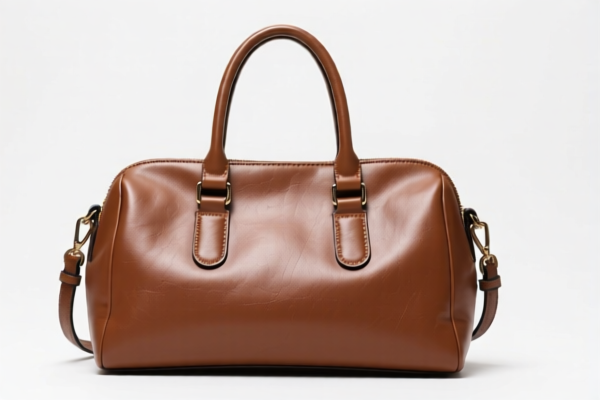
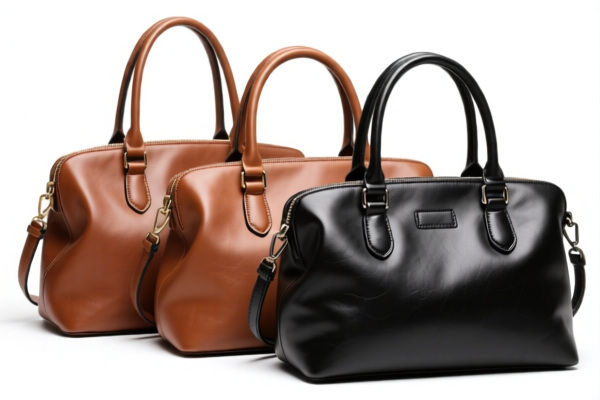
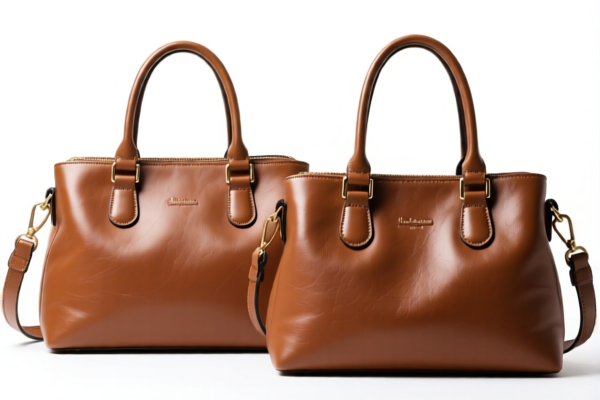
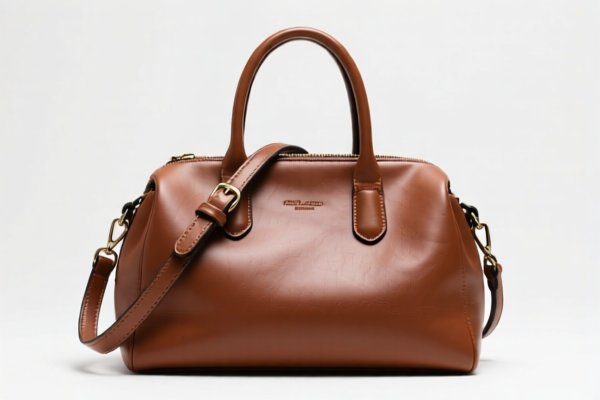
AI Analysis
👜 Leather Handbags & Accessories (The Ultimate Guide to US Customs & Tariffs)
🌐 HS Code Reference & Clearance Guide | 2026 Latest Tariff Analysis | Professional-Level Compliance Strategy
📌 I. Product Definition: Do You Really Understand "Leather Handbags"?
Leather handbags and related articles are not just fashion items; they are heavily scrutinized goods in international trade. In customs classification, the distinction between a "pure leather article" and a "functional container" is critical for determining your tax liability.
Key Distinctions: 1. General Leather Articles (Head 42.05): Decorative items, belts, gloves, or parts that do not fit the specific definition of a "bag" or "container." 2. Carrying Cases & Bags (Head 42.02): Items designed to carry personal effects, money, documents, etc. This includes handbags, wallets, and purses. 3. Leather Outer Surface (Head 42.03): Accessories like gloves, belts, and harnesses made primarily of leather.
⚠️ Critical Classification Point:
- If the item is a structured bag (handbag, purse, satchel) → It falls under 42.02.
- If the item is a decorative leather good or unstructured leather piece not fitting bag definitions → It may fall under 42.05 or 42.03.
- Surface Material Matters: If the outer surface is leather (even partially covered), it triggers specific subheadings under 42.02.
📦 II. HS Code Classification Details (2026 Latest Tariff Authority Comparison)
Based on the provided data, here is the authoritative breakdown for leather-related goods imported into the US:
| HS Code | Product Description | Applicable Scenario | Tax Rate (Total) | Key Tax Components |
|---|---|---|---|---|
4205.00.80.00 |
Leather Articles (General) | Decorative leather goods, belts, gloves, or items not classified as bags/containers. | 35.0% | Base: 0% + Section 301: 25% + Section 122: 10% |
4202.39.90.00 |
Other Handbag-Type Articles (Leather) | Bags made of leather, not specifically listed elsewhere (e.g., non-handbag carriers, small pouches). | 55.0% | Base: 20% + Section 301: 25% + Section 122: 10% |
4202.31.60.00 |
Handbags & Similar Containers (Leather Outer Surface) | Standard Handbags, purses, and totes with an outer surface of leather. | 43.0% | Base: 8% + Section 301: 25% + Section 122: 10% |
4203.29.05.00 |
Leather Accessories (Other) | Leather goods like gloves, belts, or other attire accessories not specified elsewhere. | 47.6% | Base: 12.6% + Section 301: 25% + Section 122: 10% |
4203.29.08.00 |
Leather Accessories (Other) | Similar to above, matching form and material specifications. | 49.0% | Base: 14.0% + Section 301: 25% + Section 122: 10% |
🔍 Key Insight:
- Handbags (4202.31.60.00) are taxed at 43% (Total).
- General Leather Items (4205.00.80.00) are taxed at 35% (Total).
- Non-Handbag Leather Bags (4202.39.90.00) are taxed at 55% (Total) — Avoid this high rate by correctly classifying as handbags if applicable.
- Leather Accessories (4203.29.05.00/4203.29.08.00) range from 47.6% to 49%.
💰 III. 2026 Latest Tariff Rate Breakdown (Including Surcharges & Policy Add-ons)
✅ Applicable Country: United States (US)
✅ Country of Origin: China (CN)
✅ Effective Date: Ongoing (including subsequent imports after 2025)
🎯 1. 4202.31.60.00 — Handbags & Similar Containers (Leather Outer Surface)
The most common classification for fashion handbags.
| Item | Details |
|---|---|
| Base Tariff | 8.0% |
| Section 301 Surcharge | +25.0% |
| Section 122 Surcharge | +10.0% |
| Total Effective Tax Rate | 43.0% |
| Calculation Method | CIF Value × 43.0% |
| De Minimis Eligibility | ❌ Not Eligible (Deny De Minimis) |
| Legal Basis Path | HTSUS:4202.31.60.00 → Section 301: Footnote 9903.88.01 → Section 122: IEEPA Authority |
📌 Explanation:
- The 25% Section 301 tariff applies to all Chinese-made goods in this category.
- The 10% Section 122 tariff is a specific surcharge applied to certain consumer goods from China.
- Total 43% is the standard burden for leather handbags. Do not confuse with lower base rates; the surcharges are mandatory.
🎯 2. 4202.39.90.00 — Other Handbag-Type Articles (Leather)
For bags that do not fit the "handbag" definition but are still carrying cases.
| Item | Details |
|---|---|
| Base Tariff | 20.0% |
| Section 301 Surcharge | +25.0% |
| Section 122 Surcharge | +10.0% |
| Total Effective Tax Rate | 55.0% |
| Calculation Method | CIF Value × 55.0% |
| De Minimis Eligibility | ❌ Not Eligible |
| Legal Basis Path | HTSUS:4202.39.90.00 → Section 301 → Section 122 |
📌 Warning:
- This is the highest tax rate in the dataset.
- Misclassifying a general bag as "other" instead of "handbag" can cost you an extra 12% in taxes. Ensure your product description clearly states it is a "handbag" or "purse."
🎯 3. 4205.00.80.00 — Other Leather Articles
For decorative leather goods, belts, or items not classified as bags.
| Item | Details |
|---|---|
| Base Tariff | 0.0% |
| Section 301 Surcharge | +25.0% |
| Section 122 Surcharge | +10.0% |
| Total Effective Tax Rate | 35.0% |
| Calculation Method | CIF Value × 35.0% |
| De Minimis Eligibility | ❌ Not Eligible |
| Legal Basis Path | HTSUS:4205.00.80.00 → Section 301 → Section 122 |
📌 Opportunity:
- If your product is a leather belt, glove, or decorative pouch that does NOT function as a handbag, you can save 8-20% in taxes by classifying here.
- Condition: The item must NOT be primarily designed for carrying personal effects like a handbag.
🎯 4. 4203.29.05.00 & 4203.29.08.00 — Leather Accessories
For gloves, belts, and other attire accessories.
| Item | Details |
|---|---|
| Base Tariff | 12.6% (05) / 14.0% (08) |
| Section 301 Surcharge | +25.0% |
| Section 122 Surcharge | +10.0% |
| Total Effective Tax Rate | 47.6% / 49.0% |
| Calculation Method | CIF Value × 47.6% / 49.0% |
| De Minimis Eligibility | ❌ Not Eligible |
📌 Note:
- These rates are higher than handbags (43%) but lower than "other bags" (55%).
- Ensure the item is clearly an accessory (e.g., belt, glove) and not a bag.
🛠️ IV. Clearance Practical Advice (Expert Pitfall Avoidance Guide)
✅ 1. Required Documentation Checklist
| Document | Mandatory | Notes |
|---|---|---|
| ✅ Product Specification Sheet | ✔️ | Must specify material (e.g., "100% Leather," "Polyurethane Coated Leather"). |
| ✅ Product Photos | ✔️ | Clear images of the outer surface, interior, and any branding. |
| ✅ Commercial Invoice | ✔️ | Clearly state "Handbag," "Leather," and HS Code. |
| ✅ Packing List | ✔️ | Detail quantities and dimensions. |
| ✅ Origin Certificate | ✔️ | Proof of Chinese origin is required for surcharge assessment. |
✅ 2. Classification Strategy (Golden Rules)
🔥 “Material Defines Base, Function Defines Chapter, Shape Defines Subheading!”
| Scenario | Correct HS Code | Tax Rate | Why? |
|---|---|---|---|
| Fashion Handbag (Structured, handles, for personal items) | 4202.31.60.00 |
43.0% | Fits "Handbags & Similar Containers" with leather outer surface. |
| Leather Belt | 4203.29.05.00 or 4205.00.80.00 |
47.6% or 35.0% | Belts are accessories. 4205 is often preferred for simple leather goods if not specified elsewhere. |
| Leather Wallet (Small, fits in hand) | 4202.31.60.00 |
43.0% | Often classified as handbags/purses if designed for carrying. |
| Decorative Leather Keychain | 4205.00.80.00 |
35.0% | Not a container or accessory for attire; a general leather article. |
| Non-Leather Bag (e.g., Canvas with Leather Trim) | Check HTSUS 42.02 | Varies | If leather is only a trim, it may not be "Leather Outer Surface." |
⚠️ Warning:
- Do NOT classify a handbag as4205.00.80.00to save taxes unless it is genuinely NOT a bag. Customs will reclassify and penalize.
- Do NOT classify a handbag as4202.39.90.00. This is a "catch-all" for bags that don't fit other categories, resulting in the highest tax (55%).
✅ 3. Special Cases & Handling
| Situation | Recommendation |
|---|---|
| Leather vs. Synthetic | If the outer surface is "Genuine Leather," use 4202.31.60.00. If it's "Faux Leather," it may fall under 4202.32.90.00 (different rate). |
| Mixed Materials | If leather is <50% of outer surface, it may not qualify as "Leather Outer Surface." Check specific HTSUS rules. |
| Handbag Parts (Straps, Lining) | Classified separately if sold alone. Straps may fall under 4205.00.80.00. |
| De Minimis ($800) | ❌ NOT ELIGIBLE. All leather goods from China are subject to full duties. |
🌍 V. Global Market Comparison (2026)
| Market | Recommended HS Code | Approx. Total Duty | Notes |
|---|---|---|---|
| 🇺🇸 USA | 4202.31.60.00 |
43.0% | Includes 25% Sec 301 + 10% Sec 122. |
| 🇨🇳 China | 4202.31.60.00 |
20.0% | No surcharges. |
| 🇪🇺 EU | 4202.31.60.00 |
8.0% | No Section 301/122 equivalents. |
| 🇬🇧 UK | 4202.31.60.00 |
12.0% | Post-Brexit tariff. |
| 🇯🇵 Japan | 4202.31.60.00 |
10.8% | No major surcharges. |
📌 Conclusion:
- The US market is the most expensive for Chinese leather goods due to Section 301 and Section 122 tariffs.
- Plan for a 43% total duty cost for handbags.
- Consider supply chain diversification if margins are thin.
📌 VI. Common Errors & Pitfalls (Lessons Learned)
❌ Error 1: Classifying a Handbag as 4205.00.80.00 (General Leather)
👉 Result: Customs reclassifies to 4202.31.60.00 → Back taxes + penalties.
❌ Error 2: Classifying a Handbag as 4202.39.90.00 (Other Bags)
👉 Result: Overpaying 12% in taxes (55% vs 43%).
❌ Error 3: Claiming De Minimis ($800) exemption for leather goods
👉 Result: Seizure or forced payment of all duties. Leather goods from China are excluded from de minimis.
❌ Error 4: Mislabeling Faux Leather as "Genuine Leather"
👉 Result: Potential fraud charges or reclassification to synthetic material tariffs.
✅ Correct Practice:
"Leather Handbag, Women's, Black, Genuine Leather Outer Surface, Model XYZ, No De Minimis Exemption Claimed"
🎯 VII. Conclusion: Precision in Classification Saves Money
🎯 Remember the Rules:
🔹 "Handbags = 4202.31.60.00 (43%)"
🔹 "Belts/Accessories = 4203/4205 (35%-49%)"
🔹 "Other Bags = 4202.39.90.00 (55%) — Avoid!"
🔹 "No De Minimis for Chinese Leather!"
📌 Pro Tip:
If your product is not from China (e.g., Vietnam, Italy, India), you may avoid the 25% Section 301 and 10% Section 122 tariffs.
- Vietnam/Italy: Duty could be as low as 0-8% (Base rate only).
- Strategy: Consider sourcing from non-China countries to reduce total tax burden significantly.
📣 Immediate Action:
📞 Consult a Customs Broker + Provide Product Photos + Verify Material Composition
🚀 Accurate Classification = Lower Costs + Faster Clearance
✨ Professional Clearance Starts with Precise Classification!
💼 Every Dollar Saved is a Dollar Earned!
Customer Reviews
About HS Code Classification
The Harmonized System (HS) is an internationally standardized nomenclature developed by the World Customs Organization (WCO) to classify traded products. Over 200 countries use the HS system as the basis for customs tariffs, trade statistics, and import/export regulations.
Each HS code follows a hierarchical structure:
- Chapter (2 digits) — Broad category of goods (e.g., Chapter 84: Machinery and Mechanical Appliances)
- Heading (4 digits) — More specific grouping within the chapter
- Subheading (6 digits) — Internationally standardized breakdown, used by all WCO member countries
- National subdivisions (8-10 digits) — Country-specific extensions for further classification, such as US HTSUS 10-digit codes
Correct HS code classification is essential for smooth customs clearance, accurate duty payment, and compliance with trade regulations. Misclassification can lead to customs delays, overpayment of duties, or penalties.
When importing from CN to US, the applicable tariff rates may include:
- Most-Favored-Nation (MFN) rate — The standard duty rate applied to WTO members
- General rate — Applied to countries without trade agreements
- Trade remedy duties — Additional tariffs such as Section 301 (anti-dumping), Section 232 (national security), or countervailing duties
The information provided on this page is for reference purposes only. For official classification, please consult with your local customs authority or a licensed customs broker.