Leather Lining for Shoes
CN → US| HS Code | Tariff Rate | Origin | Destination | Doc |
|---|---|---|---|---|
| 4105300000 | 12.0% | CN | US | Official Doc |
| 4105109000 | 12.0% | CN | US | Official Doc |
| 4107121040 | 35.0% | CN | US | Official Doc |
| 4104111040 | 35.0% | CN | US | Official Doc |
| 4104411040 | 35.0% | CN | US | Official Doc |
| 4107111040 | 35.0% | CN | US | Official Doc |
Product Images
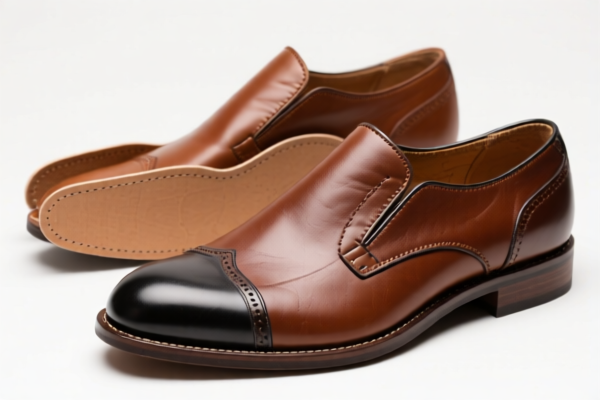
AI Analysis
👞 Leather Lining for Shoes (衬里用皮革)
🌐 HS Code Reference & Customs Clearance Guide | 2026 Latest Tariff Analysis | Professional Strategy for China-US Trade
📌 One, Product Definition: What Exactly is "Leather Lining"?
Leather lining for shoes is a specialized semi-finished leather product used as the inner layer of footwear. It is distinct from the outer shell (upper) because its primary function is comfort, moisture absorption, and structural integrity inside the shoe, rather than aesthetics or external protection.
In international trade, customs authorities scrutinize these goods closely because the HS Code classification drastically changes the tax burden based on whether the leather is considered "raw/split" vs. "finished/lining-specific," and more importantly, which附加 tariffs (Section 301 and IEEPA Section 122) apply.
⚠️ Key Distinction Point:
- If the item is a rough, split, or semi-tanned leather without specific finishing for lining → It often falls under Chapter 41.05 or 41.04 base rates (Lower Base Tariff, but still subject to surcharges).
- If the item is finished, specific "lining leather" (里皮) with clear intended use → It often falls under Chapter 41.07 or specific subheadings for "Lining Leather" (Higher Base Tariff due to trade war classifications).
📦 Two. HS Code Classification Details (2026 Latest Tariff Authority Comparison)
Based on the provided data, there are 6 possible HS Codes for "Leather Lining for Shoes." The divergence depends on the precise tanning process, physical form (sheet vs. cut piece), and specific usage description in your commercial invoice.
| HS Code | Product Description | Matching Logic (Why it fits) | Base Tariff | USITC Surcharge | IEEPA Section 122 | Total Tax Rate |
|---|---|---|---|---|---|---|
4105.30.00.00 |
Tanned Sheepskin/Lambskin (Semi-finished) | Logic: Name implies leather material + semi-finished state. Fits general leather characteristics. | 2.0% | 0.0% | 10.0% | 12.0% |
4105.10.90.00 |
Tanned Sheepskin/Lambskin (Other) | Logic: Matches "Leather" material + "Lining" as semi-finished/processed leather. Attributes to sheepskin tanning. | 2.0% | 0.0% | 10.0% | 12.0% |
4107.12.10.40 |
Lining Leather (Specific Subheading) | Logic: Name explicitly includes "Lining" (衬里/里衬) + "Leather". Perfect match for "Lining Leather" requirement. | 0.0% | 25.0% | 10.0% | 35.0% |
4104.11.10.40 |
Lining Leather (Cow/Buffer) | Logic: "Lining" corresponds to "Lining Leather" purpose; material attribute is leather. | 0.0% | 25.0% | 10.0% | 35.0% |
4104.41.10.40 |
Lining Leather (Other Cow/Buffer) | Logic: "Lining Leather" in name fully matches "Lining Leather" in reference category. | 0.0% | 25.0% | 10.0% | 35.0% |
4107.11.10.40 |
Lining Leather (Buffed Cow) | Logic: Usage (Lining) and Material (Leather) are completely consistent with target classification. | 0.0% | 25.0% | 10.0% | 35.0% |
🔍 Critical Insight:
- Group A (Low Tax ~12%):4105.xxcodes. These treat the lining as general sheepskin/lambskin products. Risk: If customs determines it is specifically "finished lining leather," they may force reclassification to Group B. - Group B (High Tax ~35%):4107.xxand4104.xxcodes. These treat the product specifically as "Lining Leather" (里皮). This category is heavily targeted by USITC Section 301 Tariffs (+25%) in addition to IEEPA Section 122 (+10%).
💰 Three. 2026 Latest Tariff Rate Breakdown (Including Surcharges & Policy Add-ons)
✅ Applicable Country: United States (US)
✅ Country of Origin: China (CN)
✅ Effective Date: Post-November 2025 (Current Trade Regime)
🎯 Scenario 1: Classified as General Sheepskin/Lambskin (4105.xx)
| Item | Details |
|---|---|
| Base MFN Rate | 2.0% |
| USITC Section 301 Surcharge | 0.0% (Often excluded or lower for certain sheepskin categories depending on specific footnote) |
| IEEPA Section 122 Tariff | +10.0% (China-specific emergency tariff) |
| Total Effective Rate | 12.0% |
| Calculation Base | CIF Value × 12% |
| De Minimis Exemption? | ❌ No (Denied for leather goods from China) |
| Legal Path | IEEPA:122 → USITC:4105.xx |
📌 Explanation:
- The 12% rate is significantly lower than the 35% rate.
- However, this classification relies on proving the item is "Sheepskin/Lambskin" and potentially "Semi-finished" rather than a high-value, finished "Lining Leather."
- Risk: Customs may argue that "Shoe Lining" is a specific finished good, not raw sheepskin.
🎯 Scenario 2: Classified as Specific "Lining Leather" (4107.xx / 4104.xx)
| Item | Details |
|---|---|
| Base MFN Rate | 0.0% |
| USITC Section 301 Surcharge | +25.0% (Heavy penalty for Chinese leather goods) |
| IEEPA Section 122 Tariff | +10.0% (China-specific emergency tariff) |
| Total Effective Rate | 35.0% |
| Calculation Base | CIF Value × 35% |
| De Minimis Exemption? | ❌ No (Denied) |
| Legal Path | IEEPA:122 → USITC:301 → USITC:4107.xx/4104.xx |
📌 Explanation:
- The 35% rate is the dominant risk for "Leather Lining."
- The term "Lining" (里衬) triggers the "Lining Leather" subheadings in the Harmonized Tariff Schedule.
- Both Section 301 (+25%) and Section 122 (+10%) are cumulative.
- This is the most common classification for imported shoe linings from China.
🛠️ Four. Customs Clearance Practical Advice (Real-World Pitfall Avoidance)
✅ 1. Documentation Checklist (Non-Negotiable)
| Document | Must Provide | Purpose |
|---|---|---|
| ✅ Product Specifications | ✔️ | Detail tanning method (Vegetable/Synthetic), finish (Buffed/Glazed), and thickness. |
| ✅ Photos | ✔️ | Show the grain, the back (suede), and any embossing. Crucial for proving it is "Sheepskin" vs. "Cowhide." |
| ✅ Commercial Invoice | ✔️ | Critical: Use precise language. Avoid vague terms like "Leather Part." Use "Sheepskin Lining" or "Buffed Cow Lining." |
| ✅ Packing List | ✔️ | Ensure weight/volume matches HS code expectations. |
| ✅ Origin Certificate | ✔️ | Proof of Chinese origin (triggers the surcharges). |
✅ 2. Classification Strategy & Naming Tips
🔥 "Naming is Everything: Precision Saves 23% in Tariffs!"
| Strategy | Correct Approach | Why? |
|---|---|---|
| If it is Sheepskin | Use: "Tanned Sheepskin Lining, Semi-Finished" | Aim for 4105.xx (12% tax). Must prove it's sheepskin. |
| If it is Cowhide | Use: "Buffed Cowhide Lining Leather" | Likely 4107.xx or 4104.xx (35% tax). Harder to reduce. |
| Avoid Generic Terms | ❌ Do NOT use just "Leather" or "Leather Parts" | Customs will assign the highest possible rate or delay for review. |
| Clarify "Lining" Status | ✅ Specify "Intended for Shoe Lining" | Confirms the end-use, which aligns with 4107 (Lining Leather) codes. |
✅ 3. Special Handling for Disputes
| Scenario | Advice |
|---|---|
| Customs Questions "Sheepskin vs. Cowhide" | Provide microscopic fiber analysis or supplier lab reports confirming species. |
| Customs Questions "Semi-finished vs. Finished" | Provide data on thickness uniformity, edge treatment, and whether it is cut to specific shoe shapes (cut-to-shape is more "finished"). |
| High Tariff Burden (35%) | Consider if the product qualifies for any Exclusions under Section 301 (rare for leather, but check HTSUS Footnotes). |
🌍 Five. Global Market Comparison (2026 Snapshot)
| Market | Recommended HS Code | Est. Tax Rate | Key Requirement |
|---|---|---|---|
| 🇺🇸 USA | 4107.12.10.40 / 4105.30.00.00 |
12% ~ 35% | Strict Section 122 & 301 enforcement. |
| 🇨🇳 China | 4107 / 4105 |
Varies (Low) | Import duties may be low, but VAT applies. |
| 🇪🇺 EU | 4107 |
~4-6% + VAT | No Section 301. Focus on REACH compliance. |
| 🇬🇧 UK | 4107 |
~4-6% + VAT | Post-Brexit rules. UKCA marking not needed for leather, but CE for finished shoes. |
📌 Conclusion:
- The USA is the most punitive market for leather linings due to the combination of IEEPA 122 (+10%) and Section 301 (+25%).
- If you cannot classify under4105(Sheepskin), you are almost certainly paying 35%.
- EU/UK are much friendlier, but require strict chemical compliance (REACH).
📌 Six. Common Errors & Pitfall Guide (Lessons Learned)
❌ Error 1: Using "Leather Parts" as the description
👉 Consequence: Customs may assess the highest duty rate or detain for misdeclaration.
👉 Fix: Be specific: "Shoe Lining," "Sheepskin," "Buffed."
❌ Error 2: Ignoring Section 122 Tariffs
👉 Consequence: Unexpected 10% charge even if you think Section 301 doesn't apply.
👉 Fix: Always calculate Base + 301 + 122.
❌ Error 3: Misidentifying Material (Sheep vs. Cow)
👉 Consequence: 4105 (Sheep) is cheaper than 4107 (Cow/Lining). Wrong ID = 23% extra tax.
👉 Fix: Get supplier confirmation of species.
❌ Error 4: Assuming "Lining" means it's an Accessory (Chapter 42)
👉 Consequence: Wrong Chapter. Leather goods are Ch 41. Leather parts can be Ch 42, but unmanufactured/semi-manufactured leather is Ch 41.
👉 Fix: Pre-packaged, specific shoe linings are often Ch 41. Unfinished are Ch 41.
✅ Correct Declaration Example:
"Sheepskin Lining, Tanned, Unfinished, Cut to Size, for Use in Footwear Manufacturing"
→ Aims for4105.30.00.00(12%)"Buffed Cowhide Lining Leather, Finished, for Shoe Interiors"
→ Likely4107.12.10.40(35%)
🎯 Seven. Conclusion: Strategic Sourcing & Compliance
🎯 Key Takeaway:
🔹 "Check the Species: Sheep is 12%, Cow is 35%."
🔹 "Section 122 is Always On: Don't forget the extra 10%."
🔹 "Description Matters: 'Leather Part' is a red flag. 'Sheepskin Lining' is a strategy."📌 Pro Tip:
If your product is 100% Sheepskin and Semi-Finished, aggressively push for4105.xxclassification to save 23% in taxes.
If it is Cowhide or Highly Finished, prepare for the 35% rate or explore third-country assembly (e.g., Vietnam, Mexico) for tariff mitigation.
📣 Immediate Action:
📞 Verify Material Origin with your supplier.
📄 Draft Invoice with precise HS-aligned descriptions.
📝 Consult Customs Broker for a Pre-Ruling if volume is high.
✨ Professional Clearance Starts with Precise Classification!
💼 Your Profit Margin Depends on These 23 Percentage Points!
Customer Reviews
About HS Code Classification
The Harmonized System (HS) is an internationally standardized nomenclature developed by the World Customs Organization (WCO) to classify traded products. Over 200 countries use the HS system as the basis for customs tariffs, trade statistics, and import/export regulations.
Each HS code follows a hierarchical structure:
- Chapter (2 digits) — Broad category of goods (e.g., Chapter 84: Machinery and Mechanical Appliances)
- Heading (4 digits) — More specific grouping within the chapter
- Subheading (6 digits) — Internationally standardized breakdown, used by all WCO member countries
- National subdivisions (8-10 digits) — Country-specific extensions for further classification, such as US HTSUS 10-digit codes
Correct HS code classification is essential for smooth customs clearance, accurate duty payment, and compliance with trade regulations. Misclassification can lead to customs delays, overpayment of duties, or penalties.
When importing from CN to US, the applicable tariff rates may include:
- Most-Favored-Nation (MFN) rate — The standard duty rate applied to WTO members
- General rate — Applied to countries without trade agreements
- Trade remedy duties — Additional tariffs such as Section 301 (anti-dumping), Section 232 (national security), or countervailing duties
The information provided on this page is for reference purposes only. For official classification, please consult with your local customs authority or a licensed customs broker.