Leather Lubricant
CN → US| HS Code | Tariff Rate | Origin | Destination | Doc |
|---|---|---|---|---|
| 3911901000 | 35.0% | CN | US | Official Doc |
| 3812205000 | 40.0% | CN | US | Official Doc |
| 3906905000 | 39.2% | CN | US | Official Doc |
| 3402905050 | 38.7% | CN | US | Official Doc |
| 3506990000 | 37.1% | CN | US | Official Doc |
Product Images
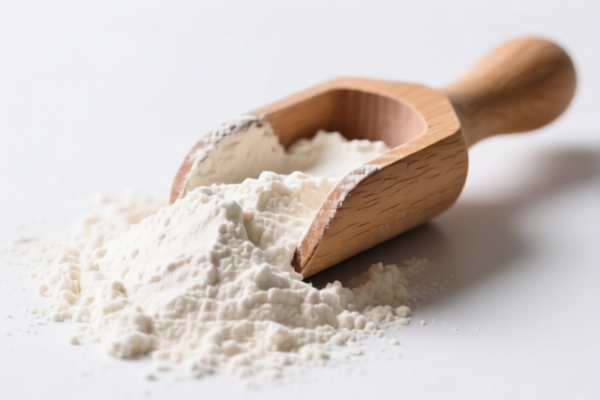
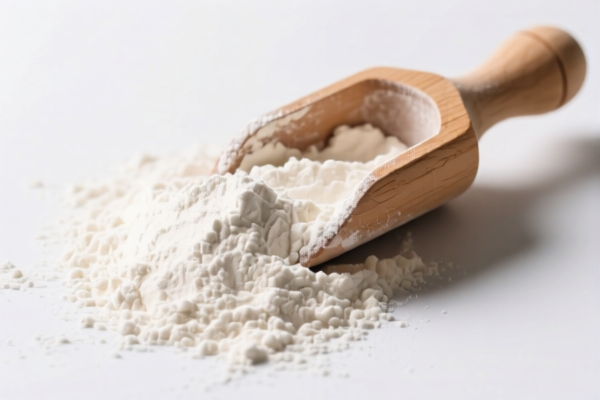
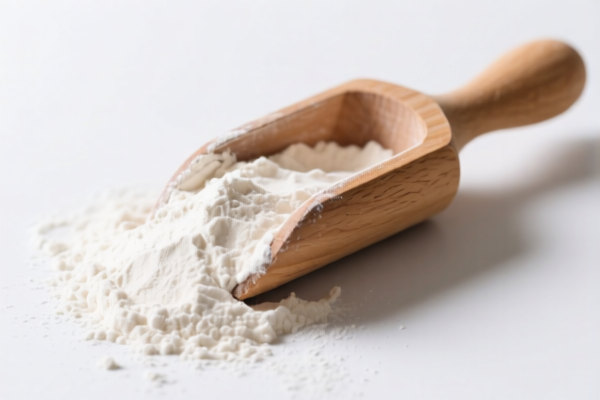
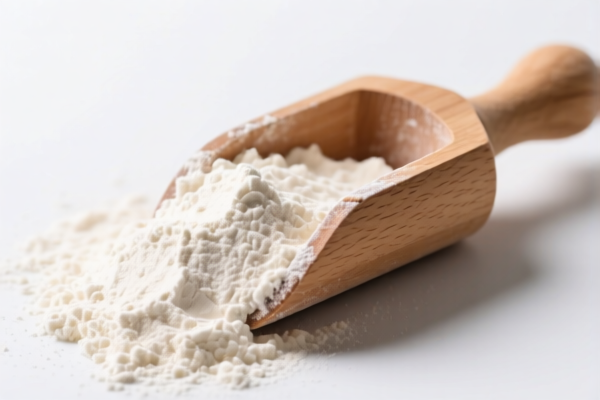
AI Analysis
🧴 Leather Lubricant (Leather Conditioner/Lubricant)
🌐 HS Code Reference & Customs Clearance Guide | 2026 Latest Tariff Analysis | Professional Clearance Strategy
📌 I. Product Definition: What Exactly Is "Leather Lubricant"?
Leather Lubricant, often referred to as Leather Conditioner, Dressing, or Softener, is a chemical formulation applied to leather to restore flexibility, reduce friction, and prevent cracking. It typically contains oils, waxes, and emulsifiers.
In international trade, the classification depends heavily on the primary function and chemical composition: * Chemical Additives: If it acts primarily as a plasticizer or chemical intermediate. * Preparations: If it is a mixed chemical product used for preservation or treatment. * Adhesives/Binders: If it has binding properties similar to glues. * Surface Treatment Agents: If it acts primarily as a surfactant or emulsifier for cleaning/prepping.
⚠️ Critical Distinction:
- If the product is primarily a chemical raw material used in manufacturing leather (plasticizer) → Chapter 38/39
- If the product is a finished preparation for surface treatment → Chapter 34
- If the product functions as a glue or adhesive for bonding leather layers → Chapter 35
📦 II. HS Code Classification Details (2026 Latest Tariff Authority Cross-Reference)
Based on the inferred characteristics of Leather Lubricants, here are the most likely HS Code classifications and their tax implications for imports into the US (assuming Chinese origin, subject to current trade policies).
| HS Code | Product Description | Inferred Material/Function | Total Tax Rate |
|---|---|---|---|
3911.90.10.00 |
Resinous Products, Other (Petroleum Resins/Polymeric Chemicals) | Infer material as petroleum resin or polymeric chemical, fitting the category of primary shape chemicals | 35.0% |
3812.20.50.00 |
Plasticizers, Prepared Plasticizers | Matches plasticizer usage, belonging to the category of complex plasticizers under chemical products | 40.0% |
3906.90.50.00 |
Acrylic Polymers in Primary Forms | Infer main material as acrylic polymer, fitting other category characteristics | 39.2% |
3402.90.50.50 |
Surface-Active Organic Preparations (Other) | Chemical preparation category, material attribute matches other fallback categories | 38.7% |
3506.99.00.00 |
Prepared Glues & Adhesives (Other) | Matches prepared adhesive usage, belonging to the category of other prepared adhesives | 37.1% |
🔍 Key Insight:
- Leather lubricants are often misclassified. If they contain high levels of plasticizers (to soften leather),3812is common.
- If they are resin-based binders,3911or3506may apply.
- If they are surface-active emulsions for cleaning/conditioning,3402is the standard fallback.
💰 III. 2026 Latest Tariff Rate Breakdown (Including Additional Taxes & Policy Surcharges)
✅ Applicable Country: United States (US)
✅ Origin: China (CN)
✅ Effective Date: Current rates include Section 301 and IEEPA surcharges.
🎯 1. 3911.90.10.00 —— Resinous Products / Petroleum Resins
| Item | Content |
|---|---|
| Base Duty Rate | 0.0% |
| Section 301 Surcharge | +25.0% |
| IEEPA Surcharge (List 122) | +10.0% |
| Total Effective Tax Rate | 35.0% |
| Tax Calculation | CIF Value × 35.0% |
| De Minimis Exemption | ❌ Not Eligible (Section 301 goods are excluded) |
| Legal Basis Path | IEEPA:9903.01.25 → USITC:3911.90.10.00 → SECTION_301:3911 |
📌 Explanation:
- Classified as "Petroleum Resin or Polymer Chemicals."
- High tax burden due to combined Section 301 (25%) and IEEPA (10%) surcharges on top of a 0% base rate.
🎯 2. 3812.20.50.00 —— Prepared Plasticizers
| Item | Content |
|---|---|
| Base Duty Rate | 5.0% |
| Section 301 Surcharge | +25.0% |
| IEEPA Surcharge (List 122) | +10.0% |
| Total Effective Tax Rate | 40.0% |
| Tax Calculation | CIF Value × 40.0% |
| De Minimis Exemption | ❌ Not Eligible |
| Legal Basis Path | IEEPA:9903.01.25 → USITC:3812.20.50.00 → SECTION_301:3812 |
📌 Explanation:
- If the lubricant is deemed a "Plasticizer" (used to soften leather fibers), this code applies.
- Highest total rate (40%) due to the 5% base duty plus surcharges.
🎯 3. 3906.90.50.00 —— Acrylic Polymers
| Item | Content |
|---|---|
| Base Duty Rate | 4.2% |
| Section 301 Surcharge | +25.0% |
| IEEPA Surcharge (List 122) | +10.0% |
| Total Effective Tax Rate | 39.2% |
| Tax Calculation | CIF Value × 39.2% |
| De Minimis Exemption | ❌ Not Eligible |
| Legal Basis Path | IEEPA:9903.01.25 → USITC:3906.90.50.00 → SECTION_301:3906 |
📌 Explanation:
- Applies if the lubricant is primarily an acrylic polymer emulsion.
- Moderate tax rate, slightly lower than plasticizers due to a lower base duty.
🎯 4. 3402.90.50.50 —— Surface-Active Organic Preparations (Other)
| Item | Content |
|---|---|
| Base Duty Rate | 3.7% |
| Section 301 Surcharge | +25.0% |
| IEEPA Surcharge (List 122) | +10.0% |
| Total Effective Tax Rate | 38.7% |
| Tax Calculation | CIF Value × 38.7% |
| De Minimis Exemption | ❌ Not Eligible |
| Legal Basis Path | IEEPA:9903.01.25 → USITC:3402.90.50.50 → SECTION_301:3402 |
📌 Explanation:
- Common fallback for mixed chemical preparations used in leather care (cleaners/conditioners).
- Tax rate is 38.7%, driven by the 3.7% base + 35% surcharges.
🎯 5. 3506.99.00.00 —— Prepared Adhesives (Other)
| Item | Content |
|---|---|
| Base Duty Rate | 2.1% |
| Section 301 Surcharge | +25.0% |
| IEEPA Surcharge (List 122) | +10.0% |
| Total Effective Tax Rate | 37.1% |
| Tax Calculation | CIF Value × 37.1% |
| De Minimis Exemption | ❌ Not Eligible |
| Legal Basis Path | IEEPA:9903.01.25 → USITC:3506.99.00.00 → SECTION_301:3506 |
📌 Explanation:
- If the product has adhesive properties (e.g., binding leather to fabric), it may be classified here.
- Lowest total rate among the options (37.1%) due to the low base duty (2.1%), but still subject to full surcharges.
🛠️ IV. Customs Clearance Practical Advice (Battle-Tested Pitfall Guide)
✅ 1. Required Documentation Checklist (Non-Negotiable)
| Document | Required? | Description |
|---|---|---|
| ✅ Product Specification Sheet | ✔️ | Must list chemical composition, ingredients % if possible, and physical form (liquid/spray). |
| ✅ MSDS (Material Safety Data Sheet) | ✔️ | Critical for chemical products. Must align with HS Code classification. |
| ✅ Product Photos (Label & Contents) | ✔️ | Clear images of the container, warning labels, and brand name. |
| ✅ Third-Party Test Report | ✔️ | FDA (if cosmetic claims), EPA (if antimicrobial), or SGS chemical analysis. |
| ✅ Commercial Invoice | ✔️ | Must clearly state "Leather Lubricant/Conditioner" and HS Code. |
| ✅ Bill of Lading/Air Waybill | ✔️ | Ensure weight and volume match invoice. |
✅ 2. Declaration Tips (Key Mnemonics)
🔥 "Function Defines Code, Chemicals Need SDS, Base Rate Matters, Surcharges Are Fixed!"
| Scenario | Correct Declaration | Incorrect Practice |
|---|---|---|
| Product is primarily a softener/plasticizer | 3812.20.50.00 |
Misdeclaring as "Cosmetic" → 0% base but high risk of reclassification + penalties. |
| Product is a surface treatment/emulsion | 3402.90.50.50 |
Misdeclaring as "Adhesive" → If adhesive properties are weak, Customs may challenge. |
| Product is a resin-based binder | 3911.90.10.00 or 3506.99.00.00 |
Vague description "Leather Care Product" → Delays, inspections, and potential misclassification. |
| Product claims Cosmetic Use (e.g., handbag conditioner) | Check Chapter 33 (Perfumes/Cosmetics) |
Using Chemical HS Codes (38xx, 39xx) when it should be 3307 → Potential duty underpayment if reclassified. |
📌 Note:
- If the product is marketed as a cosmetic (for skin/handbags), it might fall under 3307.90 (Pre-shave preparations, deodorants, etc.), but "Leather" specifically usually pushes it to Chemical/Preparation chapters.
- Do not use "De Minimis" (Section 321) for Section 301 goods (HS Codes 3812, 3911, etc.). They are strictly excluded.
✅ 3. Special Cases Handling
| Case | Recommendation |
|---|---|
| Private Label/OEM | Provide the formulation to your broker. If ingredients change, HS Code might change. |
| Spray vs. Liquid | Physical form doesn't change HS Code, but ensure the container type is declared accurately. |
| Mixed Kits (Leather Cleaner + Conditioner) | Declare as the item with the higher duty rate if not separable, or split if packaged separately. |
| Claims of "Natural/Organic" | Do not rely on marketing terms. Chemical analysis determines the code. "Natural" does not exempt from Section 301. |
🌍 V. Global Market Comparison (2026 Latest)
| Country/Region | Recommended HS Code | Base Duty | Additional Surcharges (China Origin) | Total Effective Rate |
|---|---|---|---|---|
| 🇺🇸 USA | 3812.20.50.00 / 3402.90.50.50 |
3.7% - 5.0% | +35% (301 + IEEPA) | 38.7% - 40.0% |
| 🇨🇳 China | 3812.20.50.00 |
5.0% | None | 5.0% |
| 🇪🇺 EU | 3824.99 (Chemical Preparations) |
6.5% | None (unless CVD/anti-dumping) | 6.5% |
| 🇬🇧 UK | 3824.99 |
6.5% | None | 6.5% |
| 🇨🇦 Canada | 3824.99 |
6.5% | None (USMCA doesn't apply to CN) | 6.5% |
📌 Conclusion:
- USA is the highest cost market due to aggressive tariffs (35-40%).
- EU and UK are significantly cheaper (6.5% base) if no anti-dumping duties apply.
- Consider supply chain diversification if targeting the US market to avoid 35%+ duties.
📌 VI. Common Mistakes & Pitfall Guide (Blood & Tears Lessons)
❌ Mistake 1: Classifying "Leather Lubricant" as a Cosmetic (HS 3307)
👉 Consequence: If Customs determines it's a chemical preparation, they will reassess at 35-40%. Back taxes + Penalties!
❌ Mistake 2: Ignoring Section 301 for HS Codes 38xx/39xx
👉 Consequence: You declared 0-5% duty, but 25-35% was missed. Seizure or heavy audit.
❌ Mistake 3: Using vague descriptions like "Leather Spray" without MSDS
👉 Consequence: Customs request for additional info. Clearance delay 2-4 weeks.
❌ Mistake 4: Assuming "De Minimis" applies
👉 Consequence: Section 301 goods (like Plasticizers and Resins) are explicitly excluded from $800 de minimis. Full duty applied on small parcels too.
✅ Correct Action:
"Leather Lubricant, Chemical Preparation, Contains Acrylic Polymers and Oils, MSDS Attached, HS Code: 3402.90.50.50"
🎯 VII. Conclusion: Professional Declaration, Save Money, Avoid Risks!
🎯 Remember the Mnemonic:
🔹 "Chemicals Need SDS, Section 301 Is Real, Cosmetics Don't Fit Leather Care, Read the Label First!"
🔹 "HS Code Determines Duty, 35% Difference Is Huge, Misclassification Costs You Big!"
📌 Pro Tip:
If your leather lubricant is manufactured in Vietnam, Thailand, or Malaysia, you may be eligible for lower or zero Section 301 duties (subject to USITC rules).
Recommend applying for an Advance Ruling with US CBP if the product formula is complex.
📣 Immediate Action:
📞 Contact a licensed US Customs Broker + Provide Product SDS + Verify Ingredient List
🚀 Ensure your leather products pass clearance smoothly, avoid hefty taxes, and maximize profit!
✨ Professional Clearance Starts with Accurate Classification!
💼 Every Cent of Duty Costs Should Be Calculated Precisely!
Customer Reviews
About HS Code Classification
The Harmonized System (HS) is an internationally standardized nomenclature developed by the World Customs Organization (WCO) to classify traded products. Over 200 countries use the HS system as the basis for customs tariffs, trade statistics, and import/export regulations.
Each HS code follows a hierarchical structure:
- Chapter (2 digits) — Broad category of goods (e.g., Chapter 84: Machinery and Mechanical Appliances)
- Heading (4 digits) — More specific grouping within the chapter
- Subheading (6 digits) — Internationally standardized breakdown, used by all WCO member countries
- National subdivisions (8-10 digits) — Country-specific extensions for further classification, such as US HTSUS 10-digit codes
Correct HS code classification is essential for smooth customs clearance, accurate duty payment, and compliance with trade regulations. Misclassification can lead to customs delays, overpayment of duties, or penalties.
When importing from CN to US, the applicable tariff rates may include:
- Most-Favored-Nation (MFN) rate — The standard duty rate applied to WTO members
- General rate — Applied to countries without trade agreements
- Trade remedy duties — Additional tariffs such as Section 301 (anti-dumping), Section 232 (national security), or countervailing duties
The information provided on this page is for reference purposes only. For official classification, please consult with your local customs authority or a licensed customs broker.