Leather Makeup Case
CN → US| HS Code | Tariff Rate | Origin | Destination | Doc |
|---|---|---|---|---|
| 4205006000 | 39.9% | CN | US | Official Doc |
| 4202329300 | 52.6% | CN | US | Official Doc |
| 4205008000 | 35.0% | CN | US | Official Doc |
| 4202329900 | 52.6% | CN | US | Official Doc |
| 4202110090 | 43.0% | CN | US | Official Doc |
Product Images
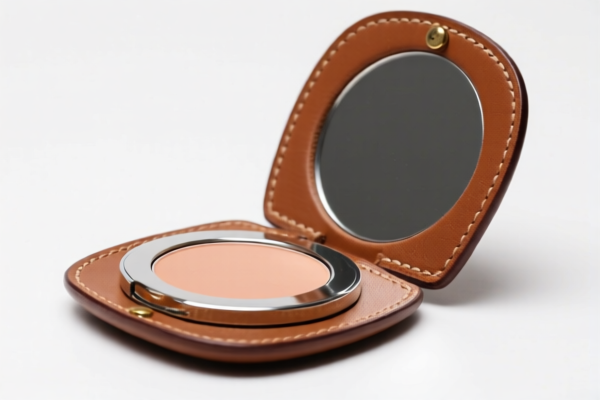
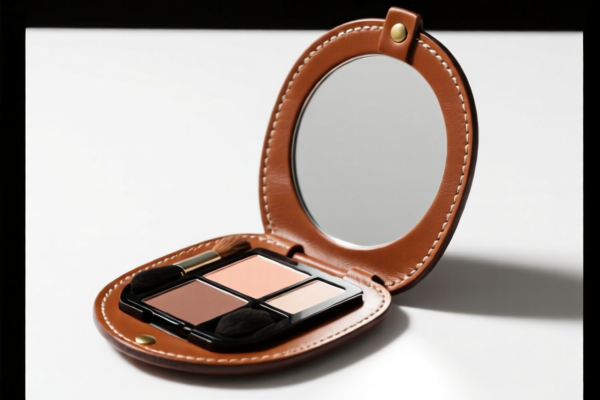
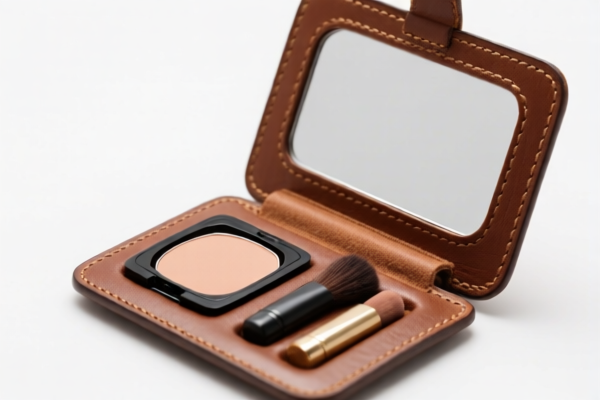
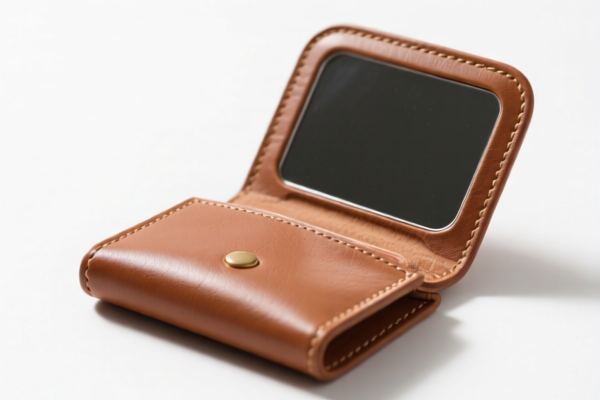
AI Analysis
💄 Leather Makeup Case (Cosmetic Bags & Pouches)
🌐 HS Code Reference & Clearance Guide | 2026 Latest Tariff Analysis | Professional Customs Strategy 📌 I. Product Definition & Classification: What Exactly Is a "Leather Makeup Case"?
A Leather Makeup Case is a small container used for storing cosmetics, toiletries, and beauty tools. In international trade, the Harmonized System (HS) classification is critical because it depends heavily on: 1. Outer Material: Is it genuine leather, synthetic leather, or textile? 2. Shape/Function: Is it a rigid container, a flexible pouch, or a general accessory?
⚠️ Key Distinction Points:
- Leather vs. Synthetic: "Leather" includes genuine leather and artificial/synthetic leather (often classified under 4205).
- Rigid vs. Flexible: Rigid boxes may fall under 4202 (Luggage/Containers), while soft pouches might also fall under 4202 or 4205 (Other leather articles).
- Material Dominance: If the outer surface is leather/synthetic leather, it generally avoids textile classifications (4202.32), unless specified otherwise.
📦 II. HS Code Classification Details (Based on Provided Data)
| HS Code | Product Description | Inferred Material/Shape | Total Tax Rate |
|---|---|---|---|
4205.00.60.00 |
Other leather articles (catch-all for leather/synthetic leather accessories not elsewhere specified) | Leather or Synthetic Leather | 39.9% |
4202.32.93.00 |
Containers with outer surface of textile materials (Inferred: Misclassification if truly leather, but listed for textile-based cases) | Textile (Inferred) | 52.6% |
4205.00.80.00 |
Other articles of leather or composition leather (catch-all logic) | Leather or Synthetic Leather | 35.0% |
4202.32.99.00 |
Other containers with outer surface of textile materials (Bags/Pouches) | Textile (Inferred) | 52.6% |
4202.11.00.90 |
Articles with outer surface of leather or composition leather (e.g., briefcases, similar items) | Genuine/Synthetic Leather | 43.0% |
🔍 Critical Insight:
- If your case is truly leather or synthetic leather, it should ideally fall under 4202.11 or 4205 categories (35.0%–43.0%).
- If it is textile-based (fabric, nylon, polyester) but mistakenly declared as leather, it falls under 4202.32 (52.6%).
- Risk: Misdeclaring a textile case as leather to avoid higher taxes is a common audit trigger.
💰 III. 2026 Latest Tariff Rate Breakdown (Including Add-on Taxes & Policy Surcharges)
✅ Applicable Country: United States (US)
✅ Origin: China (CN)
✅ Effective Date: From November 10, 2025 (and subsequent imports)
🎯 1. 4205.00.60.00 & 4205.00.80.00 —— Other Leather Articles
| Item | Content |
|---|---|
| Base Tariff | 4.9% (60.00) / 0.0% (80.00) |
| Section 301 Add-on Tariff | +25.0% |
| IEEPA Surcharge (Section 122) | +10.0% |
| Total Effective Tax Rate | 39.9% (60.00) / 35.0% (80.00) |
| Tax Calculation | CIF Value × Total Rate |
| De Minimis Exemption | ❌ Not Eligible (High tax rate triggers scrutiny; likely denied de minimis benefit for high-value shipments) |
| Legal Basis Path | USITC:4205.00 → Section 301: Footnote 9903.88.01 → IEEPA:9903.01.25 |
📌 Explanation:
- Base Tariff: Varies by specific subheading (0% for80.00, 4.9% for60.00).
- Section 301 Tariff: 25% additional tariff on Chinese-made leather goods under certain headings.
- IEEPA Surcharge: 10% additional tariff on Chinese goods under specific national emergency powers (Section 122/IEEPA).
- Total: The combination of base + 301 + IEEPA results in 39.9% or 35.0%.
🎯 2. 4202.32.93.00 & 4202.32.99.00 —— Textile-Based Containers
| Item | Content |
|---|---|
| Base Tariff | 17.6% |
| Section 301 Add-on Tariff | +25.0% |
| IEEPA Surcharge (Section 122) | +10.0% |
| Total Effective Tax Rate | 52.6% |
| Tax Calculation | CIF Value × 52.6% |
| De Minimis Exemption | ❌ Not Eligible |
| Legal Basis Path | USITC:4202.32 → Section 301: Footnote 9903.88.01 → IEEPA:9903.01.24 |
📌 Explanation:
- Base Tariff: Higher at 17.6% for textile-based cosmetic bags.
- Total Rate: 52.6% is significantly higher than leather categories.
- Warning: If you claim a textile bag is "leather," you risk misclassification penalties if proven otherwise.
🎯 3. 4202.11.00.90 —— Leather/Composition Leather Articles (Luggage/Containers)
| Item | Content |
|---|---|
| Base Tariff | 8.0% |
| Section 301 Add-on Tariff | +25.0% |
| IEEPA Surcharge (Section 122) | +10.0% |
| Total Effective Tax Rate | 43.0% |
| Tax Calculation | CIF Value × 43.0% |
| De Minimis Exemption | ❌ Not Eligible |
| Legal Basis Path | USITC:4202.11 → Section 301 → IEEPA |
📌 Explanation:
- This is the standard classification for leather cosmetic cases if they fit the definition of "articles with outer surface of leather."
- Total Rate: 43.0%.
- Advantage: Slightly lower than textile-based cases (52.6%), but higher than some "other leather articles" (4205.00.80.00at 35.0%).
🛠️ IV. Customs Clearance Practical Advice (Real-World Pitfall Guide)
✅ 1. Documentation Checklist (Non-negotiable)
| Document | Required? | Description |
|---|---|---|
| ✅ Product Specification Sheet | ✔️ | Must clearly state outer material (e.g., "100% Genuine Leather" or "PU Leather") and lining material. |
| ✅ Material Certificate | ✔️ | Lab test report proving material composition (Leather vs. Textile vs. Synthetic). |
| ✅ Product Photos | ✔️ | High-res images showing texture, seams, hardware, and labels. |
| ✅ Commercial Invoice | ✔️ | Clearly describe as "Leather Cosmetic Bag" or "Makeup Pouch," not generic "Gift Set." |
| ✅ Packing List | ✔️ | Detail contents to avoid being classified as a "set" (which may have different rates). |
| ✅ Origin Certificate | ✔️ | Confirm Chinese origin for accurate Section 301/IEEPA application. |
✅ 2. Classification Strategy (Key Mnemonics)
🔥 "Material First, Shape Second! Leather Saves 10%!"
| Scenario | Correct HS Code | Tax Rate | Mistake to Avoid |
|---|---|---|---|
| True Leather Case | 4202.11.00.90 or 4205.00.80.00 |
35.0% – 43.0% | Misdeclare as textile → 52.6% |
| Synthetic Leather (PU) | 4205.00.60.00 or 4202.11.00.90 |
35.0% – 43.0% | Declare as "Fabric" → 52.6% |
| Textile/Nylon Case | 4202.32.93.00 or 4202.32.99.00 |
52.6% | Declare as "Leather" → High Risk of Audit/Fine |
| Mixed Material (Leather Trim) | 4202.32 (if textile dominates) |
52.6% | Overclaim leather portion → Misclassification |
📌 Key Tip:
- "Synthetic Leather" (PU/PVC) is often classified under 4205 (Other leather articles) or 4202.11 (if it meets the "composition leather" definition).
- "Textile" includes fabric, nylon, polyester, canvas. If the outer surface is textile, do not use leather HS codes.
✅ 3. Special Cases Handling
| Situation | Handling Advice |
|---|---|
| OEM Customization | Provide design specs showing material hierarchy. If leather is the primary outer surface, use 4202.11 or 4205. |
| Leather Trim + Textile Body | If textile is >50% of outer surface area, use 4202.32 (52.6%). |
| Gift Sets (Case + Cosmetics) | If sold as a set, the classification may be driven by the essential character (the case). Ensure invoice separates values if possible. |
| Low-Value Samples | Even if under $800, high tax rates (35-52%) may make de minimis ineffective if duties exceed the exemption threshold. Check current US de minimis rules. |
🌍 V. Global Market Clearance Comparison (2026 Update)
| Country/Region | Recommended HS Code | Approx. Tariff (China Origin) | Certifications | Remarks |
|---|---|---|---|---|
| 🇺🇸 USA | 4202.11.00.90 |
43.0% (Leather) / 52.6% (Textile) | N/A | High tariffs due to Section 301 + IEEPA. |
| 🇪🇺 EU | 4202.21 (Leather) | 12% + VAT (20%) | CE (if electrical), REACH | No Section 301. VAT is major cost. |
| 🇨🇳 China | 4202.11 / 4205.00 | 8% - 10% | N/A | Low import duty. Focus on VAT & Consumption Tax if applicable. |
| 🇬🇧 UK | 4202.21 | 12% + VAT (20%) | N/A | Post-Brexit tariffs. Similar to EU. |
| 🇦🇺 Australia | 4202.21 | 5% + GST (10%) | N/A | Relatively low duty. GST applies to all imports. |
📌 Conclusion:
- USA is the most expensive market due to layered tariffs (Base + 301 + IEEPA).
- Textile-based cases are penalized heavily in the US (52.6%).
- Leather/Synthetic Leather is more cost-effective in the US (35-43%).
📌 VI. Common Errors & Pitfall Guide (Lessons Learned)
❌ Mistake 1: Declaring a PU Leather case as "Genuine Leather" to qualify for lower base rates.
👉 Consequence: Customs may reject the claim if material test shows PU. Misclassification penalties apply.
Fix: Use 4205.00.60.00 or 4202.11.00.90 which cover both genuine and synthetic leather.
❌ Mistake 2: Declaring a Textile case as leather to save 10% in tax.
👉 Consequence: 52.6% vs 43.0%. If caught, fines + back taxes.
Fix: Accurately classify based on outer material. 10% saving is not worth the audit risk.
❌ Mistake 3: Ignoring Section 122 (IEEPA) 10% Surcharge.
👉 Consequence: Underestimating landed cost by 10%.
Fix: Always calculate total tax as Base + 301 (25%) + IEEPA (10%).
✅ Correct Approach:
"Leather Cosmetic Bag, PU Material, Water-Resistant, with Zipper Closure, Model ABC, Origin: China"
🎯 VII. Conclusion: Professional Classification for Cost Optimization
🎯 Remember the Mnemonic:
🔹 "Leather or Synthetic? Use 4205/4202.11 (35-43%).
🔹 Textile? Use 4202.32 (52.6%).
🔹 Never Mix! Accuracy Saves Money!"
📌 Pro Tip:
- If your product is shipped from Vietnam/Mexico/Thailand, it may be eligible for IEEPA Exemptions or lower Section 301 rates.
- Apply for an Advance Ruling from US Customs (CBP) if you are unsure about material classification.
- For high-volume shipments, consider duty drawback or FTZ (Free Trade Zone) utilization.
📣 Immediate Action:
📞 Contact a Licensed Customs Broker + Provide Material Test Reports + Verify HS Code with CBP
🚀 Ensure Smooth Clearance, Minimize Duties, Maximize Profit!
✨ Professional Clearance Starts with Accurate Classification!
💼 Every Percent of Tariff Counts!
Customer Reviews
About HS Code Classification
The Harmonized System (HS) is an internationally standardized nomenclature developed by the World Customs Organization (WCO) to classify traded products. Over 200 countries use the HS system as the basis for customs tariffs, trade statistics, and import/export regulations.
Each HS code follows a hierarchical structure:
- Chapter (2 digits) — Broad category of goods (e.g., Chapter 84: Machinery and Mechanical Appliances)
- Heading (4 digits) — More specific grouping within the chapter
- Subheading (6 digits) — Internationally standardized breakdown, used by all WCO member countries
- National subdivisions (8-10 digits) — Country-specific extensions for further classification, such as US HTSUS 10-digit codes
Correct HS code classification is essential for smooth customs clearance, accurate duty payment, and compliance with trade regulations. Misclassification can lead to customs delays, overpayment of duties, or penalties.
When importing from CN to US, the applicable tariff rates may include:
- Most-Favored-Nation (MFN) rate — The standard duty rate applied to WTO members
- General rate — Applied to countries without trade agreements
- Trade remedy duties — Additional tariffs such as Section 301 (anti-dumping), Section 232 (national security), or countervailing duties
The information provided on this page is for reference purposes only. For official classification, please consult with your local customs authority or a licensed customs broker.