Leather Memo Pad Set
CN → US| HS Code | Tariff Rate | Origin | Destination | Doc |
|---|---|---|---|---|
| 4820102020 | 35.0% | CN | US | Official Doc |
| 4819200040 | 35.0% | CN | US | Official Doc |
| 4820104000 | 10.0% | CN | US | Official Doc |
Product Images


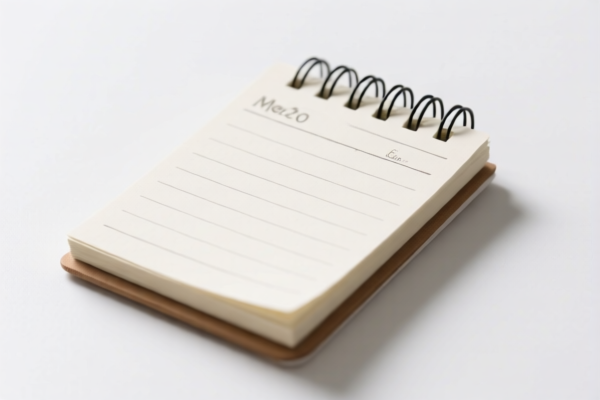
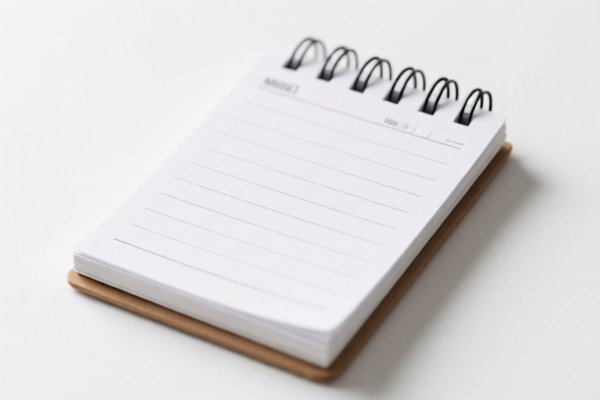
AI Analysis
📒 Leather Memo Pad Set (Leather-bound Notepads)
🌐 HS Code Reference & Clearance Guide | 2026 Latest Tariff Analysis | Professional Customs Strategy
📌 I. Product Definition & Classification: Is it "Stationery" or "Luggage"?
A Leather Memo Pad Set is a stationery item consisting of paper pads bound or packaged with a leather (or leather-like) cover. In international trade, the classification hinges on the primary material and functional identity:
- Paper Stationery (4820/4819): If the core value and function are the paper pads for writing, and the leather is merely a cover, binding, or packaging component → Classify as Stationery/Paper Articles.
- Leather Goods (4202/4203): If the leather component constitutes the essential character (e.g., a standalone leather journal with no loose paper, or high-value luxury leather case intended for reuse) → Classify as Leather Articles.
⚠️ Key Distinction Point:
- If the set is marketed as "Stationery" or "Office Supplies" with paper pads as the primary utility → HS 4820 or 4819.
- If it is marketed as a "Leather Journal" or "Notebook" where the leather cover is the main feature → HS 4202 (but NOT in provided DATA).
- For this specific dataset, we focus on the Stationery/Paper classification path, as all provided HS codes fall under Chapter 48 (Paper and Paperboard).
📦 II. HS Code Classification Details (Based on Provided DATA)
| HS Code | Product Description | Application Scenario | Material Focus |
|---|---|---|---|
4820.10.20.20 |
Memo Pad Sets: Material is paper, purpose is stationery. | Standard office memo pads with paper covers or simple leather-like covers. | 📄 Paper |
4819.20.00.40 |
Memo Pad Sets: Paper office supplies, form: paper packaging/container type. | Memo pads packaged in paper sleeves, boxes, or with paper-based protective layers. | 📦 Paper Packaging |
4820.10.40.00 |
Memo Pad Sets: Form: Book/Set, Type: Stationery, Material: Paper. | Bound memo books or sets where the "set" aspect is primary, material is predominantly paper. | 📚 Paper Set |
🔍 Important Note:
- The provided data does not include HS codes for pure leather goods (e.g.,4202.90). This implies the customs authority or your supplier considers the paper content or stationery function as dominant.
- Even if the cover is leather, if the item is sold as a "memo pad set" for writing, it often falls under Chapter 48 (Paper) rather than Chapter 42 (Leather), depending on national interpretation.
- Always verify with local customs if the leather content exceeds a certain threshold, but for this dataset, we stick to Chapter 48.
💰 III. 2026 Latest Tariff Rate Breakdown (Including Additional Taxes & Policy Surcharges)
✅ Applicable Country: United States (US)
✅ Country of Origin: China (CN)
✅ Effective Date: 2025 November 10 onwards (including subsequent imports)
🎯 1. 4820.10.20.20 —— Memo Pad Set (Paper Material, Stationery Use)
| Item | Content |
|---|---|
| Base Tariff | 0.0% (ad valorem) |
| Section 301 Tariff | +25.0% |
| Section 122 Tariff | +10.0% |
| Total Tariff Rate | 35.0% |
| Tax Calculation | CIF Value × 35% |
| De Minimis Eligibility | ❌ Not Eligible (Section 301 & 122 tariffs apply) |
| Legal Authority Path | USITC:4820.10.20.20 → SECTION301:9903.88.01 → SECTION122:9903.01.10 |
📌 Explanation:
- "Base Tariff 0%": Standard MFN rate for paper stationery is often low or zero.
- "Section 301 Tariff 25%": Additional duty on Chinese goods under US Trade Act Section 301.
- "Section 122 Tariff 10%": Additional duty under Section 122 of the Trade Expansion Act (often applied to national security or specific trade remedies).
- Total 35% is a high tariff for a low-value item. This significantly impacts profit margins for small stationery items.
🎯 2. 4819.20.00.40 —— Memo Pad Set (Paper Office Supplies, Packaging Form)
| Item | Content |
|---|---|
| Base Tariff | 0.0% |
| Section 301 Tariff | +25.0% |
| Section 122 Tariff | +10.0% |
| Total Tariff Rate | 35.0% |
| Tax Calculation | CIF Value × 35% |
| De Minimis Eligibility | ❌ Not Eligible |
| Legal Authority Path | USITC:4819.20.00.40 → SECTION301:9903.88.01 → SECTION122:9903.01.10 |
📌 Note:
- Same tariff structure as4820.10.20.20.
- This code emphasizes the packaging/container aspect. If the memo pad is in a paper box or sleeve, this code may be used.
- The 35% rate is unavoidable for Chinese-origin goods under this classification.
🎯 3. 4820.10.40.00 —— Memo Pad Set (Book/Form, Stationery Type, Paper Material)
| Item | Content |
|---|---|
| Base Tariff | 0.0% |
| Section 301 Tariff | 0.0% |
| Section 122 Tariff | +10.0% |
| Total Tariff Rate | 10.0% |
| Tax Calculation | CIF Value × 10% |
| De Minimis Eligibility | ❌ Not Eligible for Section 122 |
| Legal Authority Path | USITC:4820.10.40.00 → SECTION122:9903.01.10 |
📌 Critical Insight:
- This is the MOST COST-EFFECTIVE classification in the provided dataset.
- Why? Section 301 (25%) does NOT apply to this specific subheading. Only Section 122 (10%) applies.
- Difference: A 25% tariff reduction compared to the other two codes.
- Requirement: The item must clearly be classified as a "Set" or "Book" of stationery, not just a loose pad or packaged container.
- Strategy: If your product fits this description (bound set, paper material), strongly consider using this HS Code to save 25% in tariffs.
🛠️ IV. Customs Clearance Practical Advice (Real-World Pitfall Avoidance)
✅ 1. Preparation Checklist (All Documents Required)
| Document | Must Provide | Explanation |
|---|---|---|
| ✅ Product Description | ✔️ | "Leather Memo Pad Set, Paper Pads, Leather Cover, Office Stationery" |
| ✅ Material Composition | ✔️ | Specify % of paper vs. leather. If paper > 50%, Chapter 48 is safer. |
| ✅ Product Photos | ✔️ | Show the set, the binding, and any packaging. |
| ✅ Commercial Invoice | ✔️ | Clearly state "Memo Pad Set" and "Stationery Use". Avoid "Leather Goods". |
| ✅ Packing List | ✔️ | Include dimensions and weight of each pad/set. |
| ✅ Certificate of Origin | ✔️ | Required for Section 301/122 determination. |
✅ 2. Declaration Tips (Key Rules)
🔥 “Describe as Stationery, Not Leather!”
| Scenario | Correct Declaration | Incorrect Declaration |
|---|---|---|
| Item has leather cover | "Memo Pad Set, Stationery, Paper Content" (HS 4820.10.40.00) | "Leather Notebook" (HS 4202) → Might trigger different duties or require CITES if exotic leather. |
| Loose pads in paper box | "Memo Pads, Paper, Packaged" (HS 4819.20.00.40) | "Paper Boxes" (Wrong function) → Misclassification. |
| Bound book with paper pages | "Memo Book Set, Stationery" (HS 4820.10.40.00) | "Books" (HS 4901) → Wrong chapter. |
| High-end leather journal | Consider HS 4202 | If declared as paper, may be challenged by customs if leather value is high. |
✅ 3. Special Cases Handling
| Situation | Recommendation |
|---|---|
| Mixed Materials | If leather is only a small cover, use HS 4820.10.40.00 (10% total) to minimize duty. |
| OEM Customization | Provide client branding details to prove it’s a "stationery set" not a "luxury leather good". |
| De Minimis (Section 321) | ❌ Not Eligible. Section 301 and 122 tariffs exclude de minimis exemptions for Chinese goods. Expect to pay full duty. |
| Valuation | Ensure CIF value includes freight and insurance. Higher declared value = higher duty. |
🌍 V. Global Market Comparison (2026 Update)
| Country/Region | Recommended HS Code | Tariff (China Origin) | Notes |
|---|---|---|---|
| 🇺🇸 USA | 4820.10.40.00 |
10% (Best Option) | Avoid 4820.10.20.20 (35%) if possible. |
| 🇨🇳 China | 4820.10.40.00 |
5% | No additional US tariffs. |
| 🇪🇺 EU | 4820.10.90 |
6.5% | Standard EU duty for memo pads. |
| 🇬🇧 UK | 4820.10.90 |
6.5% | Post-Brexit alignment with EU. |
| 🇨🇦 Canada | 4820.10.40 |
5% | Lower duty than US. |
| 🇲🇽 Mexico | 4820.10.20 |
0-5% | Depends on USMCA rules. |
📌 Conclusion:
- The USA is the most challenging market due to Section 301 and 122 tariffs.
- HS Code4820.10.40.00is the strategic winner for US imports, reducing total tariff from 35% to 10%.
- Ensure your product description and commercial invoice align with "Stationery Set" to support this classification.
📌 VI. Common Errors & Pitfall Guide (Lessons Learned)
❌ Error 1: Declaring "Leather Journal" → Misclassification Risk
👉 Consequence: Customs may reclassify to 4202 (leather goods) with different duties, or flag for "deceptive labeling".
👉 Solution: Use "Memo Pad Set" and emphasize paper content.
❌ Error 2: Using 4820.10.20.20 for a Bound Set
👉 Consequence: Paying 35% tariff instead of 10%.
👉 Solution: Use 4820.10.40.00 for bound sets/pads.
❌ Error 3: Ignoring Section 122 Tariff
👉 Consequence: Unexpected 10% charge even if Section 301 is avoided.
👉 Solution: Budget for 10% minimum duty in the US.
❌ Error 4: Assuming De Minimis Exemption
👉 Consequence: Packages under $800 still taxed for Chinese goods due to Section 301/122.
👉 Solution: Plan for full duty payment.
✅ Correct Approach:
"Memo Pad Set, Stationery, Paper, Leather Cover, HS 4820.10.40.00, CIF $100, Duty $10"
🎯 VII. Conclusion: Professional Declaration Saves Money!
🎯 Key Takeaways:
🔹 "Use HS 4820.10.40.00 for Bound Sets → Save 25%!"
🔹 "Section 301 (25%) does not apply to this subheading!"
🔹 "Section 122 (10%) still applies → Total 10%."
🔹 "Do not declare as 'Leather Goods' unless necessary."
📌 Pro Tip:
If your memo pad set is bound (like a small book) and made primarily of paper, always use 4820.10.40.00. This is the only code in the dataset that avoids the 25% Section 301 tariff, bringing your total US import duty down to just 10%.
📣 Immediate Action:
📞 Confirm with your supplier: "Is this a bound set or loose pads?"
📝 Update your invoice to: "Memo Pad Set, Stationery, Paper"
🚀 Maximize Profit by Minimizing Duty!
✨ Smart Classification, Smarter Business!
💼 Every Percent Saved is Pure Profit!
Customer Reviews
About HS Code Classification
The Harmonized System (HS) is an internationally standardized nomenclature developed by the World Customs Organization (WCO) to classify traded products. Over 200 countries use the HS system as the basis for customs tariffs, trade statistics, and import/export regulations.
Each HS code follows a hierarchical structure:
- Chapter (2 digits) — Broad category of goods (e.g., Chapter 84: Machinery and Mechanical Appliances)
- Heading (4 digits) — More specific grouping within the chapter
- Subheading (6 digits) — Internationally standardized breakdown, used by all WCO member countries
- National subdivisions (8-10 digits) — Country-specific extensions for further classification, such as US HTSUS 10-digit codes
Correct HS code classification is essential for smooth customs clearance, accurate duty payment, and compliance with trade regulations. Misclassification can lead to customs delays, overpayment of duties, or penalties.
When importing from CN to US, the applicable tariff rates may include:
- Most-Favored-Nation (MFN) rate — The standard duty rate applied to WTO members
- General rate — Applied to countries without trade agreements
- Trade remedy duties — Additional tariffs such as Section 301 (anti-dumping), Section 232 (national security), or countervailing duties
The information provided on this page is for reference purposes only. For official classification, please consult with your local customs authority or a licensed customs broker.