Leather Motorcycle Jacket
CN → US| HS Code | Tariff Rate | Origin | Destination | Doc |
|---|---|---|---|---|
| 4107127040 | 15.0% | CN | US | Official Doc |
| 4107117040 | 15.0% | CN | US | Official Doc |
| 4203104030 | 41.0% | CN | US | Official Doc |
| 4203104060 | 41.0% | CN | US | Official Doc |
Product Images
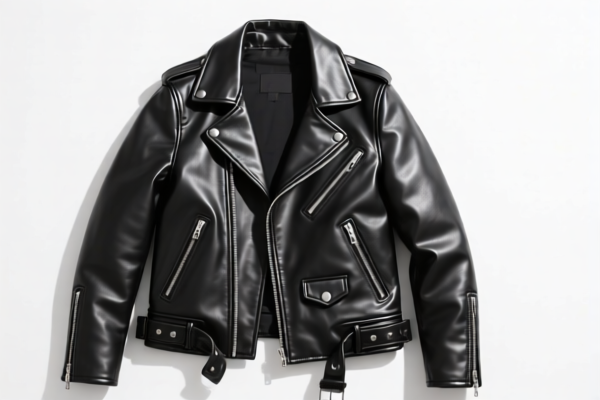
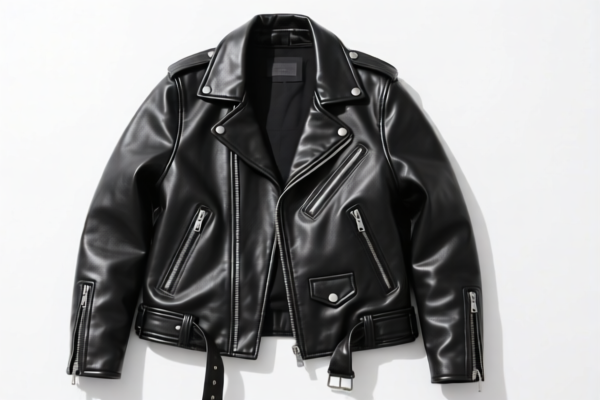
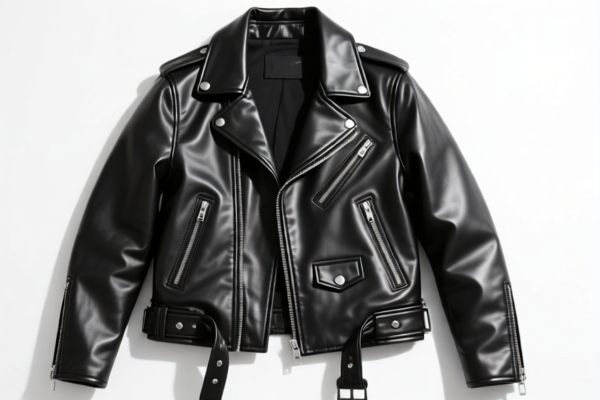
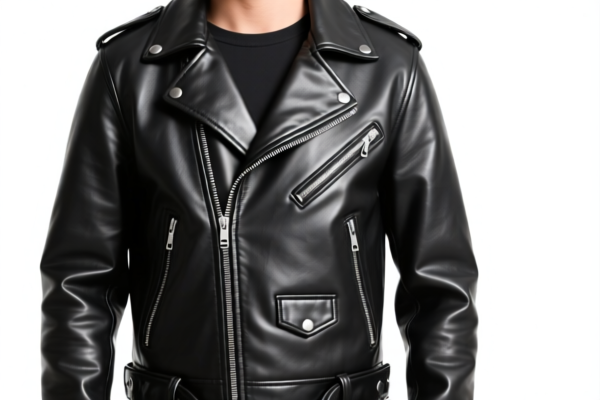
AI Analysis
🧥 Leather Motorcycle Jacket (Protective Clothing)
🌐 HS Code Reference & Customs Clearance Guide | 2026 Latest Tariff Analysis | Professional Clearance Strategy
📌 I. Product Definition & Classification: What Exactly Is a "Leather Motorcycle Jacket"?
A leather motorcycle jacket is a protective garment designed for riders, typically made from cowhide, goatskin, or other animal hides. In international trade, its classification depends heavily on manufacturing stages and specific design features.
There are two primary pathways for classification: 1. Chapter 41 (Hides & Skins, Dressed): If the jacket is considered a simple "garment" made from dressed leather, often associated with basic apparel standards. 2. Chapter 42 (Articles of Leather): If the jacket features specific protective elements, robust construction, or is classified under "articles of apparel and clothing accessories" where the leather article is dominant or specialized.
⚠️ Key Distinction Point:
- If it is a standard leather jacket without specific "protective gear" certifications or complex multi-layer armored structures, it may fall under Chapter 41 (Hides/Skins dressed).
- If it is constructed as a complex leather article with specific protective features, heavy-duty hardware, or is classified as a "special purpose" leather article, it often falls under Chapter 42 (Articles of Leather).
Note: In many jurisdictions, finished leather garments are classified under Chapter 42 if they are not merely "dressed skins" but "articles." However, specific subheadings in Chapter 41 (like 4107) explicitly cover "garments of leather." This creates a critical divergence in tariff rates.
📦 II. HS Code Classification Details (2026 Latest Tariff Authority Cross-Reference)
| HS Code | Product Description | Applicable Scenario | Key Differentiator |
|--------|----------|--------------------------|
| 4107.12.70.40 | Leather Jackets, matching leather material and clothing use | Standard leather jackets, fashion-oriented, basic protective wear | Chapter 41 Focus: Emphasizes the material (dressed leather) and general clothing function. Often lower duty if viewed as standard apparel. |
| 4107.11.70.40 | Leather Jackets, matching leather material and clothing use | Similar to above, possibly different cut/grade of leather within the same chapter | Chapter 41 Focus: Same as above, slight variation in leather type or grade. |
| 4203.10.40.30 | Leather Jackets, matching leather material and jacket form | Motorcycle-specific, armored, heavy-duty, protective gear | Chapter 42 Focus: Emphasizes the form and protective nature. Viewed as a specialized "article of leather" rather than just a garment. |
| 4203.10.40.60 | Leather Jackets, matching leather material and outerwear use | Premium outerwear, high-end protective jackets, complex construction | Chapter 42 Focus: Viewed as high-end "outerwear" articles. Higher complexity often triggers Chapter 42. |
🔍 Critical Reminder:
- Chapter 41 (4107) generally treats the item as a "garment made of dressed leather."
- Chapter 42 (4203) treats the item as an "article of apparel made of leather."
- The tariff difference is massive: Chapter 41 items may enjoy lower base duties, while Chapter 42 items are often subject to higher base duties AND additional punitive tariffs.
- Misclassification Risk: Declaring a heavy-duty motorcycle jacket as4107.12to avoid higher Chapter 42 duties can lead to severe penalties if customs determine the jacket has "protective article" characteristics (e.g., armor pockets, reinforced seams).
💰 III. 2026 Latest Tariff Rate Details (Including Surcharges, Policy Add-ons)
✅ Applicable Country: United States (US)
✅ Origin: China (CN)
✅ Effective Date: From November 10, 2025 onwards (including subsequent imports)
🎯 1. 4107.12.70.40 & 4107.11.70.40 —— Leather Jackets (Chapter 41 - Material Focus)
| Item | Content |
|---|---|
| Base Duty Rate | 5.0% |
| Section 301 Surcharge | 0.0% (No additional 301 tariff for these specific subheadings) |
| Section 122 Tariff | +10% (Targeting China/Canada/Mexico products under specific trade measures) |
| Total Duty Rate | 15.0% |
| Tax Calculation | CIF Value × 15.0% |
| De Minimis Eligibility | ❌ No (Denied for most textile/apparel categories from China) |
| Legal Authority Path | Section 122: 19 U.S.C. 2112 → USITC: 4107.12.70.40 |
📌 Explanation:
- These codes are classified under Chapter 41, which deals with "Hides, Skins, Leather and Furskins."
- They benefit from a lower base duty (5%) and are exempt from the 25% Section 301 tariff that typically affects many Chinese goods.
- However, they are still subject to the 10% Section 122 tariff, resulting in a 15% total duty.
- Advantage: Significantly lower than Chapter 42 alternatives.
🎯 2. 4203.10.40.30 & 4203.10.40.60 —— Leather Jackets (Chapter 42 - Article Focus)
| Item | Content |
|---|---|
| Base Duty Rate | 6.0% |
| Section 301 Surcharge | +25.0% (Standard punitive tariff on Chinese leather goods/apparel) |
| Section 122 Tariff | +10% (Targeting China/Canada/Mexico products) |
| Total Duty Rate | 41.0% |
| Tax Calculation | CIF Value × 41.0% |
| De Minimis Eligibility | ❌ No |
| Legal Authority Path | Section 301: 19 U.S.C. 2411 → Section 122: 19 U.S.C. 2112 → USITC: 4203.10.40.30 |
📌 Warning:
- These codes fall under Chapter 42, which covers "Articles of Leather."
- They are subject to the 25% Section 301 tariff, which is a heavy punitive burden.
- Combined with the 6% base and 10% Section 122, the total duty is 41%.
- Disadvantage: This is 2.7x higher than the Chapter 41 classification. Misclassifying a motorcycle jacket here instead of Chapter 41 can cost you 26% more in duties.
🛠️ IV. Customs Clearance Practical Advice (Battle-Tested Pitfall Avoidance Guide)
✅ 1. Required Documentation Checklist (Non-negotiable)
| Document | Mandatory | Explanation |
|---|---|---|
| ✅ Product Specification Sheet | ✔️ | Must detail leather type (e.g., cowhide, goatskin), lining material, thickness, and any protective features (armor pockets, CE certification). |
| ✅ Technical Drawings / Structure Diagram | ✔️ | Crucial to prove the construction method. Does it have reinforced stitching? Armor? This helps justify Chapter 41 if it's a simple garment, or Chapter 42 if it's a complex article. |
| ✅ Product Photos (with Label) | ✔️ | Clear images of the interior lining, labels, and any protective hardware. |
| ✅ Commercial Invoice | ✔️ | Must clearly state "Leather Jacket" and specify the intended use (e.g., "Fashion Apparel" vs. "Motorcycle Protective Gear"). |
| ✅ Packing List | ✔️ | Detail contents to avoid confusion with other leather goods. |
| ✅ CE Certification (if applicable) | ✔️ | If claiming protective features, CE EN 17092 certification may be required. Note: Presence of CE cert might push customs toward Chapter 42. |
✅ 2. Declaration Tips (Key Mantra)
🔥 "Material vs. Article: Choose Wisely, Pay Wisely!"
| Scenario | Recommended Declaration | Risk if Incorrect |
|---|---|---|
| Fashion Leather Jacket / Basic Motorcycle Jacket | 4107.12.70.40 (Chapter 41) |
If misdeclared as 4203, you pay 41% instead of 15%. |
| High-End Protective Jacket (with armor, CE cert) | 4203.10.40.30 (Chapter 42) |
If misdeclared as 4107, customs may audit and reclassify, leading to back taxes + penalties. |
| Mixed Package (Jacket + Pants) | Declare separately by HS Code | Do not lump into one code. Each item must be classified individually. |
| OEM Custom Jacket | Provide client order + design specs | Avoid being labeled as "standard goods" if unique features exist. |
✅ 3. Special Circumstances Handling
| Situation | Handling Advice |
|---|---|
| Jacket with Armor Pockets (No Armor Inserted) | If armor is sold separately, the jacket is still a garment. Try to classify under 4107 if possible, but be prepared to justify it as a "garment" not a "protective article." |
| Jacket with CE EN 17092 Certification | Strong evidence of "protective article" status. Customs will likely insist on 4203.10. Factor in the 41% duty. |
| Goatskin vs. Cowhide | Both can fall under 4107 or 4203. The material type matters less than the construction and intended use. |
| "Motorcycle Use" Labeling | Explicitly stating "Motorcycle Use" on the invoice may trigger customs to view it as a protective article (Chapter 42). Use "Fashion Leather Jacket" if it’s primarily for fashion, if true. |
🌍 V. Global Market Comparison (2026 Latest)
| Country/Region | Recommended HS Code | Duty Rate | Certification | Notes |
|---|---|---|---|---|
| 🇺🇸 United States | 4107.12.70.40 |
15% (Best Case) | None | If 4203.10.40.30, duty jumps to 41%. |
| 🇨🇳 China | 4107.12.70.40 |
5% | None | Lower base duty. |
| 🇪🇺 European Union | 4203.10.10 |
12% + VAT | CE (if protective) | EU classifies more leather garments under 4203. No 301 tariff. |
| 🇬🇧 United Kingdom | 4203.10.00 |
12% | UKCA (if protective) | Similar to EU. |
| 🇯🇵 Japan | 4203.29.00 |
10% | None | Standard leather garment duty. |
📌 Conclusion:
- The US market is highly sensitive to Chapter 41 vs. 42 classification.
- Chapter 41 (4107) is significantly cheaper (15% vs. 41%) for standard leather jackets.
- If your jacket is truly a "fashion item" or "basic garment," strive for 4107 classification.
- If it is a high-performance protective gear, accept the 4203 classification and budget for the 41% duty.
📌 VI. Common Errors & Pitfall Guide (Blood & Tears Lessons)
❌ Error 1: Declaring a heavy-duty, CE-certified motorcycle jacket as 4107.12 to save duty.
👉 Consequence: Customs audit reveals protective features. Reclassification to 4203.10 → 26% tax difference + penalties.
❌ Error 2: Declaring a simple fashion leather jacket as 4203.10.
👉 Consequence: Paying 41% instead of 15%. Loss of profit margin.
❌ Error 3: Not providing a detailed description of "armor pockets."
👉 Consequence: Customs may assume it's protective gear and classify it under 4203 by default. Always clarify if armor is included.
❌ Error 4: Using vague terms like "Leather Apparel" on the invoice.
👉 Consequence: Customs officer has discretion. May choose the higher-tariff code. Be specific: "Leather Jacket, Fashion Style, No Protective Armor."
✅ Correct Practice:
"Leather Jacket, Cowhide, Fashion Style, No Armor, Model XYZ, For General Wear" → Aim for 4107.12.70.40
"Motorcycle Protective Jacket, CE EN 17092 Certified, Cowhide with Armor Slots, Model ABC" → Declare 4203.10.40.30
🎯 VII. Conclusion: Professional Declaration, Save Costs, Ensure Clearance!
🎯 Remember the Mantra:
🔹 "Garment = 4107 (15%), Article = 4203 (41%)"
🔹 "Classify Right, Save 26%, Avoid Audit Nightmares!"
📌 Pro Tip:
If your leather jacket is not primarily for protection (no armor, no CE cert), emphasize "Fashion" and "Apparel" in your documentation to support Chapter 41 classification.
If it is for protection, be honest about its protective nature. Attempting to hide protective features can lead to fraud allegations.
📣 Immediate Action:
📞 Consult with a licensed customs broker to review your product's technical specs.
📄 Prepare clear product photos and descriptions.
🚀 Get an Advance Ruling (if possible) to lock in the 15% duty rate!
✨ Professional Clearance Starts with Precise Classification!
💼 Every Dollar Saved in Duty is Pure Profit!
Customer Reviews
About HS Code Classification
The Harmonized System (HS) is an internationally standardized nomenclature developed by the World Customs Organization (WCO) to classify traded products. Over 200 countries use the HS system as the basis for customs tariffs, trade statistics, and import/export regulations.
Each HS code follows a hierarchical structure:
- Chapter (2 digits) — Broad category of goods (e.g., Chapter 84: Machinery and Mechanical Appliances)
- Heading (4 digits) — More specific grouping within the chapter
- Subheading (6 digits) — Internationally standardized breakdown, used by all WCO member countries
- National subdivisions (8-10 digits) — Country-specific extensions for further classification, such as US HTSUS 10-digit codes
Correct HS code classification is essential for smooth customs clearance, accurate duty payment, and compliance with trade regulations. Misclassification can lead to customs delays, overpayment of duties, or penalties.
When importing from CN to US, the applicable tariff rates may include:
- Most-Favored-Nation (MFN) rate — The standard duty rate applied to WTO members
- General rate — Applied to countries without trade agreements
- Trade remedy duties — Additional tariffs such as Section 301 (anti-dumping), Section 232 (national security), or countervailing duties
The information provided on this page is for reference purposes only. For official classification, please consult with your local customs authority or a licensed customs broker.