Leather Multi function Card Holder
CN → US| HS Code | Tariff Rate | Origin | Destination | Doc |
|---|---|---|---|---|
| 4202313000 | 38.7% | CN | US | Official Doc |
| 4205008000 | 35.0% | CN | US | Official Doc |
| 4205006000 | 39.9% | CN | US | Official Doc |
| 4202316000 | 43.0% | CN | US | Official Doc |
Product Images
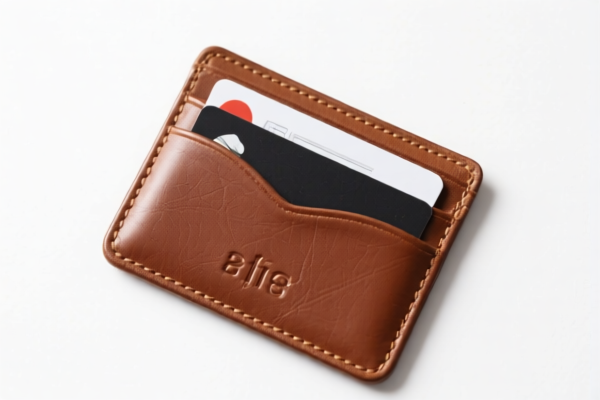

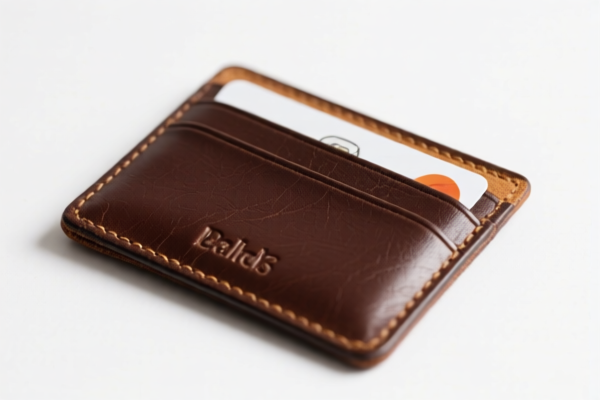
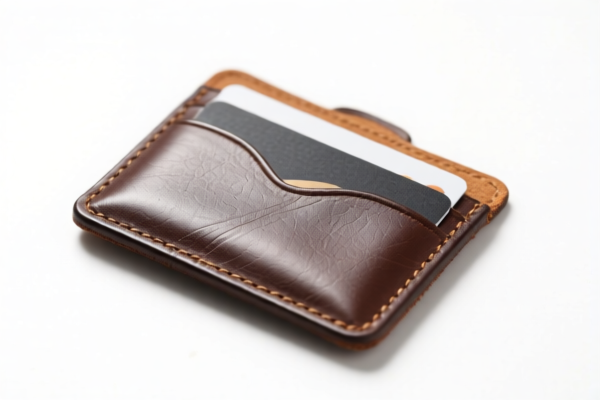
AI Analysis
🧳 Leather Multi-Function Card Holder
🌐 HS Code Classification & U.S. Customs Clearance Guide | 2026 Tariff Breakdown | Strategic Entry Protocol
📌 One: Product Definition & Classification Logic
The "Leather Multi-Function Card Holder" is a leather accessory designed to store identification cards, credit cards, and cash. While often mistaken for a small handbag, U.S. Customs and Border Protection (CBP) distinguishes these items based on capacity, intended use, and construction.
⚠️ Critical Classification Distinction:
- Classified as "Pouches/Pockets" (4202.31...): If the item is primarily designed to be carried in a pocket or handbag, or functions strictly as a wallet/card case.
- Classified as "Other Leather Articles" (4205.00...): If the item has a different shape or function that does not fit the specific "pouches" definition (e.g., specific leather holders for tools or distinct shapes).Key Takeaway: The HS Code determines whether you pay 38.7% or 43.0% tax. Misclassification here can lead to immediate cargo detention or penalty fees.
📦 Two: HS Code Classification Matrix (2026 Tariff Schedule)
Based on U.S. Harmonized Tariff Schedule (HTSUS) analysis for Leather Card Holders, here are the precise classifications and tax implications.
| HS Code | Product Description (Summary) | Category Logic | Total Duty Rate |
|---|---|---|---|
4202.31.30.00 |
Leather, Card Holder Pouch/Pocket Specifically for "Pouches/Pockets" (wallets/cardholders) |
✅ Fits the definition of a "pocket" container. | 38.7% |
4205.00.80.00 |
Other Leather Articles General leather goods not covered elsewhere |
⚠️ "Other" category. Used if shape/function is non-standard. | 35.0% |
4205.00.60.00 |
Other Leather Articles Alternative "Other" classification |
⚠️ Similar to above; slight variation in leather type or specific sub-rule. | 39.9% |
4202.31.60.00 |
Leather, Handbag/Pocket Container Larger "Pouches" or handbag-style card holders |
✅ "Pouches" category, but potentially larger or multi-compartment. | 43.0% |
🔍 Analysis Note:
-4202.31codes are the most common for standard card holders and wallets.
-4205.00codes are less common for standard card holders but apply if the item is deemed a "leather article" rather than a "pouch."
-4202.31.60.00often applies if the card holder has significant features of a "handbag" (e.g., a strap, large size).
💰 Three: 2026 Tariff Structure & Calculation (Detailed Breakdown)
✅ Target Market: United States (US)
✅ Origin: China (CN)
✅ Effective Date: Current (Applicable to imports from China)
✅ Structure: Base Duty + Section 301 (25%) + Section 122 (10%)
🎯 1. 4202.31.30.00 – Standard Leather Card Holder (Pouch/Pocket)
| Component | Rate | Source |
|---|---|---|
| Base Duty | 3.7% | HTSUS General Rate |
| Section 301 Add-on | 25.0% | 301 Action (China Specific) |
| Section 122 Add-on | 10.0% | Executive Order 13936 (China Specific) |
| TOTAL DUTY | 38.7% | |
| Calculation | CIF Value × 38.7% |
📌 Strategic Insight: This is the baseline standard for most leather card holders. The 25% + 10% add-on is mandatory and non-negotiable for Chinese origin goods.
🎯 2. 4205.00.80.00 – Other Leather Articles (Zero Base)
| Component | Rate | Source |
|---|---|---|
| Base Duty | 0.0% | HTSUS Zero Rate |
| Section 301 Add-on | 25.0% | 301 Action |
| Section 122 Add-on | 10.0% | Executive Order 13936 |
| TOTAL DUTY | 35.0% | |
| Calculation | CIF Value × 35.0% |
📌 Strategic Insight: If your product can be legally argued as an "Other Leather Article" rather than a "Pouch," you save 3.7% (the base duty). However, the 301/122 tariffs remain.
🎯 3. 4205.00.60.00 – Other Leather Articles (Higher Base)
| Component | Rate | Source |
|---|---|---|
| Base Duty | 4.9% | HTSUS Specific Rate |
| Section 301 Add-on | 25.0% | 301 Action |
| Section 122 Add-on | 10.0% | Executive Order 13936 |
| TOTAL DUTY | 39.9% | |
| Calculation | CIF Value × 39.9% |
⚠️ Warning: This code is more expensive than the standard pouch (
4202.31.30.00). Avoid this unless your product has unique features forcing this classification.
🎯 4. 4202.31.60.00 – Larger Handbag/Pocket Containers
| Component | Rate | Source |
|---|---|---|
| Base Duty | 8.0% | HTSUS Specific Rate |
| Section 301 Add-on | 25.0% | 301 Action |
| Section 122 Add-on | 10.0% | Executive Order 13936 |
| TOTAL DUTY | 43.0% | |
| Calculation | CIF Value × 43.0% |
⚠️ Critical Risk: If your card holder is too large, has a strap, or looks like a mini-handbag, CBP may force this classification, costing you 4.3% more than the standard pouch.
🛠️ Four: Customs Clearance Strategy & Action Plan
✅ 1. Documentation Checklist (Must-Have)
To prevent delays and ensure correct HS Code assignment, you must provide:
| Document | Requirement | Why It Matters |
|---|---|---|
| Detailed Product Description | "Leather Card Holder, 6 Card Slots, 1 Bill Pocket, No Handle/Strap" | Proves it is a pouch, not a handbag (4202.31.60 vs 4202.31.30). |
| Material Composition | 100% Genuine Leather / 100% Bovine Leather | "Leather" is key for Chapter 42. Synthetic alternatives have different codes. |
| Functionality Statement | "Intended solely for holding IDs and credit cards; not a purse." | Prevents misclassification as a "Handbag" (4202.21 or similar). |
| Photos | Front, Back, Inside, With Money/Cards | Visual proof of size and lack of straps/handles. |
| Invoice | Value in USD, clearly labeled "Card Holder" | Ensures accurate tax calculation (38.7% or 35.0%). |
✅ 2. Classification Optimization Tips (The "Goldilocks" Rule)
🔥 Rule of Thumb: "Small, Flat, No Strap = 38.7% (or 35%). Large/Strapped = 43%."
| Scenario | Recommended HS Code | Risk Level | Strategy |
|---|---|---|---|
| Standard Slim Wallet | 4202.31.30.00 |
🟢 Low | Declare as "Card Holder" or "Wallet". |
| Multi-Pocket Card Case | 4205.00.80.00 |
🟡 Medium | Argue it's an "Article of Leather" if it has unusual shapes. |
| Card Holder with Strap | 4202.31.60.00 |
🔴 High | Expect higher duty (43%). May need to redesign to remove strap. |
| Non-Leather (Synthetic) | Different Chapter | 🔴 High | Do not use Leather codes. Use Chapter 39 or 4202.92. |
✅ 3. Special Clauses Explanation (The "Section 122" & "301" Trap)
⚠️ Critical Warning: - Section 301 (25%): This is the "China Tariff" imposed under U.S. Trade Act Section 301. It applies to almost all leather goods from China. - Section 122 (10%): This is an Additional duty specifically targeting Chinese goods (often under "Section 122 of the Tariff Act of 1930" or related executive orders). - Combined Effect: You cannot avoid the 35.0% – 43.0% range unless you change the Country of Origin (e.g., Vietnam, Mexico, Thailand).
🛡️ Mitigation Strategy:
If the total tax burden (35-43%) destroys your margin, consider: 1. Sourcing from Non-China: If you manufacture in Vietnam/Mexico, the 10% Section 122 tax often vanishes. 2. Value Engineering: Reduce CIF value to lower absolute tax amounts. 3. De Minimis Review: Small shipments (<$800) may be exempt, but bulk imports are not.
🌍 Five: Quick Reference: Tax Comparison by Origin
| Origin | HS Code | Base Tax | Section 301 | Section 122 | Total |
|---|---|---|---|---|---|
| 🇨🇳 China | 4202.31.30.00 |
3.7% | 25.0% | 10.0% | 38.7% |
| 🇻🇳 Vietnam | 4202.31.30.00 |
3.7% | 0.0%* | 0.0%* | 3.7% |
| 🇺🇸 USA | 4202.31.30.00 |
0.0% | 0.0% | 0.0% | 0.0% |
* Note: Vietnam/Mexico goods are generally exempt from Section 301 and 122, but subject to standard base tariffs. Verify current trade status.
📌 Six: Final Verdict & Action Items
- Verify Your Design: Does your "Card Holder" have a strap or handle?
- No → Target
4202.31.30.00(38.7% Total). - Yes → Expect
4202.31.60.00(43.0% Total).
- No → Target
- Check Your Origin: If shipping from China, prepare for the 38.7% - 43.0% hit.
- Document Everything: Ensure your invoice and description explicitly state "Leather Card Holder" and exclude words like "Handbag," "Bag," or "Strap" unless true.
🚀 Pro Tip: For high-volume imports, consult a customs broker to apply for a Binding Ruling from CBP before shipping. This locks in your HS Code and avoids future disputes.
✨ Smart Classification = Maximum Profit!
💼 Don't let tariffs eat your margins. Classify right, ship fast.
Customer Reviews
About HS Code Classification
The Harmonized System (HS) is an internationally standardized nomenclature developed by the World Customs Organization (WCO) to classify traded products. Over 200 countries use the HS system as the basis for customs tariffs, trade statistics, and import/export regulations.
Each HS code follows a hierarchical structure:
- Chapter (2 digits) — Broad category of goods (e.g., Chapter 84: Machinery and Mechanical Appliances)
- Heading (4 digits) — More specific grouping within the chapter
- Subheading (6 digits) — Internationally standardized breakdown, used by all WCO member countries
- National subdivisions (8-10 digits) — Country-specific extensions for further classification, such as US HTSUS 10-digit codes
Correct HS code classification is essential for smooth customs clearance, accurate duty payment, and compliance with trade regulations. Misclassification can lead to customs delays, overpayment of duties, or penalties.
When importing from CN to US, the applicable tariff rates may include:
- Most-Favored-Nation (MFN) rate — The standard duty rate applied to WTO members
- General rate — Applied to countries without trade agreements
- Trade remedy duties — Additional tariffs such as Section 301 (anti-dumping), Section 232 (national security), or countervailing duties
The information provided on this page is for reference purposes only. For official classification, please consult with your local customs authority or a licensed customs broker.