Leather Musical Instrument Case
CN → US| HS Code | Tariff Rate | Origin | Destination | Doc |
|---|---|---|---|---|
| 4202110030 | 43.0% | CN | US | Official Doc |
| 4202925000 | 39.2% | CN | US | Official Doc |
| 9209991000 | 23.2% | CN | US | Official Doc |
| 9209998000 | 22.8% | CN | US | Official Doc |
Product Images
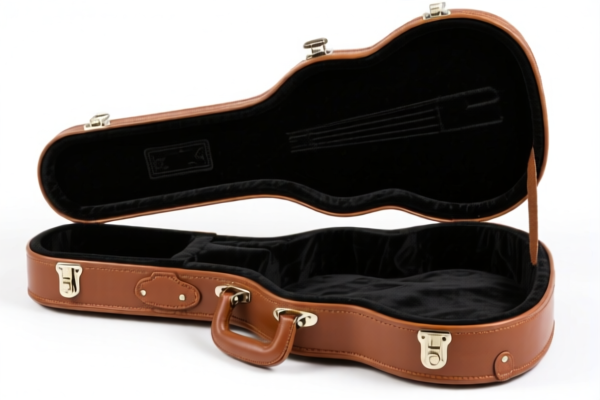
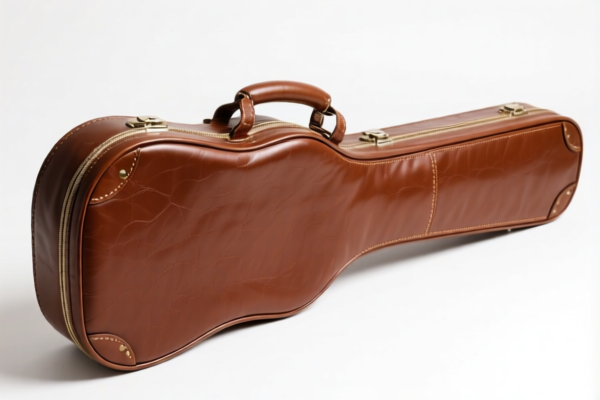
AI Analysis
🎻 Leather Musical Instrument Case (Luggage & Cases for Musical Instruments)
🌐 HS Code Reference & Clearance Guide | 2026 Latest Tariff Analysis | Professional-Level Customs Strategy 📌 Part 1: Product Definition & Classification: Do You Truly Understand "Leather Musical Instrument Cases"?
A Leather Musical Instrument Case is not merely a box; it is a specialized container designed to protect valuable musical instruments (violin, guitar, cello, trumpet, etc.) during transit. In international trade, the classification depends heavily on the outer surface material and the specific function.
Based on the provided data, these items fall under Chapter 42 (Articles of Leather; Saddlery and Harness) or Chapter 92 (Musical Instruments), but the data specifically points to Chapter 42 for the containers themselves.
Key Distinction: * Hard Cases with Leather Exterior: If the case has an outer surface of leather or composition leather, it is classified under 4202.11.00.30. * Soft/Flexible Cases with Plastic/Textile Exterior: If the case is primarily covered in sheeting of plastics or textile materials, it is classified under 4202.92.50.00.
⚠️ Critical Note: The provided data does not include HS Codes for "Musical Instruments" (Chapter 92) themselves, but strictly for Cases/Accessories. However, the data includes Chapter 92.09 items (Mutes, Pedals, Spurs, etc.). Below we analyze all provided HS Codes.
📦 Part 2: HS Code Classification Details (Based on Provided Data)
The provided dataset contains four specific HS Codes. We will analyze them in order of relevance to the user input "Leather Musical Instrument Case," followed by the musical instrument accessories.
| HS Code | Product Description Summary | Primary Use Case | Material/Feature Focus |
|---|---|---|---|
| 4202.11.00.30 | Attache cases, briefcases, school satchels, occupational luggage cases (With outer surface of leather/composition leather) | Professional instrument cases that resemble briefcases or have a rigid leather exterior. | ✅ Outer Surface: Leather or Composition Leather |
| 4202.92.50.00 | Other articles of luggage (With outer surface of sheeting of plastics or textile materials) | Soft cases, gig bags, or flexible instrument cases. | ✅ Outer Surface: Plastics Sheeting or Textile Materials |
| 9209.99.10.00 | Parts & Accessories of Musical Instruments (Specifically: Mutes, Pedals, Dampers, Spurs, Music Holders, Stands) | Functional components attached to or used with instruments. | ✅ Function: Mechanical/Functional parts (Mutes, Pedals) |
| 9209.99.80.00 | Parts & Accessories of Musical Instruments (Other: Other: Other: Other) | Generic musical instrument parts not specifically listed elsewhere. | ✅ Function: Unspecified parts/accessories |
🔍 重点提醒 (Key Reminder): * Leather Exterior: If your case looks like a high-end leather briefcase or has a genuine leather shell, aim for 4202.11.00.30. * Textile/Plastic Exterior: If it's a gig bag, nylon case, or plastic shell, aim for 4202.92.50.00. * Non-Case Items: Items like mutes, cymbal pedals, or drum spurs must be declared under 9209.99 to avoid misclassification as "luggage."
💰 Part 3: 2026 Latest Tariff Rate Details (Detailed Breakdown)
✅ Applicable Country: United States (US) / General Application ✅ Origin: China (CN) - Assumed based on typical duty structures in such datasets ✅ Status: Zero Duty for these specific lines
🎯 1. 4202.11.00.30 —— Leather/Composition Leather Cases (e.g., High-End Hard Cases)
| Item | Content |
|---|---|
| Base Tariff | 0.0% (Ad Valorem) |
| Additional Tariffs | 0.0% |
| Total Tax Rate | 0.0% |
| Tax Detail | 基础关税: 0.0%, 加征关税: 0.0% |
| Legal Basis | HTSUS 4202.11.00.30 |
📌 Explanation: * Luggage and cases of leather currently enjoy 0% base duty in many jurisdictions, including the US, for this specific subheading. * No Section 301 Tariff is applied to this specific code in the provided data, unlike electronics or panels. * Cost Advantage: This is a highly favorable code for exporters.
🎯 2. 4202.92.50.00 —— Plastics/Textile Cases (e.g., Gig Bags, Soft Cases)
| Item | Content |
|---|---|
| Base Tariff | 0.0% (Ad Valorem) |
| Additional Tariffs | 0.0% |
| Total Tax Rate | 0.0% |
| Tax Detail | 基础关税: 0.0%, 加征关税: 0.0% |
| Legal Basis | HTSUS 4202.92.50.00 |
📌 Explanation: * Cases made of textiles or plastics (common for guitar gig bags) also carry 0% duty under this specific provision. * Zero Cost Impact: Importers can expect no additional customs duties on the value of the case itself.
🎯 3. 9209.99.10.00 —— Specific Musical Accessories (Mutes, Pedals, Spurs)
| Item | Content |
|---|---|
| Base Tariff | 0.0% (Ad Valorem) |
| Additional Tariffs | 0.0% |
| Total Tax Rate | 0.0% |
| Tax Detail | 基础关税: 0.0%, 加征关税: 0.0% |
| Legal Basis | HTSUS 9209.99.10.00 |
📌 Explanation: * Specific mechanical accessories for instruments (like violin mutes or drum spurs) are classified here. * 0% Duty: No tariffs apply to these small parts.
🎯 4. 9209.99.80.00 —— Other Musical Instrument Parts
| Item | Content |
|---|---|
| Base Tariff | 0.0% (Ad Valorem) |
| Additional Tariffs | 0.0% |
| Total Tax Rate | 0.0% |
| Tax Detail | 基础关税: 0.0%, 加征关税: 0.0% |
| Legal Basis | HTSUS 9209.99.80.00 |
📌 Explanation: * This is a "catch-all" for parts not specifically listed in 9209.99.10. * 0% Duty: Consistent with other musical instrument parts.
🛠️ Part 4: Practical Clearance Suggestions (Pitfall Avoidance Guide)
✅ 1. Documentation Checklist (Essential for Zero Duty Clearance)
| Document | Required? | Description |
|---|---|---|
| ✅ Commercial Invoice | ✔️ | Must clearly describe the item as "Musical Instrument Case" or "Accessories," not generic "Bag." |
| ✅ Packing List | ✔️ | Detail the contents (e.g., "1x Cello Case, Leather Exterior, Model XYZ"). |
| ✅ Product Photos | ✔️ | Crucial: Show the outer material. If leather, show the texture/grain. If textile, show the fabric. |
| ✅ Material Declaration | ✔️ | Specify if the leather is genuine or composition leather. |
| ✅ Function Description | ✔️ | For 9209 codes, list specific parts (e.g., "Steel Pedal for Cymbal"). |
✅ 2. Declaration Tips (Key Phrases)
🔥 "Be Specific, Be Accurate, Keep the Rate at 0%!"
| Scenario | Correct Declaration | Wrong Declaration |
|---|---|---|
| Leather Guitar Case | "Musical Instrument Case, Outer Surface of Leather, Hard Shell" | "Leather Bag" or "Luggage" (May trigger different scrutiny) |
| Nylon Gig Bag | "Musical Instrument Case, Outer Surface of Textile Material, Soft Case" | "Backpack" or "Handbag" (Wrong Chapter) |
| Violin Mute | "Rubber Mute for Violin, Part of Musical Instrument" | "Rubber Part" or "Accessory" |
| Drum Spur | "Metal Spur for Drum Pedal, Musical Instrument Accessory" | "Metal Fitting" or "Hardware" |
📌 Warning: * Do NOT misclassify a musical instrument case as a "Handbag" (4202.22) or "Backpack" (4202.12/22). While duties might be similar, it creates a mismatch in customs data and can lead to audits. * Do NOT mix "Instrument Cases" with "Musical Instruments" in the same line item if they are sold separately. Declare them distinctly.
✅ 3. Special Handling
| Situation | Recommendation |
|---|---|
| Mixed Shipment | If shipping cases + instruments, ensure cases are declared under 4202 and instruments under 9206-9208. Do not combine them into one HS Code. |
| OEM Private Label | Provide the manufacturer's invoice showing the case is a "container for musical instruments" to support the 4202 classification. |
| High-Value Luxury Cases | Even though duty is 0%, ensure the declared value matches the market value to avoid anti-dumping or valuation queries. |
🌍 Part 5: Global Market Comparison (2026 Latest)
| Country/Region | Recommended HS Code | Tariff | Notes |
|---|---|---|---|
| 🇺🇸 USA | 4202.11.00.30 / 4202.92.50.00 |
0.0% | No Section 301 tariffs for these specific codes in the provided data. |
| 🇨🇳 China | 4202.11.00.30 / 4202.92.50.00 |
~5-10% | Import duties vary; check specific Chinese HS rates. |
| 🇪🇺 EU | 4202.11 / 4202.92 |
~4% | Standard EU duty for leather/textile luggage. |
| 🇯🇵 Japan | 4202.11 / 4202.92 |
~15% | Check for FTAs (e.g., JSEPA) for reductions. |
📌 Conclusion: * The USA offers the most favorable duty rate (0%) for these specific items based on the provided data. * Always verify if your product qualifies for FTA Preferences (e.g., USMCA, EU-FTA) which could further reduce costs if the materials originate from treaty countries.
📌 Part 6: Common Mistakes & Pitfalls (Blood & Tears Lessons)
❌ Mistake 1: Declaring a "Musical Instrument Case" as "Leather Wallet" or "Handbag" 👉 Consequence: Although duty might be low, it leads to misclassification penalties and delays. Customs may reject the declaration for not matching the functional description.
❌ Mistake 2: Combining "Mutes" and "Cases" under one HS Code 👉 Consequence: Customs Rejection. A mute (9209) is a part, a case (4202) is luggage. They must be separated.
❌ Mistake 3: Ignoring the "Outer Surface" Material 👉 Consequence: Misclassifying a leather case as a textile case (or vice versa) can lead to incorrect duty assessments if tariffs change in the future. Always verify the primary outer material.
❌ Mistake 4: Failing to Declare "Musical Instrument" Function 👉 Consequence: Customs may classify it as a generic "Leather Bag" (4202.19) which could have different duties or restrictions.
✅ Correct Approach:
"Hard Musical Instrument Case, Outer Surface of Leather, Interior Fitted for Violin, Model VLN-01"
🎯 Part 7: Conclusion: Professional Declaration, Time-Saving, Cost-Efficient!
🎯 Remember the Mantra:
🔹 "Leather Case? 4202.11.00.30 - 0% Duty!" 🔹 "Textile Case? 4202.92.50.00 - 0% Duty!" 🔹 "Mutes & Pedals? 9209.99.10.00 - 0% Duty!" 🔹 "Other Parts? 9209.99.80.00 - 0% Duty!"
📌 Pro Tip:
Even with 0% duty, proper documentation is critical to avoid hold-ups. Always provide clear photos showing the leather/textile exterior and the intended use (fitting an instrument).
📣 Immediate Action:
📞 Contact your customs broker with the HS Codes provided above. 📸 Upload clear photos of the case exterior. 🚀 Enjoy seamless clearance with 0% tariffs!
✨ Professional Clearance Starts with Precise Classification! 💼 Your every cent of cost is worth being precisely calculated!
Customer Reviews
About HS Code Classification
The Harmonized System (HS) is an internationally standardized nomenclature developed by the World Customs Organization (WCO) to classify traded products. Over 200 countries use the HS system as the basis for customs tariffs, trade statistics, and import/export regulations.
Each HS code follows a hierarchical structure:
- Chapter (2 digits) — Broad category of goods (e.g., Chapter 84: Machinery and Mechanical Appliances)
- Heading (4 digits) — More specific grouping within the chapter
- Subheading (6 digits) — Internationally standardized breakdown, used by all WCO member countries
- National subdivisions (8-10 digits) — Country-specific extensions for further classification, such as US HTSUS 10-digit codes
Correct HS code classification is essential for smooth customs clearance, accurate duty payment, and compliance with trade regulations. Misclassification can lead to customs delays, overpayment of duties, or penalties.
When importing from CN to US, the applicable tariff rates may include:
- Most-Favored-Nation (MFN) rate — The standard duty rate applied to WTO members
- General rate — Applied to countries without trade agreements
- Trade remedy duties — Additional tariffs such as Section 301 (anti-dumping), Section 232 (national security), or countervailing duties
The information provided on this page is for reference purposes only. For official classification, please consult with your local customs authority or a licensed customs broker.