Leather Notepad Set
CN → US| HS Code | Tariff Rate | Origin | Destination | Doc |
|---|---|---|---|---|
| 4205008000 | 35.0% | CN | US | Official Doc |
| 4205006000 | 39.9% | CN | US | Official Doc |
| 4820102060 | 35.0% | CN | US | Official Doc |
| 4820104000 | 35.0% | CN | US | Official Doc |
| 4820102060 | 35.0% | CN | US | Official Doc |
Product Images
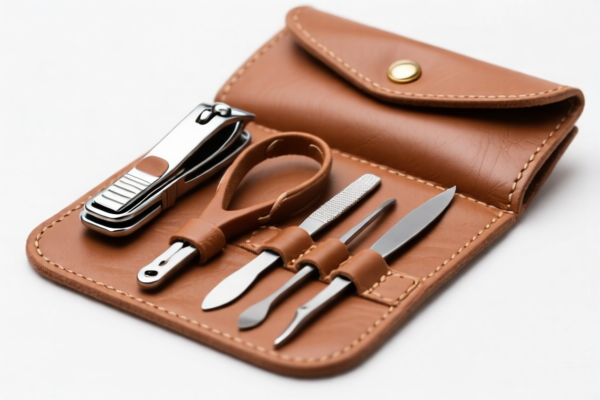
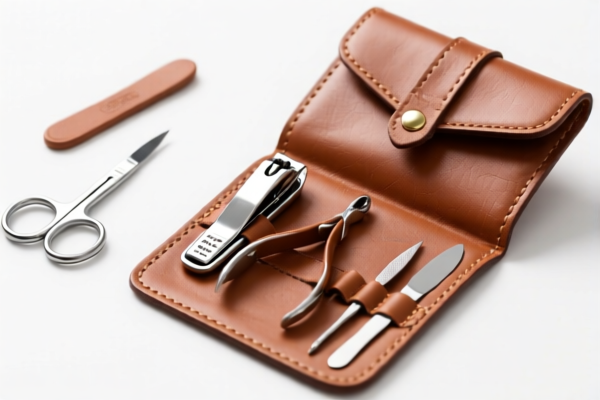
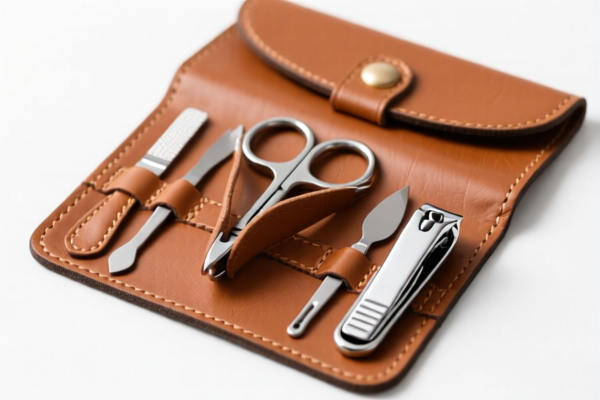
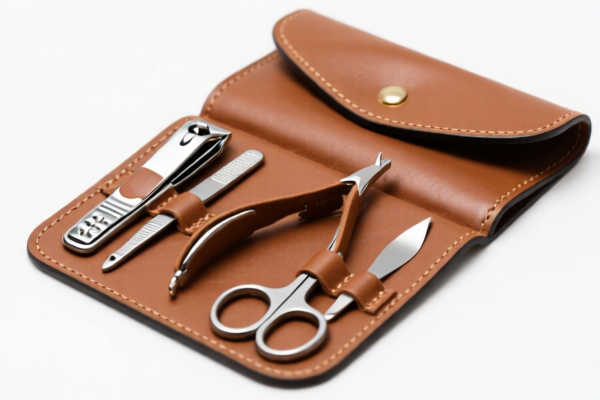
AI Analysis
📔 Leather Notepad Set: HS Code Classification & US Customs Clearance Guide (2026)
🌐 HS Code Reference & Customs Clearance Guide | Latest 2026 Tariff Analysis | Professional Entry Strategy
📌 1. Product Definition & Classification: What is a "Leather Notepad Set"?
A Leather Notepad Set is a stationery item combining functional writing surfaces with decorative or protective covers. In international trade, the classification depends heavily on the primary material and the core function.
- Scenario A: Leather as the Primary Material
If the notepad is fundamentally a "leather good" (e.g., a leather-bound journal where the leather cover is the defining characteristic, and paper is secondary), it falls under Chapter 42 (Articles of Leather). - Scenario B: Paper as the Primary Material
If the item is fundamentally a "stationery product" (e.g., a pad of paper with a simple leather or faux-leather cover for protection), it falls under Chapter 48 (Paper and Paperboard).
⚠️ Critical Distinction:
- If the leather content/value is significant and it’s marketed as a "leather accessory/journal" → Chapter 42.
- If it’s marketed as a "notepad/memo book" with a leather cover → Chapter 48.
📦 2. HS Code Classification Details (Based on Provided Data)
The following HS Codes and tax rates are derived strictly from the provided dataset. All entries involve a total tax burden of 35.0% or 39.9% due to additional levies.
| HS Code | Product Description | Tax Rate | Tax Breakdown | Key Classification Logic |
|---|---|---|---|---|
| 4205.00.80.00 | Leather Notepad, Classified as "Other Leather Articles" | 35.0% | Base: 0.0% Add'l: 25.0% Section 122: 10% |
Core classification: Leather Articles (Ch 42). The paper inside is secondary. |
| 4205.00.60.00 | Leather Notepad, Classified as "Other Made-up Leather Articles" | 39.9% | Base: 4.9% Add'l: 25.0% Section 122: 10% |
Core classification: Leather Articles (Ch 42). Higher base duty applies. |
| 4820.10.20.60 | Leather Notepad/Memo Book Set, Classified as "Stationery of Paper" | 35.0% | Base: 0.0% Add'l: 25.0% Section 122: 10% |
Core classification: Paper Stationery (Ch 48). Leather cover is incidental. |
| 4820.10.40.00 | Leather Notepad, Core Carrier is Paper (Stationery) | 35.0% | Base: 0.0% Add'l: 25.0% Section 122: 10% |
Core classification: Paper Stationery (Ch 48). Focus on writing function. |
| 4820.10.20.60 | Leather Memo Book Set, Common Leather Cover for Paper Stationery | 35.0% | Base: 0.0% Add'l: 25.0% Section 122: 10% |
Core classification: Paper Stationery (Ch 48). Emphasizes "Set" and "Memo Book". |
🔍 Key Observation:
- Chapter 42 (Leather) codes have two variants: 0% base (4205.00.80.00) and 4.9% base (4205.00.60.00).
- Chapter 48 (Paper) codes generally have 0% base duty but still incur the same additional taxes.
- Section 122 Tariff (10%) and Additional Tariff (25%) apply uniformly across all these codes, likely indicating a specific trade remedy or bilateral tariff structure (e.g., US-China Section 301/122 implications).
💰 3. 2026 Latest Tariff Rate Breakdown
✅ Applicable Country: USA (US)
✅ Origin: Likely China (CN) [Inferred from "Section 122" and high additional tariffs]
✅ Effective Time: Current (2026)
🎯 1. Chapter 42: Leather Articles (4205.00.xxxxxx)
| Item | Content |
|---|---|
| HS Code | 4205.00.80.00 OR 4205.00.60.00 |
| Product Type | Leather Notepad (Classified as Leather Good) |
| Base Duty | 0.0% (for .80.00) OR 4.9% (for .60.00) |
| Additional Tariff | +25.0% |
| Section 122 Tariff | +10.0% |
| Total Tax Rate | 35.0% (for .80.00) 39.9% (for .60.00) |
| Tax Calculation | CIF Value × Total Rate |
| De Minimis Exemption | ❌ Not Eligible (High tariff rates typically exclude Section 321 de minimis benefits) |
| Legal Basis | USHTS Chapter 42 + Additional Trade Measures |
📌 Explanation:
- If your product is deemed a "leather article," you face either 35% or 39.9% total duty.
- The 4.9% difference in.60.00is the base duty, which is added on top of the same 35% additional tariffs.
🎯 2. Chapter 48: Paper/Paperboard Articles (4820.10.xxxxxx)
| Item | Content |
|---|---|
| HS Code | 4820.10.20.60 OR 4820.10.40.00 |
| Product Type | Notepad/Memo Book (Classified as Paper Stationery) |
| Base Duty | 0.0% |
| Additional Tariff | +25.0% |
| Section 122 Tariff | +10.0% |
| Total Tax Rate | 35.0% |
| Tax Calculation | CIF Value × 35% |
| De Minimis Exemption | ❌ Not Eligible |
| Legal Basis | USHTS Chapter 48 + Additional Trade Measures |
📌 Explanation:
- Even though the base duty is 0%, the 25% + 10% additional tariffs make the total 35%.
- This is a cost-neutral option compared to4205.00.80.00, but cheaper than4205.00.60.00(39.9%).
🛠️ 4. Customs Clearance Practical Advice
✅ 1. Documentation Checklist (Essential)
| Document | Required | Notes |
|---|---|---|
| Commercial Invoice | ✅ | Must clearly state: "Leather Notepad Set" |
| Packing List | ✅ | Detail contents: Paper count, leather type, set components |
| Product Description | ✅ | Specify: "Paper notepad with leather cover" vs. "Leather journal" |
| HS Code Declaration | ✅ | State exact HS Code and tax breakdown |
| Certificate of Origin | ✅ | Required for tariff verification |
| Photos | ✅ | Show product with/without cover to prove primary material |
✅ 2. Classification Strategy (Key Tips)
🔥 "Classify by Primary Function: If it writes, it’s 48. If it’s a leather good, it’s 42."
| Scenario | Recommended HS Code | Total Tax | Reason |
|---|---|---|---|
| Paper-focused | 4820.10.20.60 / 4820.10.40.00 |
35.0% | Lower risk, standard base duty (0%), same additional tax. |
| Leather-focused | 4205.00.80.00 |
35.0% | Same total tax as paper, but higher scrutiny on leather content. |
| Leather-focused (Other) | 4205.00.60.00 |
39.9% | Avoid if possible; 4.9% higher base duty. |
📌 Recommendation:
- If the product is a standard notepad with a leather cover, use Chapter 48 (4820.10.20.60). It’s the most common classification for "notepads" and has 0% base duty, simplifying calculation.
- If the product is a premium leather journal with high leather value, use Chapter 42 (4205.00.80.00). It also has 0% base duty and 35% total tax, making it tax-equivalent to Chapter 48.
- Avoid4205.00.60.00unless specifically required, as it incurs an extra 4.9% base duty.
✅ 3. Special Cases
| Case | Advice |
|---|---|
| Faux Leather/Vegan Leather | Classify under Chapter 48 (Paper Stationery) as it’s not genuine leather. Use 4820.10.20.60. |
| Mixed Materials | If >50% leather value, consider Chapter 42. But if function is writing, Chapter 48 is safer. |
| Gift Sets | If sold as a "set" (e.g., notepad + pen + leather case), declare the principal component (usually the notepad). |
| De Minimis | Do not rely on Section 321 ($800) de minimis for high-value leather goods; additional tariffs often negate benefits. |
🌍 5. Global Market Comparison (2026)
| Country/Region | Recommended HS Code | Est. Total Tax | Notes |
|---|---|---|---|
| 🇺🇸 USA | 4820.10.20.60 or 4205.00.80.00 |
35.0% | High additional tariffs (25% + 10%) apply. |
| 🇨🇳 China | 4820.10.20.60 |
~13-15% | Import duty + VAT. No additional US-style tariffs. |
| 🇪🇺 EU | 4820.10.20.60 |
~6.5% + VAT | Lower base duty. No Section 122 equivalent. |
| 🇬🇧 UK | 4820.10.20.60 |
~6.5% + VAT | Post-Brexit tariff structure applies. |
📌 Conclusion:
- USA is the most expensive market due to Section 122 + 301-like tariffs.
- EU/UK/China have significantly lower total duty burdens.
- Strategy: Consider third-country assembly (e.g., Vietnam, Mexico) if exporting to the US to avoid additional tariffs.
📌 6. Common Mistakes & Pitfalls
❌ Mistake 1: Classifying as "Leather Apparel" (Ch 42) when it’s a Stationery Item (Ch 48)
👉 Result: Unnecessary scrutiny, potential misclassification penalty.
❌ Mistake 2: Ignoring Section 122 Tariff (10%)
👉 Result: Underpayment of duty → Customs seizure + fines.
❌ Mistake 3: Claiming De Minimis for High-Value Sets
👉 Result: Rejected entry; goods held until proper duty payment.
✅ Correct Approach:
"Leather Notepad Set, Paper Core, Leather Cover, HS Code: 4820.10.20.60, Total Duty: 35%"
🎯 7. Conclusion: Smart Classification for Cost Efficiency
🎯 Key Takeaway:
🔹 "Paper Core = 0% Base + 35% Add'l = 35% Total"
🔹 "Leather Core (80) = 0% Base + 35% Add'l = 35% Total"
🔹 "Leather Core (60) = 4.9% Base + 35% Add'l = 39.9% Total"📌 Recommendation:
Use4820.10.20.60(Paper Stationery) for standard notepads. It’s the safest, most common, and tax-efficient classification (35% total). Avoid4205.00.60.00unless specifically required, as it costs 4.9% more.
📣 Immediate Action:
📞 Confirm product structure with supplier.
📦 Declare HS Code4820.10.20.60for optimal clarity.
🚀 Prepare invoices with precise description to avoid customs delays.
✨ Pro Tip:
If your leather notepad set is shipped from Mexico or Vietnam, you may qualify for preferential tariffs under USMCA or other FTAs. Always check origin rules!
💼 Your Profit Margin Depends on Accurate Classification!
Customer Reviews
About HS Code Classification
The Harmonized System (HS) is an internationally standardized nomenclature developed by the World Customs Organization (WCO) to classify traded products. Over 200 countries use the HS system as the basis for customs tariffs, trade statistics, and import/export regulations.
Each HS code follows a hierarchical structure:
- Chapter (2 digits) — Broad category of goods (e.g., Chapter 84: Machinery and Mechanical Appliances)
- Heading (4 digits) — More specific grouping within the chapter
- Subheading (6 digits) — Internationally standardized breakdown, used by all WCO member countries
- National subdivisions (8-10 digits) — Country-specific extensions for further classification, such as US HTSUS 10-digit codes
Correct HS code classification is essential for smooth customs clearance, accurate duty payment, and compliance with trade regulations. Misclassification can lead to customs delays, overpayment of duties, or penalties.
When importing from CN to US, the applicable tariff rates may include:
- Most-Favored-Nation (MFN) rate — The standard duty rate applied to WTO members
- General rate — Applied to countries without trade agreements
- Trade remedy duties — Additional tariffs such as Section 301 (anti-dumping), Section 232 (national security), or countervailing duties
The information provided on this page is for reference purposes only. For official classification, please consult with your local customs authority or a licensed customs broker.