Leather Offcuts (for Belts)
CN → US| HS Code | Tariff Rate | Origin | Destination | Doc |
|---|---|---|---|---|
| 4205000500 | 37.9% | CN | US | Official Doc |
| 4205001000 | 35.0% | CN | US | Official Doc |
| 6406906000 | 17.5% | CN | US | Official Doc |
| 6406909000 | 17.5% | CN | US | Official Doc |
| 411490 | 0.0% | CN | US | Official Doc |
| 411410 | 0.0% | CN | US | Official Doc |
Product Images
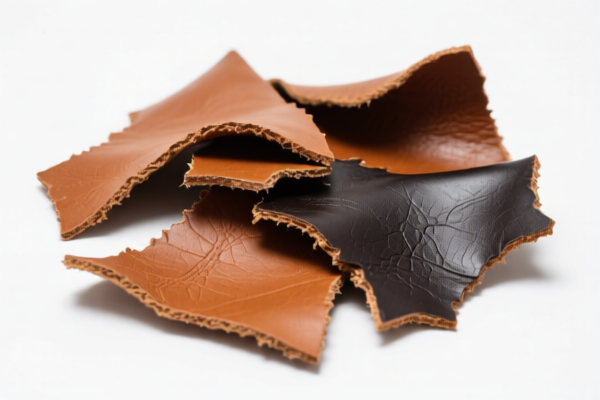
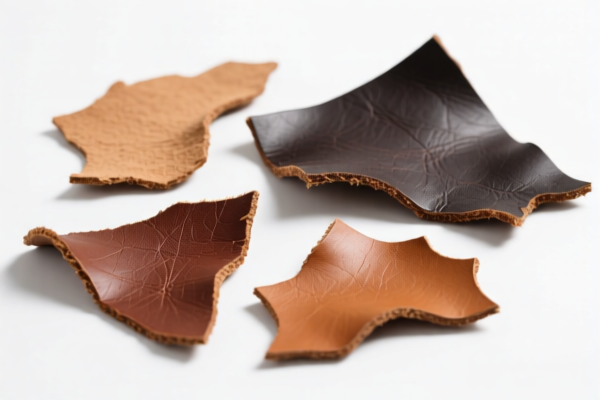
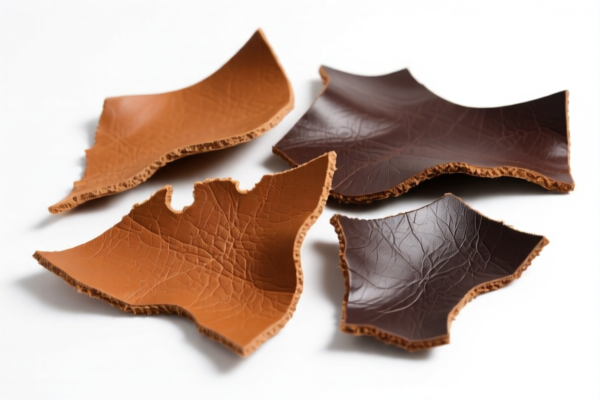
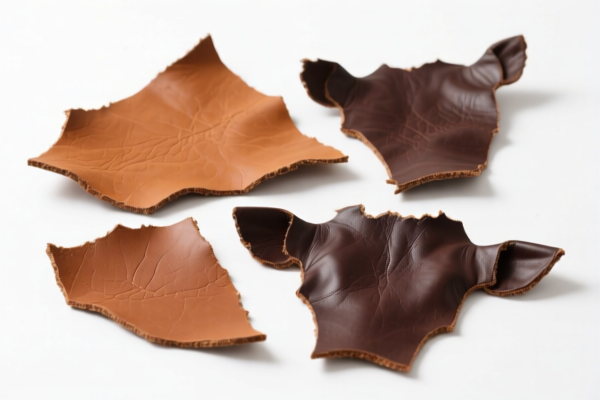
AI Analysis
👞 Leather Offcuts (For Belts)
🌐 HS Code Reference & Customs Clearance Guide | 2026 Latest Tariff Analysis | Specialized Strategy for Leather Scraps
📌 I. Product Definition & Classification: What Exactly Are "Leather Offcuts"?
Leather offcuts refer to the residual pieces of leather generated during the cutting process for larger leather goods. In international trade, the classification is strictly determined by their intended use and physical state. They are not simply "trash"; they are secondary raw materials for specific manufacturing lines.
Key Distinction: * For Belts/Machinery: If the offcuts are cut or shaped specifically for belt making or mechanical applications (like belting), they fall under Chapter 42. * For Apparel/Clothing: If the offcuts are intended for clothing accessories (including non-belt apparel), they fall under Chapter 41. * State of Work: They must be no further worked than cut to shape or size. Any tanning, dyeing, or complex processing beyond cutting changes the classification.
⚠️ Critical Note:
- If the material is merely "strips for belting", it is a specialized technical good (Ch 42).
- If it is "general scraps for apparel", it is a raw material (Ch 41).
- Do not mix these categories in a single declaration unless explicitly allowed by local customs procedures.
📦 II. HS Code Classification Details (2026 Latest Tariff Authority Match)
Based on the provided data, here are the precise HS Codes and their associated tax structures. Note that two codes have tax retrieval errors, which poses a specific risk.
| HS Code | Product Description | Intended Use / Scenario | Tax Status |
|---|---|---|---|
4205.00.05.00 |
Other articles of leather: Belting leather cut or manufactured into forms suitable for conversion into belting | Machinery/Technical Use: Strips or shapes specifically for conveyor belts, machine belts, or durable leather belts. | ✅ Success |
4205.00.10.00 |
Other articles of leather: Of a kind used in machinery... Other | Technical Use (Non-Belt): Other leather parts for machinery not covered by the specific belt category above. | ✅ Success |
6406.90.60.00 |
Parts of footwear: Of other materials: Of leather | Footwear Parts: Leather components used in shoe manufacturing (uppers, linings). Note: Distinct from apparel offcuts. | ✅ Success |
6406.90.90.00 |
Parts of footwear: Of other materials: Other | Footwear Parts (Misc): Other non-leather or unspecified material parts for footwear. | ✅ Success |
4114.90 |
Leather offcuts... for use in the manufacture of belts... not further worked than cut to shape | Raw Material for Belts: General offcuts intended for belt production, unprocessed beyond cutting. | ⚠️ Error |
4114.10 |
Leather offcuts... for use in the manufacture of apparel/clothing accessories... not further worked than cut to shape | Raw Material for Apparel: Scraps intended for jackets, bags, or other clothing items. | ⚠️ Error |
🔍 Focus Analysis:
- Codes4205.00.05.00and4205.00.10.00are for finished/semi-finished technical articles.
- Codes4114.90and4114.10are for raw material offcuts (scraps).
- The user input "Leather Offcuts (for Belts)" maps most directly to4114.90(Raw Offcuts) or potentially4205.00.05.00(Prepared Belting).
- Crucially,4114.90and4114.10have Tax Retrieval Failed status.
💰 III. 2026 Tariff Rate Detail Explanation
✅ Applicable Data Source: Provided
<DATA>JSON
✅ Status: Mixed Success/Error
🎯 1. 4205.00.05.00 – Belting Leather (Prepared for Conversion)
This code applies if the offcuts are already cut into shapes suitable for belts or machinery.
| Item | Content |
|---|---|
| Base Tariff | 2.9% (Ad Valorem) |
| Additional Tariff | 25.0% (Section 301 / USITC) |
| Total Tax Rate | 27.9% |
| Tax Calculation | CIF Value × 27.9% |
| Tax Detail | 基础关税: 2.9%, 加征关税: 25.0% |
📌 Explanation:
- This is a high-cost category due to the 25% additional tariff.
- This classification implies the goods are considered "articles" rather than raw "offcuts," triggering higher duties.
- Strategy: If your product is just rough scraps, declaring it here may be incorrect and costly. Check if it fits4114.90(if tax is retrievable/low) or if it truly is "manufactured into forms."
🎯 2. 4205.00.10.00 – Other Technical Leather Articles
Applies to technical leather uses other than the specific belting form in 4205.00.05.00.
| Item | Content |
|---|---|
| Base Tariff | 0.0% |
| Additional Tariff | 25.0% |
| Total Tax Rate | 25.0% |
| Tax Calculation | CIF Value × 25.0% |
| Tax Detail | 基础关税: 0.0%, 加征关税: 25.0% |
📌 Explanation:
- Slightly cheaper than4205.00.05.00(27.9%) due to 0% base rate.
- Still subject to the heavy 25% additional tariff.
🎯 3. Footwear Parts (6406.90.60.00 / 6406.90.90.00)
Note: Unless your "offcuts" are specifically cut and shaped for footwear (shoes/boots), these codes are incorrect for general belt/apparel offcuts.
| Item | Content |
|---|---|
| Base Tariff | 0.0% |
| Additional Tariff | 7.5% |
| Total Tax Rate | 7.5% |
| Tax Detail | 基础关税: 0.0%, 加征关税: 7.5% |
📌 Warning:
- Only use if the goods are parts of footwear.
- Misdeclaring belt offcuts as footwear parts (6406.90) will lead to customs penalties for misclassification.
🎯 4. 4114.90 & 4114.10 – Raw Leather Offcuts (Tax Error)
| HS Code | Description | Tax Status |
|---|---|---|
4114.90 |
Offcuts for Belts | ❌ Failed to retrieve tax information (Error) |
4114.10 |
Offcuts for Apparel | ❌ Failed to retrieve tax information (Error) |
🚨 Critical Risk Alert:
- These codes are the most likely candidates for "Leather Offcuts" that are not pre-formed into belt shapes.
- However, the tax data is MISSING.
- Action Required: You cannot rely on this data for final cost calculation. You must consult the official customs tariff schedule for these specific codes, as they may have different rates (often lower than 25%) or require additional verification.
- Do not assume 0% or 25% tax for these. The "Error" status means the system failed to fetch the applicable duty rate.
🛠️ IV. Customs Clearance Practical Advice (Real-World Pitfall Avoidance)
✅ 1. Preparation Checklist (Non-Negotiable)
| Document | Mandatory? | Explanation |
|---|---|---|
| ✅ Product Photos | ✔️ | Must clearly show the offcuts are not finished goods. Show edges, thickness, and lack of stitching/holes. |
| ✅ Bill of Materials / Manufacturing Process | ✔️ | Explain that these are cuttings from larger leather production, not independently manufactured. |
| ✅ Detailed Description | ✔️ | Use exact wording: "Leather offcuts, unworked except cut to shape, intended for manufacturing belts." Avoid vague terms like "leather scraps." |
| ✅ Certificate of Origin | ✔️ | Required to verify country of origin for additional tariff calculations. |
| ✅ Commercial Invoice | ✔️ | Must value the goods accurately. Do not undervalue as "waste" if they are usable raw materials. |
✅ 2. Declaration Tips (Key Mantra)
🔥 "Raw vs. Prepared: Shape Defines the Tax!"
| Scenario | Correct HS Code Approach | Wrong Approach |
|---|---|---|
| Rough scraps (irregular shapes, untrimmed) | Likely 4114.90 (Belt) or 4114.10 (Apparel) |
❌ Declaring as 4205.00 (Finished Article) → 27.9% Tax |
| Cut strips (pre-cut for belt width/length) | Could be 4205.00.05.00 |
❌ Declaring as 6406.90 (Footwear) → Misclassification Penalty |
| Footwear leather pieces | 6406.90.60.00 |
❌ Declaring as general "offcuts" |
📌 Key Insight:
- If the offcuts are pre-cut into specific belt shapes (e.g., holes punched, edges rounded), customs may view them as "articles of leather" (4205.00) rather than "offcuts" (4114).
-4205.00tax (27.9%) is significantly higher than typical raw material rates.
- For4114.90and4114.10, since tax info is missing, request a Binding Tariff Information (BTI) or Pre-Ruling from customs before shipment.
✅ 3. Special Cases & Handling
| Situation | Handling Suggestion |
|---|---|
| Mixed Loads (Belt + Apparel Offcuts) | Do NOT mix in one line item if possible. Separate declarations reduce the risk of misclassification errors. |
Tax Error on 4114 |
STOP. Do not ship until you verify the actual duty rate for 4114.90 in your destination country's tariff book. The "Error" is a major red flag. |
"Other" Classification (4205.00.10.00) |
Use only if the offcuts are for mechanical machinery (e.g., conveyor belts) and not for fashion belts. Fashion belts go to 4205.00.05.00 or 4114.90. |
| Footwear Parts | Only use 6406.90 if the offcuts are specifically for shoe uppers/linings. If for belts, this is wrong. |
🌍 V. Global Market Comparison (2026 Update)
| Market | Recommended HS Code (Likely) | Estimated Tax Trend | Note |
|---|---|---|---|
| 🇺🇸 USA | 4205.00.05.00 or 4114.90 |
High Risk | 4205 has 27.9%. 4114 tax unknown (Error). High scrutiny on "offcuts" vs "articles." |
| 🇨🇳 China | 4114.90 |
Varies | Generally lower base rates, but verify additional duties if re-exporting. |
| 🇪🇺 EU | 4114.90 |
Varies | EU often classifies raw offcuts under Ch 41. Check EU Combined Nomenclature. |
📌 Conclusion:
- The US market is the most expensive for pre-formed leather articles (4205.00) due to the 25% additional tariff.
- The missing tax data for4114.90is the biggest hurdle.
- Recommendation: If possible, argue for4114.90(raw offcuts) if the goods are not pre-formed, but verify the tax rate manually because the system returned an error. If they are pre-formed belts, expect 27.9% total tax.
📌 VI. Common Errors & Pitfall Guide (Lessons Learned)
❌ Error 1: Declaring pre-formed belt strips as "Leather Offcuts" (4114) to avoid the 25% additional tariff.
👉 Consequence: Customs inspection reveals punched holes/pre-shaping → Re-classified to 4205.00 → Back taxes + Penalties.
❌ Error 2: Ignoring the "Tax Error" on 4114.90 and assuming 0% tax.
👉 Consequence: Unexpected duty bill at customs → Cash flow crisis.
❌ Error 3: Mixing footwear parts (6406) with belt offcuts.
👉 Consequence: Customs rejects the declaration for inconsistent product type.
❌ Error 4: Using vague descriptions like "Leather Scraps."
👉 Consequence: Customs may default to the highest duty rate or request manual review → Delays.
✅ Correct Approach:
"Leather Offcuts, Cut to Shape for Belt Manufacturing, Unworked Other Than Cutting, HS Code 4114.90 (Verify Tax) OR 4205.00.05.00 (27.9% Tax) if pre-formed."
🎯 VII. Conclusion: Precision in Classification Saves Cost!
🎯 Remember the Mantra:
🔹 "Offcuts vs. Articles: Shape Matters."
🔹 "Pre-Formed = 27.9% (US). Raw Offcuts = Tax Unknown (Check Manually)."
🔹 "Footwear Parts ≠ Belt Offcuts."
📌 Pro Tip:
Given the Tax Retrieval Error for
4114.90and4114.10, do not proceed with shipment until you have:
1. Confirmed the actual duty rate for these codes in the destination country.
2. Determined if your offcuts are "raw" (Ch 41) or "prepared" (Ch 42).
3. Obtained a Pre-Ruling from customs if the value is high.
📣 Immediate Action:
📞 Contact Customs Broker: Provide photos of the offcuts. Ask: "Are these 'raw offcuts' (4114) or 'prepared articles' (4205)?"
🚀 Verify Tax Data: Do not use theErrorstatus for financial planning.
✨ Professional Clearance Starts with Accurate Classification!
💼 Your Bottom Line Depends on These 25%!
Customer Reviews
About HS Code Classification
The Harmonized System (HS) is an internationally standardized nomenclature developed by the World Customs Organization (WCO) to classify traded products. Over 200 countries use the HS system as the basis for customs tariffs, trade statistics, and import/export regulations.
Each HS code follows a hierarchical structure:
- Chapter (2 digits) — Broad category of goods (e.g., Chapter 84: Machinery and Mechanical Appliances)
- Heading (4 digits) — More specific grouping within the chapter
- Subheading (6 digits) — Internationally standardized breakdown, used by all WCO member countries
- National subdivisions (8-10 digits) — Country-specific extensions for further classification, such as US HTSUS 10-digit codes
Correct HS code classification is essential for smooth customs clearance, accurate duty payment, and compliance with trade regulations. Misclassification can lead to customs delays, overpayment of duties, or penalties.
When importing from CN to US, the applicable tariff rates may include:
- Most-Favored-Nation (MFN) rate — The standard duty rate applied to WTO members
- General rate — Applied to countries without trade agreements
- Trade remedy duties — Additional tariffs such as Section 301 (anti-dumping), Section 232 (national security), or countervailing duties
The information provided on this page is for reference purposes only. For official classification, please consult with your local customs authority or a licensed customs broker.