Leather Offcuts for Belts
CN → US| HS Code | Tariff Rate | Origin | Destination | Doc |
|---|---|---|---|---|
| 4205000500 | 37.9% | CN | US | Official Doc |
| 4205001000 | 35.0% | CN | US | Official Doc |
| 4115100000 | 35.0% | CN | US | Official Doc |
| 4115200000 | 17.5% | CN | US | Official Doc |
| 6309000010 | 17.5% | CN | US | Official Doc |
Product Images
AI Analysis
🧵 Leather Offcuts for Belts (Leather Scrap/Remnants)
🌐 HS Code Reference & Customs Clearance Guide | 2026 Latest Tariff Analysis | Professional-Level Customs Strategy
📌 I. Product Definition and Classification: What Exactly Are "Leather Offcuts"?
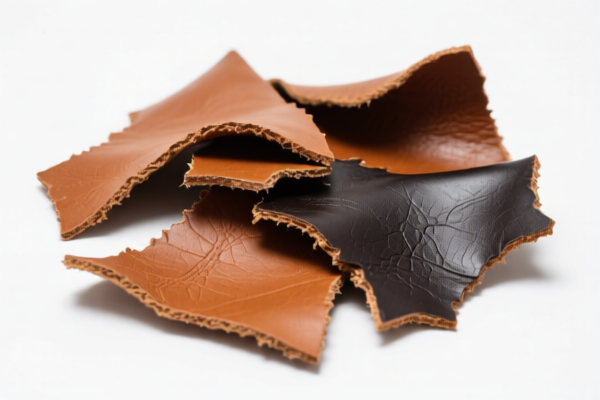
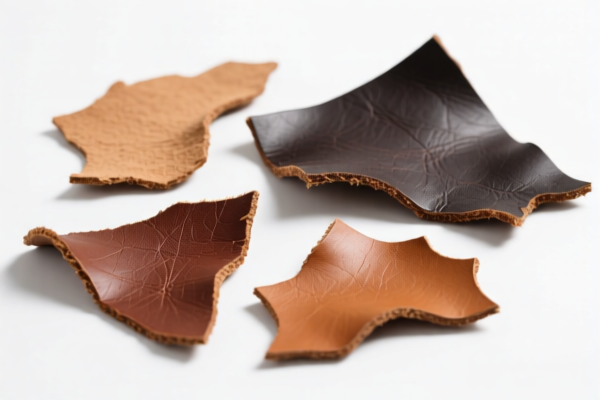
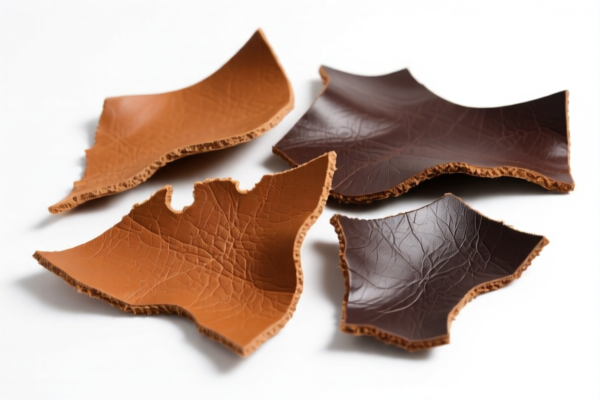
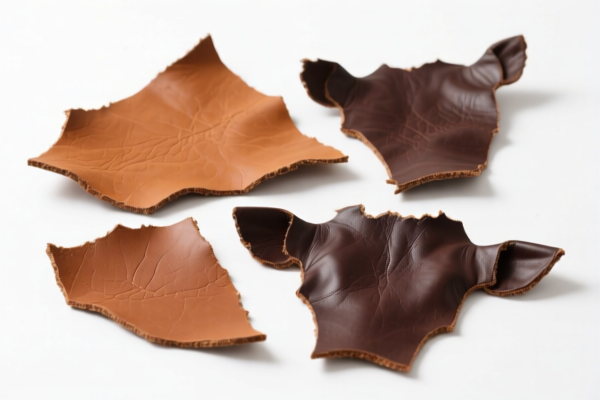
Leather offcuts (often referred to as leather scraps, remnants, or cuttings) are residual pieces of leather resulting from the manufacturing of finished leather goods, such as belts, shoes, bags, or upholstery. In international trade, their classification depends heavily on their physical state, quality, and intended use.
Because they are "intermediate" or "waste" materials, customs authorities scrutinize them closely to prevent misclassification. The key distinction lies in whether the material is: 1. Ready for further processing (semi-finished): Clean, usable pieces suitable for making new products (e.g., belts). 2. Waste/Scrap: Irregular, dirty, or unusable pieces intended for recycling or disposal.
⚠️ Critical Distinction Point:
- If the offcuts are clean, uniform, and specifically sorted for belt manufacturing (strip or sheet form), they are often treated as raw materials/semi-finished goods.
- If they are irregular, mixed, or considered "waste" from the leather tanning or cutting process, they fall under waste/scraps.
- Note: The destination market (likely the US given the "122 Clause" and high tariffs in the data) imposes strict additional duties on Chinese-origin leather goods.
📦 II. HS Code Classification Matrix (2026 Latest Tariff Authority Reference)
Based on the provided data, here is the precise breakdown for Cowhide Leather Offcuts for Belts:
| HS Code | Product Description | Physical Form | Customs Status |
|---|---|---|---|
4205.00.05.00 |
Leather offcuts for belts (specific use) | Strips/Sheets, ready for transformation into transmission belts | Semi-finished Good (High Tax) |
4205.00.10.00 |
Other leather articles (intermediate use) | General leather scraps/semi-finished parts | Semi-finished Good (High Tax) |
4115.10.00.00 |
Leather offcuts (sheet/strip form) | Sheets or strips, raw material for leather goods | Raw Material/Semi-finished (High Tax) |
4115.20.00.00 |
Leather offcuts (waste/scrap) | Irregular waste,边角料 (cuttings) classified as scrap | Waste/Scrap (Lower Tax) |
6309.00.00.10 |
Leather offcuts for automotive interiors | Primary form/semi-finished, used for car seats/interiors | Semi-finished Good (Lower Tax) |
🔍 Key Insight:
- Codes4205and4115.10are viewed as usable inputs for manufacturing. Hence, they attract higher tariffs (35%-37.9%).
- Codes4115.20and6309are viewed as waste or specific industrial scraps, attracting lower tariffs (17.5%).
- Do NOT mix descriptions. If you claim it's "waste" but send clean belt strips, customs may reclassify it as4205and charge the higher rate + penalties.
💰 III. 2026 Latest Tariff Rate Breakdown (Detailed Tax Clauses)
✅ Applicable Country: United States (US)
✅ Origin: China (CN) (Implied by the specific combination of "Section 122" and high ad-valorem rates)
✅ Effective Time: Current active rates under US Trade Act provisions
🎯 1. 4205.00.05.00 & 4205.00.10.00 —— Leather Articles for Belts (Semi-finished)
| Item | Details |
|---|---|
| Basic Tariff | 2.9% (for 4205.05) / 0.0% (for 4205.10) |
| Section 301 Additional Duty | +25.0% (USITC Footnote 9903.88.01 applicable to leather articles) |
| Section 122 Duty (IEEPA) | +10.0% (Targeting specific Chinese-origin leather/craft goods) |
| Total Effective Rate | 37.9% (for 4205.05) 35.0% (for 4205.10) |
| Calculation Base | CIF Value (Cost + Insurance + Freight) |
| De Minimis Exemption | ❌ NO (Section 301 and 122 duties generally exclude de minimis benefits for China-origin goods) |
| Legal Basis Path | IEEPA:9903.01.25 → USITC:4205.00.05.00 → SECTION_301:9903.88.01 |
📌 Explanation:
- These codes represent usable leather inputs. The US imposes heavy protectionist tariffs on Chinese leather products.
- The 35%+ rate is a significant cost driver.
- Section 122 is a specific additional duty applied to certain leather goods, adding 10% on top of the Section 301 25%.
🎯 2. 4115.10.00.00 —— Leather Offcuts (Sheets/Strips)
| Item | Details |
|---|---|
| Basic Tariff | 0.0% |
| Section 301 Additional Duty | +25.0% |
| Section 122 Duty | +10.0% |
| Total Effective Rate | 35.0% |
| De Minimis Exemption | ❌ NO |
| Legal Basis Path | IEEPA:9903.01.24 → USITC:4115.10.00.00 → SECTION_301:9903.88.01 |
📌 Explanation:
- Although classified under Chapter 41 (Raw Hides/Skins), because these are "offcuts" intended for industrial use, they are still subject to the same 35% total duty as finished leather articles.
🎯 3. 4115.20.00.00 & 6309.00.00.10 —— Leather Waste/Scrap (Lower Tax Bracket)
| Item | Details |
|---|---|
| Basic Tariff | 0.0% |
| Section 301 Additional Duty | +7.5% (Reduced rate for waste/scrap materials) |
| Section 122 Duty | +10.0% |
| Total Effective Rate | 17.5% |
| De Minimis Exemption | ❌ NO (Likely still excluded due to Section 122/301 overlap on China) |
| Legal Basis Path | IEEPA:9901.25 → USITC:4115.20.00.00 → SECTION_301:9903.88.01 |
📌 Explanation:
- Crucial Strategy: If your offcuts are truly waste (irregular, unsorted, dirty), classifying them as4115.20can save you ~17.5% in duties compared to4205.
- Risk: Customs must agree they are "waste." If you send clean, sorted belt blanks, they will reclassify to4205and charge 35%.
🛠️ IV. Customs Clearance Practical Advice (Avoid Pitfalls)
✅ 1. Documentation Checklist (Non-Negotiable)
| Document | Required? | Notes |
|---|---|---|
| ✅ Commercial Invoice | ✔️ | Must clearly state: "Leather Offcuts," "Raw Material," or "Scrap." Avoid vague terms like "Leather Parts." |
| ✅ Packing List | ✔️ | Detail weight and volume. If mixed with packaging, separate weights. |
| ✅ Product Photos | ✔️ | CRITICAL: Show the irregularity of the pieces. If they look like finished strips, they will be taxed as semi-finished goods. |
| ✅ Declaration of Use | ✔️ | Specify if it is "Waste for Recycling" or "Raw Material for Belt Manufacturing." |
| ✅ Origin Certificate | ✔️ | Must clearly state "Made in China" to trigger the correct additional duties. |
✅ 2. Classification Strategy & Tips
🔥 "Know Your Scrap: Clean Strips = High Tax; Irregular Waste = Lower Tax"
| Scenario | Recommended HS Code | Duty Rate | Why? |
|---|---|---|---|
| Sorted, clean strips ready to be stitched into belts | 4205.00.05.00 |
37.9% | Considered a usable semi-finished good. |
| General leather cuttings for making accessories | 4205.00.10.00 |
35.0% | Standard leather article classification. |
| Large sheets/strips used as raw material | 4115.10.00.00 |
35.0% | Treated as raw leather input. |
| Irregular, mixed scraps (waste) | 4115.20.00.00 |
17.5% | Classified as waste; significantly cheaper. |
| Auto interior leather scraps | 6309.00.00.10 |
17.5% | Specific use case for auto industry waste. |
📌 Warning:
- Do NOT declare "Leather Offcuts" as4115.20(Waste) if the goods are actually clean, graded leather strips. Customs officers frequently audit this.
- If reclassified, you will owe the difference (17.5% → 35%) plus penalties and interest.
✅ 3. Special Situations
| Situation | Advice |
|---|---|
| Mixed Loads | If a shipment contains both "usable strips" and "true waste," consider separating them into different shipments or clearly declaring each line item with different HS codes. |
| OEM Custom Offcuts | If the offcuts are cut to specific shapes for a client's belt, they are not waste. Use 4205 codes. |
| Auto Industry Scrap | If you are a supplier to auto makers, use 6309.00.00.10 to benefit from the lower 17.5% rate, provided the material meets "scrap" definitions. |
🌍 V. Global Market Comparison (2026)
| Market | Recommended HS Code | Estimated Duty (China Origin) | Notes |
|---|---|---|---|
| 🇺🇸 USA | 4115.20.00.00 (Scrap) or 4205 (Semi-finished) |
17.5% (Scrap) / 35-37.9% (Semi-finished) | Strict enforcement of Section 301 & 122. No de minimis. |
| 🇨🇳 China (Import) | 4115.20.00.00 |
5-10% | Lower taxes for waste importation for recycling. |
| 🇪🇺 EU | 4115.20.00 |
Varies (Often 0-2%) | EU has different waste definitions. Less aggressive additional tariffs than US. |
| 🇬🇧 UK | 4115.20.00 |
Varies | Post-Brexit rules apply. Check UK Tariff Calculator. |
📌 Conclusion:
- The US market is the most expensive for leather offcuts due to the combination of Section 301 (25%) and Section 122 (10%).
- Maximize savings by proving the goods are true waste (4115.20) rather than semi-finished products (4205).
📌 VI. Common Mistakes & Pitfalls (Lessons Learned)
❌ Mistake 1: Declaring "Leather Offcuts" generically without specifying form.
👉 Result: Customs defaults to the highest applicable rate (37.9%) or delays clearance for inspection.
❌ Mistake 2: Using 4115.20 (Waste) for clean, sorted belt blanks.
👉 Result: Customs audit, reclassification to 4205, back-tariff of ~18%, plus fines.
❌ Mistake 3: Assuming De Minimis (Section 321) applies.
👉 Result: Incorrect. Section 301 and Section 122 duties do not apply to de minimis exemptions for Chinese goods. You must pay duties on every shipment.
❌ Mistake 4: Misidentifying Auto Interior Scrap.
👉 Result: Using 4205 for auto scrap when 6309 is available, paying double duty.
✅ Correct Approach:
"Leather Offcuts, Cowhide, Irregular Shape, Grade B/C, For Recycling/Waste, Model XYZ"
🎯 VII. Conclusion: Precision in Classification Saves Money!
🎯 Remember the Golden Rule:
🔹 "Clean Strips = High Tax (35%+); Irregular Waste = Lower Tax (17.5%)."
🔹 "Section 122 + Section 301 = High Cost. No De Minimis for China."
📌 Pro Tip:
If you are exporting significant volumes of leather offcuts to the US:
1. Negotiate Duty Paid vs. DDP: Understand who bears the 35% burden.
2. Apply for Advance Ruling: Submit samples and photos to US CBP for a binding classification decision to avoid surprises.
3. Consider Third-Country Processing: If possible, process leather in a country with a US FTAA (Free Trade Agreement), though leather has limited FTAA benefits.
📣 Immediate Action:
📞 Consult a Licensed Customs Broker before shipping.
📸 Provide Clear Photos of the offcuts (showing irregularity if claiming waste).
📄 Draft Accurate Invoices with precise HS codes.
🚀 Ensure Smooth Clearance and Maximize Profit Margins!
✨ Professional Customs Clearance Starts with Accurate Classification!
💼 Every Percent in Duty is Pure Profit Loss!
Customer Reviews
About HS Code Classification
The Harmonized System (HS) is an internationally standardized nomenclature developed by the World Customs Organization (WCO) to classify traded products. Over 200 countries use the HS system as the basis for customs tariffs, trade statistics, and import/export regulations.
Each HS code follows a hierarchical structure:
- Chapter (2 digits) — Broad category of goods (e.g., Chapter 84: Machinery and Mechanical Appliances)
- Heading (4 digits) — More specific grouping within the chapter
- Subheading (6 digits) — Internationally standardized breakdown, used by all WCO member countries
- National subdivisions (8-10 digits) — Country-specific extensions for further classification, such as US HTSUS 10-digit codes
Correct HS code classification is essential for smooth customs clearance, accurate duty payment, and compliance with trade regulations. Misclassification can lead to customs delays, overpayment of duties, or penalties.
When importing from CN to US, the applicable tariff rates may include:
- Most-Favored-Nation (MFN) rate — The standard duty rate applied to WTO members
- General rate — Applied to countries without trade agreements
- Trade remedy duties — Additional tariffs such as Section 301 (anti-dumping), Section 232 (national security), or countervailing duties
The information provided on this page is for reference purposes only. For official classification, please consult with your local customs authority or a licensed customs broker.