Leather Passport Holder
CN → US| HS Code | Tariff Rate | Origin | Destination | Doc |
|---|---|---|---|---|
| 4205001000 | 35.0% | CN | US | Official Doc |
| 4205008000 | 35.0% | CN | US | Official Doc |
| 3926909989 | 22.8% | CN | US | Official Doc |
| 3926904800 | 13.4% | CN | US | Official Doc |
| 4205001000 | 35.0% | CN | US | Official Doc |
Product Images
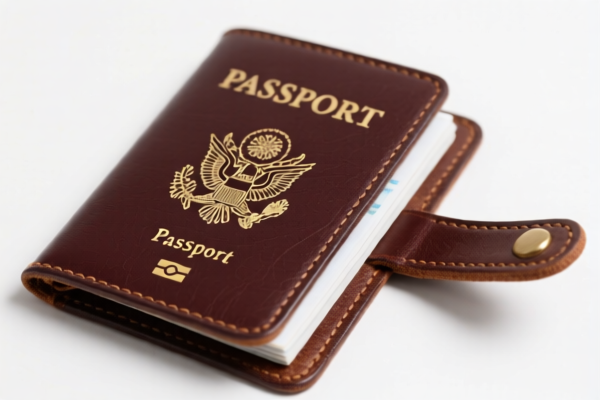
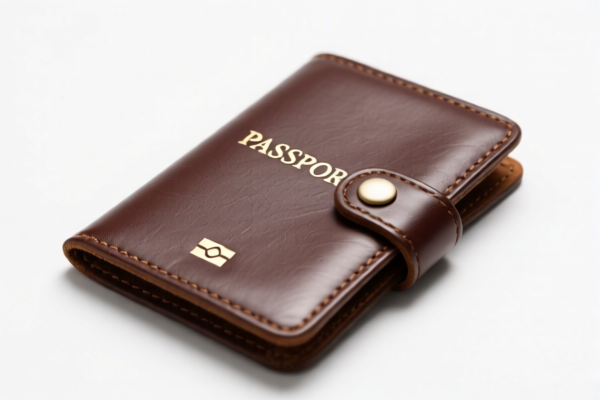
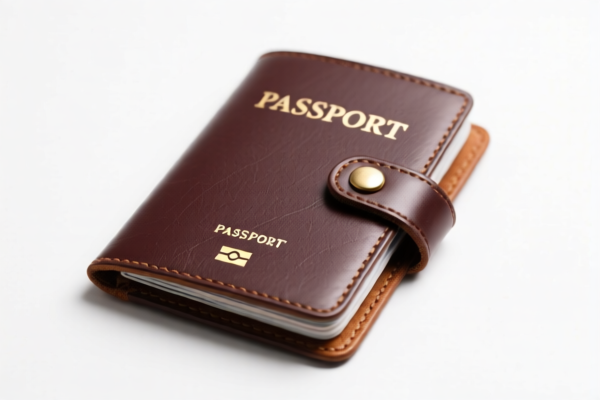
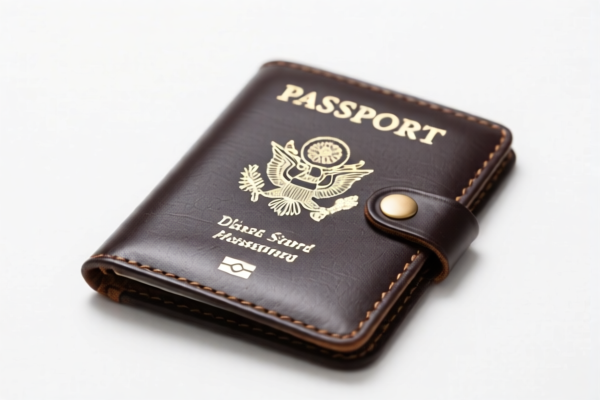
AI Analysis
🛂 Leather Passport Holder (Leather Goods & Accessories)
🌐 HS Code Reference & Customs Clearance Guide | 2026 Latest Tariff Analysis | Professional-Level Compliance Strategy 📌 I. Product Definition & Classification: Do You Really Understand "Leather Passport Holders"?
A "Leather Passport Holder" is a small personal accessory designed to hold a passport, boarding passes, and cards. However, in international trade and customs classification, the material composition and manufacturing process are the decisive factors for HS Code assignment. The term "Leather" can be ambiguous:
- True Leather (Chapter 42): Made from animal skin (cow, sheep, goat, etc.), tanned or crusted. This falls under the broad category of "Articles of leather."
- Artificial/Synthetic Leather (Chapter 39): Made from plastics (PVC, PU) or synthetic fibers. Even if it looks like leather, if it is plastic-based, it belongs to "Plastics and articles thereof."
⚠️ Key Distinction Point:
- If the main material is animal hide/leather →归入 HS 4205
- If the main material is plastic/synthetic → 归入 HS 3926
- Note: Customs will inspect the material label and physical properties to determine the correct chapter.
📦 II. HS Code Classification Details (2026 Latest Tariff Authority Comparison)
Based on the provided data, here are the four possible classifications for a "Leather Passport Holder," depending on its exact material nature:
| HS Code | Product Description | Material/Nature | Scope |
|---|---|---|---|
4205.00.10.00 |
Artificial Leather Passport Holder | Leather Articles | Classified as "Leather articles" despite the name "artificial leather" in some legacy contexts, or specifically defined as leather goods in this dataset. See Tax Detail below. |
4205.00.80.00 |
Other Leather Articles (Passport Holder) | Leather Articles | Classified under "Other" leather articles when not specifically listed elsewhere. |
3926.90.99.89 |
Artificial Leather Passport Holder (Plastic) | Plastic Articles | Made from plastic/synthetic materials; categorized as "Other plastic articles." |
3926.90.48.00 |
Plastic Passport Holder (Album/Storage) | Plastic Articles | Specifically for plastic items used as photo albums or storage containers. |
🔍 Critical Clarification:
- The term "Artificial Leather" in the dataset for HS 4205 is misleading if taken literally as "synthetic." In the context of the provided data, HS 4205 is treated as the category for Leather Articles (Chapter 42).
- HS 3926 is strictly for Plastic Articles. If your product is made of PVC, PU, or TPU, you MUST use the 3926 codes to avoid misclassification penalties.
💰 III. 2026 Latest Tariff Rate Breakdown (Including Supplementary Taxes)
✅ Applicable Country: United States (US)
✅ Origin: China (CN)
✅ Effective Time: Current tariffs include Section 301 and IEEPA surcharges.
🎯 1. 4205.00.10.00 & 4205.00.80.00 —— Leather Articles
| Item | Content |
|---|---|
| Base Duty Rate | 0.0% (Ad Valorem) |
| Section 301 Supplementary Tax | +25.0% |
| IEEPA Supplementary Tax (122 Clause) | +10.0% |
| Total Tax Rate | 35.0% |
| Tax Calculation | CIF Value × 35% |
| De Minimis Exemption? | ❌ No (Denied) |
| Legal Basis Path | USITC:4205.00.10.00/80.00 → Section 301: 25% → IEEPA (122): 10% |
📌 Explanation:
- Although the base duty for leather goods is often 0%, the Section 301 tariff (25%) and the IEEPA 122 Clause tariff (10%) are heavily applied to Chinese-origin goods in this category.
- Total Burden: 35%. This is a significant cost factor for exporters.
🎯 2. 3926.90.99.89 —— Plastic Passport Holders (General)
| Item | Content |
|---|---|
| Base Duty Rate | 5.3% |
| Section 301 Supplementary Tax | +7.5% |
| IEEPA Supplementary Tax (122 Clause) | +10.0% |
| Total Tax Rate | 22.8% |
| Tax Calculation | CIF Value × 22.8% |
| De Minimis Exemption? | ❌ No (Denied) |
| Legal Basis Path | USITC:3926.90.99.89 → Section 301: 7.5% → IEEPA (122): 10% |
📌 Explanation:
- Plastic articles face a higher base rate (5.3%) but lower Section 301 surcharges (7.5%) compared to leather goods.
- Total Burden: 22.8%, which is 12.2% lower than the leather classification.
🎯 3. 3926.90.48.00 —— Plastic Passport Holders (Album/Storage)
| Item | Content |
|---|---|
| Base Duty Rate | 3.4% |
| Section 301 Supplementary Tax | 0.0% |
| IEEPA Supplementary Tax (122 Clause) | +10.0% |
| Total Tax Rate | 13.4% |
| Tax Calculation | CIF Value × 13.4% |
| De Minimis Exemption? | ❌ No (Denied) |
| Legal Basis Path | USITC:3926.90.48.00 → IEEPA (122): 10% |
📌 Explanation:
- This is the most favorable classification for plastic-based passport holders if they can be legally defined as "albums" or "storage items" rather than general accessories.
- Total Burden: 13.4%. This is 50% cheaper than the leather classification (35%).
🛠️ IV. Customs Clearance Practical Advice (Avoid Pitfalls)
✅ 1. Preparation Checklist (Non-Negotiable)
| Document | Required? | Description |
|---|---|---|
| ✅ Material Declaration | ✔️ | Must explicitly state "100% Genuine Leather" OR "100% PVC/PU Plastic." Ambiguity leads to reclassification. |
| ✅ Product Photos | ✔️ | Clear shots of the texture, stitching, and interior lining to prove material type. |
| ✅ Commercial Invoice | ✔️ | Description must match the HS Code. If using 3926, do NOT use the word "Leather" unless qualified as "Artificial/Synthetic." |
| ✅ Packaging List | ✔️ | Detail the contents. If mixed (e.g., leather cover + plastic insert), clarify the primary material. |
✅ 2. Strategic Declaration Tips
🔥 "Material Defines Code, Code Defines Cost!"
| Scenario | Recommended Action | Consequence of Error |
|---|---|---|
| Product is Genuine Leather | Use 4205.00.10.00 or 4205.00.80.00 |
Risk: None if accurate. Cost: 35%. |
| Product is Plastic (PU/PVC) | Use 3926.90.99.89 |
Risk: If declared as leather, penalty for misclassification. Cost: 22.8%. |
| Product is Plastic & Marketed as "Storage/Album" | Use 3926.90.48.00 |
Risk: High scrutiny. Must prove it's for storage/albums. Best Cost: 13.4%. |
| Mixed Material (Leather + Plastic) | Declare by Primary Material or Most Significant Function | Risk: Customs may split the value or pick the higher tax code. |
✅ 3. Special Considerations
| Situation | Handling Advice |
|---|---|
| "Artificial Leather" Labeling | If using 4205, ensure the documentation supports the "Leather Article" classification in the specific jurisdiction's rules. However, data suggests 3926 is safer for plastic-based items to avoid the 35% tax. |
| Value Under $800 (De Minimis) | ⚠️ WARNING: The data indicates deny_de_minimis for these codes. Even if the value is low, full duty applies. Do not rely on Section 321 exemption for these specific HS codes from China. |
| OEM/Private Label | Provide the customer's design sheet. If the design is for "Travel Accessories," clarify the material in the packing list. |
🌍 V. Global Market Comparison (2026 Update)
| Market | Recommended HS Code | Estimated Duty | Notes |
|---|---|---|---|
| 🇺🇸 USA | 4205.00.10.00 (Leather) |
35% | High tariffs due to Section 301 & IEEPA. |
| 🇺🇸 USA | 3926.90.48.00 (Plastic/Storage) |
13.4% | Best Option for plastic goods if categorized correctly. |
| 🇪🇺 EU | 4205.00.10 / 3926.90 | 4% - 6% | No Section 301. Standard EU duty rates apply. |
| 🇨🇳 China (Import) | 4205 / 3926 | 8% - 12% | Import duties into China for finished goods. |
📌 Conclusion:
- For the US Market, classifying a plastic passport holder as a "Storage/Album" (3926.90.48.00) is the most cost-effective strategy, saving 21.6% compared to leather classification.
- For Genuine Leather, the 35% rate is unavoidable under current US-China trade policies.
📌 VI. Common Mistakes & Pitfalls (Blood & Tears Lessons)
❌ Mistake 1: Calling a PU plastic item "Leather" to look premium.
👉 Result: If customs tests and finds it's plastic, they may apply the plastic rate (22.8%) or penalize for false declaration. If you intend to use 3926, call it "Synthetic Leather" or "PVC Passport Holder" to justify the lower base rate.
❌ Mistake 2: Assuming "De Minimis" applies to all low-value shipments.
👉 Result: The data explicitly states these codes are not eligible for de minimis exemption. You will pay taxes on every single item, even small orders.
❌ Mistake 3: Confusing "Artificial Leather" in HS 4205 with Plastic in HS 3926.
👉 Result: Misclassification leads to delays. Rule of Thumb: If it's plastic, always check HS 3926 first. It often offers lower total tariffs due to reduced Section 301 surcharges.
✅ Correct Approach:
"Passport Holder, Model XYZ, Material: 100% Polyurethane (PU) Leather, Purpose: Travel Document Storage."
Then declare under3926.90.99.89or3926.90.48.00depending on functional definition.
🎯 VII. Conclusion: Professional Declaration, Cost Optimization!
🎯 Remember the Mantra:
🔹 "Plastic is Cheap (13-23%), Leather is Expensive (35%)."
🔹 "If it's plastic, call it storage/album if possible to hit 13.4%."
🔹 "No De Minimis! Pay up on every unit."
📌 Pro Tip:
If you are sourcing from Vietnam, Mexico, or other non-China origins, these tariffs may be reduced or eliminated. Check the Country of Origin carefully. If re-exported from a neutral country, ensure Substantial Transformation rules are met to avoid "circumvention" penalties.
📣 Immediate Action:
📞 Verify your material composition today.
📄 Update your product descriptions to match the correct HS Code (Plastic vs. Leather).
🚀 Save 21.6% Tax by choosing the right classification for plastic goods!
✨ Professional Clearance, Starting with Accurate Classification!
💼 Every Dollar of Tax Saved is Pure Profit!
Customer Reviews
About HS Code Classification
The Harmonized System (HS) is an internationally standardized nomenclature developed by the World Customs Organization (WCO) to classify traded products. Over 200 countries use the HS system as the basis for customs tariffs, trade statistics, and import/export regulations.
Each HS code follows a hierarchical structure:
- Chapter (2 digits) — Broad category of goods (e.g., Chapter 84: Machinery and Mechanical Appliances)
- Heading (4 digits) — More specific grouping within the chapter
- Subheading (6 digits) — Internationally standardized breakdown, used by all WCO member countries
- National subdivisions (8-10 digits) — Country-specific extensions for further classification, such as US HTSUS 10-digit codes
Correct HS code classification is essential for smooth customs clearance, accurate duty payment, and compliance with trade regulations. Misclassification can lead to customs delays, overpayment of duties, or penalties.
When importing from CN to US, the applicable tariff rates may include:
- Most-Favored-Nation (MFN) rate — The standard duty rate applied to WTO members
- General rate — Applied to countries without trade agreements
- Trade remedy duties — Additional tariffs such as Section 301 (anti-dumping), Section 232 (national security), or countervailing duties
The information provided on this page is for reference purposes only. For official classification, please consult with your local customs authority or a licensed customs broker.