Leather Pen Case
CN → US| HS Code | Tariff Rate | Origin | Destination | Doc |
|---|---|---|---|---|
| 4205008000 | 35.0% | CN | US | Official Doc |
| 4202329300 | 52.6% | CN | US | Official Doc |
| 3926903500 | 24.0% | CN | US | Official Doc |
| 4202322000 | 55.0% | CN | US | Official Doc |
| 3926100000 | 15.3% | CN | US | Official Doc |
Product Images
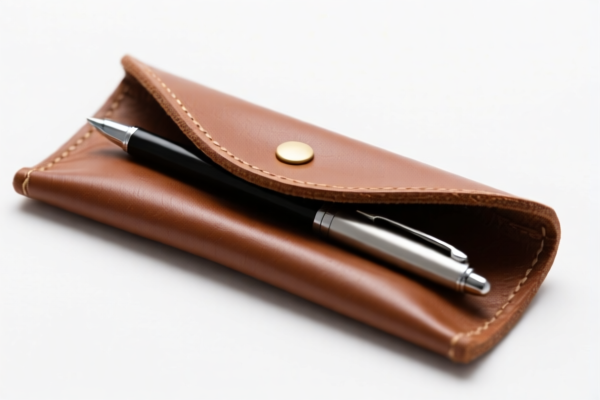
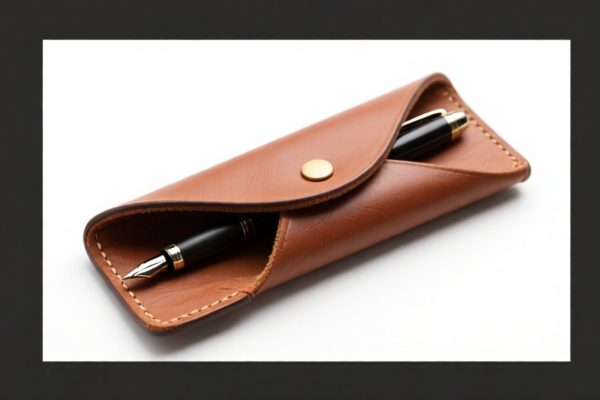
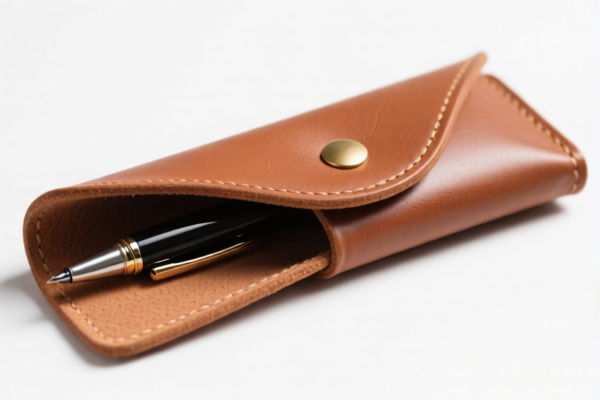
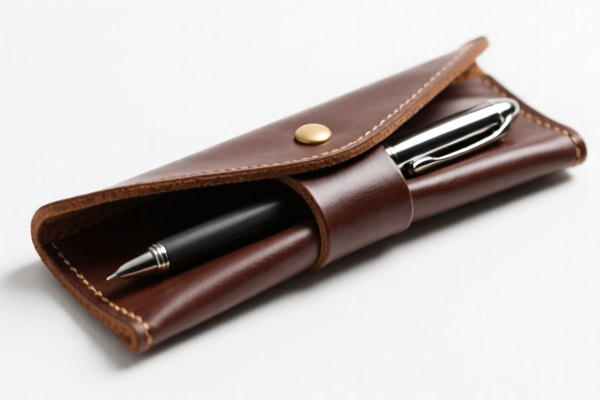
AI Analysis
🎒 Leather Pen Case (Pouches)
🌐 HS Code Reference & Customs Clearance Guide | 2026 Latest Tariff Analysis | Professional Clearance Strategy
📌 1. Product Definition & Classification: Do You Truly Understand a "Leather Pen Case"?
A Leather Pen Case is a portable container designed to organize and protect writing instruments (pens, pencils, markers) and small stationery items. In international trade, its classification hinges heavily on material composition and structural form. It sits at the intersection of general leather goods, specific travel/accessory cases, and general plastic/office supplies.
⚠️ Key Distinction Points:
- Is it primarily made of leather? → Falls under Chapter 42 (Leather Articles).
- Is it made of textiles/plastic but shaped like a case? → May fall under Chapter 42 (Travel/Art Cases) or Chapter 39 (Plastics).
- Is it a simple flat wallet-like pouch vs. a structured box? → Impacts sub-heading selection.
📦 2. HS Code Classification Details (2026 Latest Tariff Authority Comparison)
| HS Code | Product Description | Application Scenario | Total Tax Rate (China Origin to US) |
|---|---|---|---|
4205.00.80.00 |
Other articles of leather or composition leather | Flat pouches, simple sleeves, or unstructured leather cases not specifically named elsewhere. | 35.0% |
4202.32.93.00 |
Travel, sports, and office goods; Cases for utensils and cutlery; Toilet bags; Shopping bags; Wallets; Purses; Key holders; etc. (Of textile materials) | Structured pen cases where the outer surface is inferred to be textile (e.g., canvas, nylon lining with leather accents, or fully textile outer). | 52.6% |
4202.32.20.00 |
Wallets, purses, key holders, etc. (Of plastic sheeting or of textile materials) | Cases typically carrying items, made of plastic sheeting or textile, fitting the "accessory case" definition. | 55.0% |
3926.90.35.00 |
Other articles of plastics and articles of other materials of headings 3901 to 3914 | Pen cases inferred to be made of plastic or synthetic fibers, falling under general plastic articles. | 24.0% |
3926.10.00.00 |
Articles of plastic office or school stationery | Pen cases explicitly defined as office/school stationery items made of plastic or cloth, with a lower base tariff. | 15.3% |
🔍 Critical Reminder:
- If the product is pure leather and doesn't fit the specific "travel/toiletry case" shape, it often defaults to 4205.00.80.00 (Other leather articles).
- If it is a structured case (like a pen roll or zippered box) but made of textile, it is classified under 4202.32 (Office/Travel cases), not as a simple leather article.
- Plastic cases can vary significantly: if labeled strictly as "stationery," the rate is lower (15.3%); if generic "plastic articles," it is higher (24.0%).
💰 3. 2026 Latest Tariff Rate Details (Including Surcharges & Policy Add-ons)
✅ Applicable Country: United States (US)
✅ Origin: China (CN)
✅ Effective Date: From November 10, 2025 (including subsequent imports)
🎯 1. 4205.00.80.00 —— Other Leather Articles
| Item | Content |
|---|---|
| Base Tariff | 0.0% (ad valorem) |
| Section 301 Surcharge | +25.0% |
| Section 122 Tariff | +10.0% |
| Total Tax Rate | 35.0% |
| Tax Calculation | CIF Value × 35.0% |
| De Minimis Exemption | ❌ Not Available |
| Legal Basis Path | Section 301: 9903.88.01 → Section 122 → USITC: 4205.00.80.00 |
📌 Explanation:
- Section 301 (25%): Standard trade war tariff for many Chinese leather goods.
- Section 122 (10%): Additional surcharge for specific leather articles.
- Total 35%: Moderate-to-high. No base tariff helps slightly, but surcharges dominate.
🎯 2. 4202.32.93.00 —— Office/Travel Cases (Textile Outer Surface)
| Item | Content |
|---|---|
| Base Tariff | 17.6% |
| Section 301 Surcharge | +25.0% |
| Section 122 Tariff | +10.0% |
| Total Tax Rate | 52.6% |
| Tax Calculation | CIF Value × 52.6% |
| De Minimis Exemption | ❌ Not Available |
| Legal Basis Path | Section 301: 9903.88.01 → Section 122 → USITC: 4202.32.93.00 |
📌 Note:
- Despite being a "case," if the outer material is textile (e.g., canvas pen roll), the base tariff is high (17.6%).
- Combined with surcharges, this is the highest tax bracket among the options.
- Risk: Misdeclaring a textile case as leather to save tax is a common compliance error.
🎯 3. 4202.32.20.00 —— Wallets/Small Cases (Plastic/Textile)
| Item | Content |
|---|---|
| Base Tariff | 20.0% |
| Section 301 Surcharge | +25.0% |
| Section 122 Tariff | +10.0% |
| Total Tax Rate | 55.0% |
| Tax Calculation | CIF Value × 55.0% |
| De Minimis Exemption | ❌ Not Available |
| Legal Basis Path | Section 301: 9903.88.01 → Section 122 → USITC: 4202.32.20.00 |
📌 Warning:
- This is the most expensive option.
- Applies if the case is structured like a wallet/purse but made of plastic or textile.
- Avoid unless misclassification is unavoidable (which it shouldn't be).
🎯 4. 3926.90.35.00 —— Other Plastic Articles
| Item | Content |
|---|---|
| Base Tariff | 6.5% |
| Section 301 Surcharge | +7.5% |
| Section 122 Tariff | +10.0% |
| Total Tax Rate | 24.0% |
| Tax Calculation | CIF Value × 24.0% |
| De Minimis Exemption | ❌ Not Available |
| Legal Basis Path | Section 301: 9903.08.10 (Note: Lower rate for some plastics) → Section 122 → USITC: 3926.90.35.00 |
📌 Advantage:
- Lower Section 301 rate (7.5%) compared to leather/textile cases (25%).
- Best for generic plastic pen cases not strictly defined as "stationery."
🎯 5. 3926.10.00.00 —— Plastic Office/School Stationery
| Item | Content |
|---|---|
| Base Tariff | 5.3% |
| Section 301 Surcharge | +0.0% |
| Section 122 Tariff | +10.0% |
| Total Tax Rate | 15.3% |
| Tax Calculation | CIF Value × 15.3% |
| De Minimis Exemption | ❌ Not Available |
| Legal Basis Path | Section 122 → USITC: 3926.10.00.00 |
📌 Optimal Choice for Plastics:
- Zero Section 301 tax! This is the lowest total tariff (15.3%).
- Condition: Must be clearly identifiable as office or school stationery made of plastic or cloth.
- Strategy: If your pen case is plastic, ensure marketing and documentation emphasize "Stationery/Office Use" rather than general "Plastic Case."
🛠️ 4. Customs Clearance Practical Advice (Real-World Pitfall Guide)
✅ 1. Required Documentation Checklist (Non-negotiable)
| Document | Must Provide | Description |
|---|---|---|
| ✅ Product Specification Sheet | ✔️ | Material breakdown (e.g., 100% Leather, or 50% Plastic/50% Fabric). |
| ✅ Material Composition Proof | ✔️ | Supplier declaration or lab test showing outer surface material. |
| ✅ Product Photos (Labeled) | ✔️ | Clear view of zippers, lining, and outer texture. |
| ✅ Commercial Invoice | ✔️ | Use precise terminology: "Leather Pen Pouch" vs. "Plastic Stationery Case." |
| ✅ Packing List | ✔️ | Ensure quantities match invoice; no hidden accessories that change classification. |
✅ 2. Declaration Tips (Key Mantra)
🔥 "Material Defines Chapter, Use Defines Sub-heading!"
| Scenario | Correct Declaration | Wrong Practice |
|---|---|---|
| Pure Leather Pen Sleeve | 4205.00.80.00 (Other Leather) |
Misdeclare as "Stationery" → Audit Risk |
| Canvas Pen Roll | 4202.32.93.00 (Textile Case) |
Declare as "Leather" → False Declaration |
| Hard Plastic Pen Box | 3926.10.00.00 (Stationery) |
Declare as "General Plastic" → Higher Tax (24%) |
| Soft Plastic Pouch | 3926.90.35.00 (General Plastic) |
Declare as "Stationery" → Misclassification Risk |
✅ 3. Special Situation Handling
| Situation | Handling Advice |
|---|---|
| Hybrid Materials (Leather + Fabric) | If leather is the main characteristic, it may still fall under Ch. 42. If fabric is outer, use 4202.32. Be consistent. |
| OEM/Private Label | Provide design specs to prove the intended use (Stationery vs. General Accessory). |
| Promotional Giveaways | Still subject to full tariffs; no special "gift" exemption for commercial imports. |
| Samples | Even samples are subject to tariffs if declared as commercial samples; consider "Returnable Samples" if applicable, but tax still applies. |
🌍 5. Global Market Clearance Comparison (2026 Latest)
| Country/Region | Recommended HS Code | Tariff | Certification | Remarks |
|---|---|---|---|---|
| 🇺🇸 USA | 3926.10.00.00 (if plastic/stationery) |
15.3% | N/A | Best rate for plastics. Leather/Textile cases face 35-55%. |
| 🇨🇳 China | 4205.00.80.00 (Leather) |
5% - 10% | N/A | Low base tariff, no Section 301/122. |
| 🇪🇺 EU | 4202.32.00 or 4205.00.00 |
4% - 12% | CE (if plastic) | No punitive surcharges. Standard MFN rates apply. |
| 🇬🇧 UK | Similar to EU | 4% - 12% | UKCA | Post-Brexit rules mirror EU for most goods. |
| 🇦🇺 Australia | 4202.32.00 or 3926.10.00 |
5% | N/A | Generally low tariffs. |
📌 Conclusion:
- USA is the most challenging market due to Section 301 and Section 122 surcharges.
- Plastic Stationery (3926.10.00.00) offers the lowest cost (15.3%) in the US.
- Leather/Textile cases are heavily taxed (35-55%). Consider material substitution or packaging redesign to optimize tax if volume is high.
📌 6. Common Errors & Pitfall Guide (Blood & Tears Lessons)
❌ Error 1: Declaring a Textile Pen Roll as Leather to avoid the 25% Section 301 tax.
👉 Consequence: Customs audit, penalties, and back-tariff of 25%.
❌ Error 2: Declaring a Plastic Pen Case as "General Plastic" (3926.90) instead of "Stationery" (3926.10).
👉 Consequence: Pay 24% instead of 15.3%. Overpaying by ~8.7% for no reason.
❌ Error 3: Ignoring Section 122 (10%).
👉 Consequence: Even if you find a low base tariff, you must add 10%. Forgetting this leads to underpayment.
❌ Error 4: Using vague descriptions like "Gift Pack" or "Accessory."
👉 Consequence: Customs may classify based on worst-case scenario (e.g., as a general textile case at 55%).
✅ Correct Approach:
"Plastic Pen Case, Office Stationery, Model XYZ, 100% PVC, Color Black"
→ Declares Use (Stationery) + Material (Plastic) → Leads to3926.10.00.00(15.3%).
🎯 7. Conclusion: Precise Classification Saves Money!
🎯 Remember the Mantra:
🔹 "Plastic Stationery: 15.3% (Best)!"
🔹 "General Plastic: 24.0%"
🔹 "Leather: 35.0%"
🔹 "Textile Case: 52.6%"
🔹 "Plastic Case: 55.0% (Worst)!"🔹 "HS Code Determines Tax, Description Determines Code!"
📌 Pro Tip:
If you are importing large volumes of plastic pen cases, ensure your invoice and product description explicitly state "Office Stationery" to qualify for the 0% Section 301 rate under 3926.10.00.00. This single change can save you 8.7% on every unit compared to general plastic classification.
📣 Immediate Action:
📞 Review your product material composition.
📄 Update invoice descriptions to match the lowest applicable HS Code.
🚀 Optimize your supply chain tax liability today!
✨ Professional Clearance, Starts with Accurate Classification!
💼 Every cent saved is pure profit!
Customer Reviews
About HS Code Classification
The Harmonized System (HS) is an internationally standardized nomenclature developed by the World Customs Organization (WCO) to classify traded products. Over 200 countries use the HS system as the basis for customs tariffs, trade statistics, and import/export regulations.
Each HS code follows a hierarchical structure:
- Chapter (2 digits) — Broad category of goods (e.g., Chapter 84: Machinery and Mechanical Appliances)
- Heading (4 digits) — More specific grouping within the chapter
- Subheading (6 digits) — Internationally standardized breakdown, used by all WCO member countries
- National subdivisions (8-10 digits) — Country-specific extensions for further classification, such as US HTSUS 10-digit codes
Correct HS code classification is essential for smooth customs clearance, accurate duty payment, and compliance with trade regulations. Misclassification can lead to customs delays, overpayment of duties, or penalties.
When importing from CN to US, the applicable tariff rates may include:
- Most-Favored-Nation (MFN) rate — The standard duty rate applied to WTO members
- General rate — Applied to countries without trade agreements
- Trade remedy duties — Additional tariffs such as Section 301 (anti-dumping), Section 232 (national security), or countervailing duties
The information provided on this page is for reference purposes only. For official classification, please consult with your local customs authority or a licensed customs broker.