Leather Pen Pouch
CN → US| HS Code | Tariff Rate | Origin | Destination | Doc |
|---|---|---|---|---|
| 4205008000 | 35.0% | CN | US | Official Doc |
| 4202329300 | 52.6% | CN | US | Official Doc |
| 3926903500 | 16.5% | CN | US | Official Doc |
| 4202322000 | 55.0% | CN | US | Official Doc |
| 3926100000 | 15.3% | CN | US | Official Doc |
Product Images
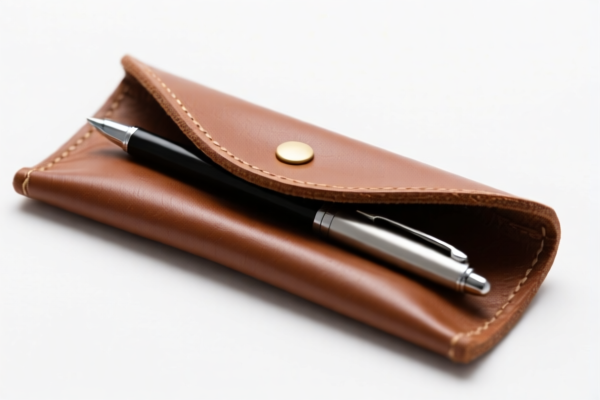
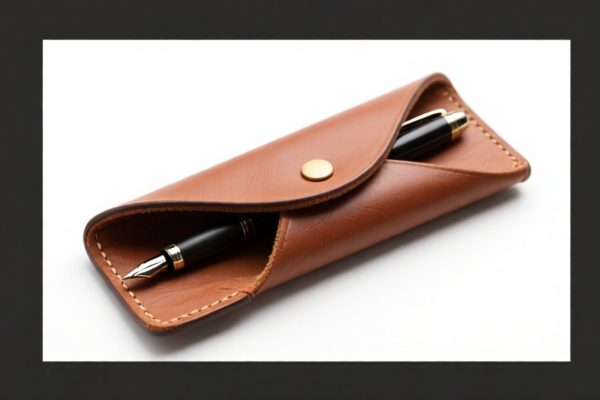
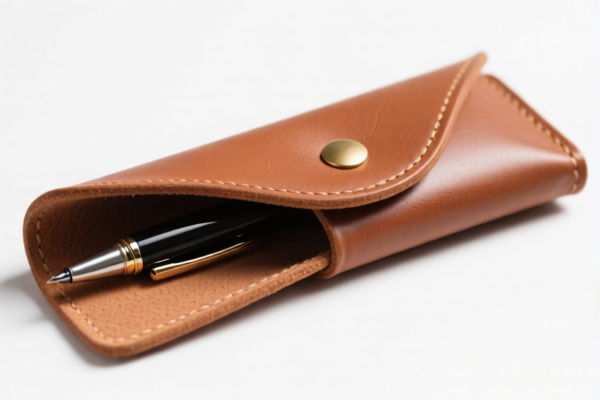
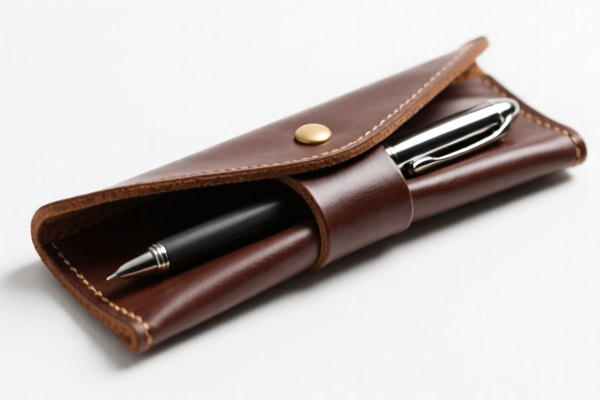
AI Analysis
🎒 Leather Pen Pouch (笔袋/文具收纳袋)
🌐 HS Code Reference & Customs Clearance Guide | 2026 Latest Tariff Analysis | Professional Entry Strategy
📌 I. Product Definition & Classification: Is It a "Bag" or a "Plastic Article"?
A Leather Pen Pouch is typically an文具收纳 container (stationery organizer) used for carrying pens, pencils, and small office supplies. However, in international trade, its classification hinges critically on its material composition and structural definition.
There are two primary classification pathways depending on how customs interprets the item: 1. As a Bag/Container (Heading 4202/4205): If the outer surface is leather, synthetic leather, or textile, it is often classified under heading 42 (Articles of leather). 2. As a Plastic Article (Heading 3926): If the item is primarily plastic-based, coated textile, or deemed a "general plastic article," it falls under heading 39.
⚠️ Key Distinction Point:
- If the main material is leather/synthetic leather → Likely 4205.00.80.00 (Lower Tax: 35%)
- If the main material is textile/outer surface → Likely 4202.32.93.00 or 4202.32.20.00 (Higher Tax: 52.6% - 55%)
- If the main material is plastic/synthetic fiber → Likely 3926.90.35.00 or 3926.10.00.00 (Lowest Tax: 15.3% - 16.5%)
📦 II. HS Code Classification Details (2026 Latest Tariff Authority Comparison)
Based on the provided data, here is the detailed breakdown for "Leather Pen Pouch" across different material interpretations:
| HS Code | Product Description & Logic | Tax Rate (Total) | Tax Detail Breakdown |
|---|---|---|---|
4205.00.80.00 |
Other articles of leather or composition leather. Logic: Pen pouches made of leather or synthetic leather fit the residual category for leather articles. |
35.0% | Base Tariff: 0.0% Add-on (Section 301): 25.0% Section 122: 10% |
4202.32.93.00 |
Other articles of a kind normally carried in the pocket or handbag: With outer surface of textile materials. Logic: Pen pouches are considered "bags/containers." If the outer surface is textile, it falls here. |
52.6% | Base Tariff: 17.6% Add-on (Section 301): 25.0% Section 122: 10% |
4202.32.20.00 |
Other articles of a kind normally carried in the pocket or handbag: Of plastic sheeting or of textile materials. Logic: General classification for small carrying cases made of plastic or textile. |
55.0% | Base Tariff: 20.0% Add-on (Section 301): 25.0% Section 122: 10% |
3926.90.35.00 |
Other articles of plastics: Other. Logic: If the pen pouch is inferred to be made of plastic or synthetic fiber, it falls under general plastic articles. |
16.5% | Base Tariff: 6.5% Add-on (Section 301): 0.0% Section 122: 10% |
3926.10.00.00 |
Articles of plastic for office or school supplies. Logic: Explicitly covers plastic/synthetic office/school items. If the pouch is plastic-based, this is a strong candidate. |
15.3% | Base Tariff: 5.3% Add-on (Section 301): 0.0% Section 122: 10% |
🔍 Critical Analysis:
- Highest Risk (Tax-wise):4202.32.20.00(55.0%). This is the most expensive classification, often resulting from misidentifying a leather/textile pouch as a general "plastic/textile bag." - Lowest Cost (Tax-wise):3926.10.00.00(15.3%). This offers significant savings but requires the product to be legitimately classified as an "article of plastic for office/school supplies." - Middle Ground (Leather Specific):4205.00.80.00(35.0%). This is the correct classification if the product is genuinely made of leather or synthetic leather and not primarily a "bag" structure under 4202.
💰 III. 2026 Latest Tariff Rate Details (Including Add-ons)
✅ Applicable Country: United States (US)
✅ Origin: China (CN)
✅ Effective Date: Includes all imports from Nov 10, 2025 onwards
🎯 1. 4205.00.80.00 — Other Leather/Synthetic Leather Articles
| Item | Content |
|---|---|
| Base Rate | 0.0% (ad valorem) |
| USITC Add-on | +25.0% (Section 301) |
| Section 122 | +10.0% (Specific penalty/add-on) |
| Total Rate | 35.0% |
| Calculation | CIF Value × 35% |
| De Minimis? | ❌ No (Section 122 typically denies de minimis exemptions for certain goods) |
| Legal Basis | USITC:4205.00.80.00 → Section 122 |
📌 Explanation:
- If your pen pouch is made of leather or synthetic leather, this is often the most favorable "leather-specific" code. - Avoid misclassifying it as a textile bag (4202), which adds a 17.6% base tariff, pushing the total to 52.6%+.
🎯 2. 4202.32.93.00 & 4202.32.20.00 — Textile/Plastic Bags
| Item | Content |
|---|---|
| Base Rate | 17.6% - 20.0% |
| USITC Add-on | +25.0% |
| Section 122 | +10.0% |
| Total Rate | 52.6% - 55.0% |
| Calculation | CIF Value × 52.6%/55.0% |
| De Minimis? | ❌ No |
📌 Warning:
- This is the most expensive category. - Customs may classify a "pen pouch" as a "bag" if it has handles, straps, or a bag-like structure. - Strategy: If the item is small, flat, and lacks bag-like features, argue for4205(Leather) or3926(Plastic) instead.
🎯 3. 3926.90.35.00 & 3926.10.00.00 — Plastic Articles
| Item | Content |
|---|---|
| Base Rate | 5.3% - 6.5% |
| USITC Add-on | 0.0% (Key Benefit!) |
| Section 122 | +10.0% |
| Total Rate | 15.3% - 16.5% |
| Calculation | CIF Value × 15.3%/16.5% |
| De Minimis? | ❌ No (Section 122 applies) |
📌 Strategic Advantage:
- These codes have NO Section 301 (25%) tariff. - If your pen pouch is made of hard plastic, PVC, or synthetic fiber, classifying it under Chapter 39 can save you ~20-40% in tariffs compared to Chapter 42. - Condition: Must be defensible as an "article of plastic" or "office/school supply" made of plastic.
🛠️ IV. Customs Clearance Practical Advice (Avoid Pitfalls)
✅ 1. Preparation Checklist (Non-negotiable)
| Document | Required | Notes |
|---|---|---|
| ✅ Product Material Composition | ✔️ | Clearly state % of Leather, Plastic, Textile, Zipper, etc. |
| ✅ Product Photos | ✔️ | Show overall shape, interior, and material texture. |
| ✅ Commercial Invoice | ✔️ | Describe as "Pen Pouch" or "Stationery Organizer," not "Bag." |
| ✅ Structure Diagram | ✔️ | Show if it has handles/straps (risk factor for 4202). |
| ✅ Customs Declaration Statement | ✔️ | "Item is a pen pouch made of [Material], not a handbag." |
✅ 2. Classification Strategy (Key Logic)
| Scenario | Recommended HS Code | Reason |
|---|---|---|
| Genuine Leather/Synthetic Leather | 4205.00.80.00 |
Lowest tax in Chapter 42 (35% vs 55%). Avoids "Bag" classification. |
| Plastic/PVC/Synthetic Fiber | 3926.10.00.00 |
Lowest total tax (15.3%). No 301 tariff. Best for cheap plastic pouches. |
| Textile Outer Surface | 4202.32.93.00 |
High risk (52.6%). Only if no other option. |
| Mixed Materials (Leather + Plastic) | 4205.00.80.00 |
Argue that leather is the essential character. |
🔥 "Do Not Call It a Bag!"
If you use the word "Bag" or "Purse" in your description, customs may default to 4202, triggering the 55% tax.
Use terms like "Stationery Organizer," "Pen Case," "Pencil Holder" to steer toward 4205 or 3926.
✅ 3. Special Cases
| Situation | Advice |
|---|---|
| OEM Custom Pouches | Provide client specs. If client specifies "Leather," claim 4205. |
| Plastic-Coated Fabric | If >50% plastic coating, argue for 3926. |
| Small Flat Pouch (No Handle) | Strongly argue against 4202 (Bag). Use 4205 or 3926. |
| Large Backpack-style Pen Case | Risk of 4202. Be prepared for 55% tax or provide strong counter-argument. |
🌍 V. Global Market Comparison (2026)
| Country | Recommended HS Code | Total Tax Rate | Notes |
|---|---|---|---|
| 🇺🇸 USA | 4205.00.80.00 or 3926.10.00.00 |
15.3% - 35.0% | Avoid 4202 (55%+). Section 122 applies. |
| 🇨🇳 China | 4205.00.80.00 |
~5-10% | Lower base tariff, no Section 122. |
| 🇪🇺 EU | 4205.00.80.00 |
~4-10% | No Section 122/301 equivalents. |
| 🇬🇧 UK | 4205.00.80.00 |
~5% | Post-Brexit tariffs are generally lower. |
📌 Conclusion for US Imports:
- Maximize Savings: Aim for3926.10.00.00(15.3%) if the material allows.
- Safe Middle Ground:4205.00.80.00(35.0%) for leather items.
- Avoid:4202series (52.6%-55%) unless unavoidable.
📌 VI. Common Mistakes & Pitfalls (Lessons Learned)
❌ Mistake 1: Calling it a "Leather Bag"
👉 Result: Classified as 4202.32.20.00 → 55% Tax.
💡 Fix: Call it "Leather Pen Case" or "Stationery Pouch."
❌ Mistake 2: Misidentifying Material
👉 Result: Declaring plastic as textile → Audit penalty + back taxes.
💡 Fix: Provide material test reports or clear composition labels.
❌ Mistake 3: Ignoring Section 122
👉 Result: Assuming de minimis applies → Shipment held or seized.
💡 Fix: All these codes are subject to Section 122. Plan for 10% additional cost.
🎯 VII. Conclusion: Professional Classification for Cost Efficiency
🎯 Remember This:
🔹 "Leather? Go 4205 (35%). Plastic? Go 3926 (15.3%). Bag? Avoid 4202 (55%)."
🔹 "Section 122 is non-negotiable (+10%). Plan your landed cost accordingly."
📌 Pro Tip:
If your pen pouch is made of synthetic leather, explicitly state "Composition Leather" or "Synthetic Leather" on the invoice. This supports
4205.00.80.00and avoids the higher textile/bag tariffs.
📣 Immediate Action:
📞 Contact your customs broker with product photos and material specs.
🚀 Request an Advance Ruling if the volume is high.
💼 Optimize your HS Code to save 20-40% in tariffs.
✨ Precise Classification = Maximum Profit!
💼 Every percentage point in tariff affects your bottom line!
Customer Reviews
About HS Code Classification
The Harmonized System (HS) is an internationally standardized nomenclature developed by the World Customs Organization (WCO) to classify traded products. Over 200 countries use the HS system as the basis for customs tariffs, trade statistics, and import/export regulations.
Each HS code follows a hierarchical structure:
- Chapter (2 digits) — Broad category of goods (e.g., Chapter 84: Machinery and Mechanical Appliances)
- Heading (4 digits) — More specific grouping within the chapter
- Subheading (6 digits) — Internationally standardized breakdown, used by all WCO member countries
- National subdivisions (8-10 digits) — Country-specific extensions for further classification, such as US HTSUS 10-digit codes
Correct HS code classification is essential for smooth customs clearance, accurate duty payment, and compliance with trade regulations. Misclassification can lead to customs delays, overpayment of duties, or penalties.
When importing from CN to US, the applicable tariff rates may include:
- Most-Favored-Nation (MFN) rate — The standard duty rate applied to WTO members
- General rate — Applied to countries without trade agreements
- Trade remedy duties — Additional tariffs such as Section 301 (anti-dumping), Section 232 (national security), or countervailing duties
The information provided on this page is for reference purposes only. For official classification, please consult with your local customs authority or a licensed customs broker.