Leather Penetrating Agent
CN → US| HS Code | Tariff Rate | Origin | Destination | Doc |
|---|---|---|---|---|
| 3809935000 | 41.0% | CN | US | Official Doc |
| 3403915000 | 41.5% | CN | US | Official Doc |
| 3403115000 | 36.4% | CN | US | Official Doc |
| 3914006000 | 38.9% | CN | US | Official Doc |
| 3809931000 | 41.5% | CN | US | Official Doc |
Product Images

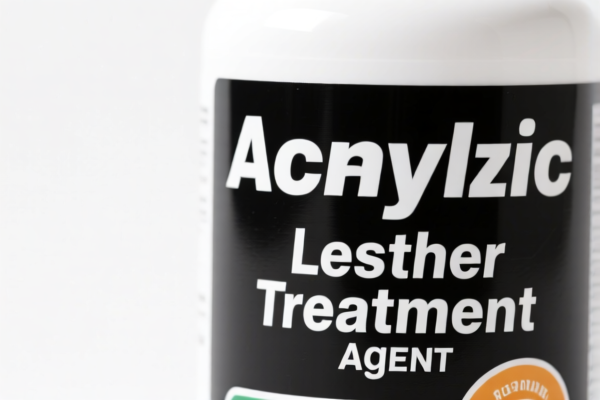


AI Analysis
🧴 Leather Penetrating Agent (化学制剂/整理剂)
🌐 HS Code Reference & Customs Clearance Guide | 2026 Latest Tariff Analysis | Professional-Level Strategy
📌 I. Product Definition & Classification: What Exactly is a "Leather Penetrating Agent"?
A Leather Penetrating Agent is a specialized chemical formulation used in the leather tanning and finishing industry. Its primary function is to deeply penetrate leather fibers to improve softness, uniformity, and the uptake of dyes or finishes. In international trade, these products are classified based on their specific chemical composition and intended industrial application, falling primarily under Chapter 38 (Miscellaneous Chemical Products) or Chapter 34 (Soap, Organic Surface-Active Agents...).
⚠️ Key Distinction:
- If the product is explicitly designed as a tanning/finishing aid (e.g., wetting agents, penetrating agents for leather processing) → It often falls under 3809 (Finishing Materials).
- If the product is primarily an oily/greasy preparation for treating leather (e.g., fatliquors, penetrating oils) → It may fall under 3403 (Preparations for oiling or cleaning leather).
- If it is an ion-exchange polymer or generic chemical intermediate used in the process → It may fall under 3914 or generic 3809 entries depending on specific formulation.
📦 II. HS Code Classification Details (Based on Provided Data)
The following HS Codes are derived directly from the provided <DATA> set. Please note that while the product name is generic ("Leather Penetrating Agent"), customs authorities may classify it into one of these specific subheadings based on the exact ingredient profile.
| HS Code | Summary Description | Total Tax Rate | Tax Breakdown |
|---|---|---|---|
| 3809.93.50.00 | Finishing agents, dyestuff carriers and similar preparations for the leather industry | 41.0% | Base: 6.0% + Section 301: 25.0% + Section 122: 10% |
| 3403.91.50.00 | Preparations for treating materials, consistent with leather material composition | 41.5% | Base: 6.5% + Section 301: 25.0% + Section 122: 10% |
| 3403.11.50.00 | Preparations for treating leather materials, containing oils or greases (chemical preparations) | 36.4% | Base: 1.4% + Section 301: 25.0% + Section 122: 10% |
| 3914.00.60.00 | Other ion-exchange agents of a kind used for water softening or similar purposes, in primary forms (Polymer-related chemicals) | 38.9% | Base: 3.9% + Section 301: 25.0% + Section 122: 10% |
| 3809.93.10.00 | Finishing agents/preparations for the leather industry | 41.5% | Base: 6.5% + Section 301: 25.0% + Section 122: 10% |
🔍 Critical Observation:
- All listed HS Codes incur high total tariffs (36.4% - 41.5%) due to the叠加 (stacking) of Base Tariff, Section 301 Tariff (25%), and Section 122 Tariff (10%).
- 3403.11.50.00 offers the lowest total rate (36.4%) if the product is primarily oil/grease-based.
- 3809.93.50.00 and 3809.93.10.00 are the most common classifications for general "finishing agents" but carry a higher base tariff (6.0%-6.5%).
💰 III. Detailed Tariff Rate Analysis (2026 Latest)
✅ Applicable Country: United States (US)
✅ Origin: China (CN)
✅ Effective Date: Current (Post-2025 Trade Policy Adjustments)
🎯 1. 3809.93.50.00 & 3809.93.10.00 —— Leather Finishing Agents
Total Rate: 41.0% / 41.5%
| Item | Content |
|---|---|
| Base Tariff | 6.0% (for .50) / 6.5% (for .10) |
| Section 301 Tariff | +25.0% (Trade Remedy Duties) |
| Section 122 Tariff | +10.0% (Emergency Imports Duty) |
| Total Effective Rate | 41.0% / 41.5% |
| Calculation | CIF Value × Total Rate |
| De Minimis Exemption | ❌ Not Eligible (Section 321/861 de minimis does not apply to Section 301/122 goods) |
| Legal Basis | HTSUS 3809.93 → USITC Footnotes → IEEPA/Section 301 Directives |
📌 Explanation:
- These codes fall under Heading 3809, which covers "Finishing materials, dyestuff carriers and similar preparations...".
- The 25% Section 301 tariff applies to most chemical products of Chinese origin.
- The 10% Section 122 tariff is an emergency duty applied to certain imports to protect national security/industry.
- Result: High cost. Must be factored into landed cost calculations immediately.
🎯 2. 3403.91.50.00 —— Material Treatment Preparations
Total Rate: 41.5%
| Item | Content |
|---|---|
| Base Tariff | 6.5% |
| Section 301 Tariff | +25.0% |
| Section 122 Tariff | +10.0% |
| Total Effective Rate | 41.5% |
| Calculation | CIF Value × 41.5% |
| De Minimis Exemption | ❌ Not Eligible |
📌 Explanation:
- This code is for "preparations for oiling, cleaning, dyeing, bleaching or similar treatments."
- Often used for non-specific "leather-compatible" chemical treatments.
- Same high tariff structure as 3809.
🎯 3. 3403.11.50.00 —— Oily/Greasy Leather Preparations
Total Rate: 36.4% (⭐ Lowest Rate in List)
| Item | Content |
|---|---|
| Base Tariff | 1.4% |
| Section 301 Tariff | +25.0% |
| Section 122 Tariff | +10.0% |
| Total Effective Rate | 36.4% |
| Calculation | CIF Value × 36.4% |
| De Minimis Exemption | ❌ Not Eligible |
📌 Explanation:
- This is the most cost-effective classification IF the product is primarily composed of oils or greases (e.g., fatliquors, penetrating oils).
- The low base tariff (1.4%) significantly reduces the overall burden compared to 6.0-6.5% base rates.
- Strategy: If the penetrating agent contains significant oil content, classify here to save 5.0-5.1% in total tariffs.
🎯 4. 3914.00.60.00 —— Polymer/Ion-Exchange Agents
Total Rate: 38.9%
| Item | Content |
|---|---|
| Base Tariff | 3.9% |
| Section 301 Tariff | +25.0% |
| Section 122 Tariff | +10.0% |
| Total Effective Rate | 38.9% |
| Calculation | CIF Value × 38.9% |
| De Minimis Exemption | ❌ Not Eligible |
📌 Explanation:
- Only applicable if the penetrating agent is a polymer-based ion-exchange resin or similar chemical intermediate.
- Less common for standard leather finishing but possible for advanced chemical treatments.
- Intermediate cost option.
🛠️ IV. Customs Clearance Practical Advice (Pitfall Avoidance Guide)
✅ 1. Essential Documentation (All Required)
| Document | Required? | Note |
|---|---|---|
| ✅ Product Specification Sheet | ✔️ | Must detail chemical composition, especially % of oils/greases vs. other chemicals. |
| ✅ Formula/Ingredients List | ✔️ | Critical for determining if it fits 3403 (oily) vs. 3809 (finishing agent). |
| ✅ Product Photos (Label & Container) | ✔️ | Must show safety warnings, usage instructions, and HS code reference if available. |
| ✅ Material Safety Data Sheet (MSDS/SDS) | ✔️ | Required for hazardous material classification and safe transport. |
| ✅ Commercial Invoice | ✔️ | Clearly state "Leather Penetrating Agent" and intended use. |
| ✅ Certificate of Origin (CO) | ✔️ | Prove Chinese origin to apply Section 301/122 correctly. |
✅ 2. Classification Strategy (Key Tips)
🔥 Golden Rule: "Oil Content Dictates Code, Finishing Defines 3809!"
| Scenario | Recommended HS Code | Reason |
|---|---|---|
| Product is oily/greasy (e.g., fatliquor, penetrating oil) | 3403.11.50.00 | Lowest base tariff (1.4%) → Total 36.4% |
| Product is non-oily chemical finish (e.g., wetting agent, binder) | 3809.93.50.00 or 3809.93.10.00 | Standard leather finishing agent classification |
| Product is polymer/ion-exchange based | 3914.00.60.00 | Specific chemical intermediate use |
| Product is general material treatment (vague description) | 3403.91.50.00 | Fallback for unspecified leather treatments |
⚠️ Warning:
- Do NOT misclassify an oily product as a general finishing agent to avoid scrutiny, but DO ensure the formula supports the3403classification to save on base tariffs.
- Customs may challenge3403if oil content is below 10-20%. Provide lab reports.
✅ 3. Special Circumstances
| Situation | Handling Advice |
|---|---|
| Multiple Components | If the product is a mix, classify by the principal characteristic (usually the active ingredient). |
| Bundled with Leather | If sold with leather, the chemical may still be classified separately. Do not bundle unless intended as a kit. |
| Sample Shipments | Even samples are subject to Section 301/122 tariffs. No de minimis exemption. |
| Pre-Ruling | Highly Recommended: Apply for a Binding Tariff Information (BTI) or Ruling Letter from CBP to confirm the correct HS Code and avoid post-audit penalties. |
🌍 V. Global Market Comparison (2026)
| Country/Region | Recommended HS Code | Estimated Total Duty | Notes |
|---|---|---|---|
| 🇺🇸 United States | 3403.11.50.00 (Best Case) |
36.4% | Highest cost due to Section 301 + 122. |
| 🇨🇳 China | 3403.11.50.00 |
Low | Import duties may be lower or zero for raw materials. |
| 🇪🇺 EU | 3403.11 or 3809 |
Varies (0-6.5%) | No Section 301/122 equivalent. Lower total cost. |
| 🇬🇧 UK | 3403.11 |
Low | Post-Brexit tariffs may differ, but generally lower than US. |
📌 Conclusion:
- The US market is the most expensive for leather chemical imports from China due to the triple-layer tariff structure.
- Optimization Strategy:
1. Reformulate to increase oil content (if feasible) to qualify for3403.11.50.00(36.4%).
2. Apply for Pre-Ruling to ensure compliance.
3. Consider Supplier Diversification if tariffs remain prohibitive (e.g., sourcing from Vietnam, India, or EU for re-export).
📌 VI. Common Mistakes & Pitfalls (Lessons Learned)
❌ Mistake 1: Classifying all leather chemicals under 3809 regardless of composition.
👉 Consequence: Paying 41%+ when 36.4% was possible.
👉 Fix: Analyze oil content. If >10-20%, use 3403.11.
❌ Mistake 2: Assuming "Sample" or "Small Quantity" is duty-free.
👉 Consequence: Seizure or penalty. Section 301/122 applies to all commercial shipments.
👉 Fix: Pay duties upfront. No de minimis.
❌ Mistake 3: Vague Description on Invoice ("Chemical for Leather").
👉 Consequence: Customs audit, delay, or misclassification.
👉 Fix: Use specific terms: "Leather Penetrating Agent, Oil-Based, for Softening."
✅ Correct Action:
"Leather Penetrating Agent, Oil-Based, Formulated with Vegetable Oils and Emulsifiers, for Use in Tanning Process, Model XYZ, MSDS Available."
🎯 VII. Conclusion: Professional Classification Saves Money!
🎯 Key Takeaway:
🔹 "Oil = 3403 (Lower Base), Finish = 3809 (Higher Base). Both carry 35%+ Total Duty!"
🔹 "Always include Oil % in your spec sheet to justify 3403.11 classification."
🔹 "No de minimis exemption for US-China Chemical Imports. Plan budget accordingly."
📌 Pro Tip:
If your product is polymer-based, consider 3914.00.60.00 for a middle-ground rate (38.9%).
Always request a CBP Ruling before the first shipment to lock in the HS Code and avoid post-clearance audits.
📣 Immediate Action:
📞 Contact your customs broker with the SDS and Formula.
📊 Calculate Landed Cost using 36.4% (Best Case) vs. 41.5% (Worst Case).
🚀 Choose the classification that best matches your product's chemical reality to optimize costs.
✨ Precision in Classification = Profit in Your Pocket!
💼 Don't let tariffs eat your margins. Get it right the first time!
Customer Reviews
About HS Code Classification
The Harmonized System (HS) is an internationally standardized nomenclature developed by the World Customs Organization (WCO) to classify traded products. Over 200 countries use the HS system as the basis for customs tariffs, trade statistics, and import/export regulations.
Each HS code follows a hierarchical structure:
- Chapter (2 digits) — Broad category of goods (e.g., Chapter 84: Machinery and Mechanical Appliances)
- Heading (4 digits) — More specific grouping within the chapter
- Subheading (6 digits) — Internationally standardized breakdown, used by all WCO member countries
- National subdivisions (8-10 digits) — Country-specific extensions for further classification, such as US HTSUS 10-digit codes
Correct HS code classification is essential for smooth customs clearance, accurate duty payment, and compliance with trade regulations. Misclassification can lead to customs delays, overpayment of duties, or penalties.
When importing from CN to US, the applicable tariff rates may include:
- Most-Favored-Nation (MFN) rate — The standard duty rate applied to WTO members
- General rate — Applied to countries without trade agreements
- Trade remedy duties — Additional tariffs such as Section 301 (anti-dumping), Section 232 (national security), or countervailing duties
The information provided on this page is for reference purposes only. For official classification, please consult with your local customs authority or a licensed customs broker.