Leather Products
CN → US| HS Code | Tariff Rate | Origin | Destination | Doc |
|---|---|---|---|---|
| 4205001000 | 35.0% | CN | US | Official Doc |
| 4203406000 | 35.0% | CN | US | Official Doc |
| 4202219000 | 44.0% | CN | US | Official Doc |
| 4202110090 | 43.0% | CN | US | Official Doc |
| 4203104095 | 41.0% | CN | US | Official Doc |
Product Images
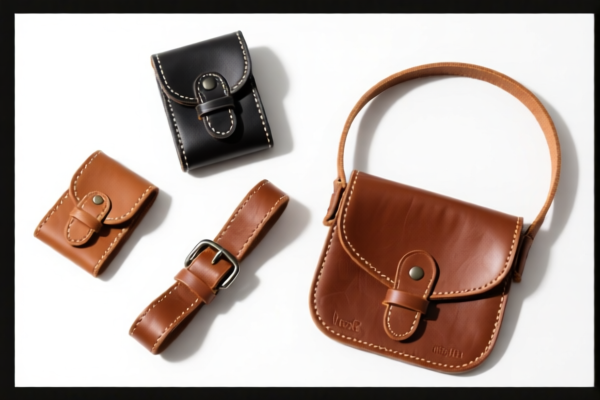
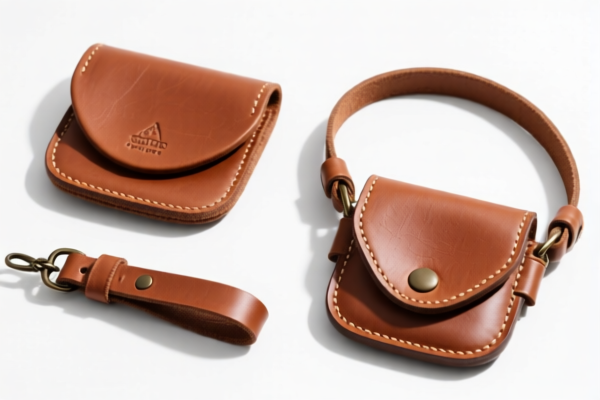
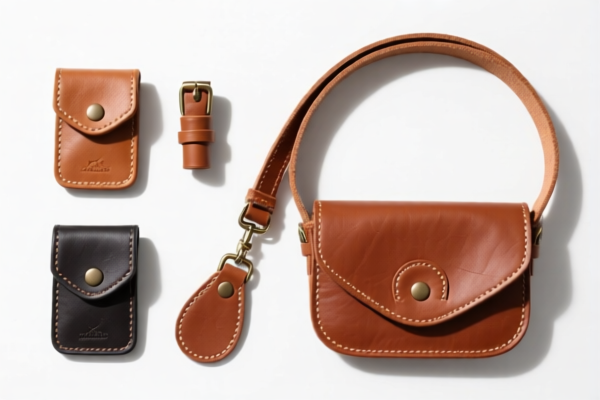
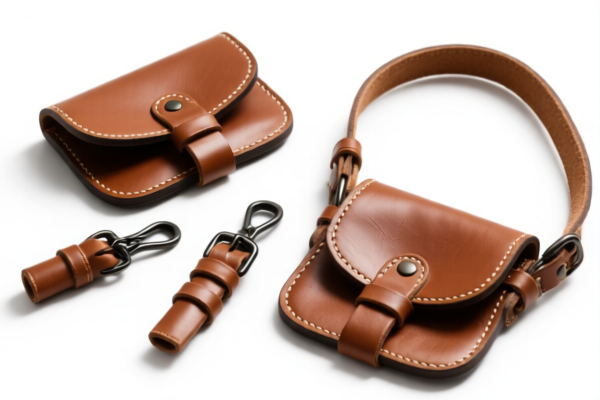
AI Analysis
🐾 Leather Goods (Leather Products) – Comprehensive HS Code & Tariff Guide | 2026 Updated | Customs Clearance Best Practices
🌐 HS Code Reference & Customs Clearance Strategy | 2026 Latest Tariff Rules | Expert-Level Compliance Guide
📌 One: Product Definition & Classification – What Exactly Are “Leather Goods”?
Leather goods are a diverse category of products made from animal hides or skins, primarily cowhide, pigskin, sheepskin, or exotic leathers, and are used across fashion, accessories, and lifestyle segments. In international trade, they are meticulously classified under HS Codes 4202–4205, depending on material, form, function, and end-use.
⚠️ Critical Distinction: - Full leather construction → High tariff risk (up to 44%) - Leather used as an accessory → Still subject to high tariffs - “Other” or “dodgy” categories → Often trigger the highest rates due to ambiguity
✅ Key Insight:
Even if your product is not a bag or wallet, but uses leather as a trim, lining, or attachment, it may still fall under high-tariff categories — especially if from China (CN) and destined for the U.S.
📦 Two: HS Code Classification Breakdown (2026 Updated Tariff Matrix)
| HS Code | Product Description | Use Case | Material | Tax Rate | Notes |
|---|---|---|---|---|---|
4205.00.10.00 |
Leather goods, general category, not otherwise specified | Accessories, decorative items, non-essential leather goods | Full leather | 35.0% | “Other” catch-all — high risk |
4203.40.60.00 |
Leather goods, used as clothing accessories (e.g., belts, cuffs, collars) | Fashion accessories, apparel trims | Leather | 35.0% | Even small leather trims are taxed |
4202.21.90.00 |
Leather goods, in the form of luggage, suitcases, or travel bags | Luggage, duffels, travel cases | Full leather | 44.0% | Highest tariff in this group |
4202.11.00.90 |
Leather goods, general category, not otherwise specified | Miscellaneous leather items | Full leather | 43.0% | “Other” category — very high risk |
4203.10.40.95 |
Leather garments, including jackets, coats, vests | Outerwear, fashion apparel | Leather | 41.0% | High tariff even for clothing |
🔍 Important Note:
- All five codes are subject to 35%+ tariffs when imported into the U.S. from China. - No “light” or “low-risk” classification — even non-functional leather trims are taxed heavily. - No de minimis exemption — any leather product from China into the U.S. is fully taxable.
💰 Three: 2026 Tariff Breakdown – The Full Tax Formula (U.S. Only)
✅ Applicable to: United States (US)
✅ Origin: China (CN)
✅ Effective Date: November 10, 2025 (and ongoing)
🎯 1. 4205.00.10.00 – General Leather Goods (Other)
| Item | Detail |
|---|---|
| Base Tariff | 0.0% (ad valorem) |
| USITC Section 301 Additional Duty | +25.0% |
| Section 122 (IEEPA) Additional Duty | +10.0% |
| Total Effective Tariff | 35.0% |
| Tax Calculation | CIF Value × 35.0% |
| De Minimis Exemption? | ❌ No (denied) |
| Legal Basis Path | IEEPA:9903.01.25 → USITC:4205.00.10.00 → FOOTNOTE:9903.88.01 |
📌 Explanation:
- 25% USITC = From the Section 301 Tariff List (China trade war tariffs). - 10% IEEPA = From the International Emergency Economic Powers Act (targeting China). - Total = 35% — even for non-functional, decorative leather items.
🎯 2. 4203.40.60.00 – Leather Accessories for Clothing
| Item | Detail |
|---|---|
| Base Tariff | 0.0% |
| USITC Section 301 Duty | +25.0% |
| IEEPA Duty | +10.0% |
| Total Tariff | 35.0% |
| Tax Calculation | CIF × 35.0% |
| De Minimis? | ❌ No |
| Legal Path | IEEPA:9901.25 → USITC:4203.40.60.00 → FOOTNOTE:9903.88.01 |
📌 Key Insight:
- A leather belt, collar, or cuff used on a jacket is not exempt. - Even if not structural, it’s still taxed at 35%.
🎯 3. 4202.21.90.00 – Leather Luggage & Travel Bags
| Item | Detail |
|---|---|
| Base Tariff | 9.0% |
| USITC 301 Duty | +25.0% |
| IEEPA Duty | +10.0% |
| Total Tariff | 44.0% |
| Tax Calculation | CIF × 44.0% |
| De Minimis? | ❌ No |
| Legal Path | IEEPA:9903.01.25 → USITC:4202.21.90.00 → FOOTNOTE:9903.88.01 |
📌 Why So High?
- 9% base tariff + 25% USITC + 10% IEEPA = 44% - Luggage, suitcases, duffels, backpacks made from leather are the most heavily taxed. - No exceptions — even small leather travel pouches fall here.
🎯 4. 4202.11.00.90 – General Leather Goods (Other)
| Item | Detail |
|---|---|
| Base Tariff | 8.0% |
| USITC 301 Duty | +25.0% |
| IEEPA Duty | +10.0% |
| Total Tariff | 43.0% |
| Tax Calculation | CIF × 43.0% |
| De Minimis? | ❌ No |
| Legal Path | IEEPA:9903.01.25 → USITC:4202.11.00.90 → FOOTNOTE:9903.88.01 |
📌 Warning:
- This is the “other” catch-all code — very broad. - If your product doesn’t fit neatly into a specific category, this is where it lands. - High risk of audit, penalty, or reassessment.
🎯 5. 4203.10.40.95 – Leather Apparel (Jackets, Coats, Vests)
| Item | Detail |
|---|---|
| Base Tariff | 6.0% |
| USITC 301 Duty | +25.0% |
| IEEPA Duty | +10.0% |
| Total Tariff | 41.0% |
| Tax Calculation | CIF × 41.0% |
| De Minimis? | ❌ No |
| Legal Path | IEEPA:9903.01.25 → USITC:4203.10.40.95 → FOOTNOTE:9903.88.01 |
📌 Insight:
- Leather clothing is taxed at 41%, even if it’s a simple jacket. - No “light” or “casual” exemption — all leather apparel is treated the same.
🛠️ Four: Customs Clearance Best Practices (Pro Tips to Avoid Penalties)
✅ 1. Required Documentation (Must-Have Checklist)
| Document | Required? | Why It Matters |
|---|---|---|
| ✅ Product Specification Sheet | ✔️ | Shows material, construction, use |
| ✅ High-Res Product Photos (with labels) | ✔️ | Proves form, function, material |
| ✅ Commercial Invoice | ✔️ | Must clearly state “Leather Jacket” or “Leather Travel Bag” |
| ✅ Bill of Lading / Air Waybill | ✔️ | Proves shipment details |
| ✅ Certificate of Origin (CO) | ✔️ | Critical for tariff eligibility |
| ✅ Third-Party Test Report (RoHS, REACH, etc.) | ✔️ | Avoids delays if materials are suspect |
| ✅ Packing List | ✔️ | Helps customs verify contents |
✅ 2.申报技巧 (申报口诀) – “Material First, Use Second, Name Accurate”
🔥 “Leather = High Tax. Form = Higher Tax. Use = Final Tax.”
| Scenario | Correct HS Code | Wrong Code | Risk |
|---|---|---|---|
| Leather belt (accessory) | 4203.40.60.00 |
4205.00.10.00 |
35% vs 35% — same, but wrong category = audit risk |
| Leather suitcase | 4202.21.90.00 |
4202.11.00.90 |
44% vs 43% — big difference |
| Leather jacket | 4203.10.40.95 |
4205.00.10.00 |
41% vs 35% → 6% more tax |
| Decorative leather patch | 4205.00.10.00 |
9405.40.00 (furniture) |
Wrong category → penalty |
✅ 3. Special Cases & Risk Mitigation
| Situation | Recommended Action |
|---|---|
| Leather used as trim on non-leather item | Still taxed at 35% — cannot avoid |
| Mixed-material product (leather + fabric) | Leather part dominates → classify as leather |
| Custom-made or artisanal leather goods | No exemption — still 35–44% |
| Leather goods from Vietnam, Mexico, or Thailand | May qualify for IEEPA exemption — check origin |
| Pre-shipment inspection | Highly recommended — avoid surprise tariffs |
🌍 Five: Global Customs Comparison (2026)
| Country/Region | Recommended HS Code | Base Tariff | Additional Duties | Notes |
|---|---|---|---|---|
| 🇺🇸 United States | 4202.21.90.00 (luggage) |
9% | +25% +10% = 44% | No de minimis |
| 🇨🇳 China | 4202.21.90.00 |
5% | 0% | No extra tariffs |
| 🇪🇺 European Union | 4202.21.90.00 |
0% (if CE) | 0% | No US-style附加税 |
| 🇦🇺 Australia | 4202.21.90.00 |
5% | 0% | No IEEPA |
| 🇯🇵 Japan | 4202.21.90.00 |
0% | 0% | No additional tariffs |
📌 Conclusion:
- The U.S. is the only market with 35%+ tariffs on Chinese leather goods. - China, EU, Japan, and Australia have much lower or zero additional duties.
📌 Six: Common Mistakes & How to Avoid Them (Real-World Risks)
❌ Mistake 1: Misclassifying a leather belt as 4205.00.10.00 instead of 4203.40.60.00
👉 Result: Wrong code, potential audit, penalties, delayed release
❌ Mistake 2: Not declaring leather as material on invoice
👉 Result: Customs may reclassify → higher tariff, fines
❌ Mistake 3: Assuming “small leather item” = low risk
👉 Result: 35%+ tax — no de minimis in U.S.
❌ Mistake 4: Shipping from China to U.S. without checking origin
👉 Result: Automatic 35%+ tax — no exemption
✅ Correct Way to Declare:
“Leather Jacket, 100% Cowhide, 2026 Collection, Model XYZ, CE Certified, CO Origin: China”
🎯 Seven: Final Verdict – How to Win the Tariff Game
🔥 Remember the Rule:
“If it’s leather, from China, to the U.S. — expect 35%+ tax.”📌 Pro Tips: - Use non-Chinese origin (Vietnam, Mexico, Thailand) to avoid IEEPA. - Pre-apply for Advance Ruling (Pre-Decision) to lock in HS Code. - Use a U.S.-based customs broker with experience in leather goods. - Never assume “small” = “low risk” — leather is high-risk.
📣 Immediate Action Required:
📞 Contact a certified customs broker + submit product photos + specs
🚀 Get HS Code pre-approval before shipping
💼 Save thousands in tariffs — and avoid penalties!
✨ Professional Customs Starts with Accurate Classification!
💼 Your product’s fate is decided by a single HS Code — get it right!
Customer Reviews
About HS Code Classification
The Harmonized System (HS) is an internationally standardized nomenclature developed by the World Customs Organization (WCO) to classify traded products. Over 200 countries use the HS system as the basis for customs tariffs, trade statistics, and import/export regulations.
Each HS code follows a hierarchical structure:
- Chapter (2 digits) — Broad category of goods (e.g., Chapter 84: Machinery and Mechanical Appliances)
- Heading (4 digits) — More specific grouping within the chapter
- Subheading (6 digits) — Internationally standardized breakdown, used by all WCO member countries
- National subdivisions (8-10 digits) — Country-specific extensions for further classification, such as US HTSUS 10-digit codes
Correct HS code classification is essential for smooth customs clearance, accurate duty payment, and compliance with trade regulations. Misclassification can lead to customs delays, overpayment of duties, or penalties.
When importing from CN to US, the applicable tariff rates may include:
- Most-Favored-Nation (MFN) rate — The standard duty rate applied to WTO members
- General rate — Applied to countries without trade agreements
- Trade remedy duties — Additional tariffs such as Section 301 (anti-dumping), Section 232 (national security), or countervailing duties
The information provided on this page is for reference purposes only. For official classification, please consult with your local customs authority or a licensed customs broker.