Leather Remote Control Cover
CN → US| HS Code | Tariff Rate | Origin | Destination | Doc |
|---|---|---|---|---|
| 4205008000 | 35.0% | CN | US | Official Doc |
| 4205004000 | 36.8% | CN | US | Official Doc |
Product Images
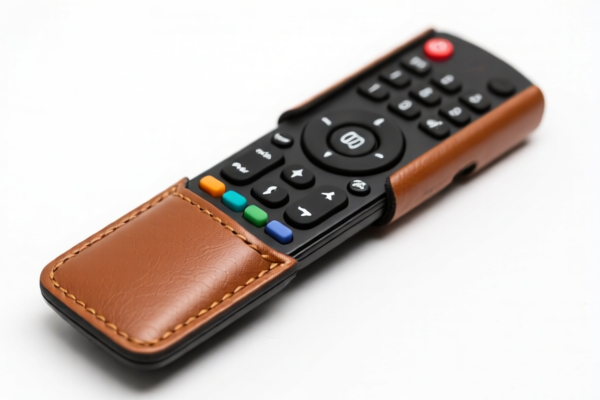
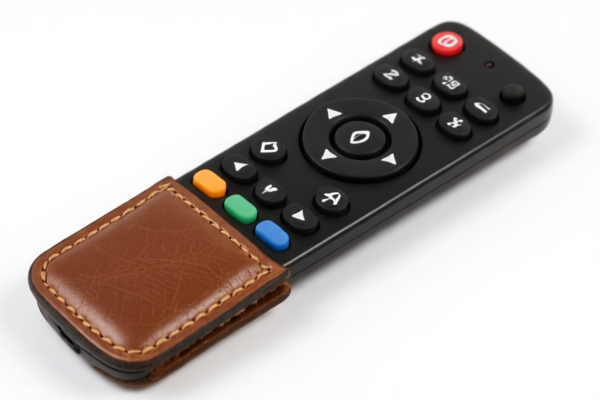
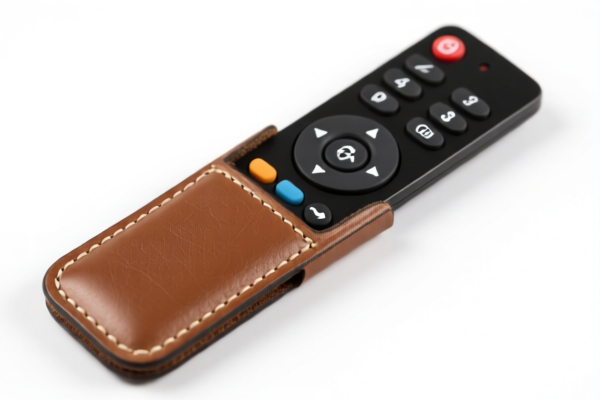
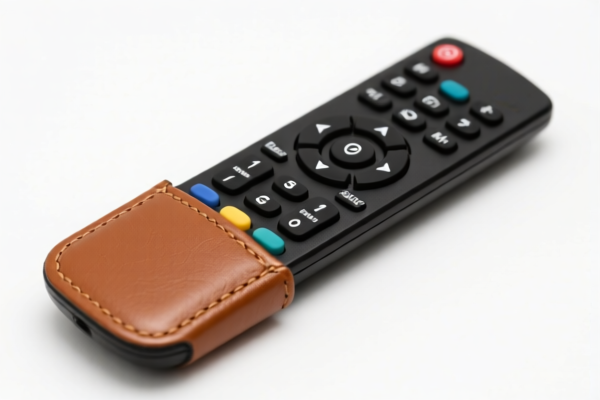
AI Analysis
🎮 Leather Remote Control Cover
🌐 HS Code Reference & Customs Clearance Guide | 2026 Latest Tariff Analysis | Professional Clearance Strategy
📌 I. Product Definition & Classification: Do You Truly Understand "Leather Remote Control Cover"?
A "Leather Remote Control Cover" is an accessory designed to protect, decorate, or personalize the casing of a remote control. In international trade, it is classified not as an electronic part, but as an article of leather. The critical distinction lies in the material composition and whether it is considered a "standard strap/strip" or a "custom-molded article."
Key Classification Logic:
1. Material: Must be leather or composition leather. If it contains significant electronic components (e.g., embedded batteries, buttons) that change its essential character, it might be reclassified as a part of the remote (Chapter 85). However, a simple cover remains Chapter 42.
2. Form:
* Standard Straps/Strips: If the item is simply a strip of leather folded or stitched without a specific molded shape for a specific remote model, it may fall under "Straps and strops."
* Custom Articles: If it is a pre-shaped, molded cover specifically designed to fit a particular remote control (with precise cutouts for buttons), it is classified as "Other articles."
⚠️ Critical Distinction Point:
- If it is a generic leather sleeve or a strap-like wrap without specific molding for a unique device → HS 4205.00.40.00 (Straps and strops).
- If it is a custom-molded, specific-shaped cover for a remote → HS 4205.00.80.00 (Other articles).
📦 II. HS Code Classification Details (2026 Latest Tariff Authority Comparison)
| HS Code | Product Description | Applicable Scenario | Specificity |
|---|---|---|---|
4205.00.40.00 |
Other articles of leather: Straps and strops | Generic leather wraps, flat leather straps, simple sleeves, non-molded covers | ❌ Low Specificity |
4205.00.80.00.00 |
Other articles of leather or of composition leather: Other: Other | Custom-molded remote control covers, shaped leather cases, specific fits | ✅ High Specificity |
🔍 Key Reminder:
- "Straps and strops" (4205.00.40.00): Generally applies to items that are essentially strips or bands. If your cover is a simple loop or flat piece folded over, it might fit here.
- "Other" (4205.00.80.00.00): This is the most common classification for modern remote covers because they are typically molded to fit specific button layouts. If it has a defined 3D shape, it is "Other."
- Composition Leather: Includes both natural leather and artificial/technical leather. Both fall under this chapter if they meet the heading description.
💰 III. 2026 Latest Tariff Rate Details (Including Additional Taxes)
✅ Applicable Country: United States (US)
✅ Origin: China (CN)
✅ Effective Date: 2025 November 10 onwards (including subsequent imports)
🎯 1. 4205.00.80.00 —— Custom Leather Remote Covers ("Other")
| Item | Content |
|---|---|
| Base Tariff | 0.0% (Ad valorem) |
| Additional Tariff (Section 301) | +25.0% |
| Total Tax Rate | 25.0% |
| Tax Calculation | CIF Value × 25% |
| De Minimis Eligibility | ❌ No (Deny de minimis) |
| Legal Basis Path | USITC:4205.00.80.00 → Section 301 Tariff List |
📌 Explanation:
- The base duty for leather articles is generally low (0%), but due to the Section 301 Trade Action, a flat 25% surcharge applies to most leather goods from China.
- There is no additional IEEPA tariff for this specific subheading in the provided data, so the total remains 25%.
- This rate is significantly lower than electronic components, making leather accessories a relatively tax-efficient category compared to tech hardware.
🎯 2. 4205.00.40.00 —— Leather Straps/Generic Sleeves ("Straps and Strops")
| Item | Content |
|---|---|
| Base Tariff | 1.8% (Ad valorem) |
| Additional Tariff (Section 301) | +25.0% |
| Total Tax Rate | 26.8% |
| Tax Calculation | CIF Value × 26.8% |
| De Minimis Eligibility | ❌ No (Deny de minimis) |
| Legal Basis Path | USITC:4205.00.40.00 → Section 301 Tariff List |
📌 Note:
- If customs determines your "cover" is essentially a "strap" (e.g., a flat leather loop), the base rate increases to 1.8%.
- The 25% additional tariff still applies, leading to a slightly higher total rate of 26.8%.
- Risk: Misclassifying a complex mold cover as a "strap" to save on the 0.18% base difference can trigger audits and penalties. It is safer to classify as "Other" (25%) if the shape is distinct.
🛠️ IV. Customs Clearance Practical Advice (Combat Pitfall Guide)
✅ 1. Required Documentation Checklist (None Can Be Skipped)
| Document | Must Provide | Description |
|---|---|---|
| ✅ Product Specification Sheet | ✔️ | Material (e.g., "Genuine Leather," "PU Leather"), Dimensions, Weight |
| ✅ Product Photos | ✔️ | Clear images of the cover on a remote control to prove it is an accessory, not the remote itself |
| ✅ Commercial Invoice | ✔️ | Description must be precise: "Leather Cover for Remote Control," NOT "Remote Control Part" |
| ✅ Packing List | ✔️ | Quantity per carton, Gross/Net Weight |
| ✅ Material Certificate | ✔️ | To prove it is leather/composition leather and not a textile product (which has different rates) |
✅ 2. Declaration Tips (Key Mantra)
🔥 "Don't Call It Remote, Call It Cover! Specific Shape = 'Other', Flat Strap = 'Strap'!"
| Scenario | Correct Declaration | Wrong Practice |
|---|---|---|
| Custom Molded Cover | HS 4205.00.80.00.00Desc: "Leather Cover for Sony Remote" |
Describe as "Remote Control Accessory" vaguely → Risk of reclassification to Electronics (Ch 85) |
| Generic Leather Sleeve | HS 4205.00.40.00Desc: "Leather Strap/Sleeve" |
Declare as "Custom Article" → Overcomplicates, but rate is similar (25% vs 26.8%) |
| Textile Cover with Leather Trim | Chapter 63/62 (Textile) | Declare as "Leather" → Major misclassification risk |
| Cover with Electronics | Chapter 85 (Electronic Part) | Declare as "Leather Cover" → Smuggling/Undervaluation risk if electronics are hidden |
✅ 3. Special Situation Handling
| Situation | Handling Advice |
|---|---|
| PU/Synthetic Leather | Ensure it is declared as "Composition Leather." Do not claim "Genuine Leather" if it is synthetic to avoid duty fraud penalties. |
| Sets (Cover + Remote) | If sold and shipped as a set, the entire set may be classified under the remote control (Ch 85), incurring much higher tariffs (often 25%+ on electronics). Advice: Ship covers separately to keep classification in Ch 42. |
| Embroidered/Decorated | If the decoration changes the essential character significantly, ensure the description highlights the "Leather Article" aspect. |
🌍 V. Global Market Clearance Comparison (2026 Latest)
| Country/Region | Recommended HS Code | Tariff Rate | Certification | Notes |
|---|---|---|---|---|
| 🇺🇸 USA | 4205.00.80.00.00 |
25.0% | None specific | High tariff due to Sec 301. |
| 🇨🇳 China (Import) | 4205.00.40.00 or 80.00 |
8% - 10% | N/A | Lower import duty for foreign leather goods. |
| 🇪🇺 EU | 4205.00 |
4.5% | CE (if marketed as safety gear) | No Section 301 equivalent. |
| 🇬🇧 UK | 4205.00 |
4.5% | UKCA | Post-Brexit alignment with EU mostly. |
📌 Conclusion:
- The US market is the most expensive due to the 25% additional tariff.
- Leather goods are heavily scrutinized for origin. Ensure the leather tanning occurs in the origin country if claiming Preferential Treatment under FTAs (e.g., USMCA, though leather often has strict regional value content rules).
📌 VI. Common Errors & Pitfall Guide (Lessons Learned from Blood)
❌ Error 1: Describing the product as "Remote Control Case" in the invoice.
👉 Consequence: Customs may classify it under Chapter 85 (Parts of Telecommunication/Electronic Devices), leading to different tariff codes and potential penalties for misdeclaration.
👉 Fix: Always use "Leather Cover for Remote Control".
❌ Error 2: Ignoring the "Composition Leather" distinction.
👉 Consequence: If customs tests the material and finds it is 100% plastic/PVC, it may reclassify to Chapter 39 (Plastics), which has different duties and regulations.
👉 Fix: Provide material composition certificates.
❌ Error 3: Shipping "Cover + Remote" together in one box.
👉 Consequence: The entire box is classified as the Remote Control. If the remote has a high tariff (e.g., 25% or more under Sec 301), and the cover is just an accessory, you are paying full tariff on the cover too.
👉 Fix: Ship separately. Cover alone → Ch 42. Remote alone → Ch 85.
🎯 VII. Conclusion: Professional Declaration Saves Money!
🎯 Remember the Mantra:
🔹 "Leather Cover is Ch 42, Not Ch 85! Separate it from the Remote! 25% is the Price to Pay, But Misclassification Costs More!"
🔹 "Shape Matters: Molded = 'Other' (80.00), Flat = 'Strap' (40.00). Be Precise!"
📌 Pro Tip:
If you are exporting to the US, ensure your Commercial Invoice explicitly states:
"Leather Cover for Remote Control. HS Code 4205.00.80.00. Country of Origin: China. Subject to 25% Section 301 Tariff."
Clear, specific, and honest descriptions prevent customs holds and delays.
📣 Immediate Action:
📞 Contact Your Customs Broker with product photos.
📸 Attach Images of the cover fitted on a remote.
🚀 Optimize Your Supply Chain: Separate accessories from electronics for smoother, cheaper clearance!
✨ Professional Clearance Starts with Accurate Classification!
💼 Every Penny Saved on Duty is Pure Profit!
Customer Reviews
About HS Code Classification
The Harmonized System (HS) is an internationally standardized nomenclature developed by the World Customs Organization (WCO) to classify traded products. Over 200 countries use the HS system as the basis for customs tariffs, trade statistics, and import/export regulations.
Each HS code follows a hierarchical structure:
- Chapter (2 digits) — Broad category of goods (e.g., Chapter 84: Machinery and Mechanical Appliances)
- Heading (4 digits) — More specific grouping within the chapter
- Subheading (6 digits) — Internationally standardized breakdown, used by all WCO member countries
- National subdivisions (8-10 digits) — Country-specific extensions for further classification, such as US HTSUS 10-digit codes
Correct HS code classification is essential for smooth customs clearance, accurate duty payment, and compliance with trade regulations. Misclassification can lead to customs delays, overpayment of duties, or penalties.
When importing from CN to US, the applicable tariff rates may include:
- Most-Favored-Nation (MFN) rate — The standard duty rate applied to WTO members
- General rate — Applied to countries without trade agreements
- Trade remedy duties — Additional tariffs such as Section 301 (anti-dumping), Section 232 (national security), or countervailing duties
The information provided on this page is for reference purposes only. For official classification, please consult with your local customs authority or a licensed customs broker.