Leather Sandals with Wooden Soles
CN → US| HS Code | Tariff Rate | Origin | Destination | Doc |
|---|---|---|---|---|
| 6405100030 | 27.5% | CN | US | Official Doc |
| 6405100060 | 27.5% | CN | US | Official Doc |
| 6403511100 | 10.0% | CN | US | Official Doc |
| 6403992060 | 18.0% | CN | US | Official Doc |
| 6405100030 | 27.5% | CN | US | Official Doc |
Product Images
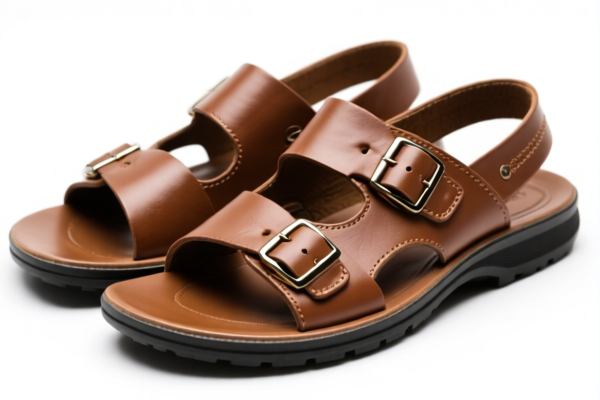
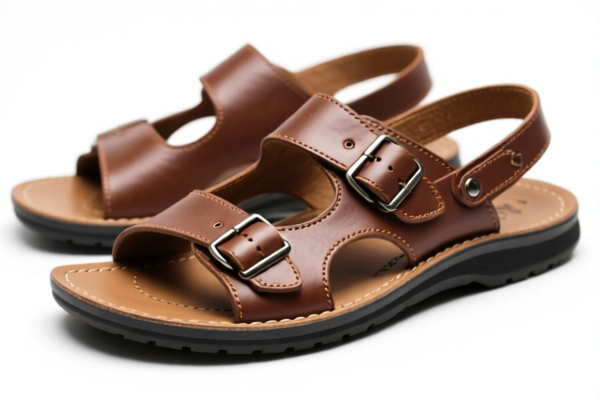
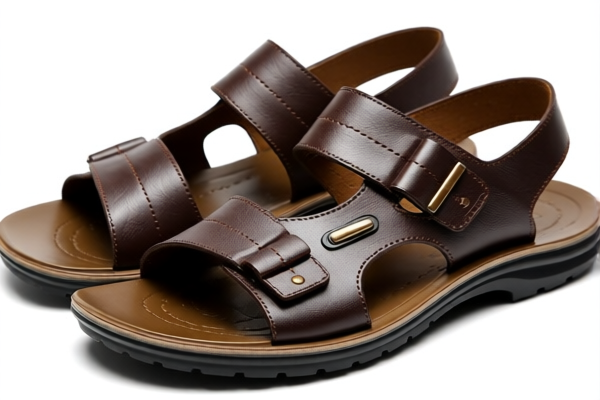
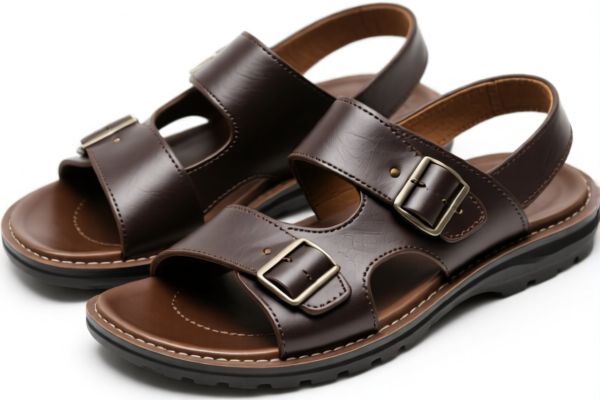
AI Analysis
👡 Leather Sandals with Wooden Soles (Men's/Women's)
🌐 HS Code Reference & Customs Clearance Guide | 2026 Latest Tariff Analysis | Professional Clearance Strategy
📌 1. Product Definition & Classification: Do You Truly Understand "Leather Sandals with Wooden Soles"?
Leather sandals with wooden soles are traditional, often artisanal or retro-styled footwear. In international trade, their classification is highly sensitive to material composition (specifically the relationship between the upper, sole, and outer sole) and structural design. They are primarily classified under Chapter 64 (Footwear) of the Harmonized System.
⚠️ Key Distinction Point:
- If the upper is leather but the outer sole is wood, it may fall under 6405 (Footwear with upper of leather, not affixed to a sole by stitching, or assembled by any other means).
- If the outer sole and upper are both leather, it may fall under 6403 (Footwear with outer sole of rubber, plastics, leather, and uppers of leather).
- Misclassification Risk: Classifying a leather-uppder, wood-sole sandal as general leather footwear (6403) when it fits the specific definition of 6405 can lead to significant duty discrepancies due to "Section 301" and "122 Clause" tariffs.
📦 2. HS Code Classification Details (2026 Latest Tariff Authority Comparison)
Based on the provided data, here are the applicable HS Codes for Leather Sandals with Wooden Soles:
| HS Code | Product Description | Classification Logic | Tax Rate |
|---|---|---|---|
6405.10.00.30 |
Leather Wooden-Soled Sandals, Upper is Leather, Classified as "Other Footwear" | Upper is leather, outer sole is wood (not rubber/plastic/leather), fits "Other Footwear" category | 27.5% |
6405.10.00.60 |
Leather Wooden-Soled Sandals, Upper is Leather, Fits Female/General Footwear Category | Similar to above, but specified for female/general use | 27.5% |
6403.51.11.00 |
Leather Wooden-Soled Sandals, Outer Sole & Upper are Leather, Sole is Wooden | Contradictory Description: Claims outer sole is leather, but summary says sole is wooden. Likely misclassified if sole is truly wood. Note: Data lists this as 10%. | 10.0% |
6403.99.20.60 |
Leather Wooden-Soled Sandals, Upper is Leather, Sole is Wooden, Meets Material & Structure Requirements | Fits general leather footwear with wooden sole components | 18.0% |
6405.10.00.30 |
(Duplicate) Leather Wooden-Soled Sandals, Upper is Leather, Classified as "Other Footwear" | Same as first entry | 27.5% |
🔍 Critical Reminder:
-6403vs.6405: The key difference lies in the outer sole material.
- If the outer sole is leather, it goes to 6403.
- If the outer sole is wood, rubber, or plastic, it typically goes to 6405 (if not affixed by stitching) or other chapters.
- Warning: The entry6403.51.11.00lists "Outer Sole is Leather" but the summary says "Sole is Wooden". This is a critical discrepancy. If the sole is truly wood, classifying under 6403 (Leather Outer Sole) is incorrect and risks penalty. Ensure physical inspection matches the HS Code.
💰 3. 2026 Latest Tariff Rate Breakdown (Including Surtaxes & Policy Surcharges)
✅ Applicable Country: USA (US)
✅ Origin: China (CN)
✅ Effective Time: 2025-11-10 onwards (including subsequent imports)
🎯 1. 6405.10.00.30 / 6405.10.00.60 —— Leather Wooden-Soled Sandals (Classified as Other Footwear)
| Item | Content |
|---|---|
| Base Tariff | 10.0% (Ad Valorem) |
| Section 301 Surtax | 7.5% |
| Section 122 Surtax | 10.0% |
| Total Tariff Rate | 27.5% |
| Tax Calculation | CIF Value × 27.5% |
| De Minimis Eligibility | ❌ No (Deny De Minimis for China-origin goods under these codes) |
| Legal Basis Path | Section 301: 7.5% → Section 122: 10% → USITC: 6405.10.00.30/60 |
📌 Explanation:
- "Section 301 Surtax (7.5%)": Added under the U.S. Trade Act of 1974, Section 301, targeting specific Chinese goods.
- "Section 122 Surtax (10%)": Under the Trade Act of 1974, Section 122, allows the President to raise duties up to 50% for up to 150 days to correct trade imbalances. Note: This is a specific surtax mentioned in the data.
- Total 27.5%: This is a high tariff rate. Importers must calculate costs carefully.
🎯 2. 6403.51.11.00 —— Leather Wooden-Soled Sandals (Outer Sole & Upper Leather)
| Item | Content |
|---|---|
| Base Tariff | 0.0% |
| Section 301 Surtax | 0.0% |
| Section 122 Surtax | 10.0% |
| Total Tariff Rate | 10.0% |
| Tax Calculation | CIF Value × 10.0% |
| De Minimis Eligibility | ❌ No |
| Legal Basis Path | Section 122: 10% → USITC: 6403.51.11.00 |
📌 Warning:
- This code has a 0% base and 0% Section 301 rate, but 10% Section 122.
- CRITICAL: Only use this if the outer sole is genuinely leather. If the sole is wood, this classification is wrong. Misclassification can lead to back taxes + penalties.
🎯 3. 6403.99.20.60 —— Leather Wooden-Soled Sandals (General Material/Structure)
| Item | Content |
|---|---|
| Base Tariff | 8.0% |
| Section 301 Surtax | 0.0% |
| Section 122 Surtax | 10.0% |
| Total Tariff Rate | 18.0% |
| Tax Calculation | CIF Value × 18.0% |
| De Minimis Eligibility | ❌ No |
| Legal Basis Path | Base: 8.0% → Section 122: 10% → USITC: 6403.99.20.60 |
📌 Note:
- This code has an 8% base rate.
- 0% Section 301 makes it cheaper than6405codes.
- Ensure the product meets the "Material & Structure Requirements" for this specific subheading.
🛠️ 4. Customs Clearance Practical Advice (Pitfall Avoidance Guide)
✅ 1. Documentation Checklist (Mandatory)
| Document | Required | Explanation |
|---|---|---|
| ✅ Product Specification Sheet | ✔️ | Must clearly state: Upper Material (Leather), Sole Material (Wood), Closure Type. |
| ✅ Product Photos (Clear) | ✔️ | Show the wooden sole from the side to prove it is not rubber/plastic/leather. |
| ✅ Commercial Invoice | ✔️ | Must specify "Leather Sandals, Wooden Sole" – do not use generic "Footwear". |
| ✅ Packing List | ✔️ | Itemize quantity, weight, and dimensions. |
| ✅ Certificate of Origin (CO) | ✔️ | To prove Chinese origin (affects surtaxes). |
| ✅ Material Declaration | ✔️ | Explicitly state: "Outer Sole is Wood, Not Rubber/Plastic/Leather". |
✅ 2. Declaration Tips (Key Mantra)
🔥 “Sole Material Determines Code, Wood Sole Means 6405, Leather Sole Means 6403, Misclassifies Costly!”
| Scenario | Correct Declaration | Wrong Practice |
|---|---|---|
| Sole is Wood, Upper is Leather | 6405.10.00.30 or 60 (27.5%) |
Declare as 6403 (10-18%) → Risk of Penalty + Back Tax |
| Sole is Leather, Upper is Leather | 6403.51.11.00 (10%) |
Declare as 6405 → Overpay Duty |
| Mixed Materials | 6403.99.20.60 (18%) |
Generic "Shoes" → Uncertain Classification |
| OEM Custom Sandals | Provide design drawings | Generic description → Delays |
✅ 3. Special Handling
| Situation | Handling Advice |
|---|---|
| Wooden Sole Fragility | Ensure packaging protects the sole. Damage can lead to "Undeliverable" claims. |
| Leather Treatment | Declare leather treatment type (tanned, dyed) if required for specific subheadings. |
| Section 122 Applicability | Verify if Section 122 surtax is active at the time of entry. It can change. |
| Pre-Ruling Request | Strongly Recommended: Apply for an Advance Ruling from CBP if unsure about the sole material classification. |
🌍 5. Global Market Comparison (2026 Latest)
| Country/Region | Recommended HS Code | Tariff | Certification | Note |
|---|---|---|---|---|
| 🇺🇸 USA | 6405.10.00.30 |
27.5% | None | High surtaxes apply to Chinese goods. |
| 🇨🇳 China | 6405.10.00.30 |
Low/0% | CCC (if applicable) | No Section 122/301. |
| 🇪🇺 EU | 6405.10.00.30 |
8-10% | CE (if safety footwear) | No Section 122/301. |
| 🇬🇧 UK | 6405.10.00.30 |
12% | UKCA | Post-Brexit rules apply. |
| 🇦🇺 Australia | 6405.10.00.30 |
5% | None | No major surtaxes. |
📌 Conclusion:
- USA has the highest effective duty rate (27.5%) due to Section 301 and Section 122 surtaxes.
- China-origin wooden-soled sandals face significant cost barriers in the US.
- Consider supply chain diversification (e.g., Vietnam, India) if possible, as other countries may not face the same surtaxes.
📌 6. Common Errors & Pitfalls (Lessons Learned)
❌ Error 1: Declaring wooden-soled sandals as 6403 (Leather Outer Sole)
👉 Consequence: CBP detects wood sole → Reclassification + Back Taxes + Penalties.
👉 Actual Rate: 27.5% vs. 10% → Loss of 17.5% margin.
❌ Error 2: Ignoring Section 122 Surtax
👉 Consequence: Underestimating cost by 10% → Cash Flow Issues.
❌ Error 3: Vague Description "Leather Sandals"
👉 Consequence: CBP may classify under highest duty rate → 27.5% instead of potentially lower rates if misclassified correctly.
❌ Error 4: Failing to Prove Wooden Sole Material
👉 Consequence: Dispute with CBP → Clearance Delay.
✅ Correct Practice:
"Men's Leather Sandals, Wooden Sole, Leather Upper, Open Toe, No Heel, Model XYZ, Made in China"
🎯 7. Conclusion: Precise Classification Saves Money!
🎯 Remember the Mantra:
🔹 "Wood Sole = 6405 (27.5%), Leather Sole = 6403 (10-18%), Misclassify = Costly!"
🔹 "Section 122 Adds 10%, Section 301 Adds 7.5%, Total 27.5% for Wooden Soles!"
📌 Tips:
- If your sandals originate from Vietnam, India, or Thailand, you may avoid Section 301 (7.5%) surtax, reducing the total rate to 17.5% (10% Base + 7.5% Sec 122).
- Apply for Pre-Ruling with CBP to confirm the correct HS Code.
📣 Immediate Action:
📞 Contact a professional customs broker + Provide product photos + Request HS Code Pre-Ruling
🚀 Ensure your leather wooden-soled sandals clear customs smoothly, maximize profits, and avoid penalties!
✨ Professional Clearance Starts with Accurate Classification!
💼 Every Percent of Duty Counts!
Customer Reviews
About HS Code Classification
The Harmonized System (HS) is an internationally standardized nomenclature developed by the World Customs Organization (WCO) to classify traded products. Over 200 countries use the HS system as the basis for customs tariffs, trade statistics, and import/export regulations.
Each HS code follows a hierarchical structure:
- Chapter (2 digits) — Broad category of goods (e.g., Chapter 84: Machinery and Mechanical Appliances)
- Heading (4 digits) — More specific grouping within the chapter
- Subheading (6 digits) — Internationally standardized breakdown, used by all WCO member countries
- National subdivisions (8-10 digits) — Country-specific extensions for further classification, such as US HTSUS 10-digit codes
Correct HS code classification is essential for smooth customs clearance, accurate duty payment, and compliance with trade regulations. Misclassification can lead to customs delays, overpayment of duties, or penalties.
When importing from CN to US, the applicable tariff rates may include:
- Most-Favored-Nation (MFN) rate — The standard duty rate applied to WTO members
- General rate — Applied to countries without trade agreements
- Trade remedy duties — Additional tariffs such as Section 301 (anti-dumping), Section 232 (national security), or countervailing duties
The information provided on this page is for reference purposes only. For official classification, please consult with your local customs authority or a licensed customs broker.