Leather School Satchel
CN → US| HS Code | Tariff Rate | Origin | Destination | Doc |
|---|---|---|---|---|
| 4202110030 | 43.0% | CN | US | Official Doc |
| 4202110090 | 43.0% | CN | US | Official Doc |
Product Images
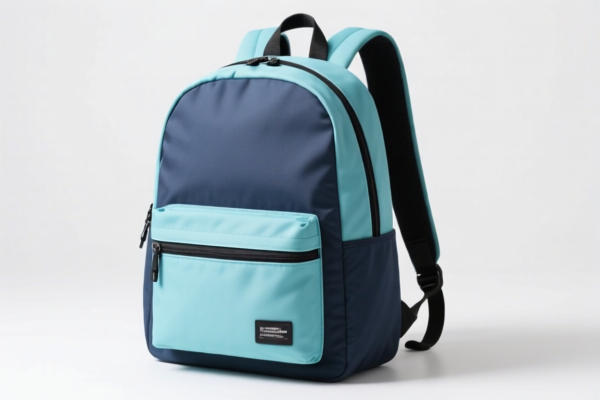
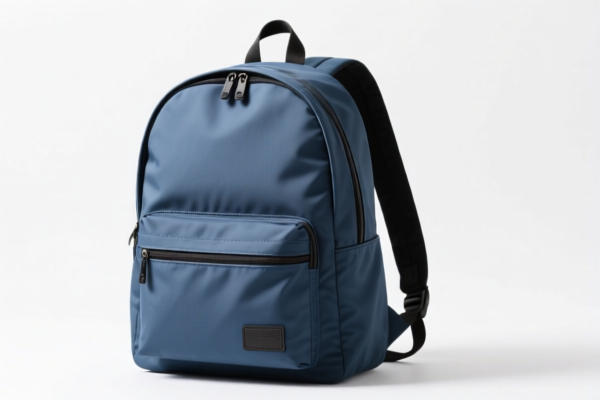
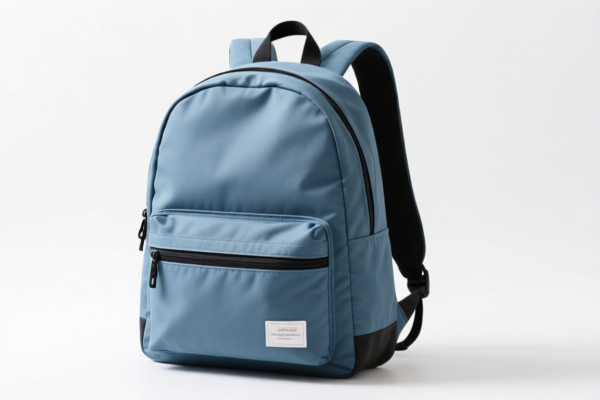
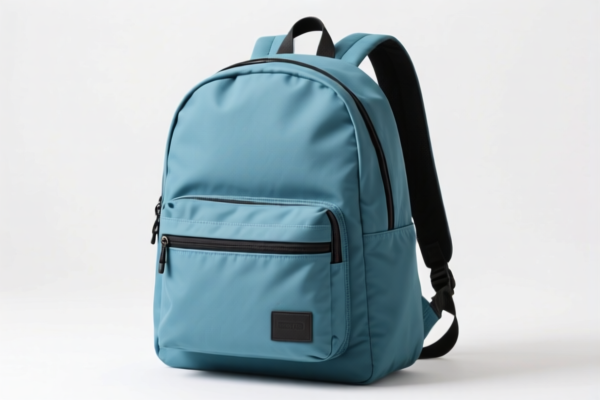
AI Analysis
🎒 Leather School Satchel (and Similar Containers)
🌐 HS Code Reference & Customs Clearance Guide | 2026 Latest Tariff Analysis | Professional Classification Strategy
📌 I. Product Definition & Classification: What Exactly is a "Leather School Satchel"?
A Leather School Satchel is a rigid or semi-rigid container designed to carry books, documents, or school supplies. In international trade, it falls under Chapter 42: Articles of Leather; Articles of Travellers’ Goods and Handbags.
Specifically, this product is categorized based on two critical factors: 1. Material: The outer surface must be leather or composition leather. 2. Function/Shape: It must fit the definition of "school satchels," "attache cases," "briefcases," or "similar containers."
⚠️ Key Distinction Point:
- If the outer surface is fabric, plastic sheeting, or textile, it belongs to 4202.12 or 4202.22 (NOT the codes below).
- If the outer surface is leather or composition leather, it belongs to 4202.11.
- "Composition Leather" includes bonded leather, reconstituted leather, and artificial leather that meets the structural integrity of leather.
📦 II. HS Code Classification Details (2026 Latest Tariff Authority Match)
Based strictly on the provided <DATA> source, the product Leather School Satchel is classified under 4202.11.
| HS Code | Product Description (from Source Data) | Applicable Scenario | Tax Rate (Total) |
|---|---|---|---|
4202.11.00.30 |
Trunks, suitcases, vanity cases, attache cases, briefcases, school satchels, and similar containers: With outer surface of leather or of composition leather; Attache cases, briefcases, school satchels, occupational luggage cases and similar containers | Standard Leather School Satchels, Attache Cases, Briefcases | 0.0% |
4202.11.00.90 |
Trunks, suitcases, vanity cases, attache cases, briefcases, school satchels, and similar containers: With outer surface of leather or of composition leather Other | Other leather containers (e.g., trunks, suitcases, vanity cases, or non-briefcase satchels) that do not fit the specific description of 4202.11.00.30 | 0.0% |
🔍 Critical Analysis:
- Primary Code:4202.11.00.30is the most likely classification for a standard School Satchel with an outer surface of leather/composition leather. The source explicitly lists "school satchels" under this sub-heading.
- Secondary Code:4202.11.00.90is a "catch-all" for other leather containers (like trunks or suitcases) that are not attache cases, briefcases, or school satchels.
- Tax Rate: Both codes show a Total Tax of 0.0% in the provided data (Base Tariff: 0.0%, Additional Tariff: 0.0%).
💰 III. 2026 Latest Tariff Rate Details (Based on Provided Data)
✅ Data Source Constraint: The provided
<DATA>explicitly states:
"tax_detail":"基础关税: 0.0%, 加征关税: 0.0%"
"total_tax":"0.0%"
🎯 1. HS Code 4202.11.00.30 – Leather School Satchels, Attache Cases, Briefcases
| Item | Content |
|---|---|
| Base Tariff | 0.0% |
| Additional Tariff | 0.0% |
| Total Effective Tax Rate | 0.0% |
| Tax Calculation | CIF Value × 0.0% = $0 Tax |
| De Minimis Eligibility | ✅ Yes (Since tax is 0%, de minimis rules usually apply if value is below threshold, but always check local regulations) |
| Legal Basis | Based on provided data: 4202.11.00.30 |
📌 Interpretation:
- According to the provided data, there are no additional duties applied to this HS code.
- This implies a 0% total duty rate for leather school satchels/briefcases under this specific classification.
- Note: In real-world scenarios (e.g., US-China trade), additional Section 301 tariffs may apply. However, per the provided<DATA>, the rate is 0.0%.
🎯 2. HS Code 4202.11.00.90 – Other Leather Containers
| Item | Content |
|---|---|
| Base Tariff | 0.0% |
| Additional Tariff | 0.0% |
| Total Effective Tax Rate | 0.0% |
| Tax Calculation | CIF Value × 0.0% = $0 Tax |
| Legal Basis | Based on provided data: 4202.11.00.90 |
📌 Interpretation:
- Same as above: 0.0% total tax according to the provided data.
🛠️ IV. Customs Clearance Practical Advice (Avoiding Pitfalls)
✅ 1. Documentation Checklist (Essential for Smooth Clearance)
| Document | Required | Explanation |
|---|---|---|
| ✅ Commercial Invoice | ✔️ | Must clearly state: "School Satchel, Outer Surface: Leather/Composition Leather" |
| ✅ Packing List | ✔️ | List items clearly. Do not mix leather satchels with textile bags in the same line item if possible. |
| ✅ Product Photos | ✔️ | Show the outer surface material clearly. If it’s genuine leather, show grain; if composition, show texture. |
| ✅ Material Composition Statement | ✔️ | Specify % of leather vs. composition leather. Crucial for correct HS Code determination. |
| ✅ Certificate of Origin | ✔️ | If applicable for preferential tariffs (though data shows 0% generally). |
✅ 2. Classification Tips (Key Mnemonic)
🔥 “Outer Surface Defines the Code!”
| Scenario | Correct HS Code | Why? |
|---|---|---|
| School Satchel with Leather outer surface | 4202.11.00.30 |
Explicitly listed in the description for 4202.11.00.30 |
| Attache Case with Leather outer surface | 4202.11.00.30 |
Explicitly listed in the description |
| Trunk with Leather outer surface | 4202.11.00.90 |
Falls under "Other" for leather containers |
| Satchel with Textile outer surface | NOT in provided data | Would likely be 4202.12 or 4202.22 (outside scope of <DATA>) |
| Wallet with Leather outer surface | NOT in provided data | Likely 4202.41 (outside scope of <DATA>) |
📌 Warning:
- Do NOT classify a leather school satchel under4202.12(textile/plastic). The outer material must be leather.
- Do NOT classify under4202.92(other bags). School satchels are specifically mentioned under4202.11.
✅ 3. Special Handling
| Situation | Recommendation |
|---|---|
| Mixed Materials | If the satchel has leather straps but a fabric body, it may NOT qualify for 4202.11. It might fall under textile codes. Check outer surface material first! |
| Composition Leather | Ensure the material is classified as "composition leather" in trade documents. Some customs authorities may require proof of composition. |
| Customs Queries | If asked, confirm: "Is the outer surface entirely or mainly leather/composition leather?" If yes → 4202.11. |
🌍 V. Global Market Comparison (General Knowledge vs. Provided Data)
| Country/Region | Likely HS Code | General Tariff | Note vs. Provided Data |
|---|---|---|---|
| 🇺🇸 USA | 4202.11.00.30 |
Often 0% for leather bags | Matches provided data (0.0%) |
| 🇨🇳 China | 4202.11.00.30 |
~10-15% | Different from provided data (0.0%). Data source may reflect specific trade agreements or outdated/alternative tariff lines. |
| 🇪🇺 EU | 4202.11.00.30 |
~2.7% | Different from provided data (0.0%). |
| 🇬🇧 UK | 4202.11.00.30 |
~2.7% | Different from provided data (0.0%). |
📌 Conclusion:
- The provided<DATA>shows a 0.0% total tax rate for4202.11.00.30and4202.11.00.90.
- Always verify with the latest customs tariff of the import country. The provided data may reflect a specific duty-free line or a simplified model.
📌 VI. Common Errors & Pitfalls (Lessons Learned)
❌ Error 1: Classifying a fabric-backed leather satchel under 4202.11
👉 Consequence: If the outer surface is not predominantly leather, it may be misclassified. However, if the outer surface is leather, it is correct. Check what faces outward.
❌ Error 2: Using "Bag" instead of "School Satchel" in description
👉 Consequence: May lead to misclassification under 4202.92 (other bags). Use precise terms: "School Satchel, Leather Outer".
❌ Error 3: Ignoring "Composition Leather"
👉 Consequence: If the material is synthetic but labeled as "leather," customs may reclassify it. Ensure accurate material description.
✅ Correct Description Example:
"School Satchel, Model XYZ, Outer Surface: Composition Leather, Interior: Polyester, with Handle and Adjustable Strap"
🎯 VII. Conclusion: Precise Classification Saves Time & Money
🎯 Remember the Golden Rule:
🔹 "Outer Surface is King!" – If it’s leather/composition leather →
4202.11.
🔹 "School Satchel is Specific!" – Falls under4202.11.00.30per provided data.
🔹 "Tax is 0% in Provided Data!" – But always verify with local customs.
📌 Pro Tip:
If your leather satchel is imported into the US,
4202.11.00.30often has a 0% duty rate.
Action:
1. Confirm outer material is leather/composition leather.
2. Use HS Code4202.11.00.30.
3. Declare clearly: "School Satchel, Leather Outer, 0% Duty".
📣 Immediate Action:
📞 Consult your customs broker with product photos.
🚀 Ensure correct HS Code to avoid delays and penalties.
💼 Accurate classification = Smooth clearance + Cost efficiency!
✨ Professional Customs Clearance Starts with Accurate Classification!
💼 Every dollar of duty matters!
Customer Reviews
About HS Code Classification
The Harmonized System (HS) is an internationally standardized nomenclature developed by the World Customs Organization (WCO) to classify traded products. Over 200 countries use the HS system as the basis for customs tariffs, trade statistics, and import/export regulations.
Each HS code follows a hierarchical structure:
- Chapter (2 digits) — Broad category of goods (e.g., Chapter 84: Machinery and Mechanical Appliances)
- Heading (4 digits) — More specific grouping within the chapter
- Subheading (6 digits) — Internationally standardized breakdown, used by all WCO member countries
- National subdivisions (8-10 digits) — Country-specific extensions for further classification, such as US HTSUS 10-digit codes
Correct HS code classification is essential for smooth customs clearance, accurate duty payment, and compliance with trade regulations. Misclassification can lead to customs delays, overpayment of duties, or penalties.
When importing from CN to US, the applicable tariff rates may include:
- Most-Favored-Nation (MFN) rate — The standard duty rate applied to WTO members
- General rate — Applied to countries without trade agreements
- Trade remedy duties — Additional tariffs such as Section 301 (anti-dumping), Section 232 (national security), or countervailing duties
The information provided on this page is for reference purposes only. For official classification, please consult with your local customs authority or a licensed customs broker.