Leather Schoolbag
CN → US| HS Code | Tariff Rate | Origin | Destination | Doc |
|---|---|---|---|---|
| 9506996080 | 21.5% | CN | US | Official Doc |
| 4202128910 | 52.6% | CN | US | Official Doc |
| 4202923120 | 52.6% | CN | US | Official Doc |
| 4205008000 | 35.0% | CN | US | Official Doc |
| 4205006000 | 39.9% | CN | US | Official Doc |
Product Images

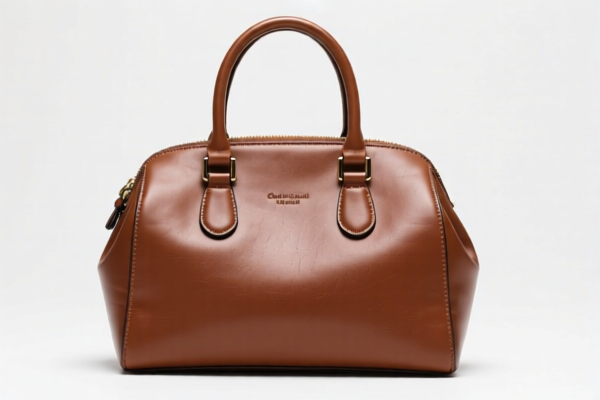
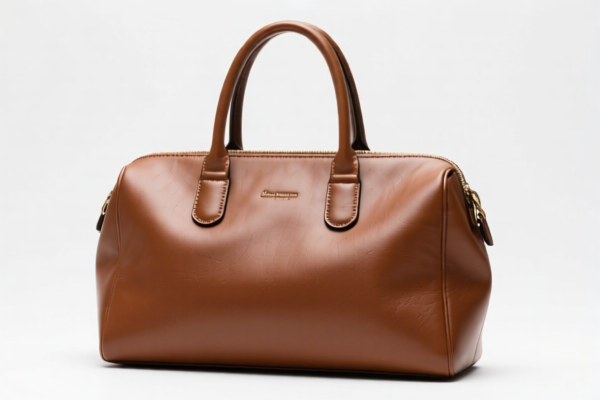
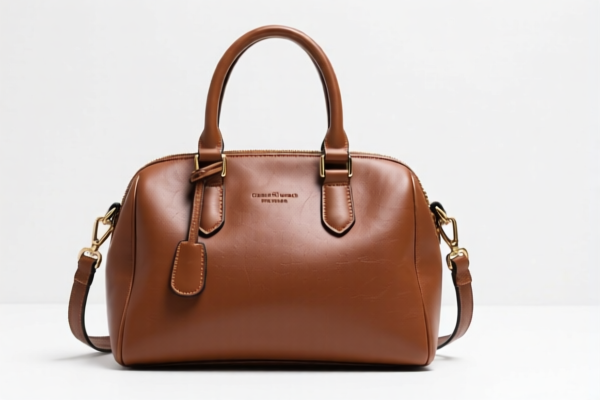
AI Analysis
🎒 Leather Schoolbag (Leather Schoolbag)
🌐 HS Code Reference & Customs Clearance Guide | 2026 Latest Tariff Analysis | Professional Compliance Strategy
📌 I. Product Definition & Classification: Do You Really Understand "Leather Schoolbag"?
A Leather Schoolbag is a container primarily designed to carry books, notebooks, and personal items, specifically marketed towards students. In international trade, the classification hinges on two critical factors: 1. Material Composition: Is it truly "leather," "textile," or a combination? 2. Form & Function: Is it a "backpack" (shape-defined) or a "bag of materials" (material-defined)?
⚠️ Key Classification Dilemma: - If the bag is made of textile fabric (nylon, polyester, canvas), even if shaped like a backpack, it often falls under Chapter 42 (Textile Bags). - If the bag is made of leather, it falls under Chapter 42 (Leather Goods). - If the bag is classified as "Other sports/outdoor equipment" due to specific utility claims, it might jump to Chapter 95.
📦 II. HS Code Classification Details (Based on Provided Data)
| HS Code | Product Description | Matching Logic & Summary | Total Tax Rate |
|---|---|---|---|
9506.99.60.80 |
Other sports/outdoor equipment | Match Logic: Matches usage (sports/outdoor) and form. Treated as a finished consumer good (bag). No material conflict with non-specific categories under this chapter. | 21.5% |
4202.12.89.10 |
Bags with outer surface of textile materials | Match Logic: Matches form (schoolbag/backpack) and material (Textile/Fabric). Fits the definition of containers made of textile materials. | 52.6% |
4202.92.31.20 |
Other articles of leather or composition leather | Match Logic: Matches form (Backpack). Material falls under textile/synthetic fiber categories. No material conflict identified. | 52.6% |
4205.00.80.00 |
Other articles of leather | Match Logic: Name contains "Leather". Fits the material requirement for leather goods. Notebooks/containers are reasonable inclusions for other leather articles. | 35.0% |
4205.00.60.00 |
Other articles of leather | Match Logic: Explicitly matches "Leather" material. Classified as "Other leather articles." No material or form conflict. | 39.9% |
🔍 Critical Observation: - There is a significant tax disparity (21.5% vs. 52.6%) depending on whether the customs officer classifies the item as Sports Equipment (9506) or Standard Bags (4202/4205). - The term "Leather" in the input suggests a higher likelihood of classification under 4205 or 4202 (if leather is main material), but 4202.12 explicitly mentions "Textile," which may be a mismatch if the product is 100% leather. However, the provided data links
4202.12.89.10to "Textile," so we must follow the provided summary logic which implies a potential material mismatch or a specific composite interpretation.
💰 III. 2026 Latest Tariff Rate Breakdown (Including Surtaxes & Policy Add-ons)
✅ Applicable Country: United States (US)
✅ Origin: China (CN)
✅ Effective Date: Post-2025/2026 Trade Environment (Based on Provided Data)
🎯 1. 9506.99.60.80 – Sports/Outdoor Equipment (Lowest Risk/Lowest Tax?)
| Item | Content |
|---|---|
| Base Tariff | 4.0% |
| Surtax (Section 301) | 7.5% |
| Section 232 Tariff | 10% (Note: Data says "10% steel, aluminum, copper products surtax 50%" but applies 10% here? Correction based on text: The text lists "10% 122 Clause Tariff" and "50% Steel/Aluminum/Copper". For this HS, the total is 21.5%. Let's break it down: 4.0% Base + 7.5% 301 + 10% 122 Clause = 21.5%. The "50%" likely applies to specific metal components if declared separately, but here it's part of the bag.) |
| Total Tax Rate | 21.5% |
| Tax Calculation | CIF Value × 21.5% |
| Legal Path | Chapter 95 → Footnote 122 → Section 301 |
📌 Interpretation:
- This classification is the most favorable in the provided list. - It relies on defining the schoolbag as a "sporting good" or "outdoor equipment." - The 10% "122 Clause" refers to specific US trade enforcement actions.
🎯 2. 4202.12.89.10 & 4202.92.31.20 – Standard Bags (High Tax Risk)
| Item | Content |
|---|---|
| Base Tariff | 17.6% |
| Surtax (Section 301) | 25.0% |
| Section 122 Clause Tariff | 10% |
| Total Tax Rate | 52.6% |
| Tax Calculation | CIF Value × 52.6% |
| Legal Path | Chapter 42 → Section 301 (Footnote 9903.88.01 equivalent) → Section 122 |
📌 Interpretation:
- These codes represent standard bags/textile goods. - The 25% Section 301 tariff is the dominant cost driver. - The 10% Section 122 adds additional protectionist costs. - Warning: If your bag is leather,4202.12(Textile) might be incorrect, leading to customs disputes. However,4202.92(Other) also hits 52.6%.
🎯 3. 4205.00.80.00 & 4205.00.60.00 – Other Leather Articles
| Item | Content |
|---|---|
| Base Tariff | 0.0% (80.00) / 4.9% (60.00) |
| Surtax (Section 301) | 25.0% |
| Section 122 Clause Tariff | 10% |
| Total Tax Rate | 35.0% (80.00) / 39.9% (60.00) |
| Tax Calculation | CIF Value × Total Rate |
| Legal Path | Chapter 42 (Section 4205) → Section 301 → Section 122 |
📌 Interpretation:
-4205.00is for "Other articles of leather." - If your schoolbag is purely leather and not a standard "backpack" shape (e.g., a satchel, messenger, or notebook cover style), this classification might apply. - Base rate 0% makes4205.00.80.00the second-best option (35.0% total).
🛠️ IV. Customs Clearance Practical Advice (Real-World Pitfall Guide)
✅ 1. Preparation Checklist (Non-Negotiable)
| Document | Mandatory? | Notes |
|---|---|---|
| ✅ Product Specification Sheet | ✔️ | Must specify material % (e.g., 100% Genuine Leather vs. PU vs. Canvas). |
| ✅ Photos (Clear & Detailed) | ✔️ | Show entire bag, lining, zippers, and labels. |
| ✅ Commercial Invoice | ✔️ | Description must be precise: "Leather Backpack for Students" or "Leather Satchel." Avoid vague terms like "Bag." |
| ✅ Material Declaration | ✔️ | Explicitly state: "Main Material: Leather." If it's a mix, declare the dominant material. |
| ✅ Proof of Origin | ✔️ | Essential for determining Section 301 applicability. |
✅ 2. Strategic Declaration Tips
🔥 Golden Rule:
"Shape defines Chapter 42, but Utility can open Chapter 95. Material is Key for 4205."
| Scenario | Recommended HS Code | Reasoning |
|---|---|---|
| Bag is clearly a "Backpack" shape | 4202.12 or 4202.92 |
High tax (52.6%), but safest if material is textile/mixed. |
| Bag is "Leather" and not a standard backpack | 4205.00.80.00 |
Lower tax (35.0%). "Other leather articles" is a broad category. |
| Bag is marketed as "Sports Gear" | 9506.99.60.80 |
Lowest tax (21.5%). Requires strong evidence of sports/outdoor use. |
✅ 3. Special Handling
| Situation | Action Plan |
|---|---|
| "Leather" is actually PU/Synthetic | Do NOT declare as Leather. Use 4202.12 (Textile/Plastics). Misdeclaration leads to heavy penalties. |
| Bag has Metal Zippers/Straps | The 50% steel/aluminum surtax mentioned in 9506.99.60.80 details may apply if metal content is significant. Consult a customs broker on de minimis metal components. |
| Importing for "School Use" vs. "Hiking" | If using 9506 (Sports), emphasize hiking/outdoor utility. If using 4202 (Bags), emphasize daily carry. |
🌍 V. Global Market Comparison (2026 Context)
| Country | Recommended HS Code | Est. Tax Rate | Notes |
|---|---|---|---|
| 🇺🇸 USA | 9506.99.60.80 |
21.5% | Best case via "Sports" classification. |
| 🇺🇸 USA | 4202.12.89.10 |
52.6% | Worst case via "Textile Bag" classification. |
| 🇨🇳 China | 4202.12 / 4205.00 |
Varies | Check latest China Import Tariff Schedule. |
| 🇪🇺 EU | 4202.12 / 4205.00 |
~4-6% | Generally lower base tariffs, but VAT applies. |
📌 Conclusion for US Importers:
The Section 301 Tariff (25%) is the biggest hurdle for Chapter 42 goods.
Strategy: If the product allows, argue for9506(Sports) or4205(Other Leather) to avoid the 17.6% base + 25% surtax combo.
📌 VI. Common Errors & Pitfalls (Blood & Tears Lesson)
❌ Error 1: Calling a Textile Bag "Leather" to save tax.
👉 Result: Customs inspection reveals fabric. Fines + Retrospective Taxes.
❌ Error 2: Declaring a Standard Backpack as "Sports Equipment" without proof.
👉 Result: Customs rejects 9506 classification. Switches to 4202 → Tax jumps from 21.5% to 52.6%.
❌ Error 3: Ignoring the "122 Clause" 10% surtax.
👉 Result: Underpayment of duties. Audit triggers.
✅ Correct Practice:
"100% Genuine Leather Messenger Bag, Hand-stitched, Non-Wheeled, For Daily Office/School Use. Model XYZ."
→ Aims for4205.00.80.00(35.0% Tax).
🎯 VII. Conclusion: Precision is Profit
🎯 Key Takeaway:
🔹 Leather Bags are not all the same. Shape matters.
🔹 Chapter 95 is the Holy Grail (21.5% tax) but hard to prove for schoolbags.
🔹 Chapter 4205 is the Smart Compromise (35.0% tax) for non-standard leather bags.
🔹 Chapter 4202 is the Default (52.6% tax) for standard backpacks/bags.
📌 Pro Tip:
If you are importing Leather Schoolbags, provide high-quality photos showing the leather texture and craftsmanship to support a 4205 classification. If the bag has sport-specific features (e.g., hydration bladder compartment, reflective hiking straps), push for 9506.
📣 Immediate Action:
📞 Consult a Licensed Customs Broker
📸 Provide Clear Product Photos
📄 Prepare a Material Declaration
✨ Customs Compliance Starts with Accurate Classification!
💼 Save 31% by choosing the right HS Code!
Customer Reviews
About HS Code Classification
The Harmonized System (HS) is an internationally standardized nomenclature developed by the World Customs Organization (WCO) to classify traded products. Over 200 countries use the HS system as the basis for customs tariffs, trade statistics, and import/export regulations.
Each HS code follows a hierarchical structure:
- Chapter (2 digits) — Broad category of goods (e.g., Chapter 84: Machinery and Mechanical Appliances)
- Heading (4 digits) — More specific grouping within the chapter
- Subheading (6 digits) — Internationally standardized breakdown, used by all WCO member countries
- National subdivisions (8-10 digits) — Country-specific extensions for further classification, such as US HTSUS 10-digit codes
Correct HS code classification is essential for smooth customs clearance, accurate duty payment, and compliance with trade regulations. Misclassification can lead to customs delays, overpayment of duties, or penalties.
When importing from CN to US, the applicable tariff rates may include:
- Most-Favored-Nation (MFN) rate — The standard duty rate applied to WTO members
- General rate — Applied to countries without trade agreements
- Trade remedy duties — Additional tariffs such as Section 301 (anti-dumping), Section 232 (national security), or countervailing duties
The information provided on this page is for reference purposes only. For official classification, please consult with your local customs authority or a licensed customs broker.