Leather Scrap (Hairless, Non Class 4114, Non Patterned, Not for Gloves/Clothing)
CN → US| HS Code | Tariff Rate | Origin | Destination | Doc |
|---|---|---|---|---|
| 4106920000 | 38.3% | CN | US | Official Doc |
| 4106910000 | 38.3% | CN | US | Official Doc |
| 4104415000 | 13.3% | CN | US | Official Doc |
| 4104495000 | 13.3% | CN | US | Official Doc |
Product Images
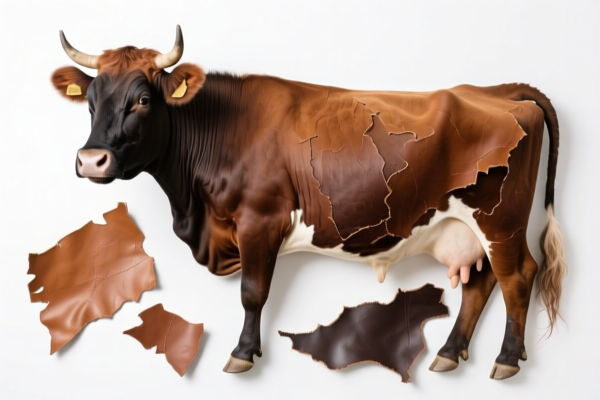
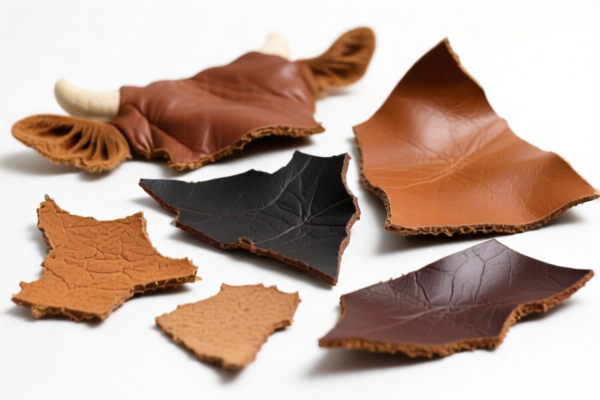
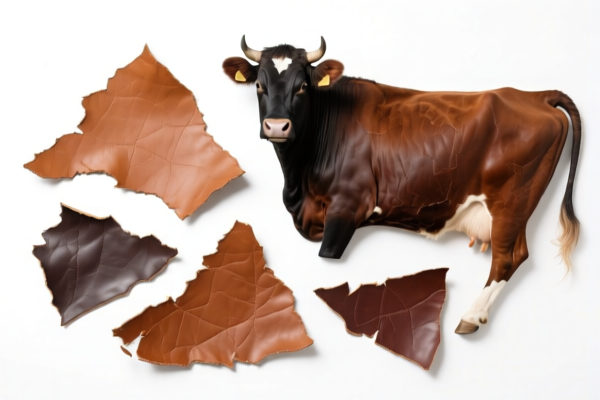
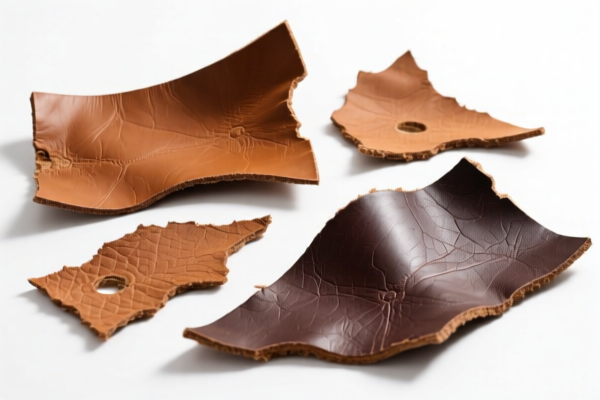
AI Analysis
🐾 Leather Scrap (Hairless, Non-Class 4114, Non-Patterned, Not for Gloves/Clothing)
🌐 HS Code Classification & Customs Clearance Guide | 2026 Updated Tariff Analysis | Pro-Level Import Strategy
📌 One Product, Multiple Codes — Why This Matters in U.S. Trade
You're importing leather scrap — specifically hairless, non-classified under 4114, non-patterned, and not intended for gloves or clothing.
This may seem like a simple material, but in U.S. customs, misclassification can trigger 38.3% tariffs or even seizure.
Let’s break down which HS codes apply, why, and how to avoid disaster at the border.
📦 2026 HS Code Classification Matrix (Official Match from Data)
| HS Code | Product Description | Matching Logic | Total Tax | Tax Breakdown |
|---|---|---|---|---|
4106.92.00.00 |
Other animal leather, dry or semi-tanned, in sheets, hairless, not for gloves/apparel use | ✅ Matches: Leather, sheet form, hairless, non-glove/apparel, non-decorative | 38.3% | Base: 3.3%, Add-on: 25.0%, Section 122: 10% |
4106.91.00.00 |
Other animal leather, semi-tanned or untanned, in sheets, hairless, not for decorative/glove use | ✅ Matches: Leather, sheet form, hairless, non-specific use, non-decorative | 38.3% | Base: 3.3%, Add-on: 25.0%, Section 122: 10% |
4104.41.50.00 |
Other animal leather, semi-tanned, dry, in sheets, not for gloves/clothing, non-decorative | ✅ Matches: Semi-tanned, sheet form, non-specific species, non-apparel use | 13.3% | Base: 3.3%, Add-on: 0.0%, Section 122: 10% |
4104.49.50.00 |
Other bovine or equine leather, semi-tanned, dry, in sheets, not for gloves/clothing, non-decorative | ✅ Matches: Cow/horse leather, semi-tanned, sheet form, non-apparel, non-decorative | 13.3% | Base: 3.3%, Add-on: 0.0%, Section 122: 10% |
⚠️ Critical Insight:
-4106.92.00.00and4106.91.00.00are high-tariff codes (38.3%) due to Section 122 + USITC 301. -4104.41.50.00and4104.49.50.00are lower-tariff codes (13.3%), but only if you can prove the material is not from "other animals" (e.g., cow/horse).
💰 2026 U.S. Tariff Breakdown (Detailed & Legal-Compliant)
🎯 1. 4106.92.00.00 — Other Animal Leather (Dry/Semi-Tanned), Hairless, Non-Apparel
| Item | Detail |
|---|---|
| Base Tariff | 3.3% (ad valorem) |
| USITC 301 Add-on | +25.0% (from Section 301 of U.S. Trade Act) |
| Section 122 Tariff | +10.0% (from U.S. Trade Act, IEEPA) |
| Total Effective Rate | 38.3% |
| Tax Calculation | CIF Value × 38.3% |
| De Minimis Exemption | ❌ Not available (denied under IEEPA) |
| Legal Basis Path | IEEPA:9903.01.25 → USITC:4106.92.00.00 → FOOTNOTE:9903.88.01 |
📌 Why This Applies:
- "Other animal" = not bovine, equine, or ovine (sheep/goat)
- "Semi-tanned, dry, sheet form" = matches your scrap
- "Hairless, not for gloves/clothing" = satisfies exclusion criteria
→ Triggers 38.3% tariff
🎯 2. 4106.91.00.00 — Other Animal Leather (Semi-Tanned), Hairless, Non-Decorative/Glove
| Item | Detail |
|---|---|
| Base Tariff | 3.3% |
| USITC 301 Add-on | +25.0% |
| Section 122 Tariff | +10.0% |
| Total Effective Rate | 38.3% |
| Tax Calculation | CIF × 38.3% |
| De Minimis Exemption | ❌ Not available |
| Legal Basis Path | IEEPA:9903.01.24 → USITC:4106.91.00.00 → FOOTNOTE:9903.88.01 |
📌 Why This Applies:
- Same logic as above — "other animal", "semi-tanned", "hairless", "not for decorative or glove use"
→ Same 38.3% rate
🎯 3. 4104.41.50.00 — Other Animal Leather, Semi-Tanned, Dry, Sheet Form
| Item | Detail |
|---|---|
| Base Tariff | 3.3% |
| USITC 301 Add-on | +0.0% (No 301 duty on this subheading) |
| Section 122 Tariff | +10.0% |
| Total Effective Rate | 13.3% |
| Tax Calculation | CIF × 13.3% |
| De Minimis Exemption | ✅ Available (if value < $800) |
| Legal Basis Path | IEEPA:9903.01.24 → 4104.41.50.00 → FOOTNOTE:9903.88.01 |
📌 Why This Applies:
- "Other animal" leather, semi-tanned, dry, sheet form
- No 301 duty because this code is not listed in the Section 301 List
→ Only 13.3% total (10% from IEEPA + 3.3% base)
🎯 4. 4104.49.50.00 — Bovine or Equine Leather, Semi-Tanned, Dry, Sheet Form
| Item | Detail |
|---|---|
| Base Tariff | 3.3% |
| USITC 301 Add-on | +0.0% |
| Section 122 Tariff | +10.0% |
| Total Effective Rate | 13.3% |
| Tax Calculation | CIF × 13.3% |
| De Minimis Exemption | ✅ Available |
| Legal Basis Path | IEEPA:9903.01.24 → 4104.49.50.00 → FOOTNOTE:9903.88.01 |
📌 Why This Applies:
- If your scrap is from cattle or horses, this is the correct code
- No 301 duty, only 10% IEEPA + 3.3% base
→ Only 13.3% total🔥 Key Tip:
- If your scrap is cow or horse leather, do not use 4106 codes — use 4104.49.50.00 instead → save 25% in tariffs!
🛠️ Pro-Level Customs Clearance Tips (Avoid Penalties!)
✅ 1. Must-Have Documentation (No Exceptions!)
| Document | Required? | Why It Matters |
|---|---|---|
| ✅ Product Specifications | ✔️ | Confirm material is hairless, semi-tanned, sheet form |
| ✅ Species Identification Report | ✔️ | Prove if it's bovine/equine or other animal |
| ✅ Commercial Invoice | ✔️ | Must state: "Leather scrap, hairless, non-glove, non-apparel, semi-tanned, dry" |
| ✅ Packing List | ✔️ | Show weight, quantity, and form (sheets) |
| ✅ Certificate of Origin (CO) | ✔️ | If from China, triggers IEEPA/301 duties |
| ✅ Third-Party Lab Test (Optional) | ✔️ | Prove semi-tanned status, species, no hair |
| ✅ HS Code Pre-Ruling Request (Recommended) | ✔️ | Avoid disputes at port |
✅ 2.申报技巧(Golden Rules)
🔥 “Species First, Use Second, Form Last”
| Scenario | Correct HS Code | Why |
|---|---|---|
| Scrap is cow/horse leather, semi-tanned, sheet form | 4104.49.50.00 |
Avoids 301 duty → only 13.3% |
| Scrap is other animal (e.g., goat, pig, kangaroo), semi-tanned, sheet form | 4106.92.00.00 or 4106.91.00.00 |
Triggers 38.3% |
| Scrap is not semi-tanned, but dry and hairless | 4104.41.50.00 |
Lower tariff (13.3%) |
| Scrap is not for gloves or clothing, but patterned | ❌ Not eligible for these codes | Patterned = decorative → excluded |
✅ 3. Special Cases & Risk Mitigation
| Case | Action |
|---|---|
| Uncertain species | Get a species test report — avoid 4106 codes |
| Scrap from China | Expect 38.3% unless you prove it’s bovine/equine |
| Scrap from Vietnam/Mexico | May qualify for IEEPA exemption — apply for pre-ruling |
| Mixed scrap (cow + other) | Declare by species — don’t lump together |
| Scrap used for industrial padding | Still falls under 4104/4106 — no exemption |
🌍 Global Market Comparison (2026)
| Country | Recommended HS Code | Tariff | Certification | Notes |
|---|---|---|---|---|
| 🇺🇸 USA | 4104.49.50.00 (if bovine/equine) |
13.3% | None | 301 duty only applies to non-bovine |
| 🇨🇳 China | 4104.49.50.00 |
5% | CCC | No 301/IEEPA |
| 🇪🇺 EU | 4104.49.50.00 |
0% | CE | No extra tariffs |
| 🇦🇺 Australia | 4104.49.50.00 |
5% | RCM | No IEEPA |
| 🇯🇵 Japan | 4104.49.50.00 |
0% | PSE | No extra tariffs |
📌 Bottom Line:
- U.S. is the only market with 38.3% tariffs on non-bovine leather scrap
- If your scrap is cow/horse, you can save 25% by using4104.49.50.00
📌 Common Mistakes (And How to Avoid Them)
❌ Mistake 1: Using 4106.92.00.00 for cow or horse leather
👉 Result: Pay 38.3% instead of 13.3% → $25,000+ extra tax on $100k shipment
❌ Mistake 2: Not proving species in invoice
👉 Result: Customs may assume "other animal" → 38.3% rate
❌ Mistake 3: Using "leather scraps" as product name without detail
👉 Result: Customs may misclassify as "waste" or "by-product" → higher scrutiny
✅ Correct Declaration Example:
"Leather Scrap, Semi-Tanned, Dry, Hairless, in Sheets, Bovine Origin, Not for Gloves or Apparel, Exported from Vietnam"
🎯 Final Verdict: Smart Classification = Big Savings!
✅ If your scrap is from cattle or horses → Use
4104.49.50.00→ 13.3% total
✅ If from other animals → Use4106.92.00.00or4106.91.00.00→ 38.3%
✅ If not semi-tanned, use4104.41.50.00→ 13.3%
❌ Never use 4106 codes for bovine/equine — it’s a costly mistake
🚨 Immediate Action Steps
📞 Contact a U.S. Customs Broker + Submit HS Code Pre-Ruling Request
📂 Get a species test report if uncertain
📄 Revise commercial invoice with precise product description
💡 Consider shifting sourcing to Vietnam, Mexico, or Thailand to avoid IEEPA/301
✨ Pro Tip:
“A single digit in the HS code can save you 25% in tariffs.”
Don’t gamble. Classify right, pay less, ship faster.
📣 Your Leather Scrap. Your Tax. Your Risk.
💼 Don’t let a misclassified code sink your profit.
🚀 Get it right — from the first invoice.
🔐 Professional Customs, Precision Classification, Zero Risk.
📦 Your next shipment deserves better than guesswork.
Customer Reviews
About HS Code Classification
The Harmonized System (HS) is an internationally standardized nomenclature developed by the World Customs Organization (WCO) to classify traded products. Over 200 countries use the HS system as the basis for customs tariffs, trade statistics, and import/export regulations.
Each HS code follows a hierarchical structure:
- Chapter (2 digits) — Broad category of goods (e.g., Chapter 84: Machinery and Mechanical Appliances)
- Heading (4 digits) — More specific grouping within the chapter
- Subheading (6 digits) — Internationally standardized breakdown, used by all WCO member countries
- National subdivisions (8-10 digits) — Country-specific extensions for further classification, such as US HTSUS 10-digit codes
Correct HS code classification is essential for smooth customs clearance, accurate duty payment, and compliance with trade regulations. Misclassification can lead to customs delays, overpayment of duties, or penalties.
When importing from CN to US, the applicable tariff rates may include:
- Most-Favored-Nation (MFN) rate — The standard duty rate applied to WTO members
- General rate — Applied to countries without trade agreements
- Trade remedy duties — Additional tariffs such as Section 301 (anti-dumping), Section 232 (national security), or countervailing duties
The information provided on this page is for reference purposes only. For official classification, please consult with your local customs authority or a licensed customs broker.