Leather Silicone Oil Auxiliary
CN → US| HS Code | Tariff Rate | Origin | Destination | Doc |
|---|---|---|---|---|
| 3402499000 | 38.7% | CN | US | Official Doc |
| 3906902000 | 41.3% | CN | US | Official Doc |
| 3506105000 | 37.1% | CN | US | Official Doc |
| 3402905050 | 38.7% | CN | US | Official Doc |
| 3906905000 | 39.2% | CN | US | Official Doc |
Product Images
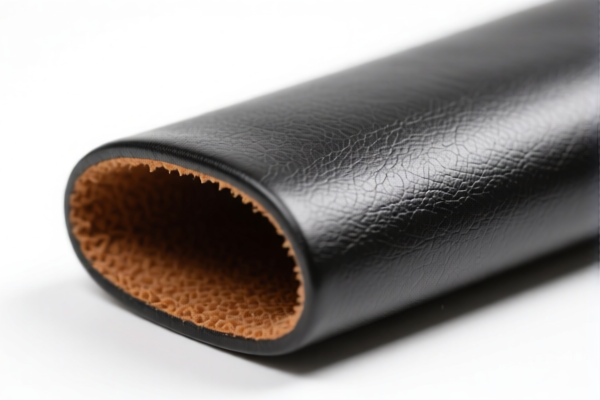
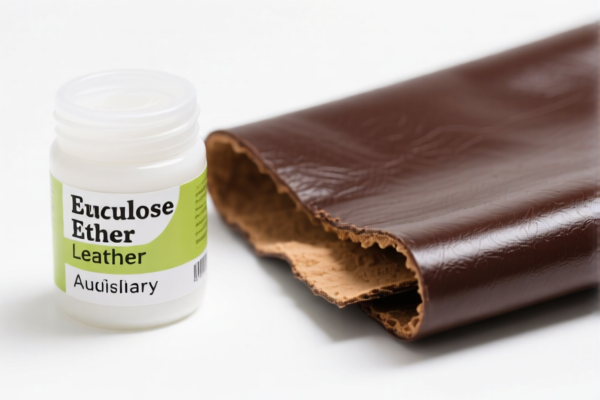
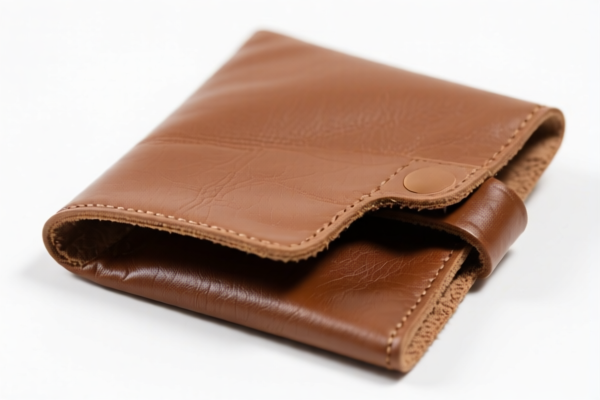
AI Analysis
🧴 Leather Silicone Oil Auxiliary (Chemical Additives for Leather Processing)
🌐 HS Code Reference & Customs Clearance Guide | 2026 Latest Tariff Analysis | Professional Clearance Strategy
📌 I. Product Definition & Classification: What is "Leather Silicone Oil Auxiliary"?
Leather Silicone Oil Auxiliary refers to chemical additives used in the leather processing industry (tanning, dyeing, or finishing). These products typically contain silicone-based polymers, organic surfactants, or acrylic-based adhesives designed to soften, waterproof, or bond leather materials.
In international trade, classification depends heavily on the primary function and chemical composition: - Surfactant-based: If primarily used to reduce surface tension or aid in wetting/dyeing → Classified under Chapter 34 (Soap, Organic Surface-Active Agents). - Polymer-based (Acrylic/Silicone): If primarily an adhesive or coating component → Classified under Chapter 39 (Plastics) or Chapter 35 (Animal/ Vegetable Materials).
⚠️ Key Distinction:
- Is it a surface-active agent (cleaning/wetting aid)? → 3402
- Is it a modulated adhesive or plastic polymer? → 3506 or 3906
📦 II. HS Code Classification Details (2026 Latest Tariff Authority Comparison)
Based on the provided data, here are the five potential HS Codes, ranked by logical inference:
| HS Code | Product Description | Application Scenario | Key Logic for Classification |
|---|---|---|---|
3402.49.90.00 |
Other Organic Surface-Active Agents (Preparations) | Leather auxiliaries acting as wetting agents or dispersants | Best Fit for Surfactants: Matches "organic surface-active agents" used as non-soap chemical additives. |
3402.90.50.50 |
Other Organic Surface-Active Agents & Preparations (Other) | General-purpose chemical auxiliaries with undefined specific function | Fallback Option: A "catch-all" category for chemical preparations not elsewhere specified, matching the "auxiliary" nature. |
3506.10.50.00 |
Modulated Adhesives, Prepared Glues | Adhesive auxiliaries used for bonding leather layers | Best Fit for Adhesives: Matches "modulated adhesives" based on the function of bonding, assuming no material conflict. |
3906.90.50.00 |
Other Primary Forms of Acrylic Polymers | Silicone/Acrylic-based auxiliaries in primary polymer form | Material-Based: If the product is primarily an acrylic polymer in primary form, this applies. |
3906.90.20.00 |
Other Plastic Materials in Primary Forms | Adhesive auxiliaries containing acrylic polymer components | Material-Based: Specifically for adhesives where acrylic polymer is the key component, matching "plastic" category. |
🔍 Critical Note:
- 3402 Series: Focuses on the chemical action (surface tension reduction, wetting).
- 3506/3906 Series: Focuses on the material structure (polymers, adhesives).
- No Conflict: The data states no material or form conflicts for any of these options, so the choice depends on the MSDS (Material Safety Data Sheet) and primary use case.
💰 III. 2026 Latest Tariff Rate Details (Including Surcharges & Policy Additions)
✅ Applicable Country: United States (US)
✅ Origin: China (CN)
✅ Effective Date: From November 10, 2025 (and subsequent imports)
🎯 1. 3402.49.90.00 —— Organic Surface-Active Agents
| Item | Content |
|---|---|
| Base Tariff | 3.7% |
| Section 301 Surcharge | +25.0% |
| IEEPA Surcharge (Section 122) | +10.0% |
| Total Tariff Rate | 38.7% |
| Calculation Basis | CIF Value × 38.7% |
| De Minimis Exemption | ❌ Not Eligible |
| Legal Basis Path | IEEPA:9903.01.24 → USITC:3402.49.90.00 → FOOTNOTE:9903.88.01 |
📌 Explanation:
- 3.7% Base: Standard MFN rate for organic surface-active agents.
- 25% Section 301: U.S. Trade Act tariff on Chinese goods.
- 10% IEEPA: International Emergency Economic Powers Act surcharge on specific Chinese chemical imports.
- Total: 38.7% – High cost, requires careful cost-benefit analysis.
🎯 2. 3402.90.50.50 —— Other Surface-Active Agents (Catch-All)
| Item | Content |
|---|---|
| Base Tariff | 3.7% |
| Section 301 Surcharge | +25.0% |
| IEEPA Surcharge (Section 122) | +10.0% |
| Total Tariff Rate | 38.7% |
| Calculation Basis | CIF Value × 38.7% |
| De Minimis Exemption | ❌ Not Eligible |
| Legal Basis Path | Same as above |
📌 Note:
- Same tariff rate as3402.49.90.00.
- Use this only if the product does not fit the specific "49" subheading criteria.
🎯 3. 3506.10.50.00 —— Modulated Adhesives
| Item | Content |
|---|---|
| Base Tariff | 2.1% |
| Section 301 Surcharge | +25.0% |
| IEEPA Surcharge (Section 122) | +10.0% |
| Total Tariff Rate | 37.1% |
| Calculation Basis | CIF Value × 37.1% |
| De Minimis Exemption | ❌ Not Eligible |
| Legal Basis Path | IEEPA:9903.01.24 → USITC:3506.10.50.00 |
📌 Best Option for Cost Savings:
- Lowest Base Rate (2.1%) among all options.
- If your product is clearly an adhesive or binding agent, this is the most cost-effective classification.
🎯 4. 3906.90.20.00 & 3906.90.50.00 —— Acrylic Polymers (Plastics)
| Item | Content |
|---|---|
Base Tariff (3906.90.20.00) |
6.3% |
Base Tariff (3906.90.50.00) |
4.2% |
| Section 301 Surcharge | +25.0% |
| IEEPA Surcharge (Section 122) | +10.0% |
Total Tariff (3906.90.20.00) |
41.3% |
Total Tariff (3906.90.50.00) |
39.2% |
| De Minimis Exemption | ❌ Not Eligible |
📌 Note:
- These are the most expensive options due to higher base rates (4.2%-6.3%).
- Only use if the product is primarily a plastic polymer and not best classified as a surfactant or adhesive.
🛠️ IV. Customs Clearance Practical Advice (Battle-Tested Pitfall Avoidance)
✅ 1. Documentation Checklist (Non-Negotiable)
| Document | Required | Explanation |
|---|---|---|
| ✅ MSDS (Material Safety Data Sheet) | ✔️ | Crucial. Must clearly state: "Not a soap," "Organic Surface-Active Agent," or "Acrylic Polymer." |
| ✅ Product Specification Sheet | ✔️ | Detail chemical composition (e.g., % silicone, % acrylic). |
| ✅ Commercial Invoice | ✔️ | Use precise English terms: "Leather Processing Chemical Auxiliary," "Silicone Emulsion," or "Acrylic Adhesive." |
| ✅ Certificate of Origin | ✔️ | To prove CN origin and apply correct surcharges. |
| ✅ Packaging List | ✔️ | Net/Gross weight, container type. |
✅ 2. Declaration Strategy (Key Mantras)
🔥 "Function First, Material Second. Don't Mix Surfactants with Plastics!"
| Scenario | Correct HS Code | Wrong Practice |
|---|---|---|
| Mainly for wetting/dyeing/softening | 3402.49.90.00 or 3402.90.50.50 |
Misdeclare as "Plastic" → Higher risk of audit. |
| Mainly for bonding/gluing leather | 3506.10.50.00 |
Misdeclare as "Surfactant" → Incorrect function claim. |
| Primary component is Acrylic Polymer | 3906.90.50.00 |
Overlook material content → Risk of reclassification. |
✅ 3. Special Handling Tips
| Situation | Recommendation |
|---|---|
| Hybrid Products | If the product is both a surfactant AND an adhesive, declare based on primary function. If ambiguous, 3506.10.50.00 offers the lowest base rate (2.1%). |
| Silicone vs. Acrylic | Silicone oils are often classified under 3402 (surfactants) unless they are in primary polymer form. Check MSDS! |
| Packaging | Ensure containers are clearly labeled with chemical names to avoid "Unknown Chemical" detention. |
🌍 V. Global Market Customs Comparison (2026 Latest)
| Country/Region | Recommended HS Code | Base Tariff | Notes |
|---|---|---|---|
| 🇺🇸 USA | 3506.10.50.00 |
2.1% + 35% Surcharges | Total 37.1% (Lowest total). |
| 🇨🇳 China | 3402.49.90.00 |
Varies | Domestic trade follows different rules. |
| 🇪🇺 EU | 3824.72.90 |
~0-6.5% | Different classification system (Chapter 38). |
| 🇦🇺 Australia | 3402.90.90.90 |
~5-10% | Check AUSFTA if applicable. |
📌 Conclusion:
- USA Market: The 3506.10.50.00 classification is the most cost-effective due to the lowest base rate (2.1%).
- EU/Asia: Classifications differ significantly; consult local experts for non-US shipments.
📌 VI. Common Mistakes & Pitfall Guide (Blood Lessons)
❌ Mistake 1: Declaring "Silicone Oil" as a generic "Chemical" without specifying function.
👉 Consequence: Customs may classify under the highest applicable duty (e.g., 3906 series at 41.3%).
❌ Mistake 2: Confusing "Surface-Active Agent" with "Soap".
👉 Consequence: If misdeclared as soap, it may face different regulatory approvals (FDA/EPA).
❌ Mistake 3: Ignoring the IEEPA 10% Surcharge.
👉 Consequence: Budget miscalculation. Total tariff is Base + 25% + 10%. Do not forget the 10%!
✅ Correct Practice:
"Leather Auxiliary, Silicone-Based Emulsion, Used for Softening and Water Resistance, Not for Cleaning."
HS Code:3402.49.90.00OR3506.10.50.00(if adhesive function dominates).
🎯 VII. Conclusion: Professional Declaration Saves Money!
🎯 Remember the Mantra:
🔹 "Adhesive First? Use 3506 (37.1% Total)."
🔹 "Surfactant Second? Use 3402 (38.7% Total)."
🔹 "Pl聚合物 Last? Use 3906 (39-41% Total)."
🔹 "Always Add 35% (25% + 10%) to Base Rate!"
📌 Pro Tip:
If your product is primarily an adhesive for leather bonding, insist on 3506.10.50.00. It saves 1.6% compared to surfactant classifications. That’s real profit!
📣 Immediate Action:
📞 Contact your customs broker with the MSDS and request a Pre-Ruling for HS Code
3506.10.50.00if applicable.
🚀 Minimize Tariffs, Maximize Profit!
✨ Professional clearance starts with precise classification!
💼 Every percentage point saved is pure margin!
Customer Reviews
About HS Code Classification
The Harmonized System (HS) is an internationally standardized nomenclature developed by the World Customs Organization (WCO) to classify traded products. Over 200 countries use the HS system as the basis for customs tariffs, trade statistics, and import/export regulations.
Each HS code follows a hierarchical structure:
- Chapter (2 digits) — Broad category of goods (e.g., Chapter 84: Machinery and Mechanical Appliances)
- Heading (4 digits) — More specific grouping within the chapter
- Subheading (6 digits) — Internationally standardized breakdown, used by all WCO member countries
- National subdivisions (8-10 digits) — Country-specific extensions for further classification, such as US HTSUS 10-digit codes
Correct HS code classification is essential for smooth customs clearance, accurate duty payment, and compliance with trade regulations. Misclassification can lead to customs delays, overpayment of duties, or penalties.
When importing from CN to US, the applicable tariff rates may include:
- Most-Favored-Nation (MFN) rate — The standard duty rate applied to WTO members
- General rate — Applied to countries without trade agreements
- Trade remedy duties — Additional tariffs such as Section 301 (anti-dumping), Section 232 (national security), or countervailing duties
The information provided on this page is for reference purposes only. For official classification, please consult with your local customs authority or a licensed customs broker.