Leather Strop
CN → US| HS Code | Tariff Rate | Origin | Destination | Doc |
|---|---|---|---|---|
| 4205004000 | 36.8% | CN | US | Official Doc |
| 3926906090 | 39.2% | CN | US | Official Doc |
| 4205008000 | 35.0% | CN | US | Official Doc |
| 8205595560 | 40.3% | CN | US | Official Doc |
| 6805301000 | 35.0% | CN | US | Official Doc |
Product Images
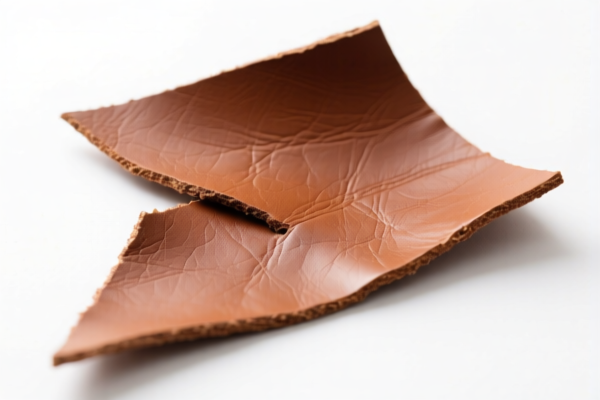
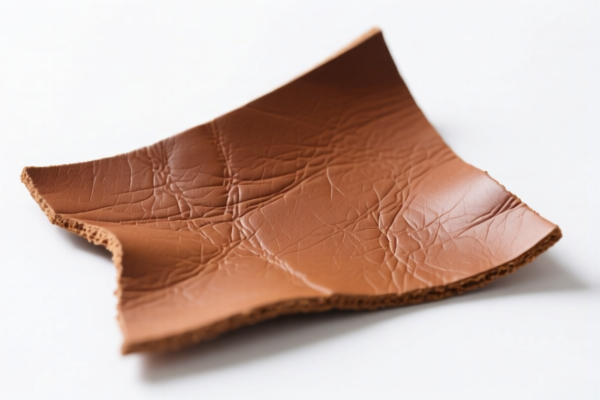
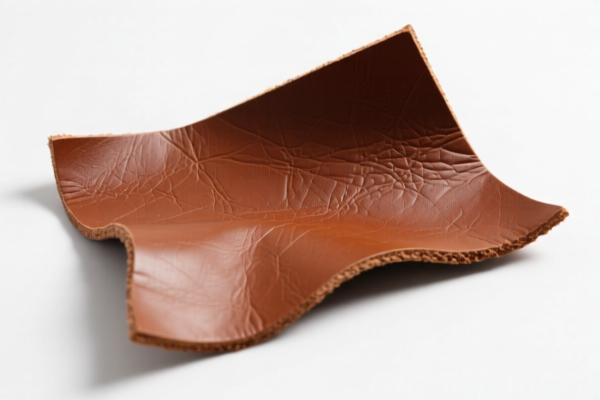

AI Analysis
🔪 Leather Strop (Sharpening Accessories & Abrasives)
🌐 HS Code Reference & Clearance Guide | 2024/2025 Tax Logic Analysis | Professional Clearance Strategy
📌 I. Product Definition & Classification: What is a "Leather Strop"?
A Leather Strop (often used for sharpening knives, razors, or tools) is an abrasive strip used to polish and straighten the edge of a blade. In international trade, its classification depends heavily on material composition, physical form, and functional intent.
⚠️ Key Distinction Point:
- Is it made of leather? → Likely Chapter 42 (Articles of Leather).
- Is it a belt attached to a backing material? → Likely Chapter 68 (Stone/Abrasives).
- Is it considered a part/accessory of a hand tool? → Likely Chapter 82 (Hand Tools).
- Is it a plastic/non-leather generic strip? → Likely Chapter 39 (Plastics).
📦 II. HS Code Classification Matrix (Based on Provided Data)
Below are the 5 possible HS Codes for "Leather Strop," derived from different classification logics (Material vs. Function vs. Form).
| HS Code | Product Description (Summary) | Classification Logic | Tax Implication |
|---|---|---|---|
| 4205.00.40.00 | Leather Strop, matching leather material & belt strip form. | Material Priority: Classified as an article of leather. | 36.8% (Lowest Base) |
| 3926.90.60.90 | Leather Strop, matching belt form but non-plastic fallback logic. | Fallback/Generic: If not strictly "leather goods" or other specific categories, it falls under "Other articles of plastic/plastics-like materials" due to broad "other" clauses in some jurisdictions. | 39.2% (Highest Base) |
| 4205.00.80.00 | Leather Strop, matching leather articles & other leather products fallback. | General Leather: Classified as other articles of leather. | 35.0% (Lowest Total) |
| 8205.59.55.60 | Leather Strop, matching hand tool accessories & non-cutting tool category. | Functional Priority: Classified as an accessory to hand tools (sharpening tools). | 40.3% (Highest Total) |
| 6805.30.10.00 | Leather Strop (Abrasive Belt), matching strip form & attached to other materials. | Functional/Form Priority: Classified as an abrasive product (sandpaper/leather belt type). | 35.0% (Lowest Total) |
💰 III. 2024/2025 Latest Tariff Rate Breakdown (Detailed Analysis)
✅ Applicable Country: USA (US)
✅ Origin: China (CN)
✅ 生效时间 (Effective Date): 2025年11月10日起 (From Nov 10, 2025)
All classifications share the same USITC Additional Duty (25%) and IEEPA Section 122 Duty (10%). The difference lies in the Base Duty.
🎯 1. 4205.00.80.00 & 6805.30.10.00 —— BEST RATE OPTIONS
| Item | Details |
|---|---|
| Base Duty | 0.0% (ad valorem) |
| USITC Additional Duty | +25% (Section 301) |
| Section 122 Duty | +10% (Specific provision for this category) |
| Total Tax Rate | 35.0% |
| Calculation | CIF Value × 35% |
| De Minimis Waiver | ❌ No (Cannot use de minimis) |
| Legal Basis | Base: 0% → Add: 25% (USITC) + 10% (Sec 122) |
📌 Why this is best:
- Both codes have a 0% base duty.
- 4205.00.80.00: Best if the product is strictly defined as an "Article of Leather."
- 6805.30.10.00: Best if the product is defined as an "Abrasive Strip/Belt" (common for industrial sharpening belts).
- Result: Lowest total liability at 35%.
🎯 2. 4205.00.40.00 —— MID-RANGE OPTION
| Item | Details |
|---|---|
| Base Duty | 1.8% (ad valorem) |
| USITC Additional Duty | +25% |
| Section 122 Duty | +10% |
| Total Tax Rate | 36.8% |
| Calculation | CIF Value × 36.8% |
| De Minimis Waiver | ❌ No |
📌 Why this happens:
- This code is specific to "Leather articles" with a small base duty.
- It is slightly more expensive than the 0% base options but still cheaper than the "Tool Accessory" category.
🎯 3. 3926.90.60.90 —— HIGH COST (Fallback)
| Item | Details |
|---|---|
| Base Duty | 4.2% (ad valorem) |
| USITC Additional Duty | +25% |
| Section 122 Duty | +10% |
| Total Tax Rate | 39.2% |
| Calculation | CIF Value × 39.2% |
📌 Why this happens:
- This is a "catch-all" for plastic/plastic-like articles. If the strop is not clearly leather or abrasive, customs may default here.
- Warning: Do not misclassify leather strops as plastic goods to avoid higher duties.
🎯 4. 8205.59.55.60 —— HIGHEST COST (Tool Accessory)
| Item | Details |
|---|---|
| Base Duty | 5.3% (ad valorem) |
| USITC Additional Duty | +25% |
| Section 122 Duty | +10% |
| Total Tax Rate | 40.3% |
| Calculation | CIF Value × 40.3% |
📌 Why this happens:
- Classified as a "Part of Hand Tools."
- Even though a strop is used with tools, it is often not considered a "part" of the tool itself (like a blade or handle).
- Risk: This is the most expensive option. Avoid if possible by arguing for "Abrasive" or "Leather Article" classification.
🛠️ IV. Clearance Practical Advice (Pitfall Avoidance)
✅ 1. Preparation Checklist (Must-Have Documents)
| Document | Required? | Purpose |
|---|---|---|
| Product Specifications | ✔️ | Must specify: Material (100% Leather vs. Composite), Form (Strip/Belt), Use (Sharpening). |
| Photos (Clear) | ✔️ | Show texture, backing material, and any packaging indicating "Abrasive" or "Leather Tool." |
| Bill of Materials (BOM) | ✔️ | Proves material composition. Crucial for distinguishing between 4205 (Leather) and 3926 (Plastic). |
| Commercial Invoice | ✔️ | Describe accurately: "Leather Sharpening Strip" or "Abrasive Leather Belt." Avoid vague terms like "Accessories." |
| Certificate of Origin | ✔️ | If applicable, to prove origin for duty calculations. |
✅ 2. Declaration Strategy (Key Mantras)
🔥 “Material First, Function Second, Form Third!”
| Scenario | Recommended HS Code | Risk of Wrong Code |
|---|---|---|
| 100% Leather Strip | 4205.00.80.00 or 4205.00.40.00 | Low if documented as leather. |
| Leather on Paper/Card Backing | 6805.30.10.00 (Abrasive) | Medium. Argue it's an "Abrasive Product" like sandpaper. |
| Plastic/PU Strop | 3926.90.60.90 | High risk if mislabeled as leather. |
| Sold as "Part of Knife Kit" | 8205.59.55.60 | HIGH COST. Avoid. Do not call it a "tool part." Call it an "accessory" or "abrasive." |
✅ 3. Special Handling Tips
| Situation | Advice |
|---|---|
| Composite Materials | If the strop has a fabric backing, emphasize the Leather or Abrasive nature in the description. Do not let customs see it as a "plastic article" (3926). |
| Kit Sales | If sold with knives, declare the strop separately as an "Abrasive" or "Leather Article," not as a "Tool Part." |
| Customs Inquiry | If asked, provide a technical data sheet showing the leather content >80% or the abrasive nature. |
🌍 V. Global Market Comparison (2024/2025)
| Country/Region | Recommended HS Code | Estimated Duty (Base + Sec 122) | Notes |
|---|---|---|---|
| 🇺🇸 USA | 6805.30.10.00 or 4205.00.80.00 | 35.0% | Best rates. Avoid 8205. |
| 🇨🇳 China | 4205.00.80.00 | Low | No Section 122/USITC duties. |
| 🇪🇺 EU | 4205.00.80.00 | ~10-12% | No additional US-style tariffs. |
| 🇬🇧 UK | 4205.00.80.00 | ~10-12% | Post-Brexit rules apply. |
📌 Conclusion:
- For US imports, 6805.30.10.00 (Abrasive) and 4205.00.80.00 (Leather Article) are the most cost-effective.
- Avoid 8205.59.55.60 (Tool Accessory) as it adds unnecessary base duty.
📌 VI. Common Errors & Pitfalls (Lessons Learned)
❌ Error 1: Describing the strop as a "Part of a Knife"
👉 Consequence: Customs may classify it as 8205.59.55.60 → 40.3% Duty.
✅ Fix: Describe as "Leather Sharpening Strip" or "Abrasive Belt."
❌ Error 2: Using "Plastic Accessory" for Leather Strops
👉 Consequence: Classification as 3926.90.60.90 → 39.2% Duty + potential fraud risk.
✅ Fix: Clearly state Material: Leather.
❌ Error 3: Ignoring Section 122 Duty
👉 Consequence: Underestimating total cost by 10%.
✅ Fix: Always calculate Base + 25% + 10%.
🎯 VII. Conclusion: Professional Declaration for Cost Efficiency
🎯 Remember the Mantra:
🔹 "Abrasive or Leather? Aim for 0% Base!"
🔹 "Don't be a Tool Part, be an Accessory!"
🔹 "Total Duty = Base + 25% + 10%. Keep Base Low!"
📌 Pro Tip:
If you are importing high-volume leather strops, consider applying for an Advance Ruling (PAR) with US Customs to lock in 6805.30.10.00 or 4205.00.80.00, securing the 35% total rate and avoiding audits.
📣 Immediate Action:
📞 Contact your Customs Broker with the following description:
"Leather Sharpening Strip, 100% Leather or Leather-backed Abrasive, Used for manual sharpening, NOT a part of a power tool."
🚀 Secure the 35% Rate, Avoid the 40.3% Trap!
✨ Professional Clearance Starts with Precise Classification!
💼 Your Every Cent Matters, Calculate Accurately!
Customer Reviews
About HS Code Classification
The Harmonized System (HS) is an internationally standardized nomenclature developed by the World Customs Organization (WCO) to classify traded products. Over 200 countries use the HS system as the basis for customs tariffs, trade statistics, and import/export regulations.
Each HS code follows a hierarchical structure:
- Chapter (2 digits) — Broad category of goods (e.g., Chapter 84: Machinery and Mechanical Appliances)
- Heading (4 digits) — More specific grouping within the chapter
- Subheading (6 digits) — Internationally standardized breakdown, used by all WCO member countries
- National subdivisions (8-10 digits) — Country-specific extensions for further classification, such as US HTSUS 10-digit codes
Correct HS code classification is essential for smooth customs clearance, accurate duty payment, and compliance with trade regulations. Misclassification can lead to customs delays, overpayment of duties, or penalties.
When importing from CN to US, the applicable tariff rates may include:
- Most-Favored-Nation (MFN) rate — The standard duty rate applied to WTO members
- General rate — Applied to countries without trade agreements
- Trade remedy duties — Additional tariffs such as Section 301 (anti-dumping), Section 232 (national security), or countervailing duties
The information provided on this page is for reference purposes only. For official classification, please consult with your local customs authority or a licensed customs broker.