Leather Tableware Box
CN → US| HS Code | Tariff Rate | Origin | Destination | Doc |
|---|---|---|---|---|
| 4205001000 | 35.0% | CN | US | Official Doc |
| 4202316000 | 43.0% | CN | US | Official Doc |
| 4205008000 | 35.0% | CN | US | Official Doc |
| 4202399000 | 55.0% | CN | US | Official Doc |
| 4205001000 | 35.0% | CN | US | Official Doc |
Product Images
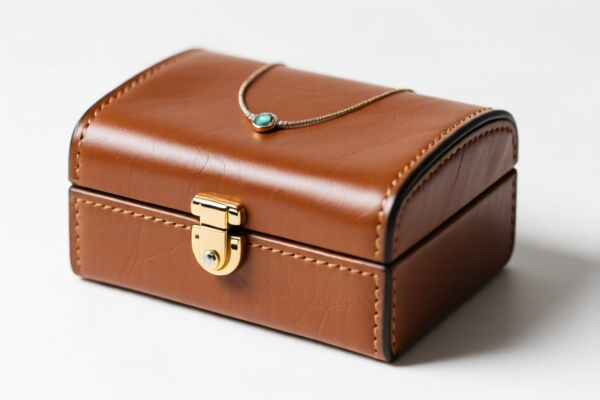
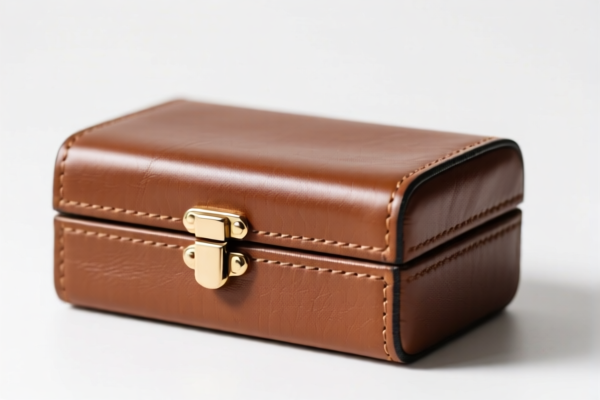
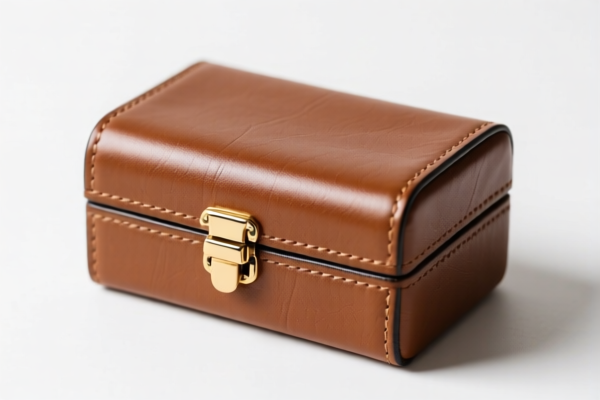
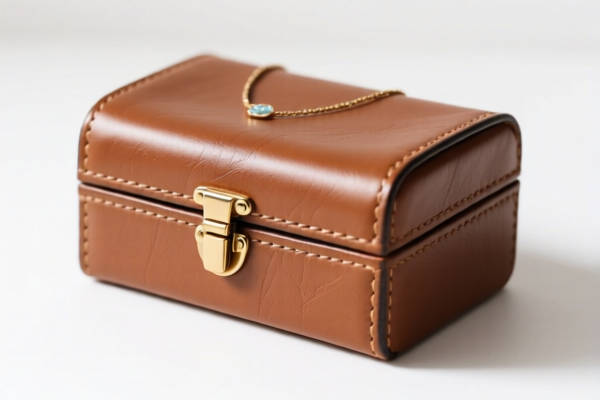
AI Analysis
🧳 Leather Tableware Box (Leather Cases for Utensils)
🌐 HS Code Reference & Customs Clearance Guide | 2026 Latest Tariff Analysis | Professional Entry Strategy
📌 I. Product Definition & Classification: What Exactly is a "Leather Tableware Box"?
A "Leather Tableware Box" typically refers to a portable or stationary container made of leather (or leather-like materials) designed to store cutlery (forks, spoons, knives), napkins, or other dining accessories. In international trade, these items are often categorized under Chapter 42 (Articles of Leather; Saddle Harnesses and Equipment) as they are considered "containers" or "other articles of leather."
Key Distinctions in Classification: 1. Specific Purpose vs. General Use: * If the item is specifically shaped for a niche purpose (e.g., cigar cases, coin purses), it may fall under specific subheadings. * However, for tableware, if it is a rigid or semi-rigid container for carrying or storing items (like cutlery sets), it is generally classified as a "bag or pouch" or "other leather container." 2. Form Factor: * Handheld/Pocket Sizes: Cases small enough to be carried in a pocket or attached to a keychain/purse are classified under 4202.3x (Articles of a kind normally carried in the pocket or in the handbag, e.g., wallets, purses, card holders). * General Storage/Decorative: Larger boxes, trays, or non-portable storage bags are classified under 4205.00 (Other articles of leather).
⚠️ Critical Classification Point:
- If the box is small, portable, and meant for personal carry (like a cutlery roll or small case) → 4202 (Bags/Pouches).
- If the box is larger, non-portable, or used for general storage/decor (like a table organizer) → 4205 (Other Leather Articles).
- Note: Misclassification can lead to significant tariff differences due to "Section XVI" vs. "Section XI" notes, but here both are Section 42. The main differentiator is portability and specific use.
📦 II. HS Code Classification Details (2026 Latest Tariff Reference)
Based on the provided data, here are the applicable HS Codes for Leather Tableware Boxes, categorized by type and usage:
| HS Code | Product Description | Application Scenario | Portability |
|---|---|---|---|
4202.31.60.00 |
Leather containers for hand or pocket use | Small cutlery cases, knife rolls, portable napkin holders | ✅ Yes (Pocket/Hand) |
4202.39.90.00 |
Other leather containers for hand/pocket use | Premium/Pocket-sized tableware sets, high-end gift boxes | ✅ Yes (Pocket/Hand) |
4205.00.10.00 |
Leather articles (Specifically for Tobacco Cigar Cases) | Note: Data lists this as "Leather articles for storage, fits leather tobacco case classification" | ⚠️ N/A (Often specific) |
4205.00.80.00 |
Other leather articles (e.g., tissue boxes, general storage) | Larger table organizers, non-portable decorative boxes, general storage | ❌ No (General/Decor) |
🔍 Key Insight:
-4202.31.60.00and4202.39.90.00are for portable items. If your "Tableware Box" is a small case you can fit in a drawer or carry, use these. -4205.00.80.00is for general leather goods not elsewhere specified. If it’s a stationary table caddy or a large decorative box, use this. -4205.00.10.00is explicitly linked to tobacco/cigar cases in the data. Do NOT use this for tableware unless the product is ambiguously defined and you are arguing for a general "storage" classification, but4205.00.80.00is safer for general storage.
💰 III. 2026 Latest Tariff Rate Breakdown (Including Surtaxes & Policy Surcharges)
✅ Applicable Country: United States (US)
✅ Country of Origin: China (CN)
✅ Effective Date: 2025/2026 (Current Status)
⚠️ Warning: High additional tariffs apply to Chinese leather goods.
🎯 1. 4202.31.60.00 – Leather Containers for Hand/Pocket Use
| Item | Details |
|---|---|
| Base Tariff | 8.0% |
| Section 301 Surcharge | +25.0% |
| IEEPA (Section 122) Surcharge | +10.0% |
| Total Effective Rate | 43.0% |
| Calculation | CIF Value × 43% |
| De Minimis Eligibility | ❌ No (Deny de minimis for Section 301 goods) |
| Legal Basis Path | USITC:4202.31.60.00 → Footnote 9903.88.01 → IEEPA:9903.01.24 |
📌 Explanation:
- This is the most common classification for small, portable leather tableware cases. - 43% total tax is substantial. Importers must factor this into landed cost. - No de minimis exemption applies. Even small shipments are taxed.
🎯 2. 4202.39.90.00 – Other Leather Containers for Hand/Pocket Use
| Item | Details |
|---|---|
| Base Tariff | 20.0% |
| Section 301 Surcharge | +25.0% |
| IEEPA (Section 122) Surcharge | +10.0% |
| Total Effective Rate | 55.0% |
| Calculation | CIF Value × 55% |
| De Minimis Eligibility | ❌ No |
| Legal Basis Path | USITC:4202.39.90.00 → Footnote 9903.88.01 → IEEPA:9903.01.24 |
📌 Warning:
- If customs determines the item is not "standard" pocket goods (e.g., a unusual shape or material), it may be pushed to this higher-rate category. - 55% tax is very high. Ensure the product clearly fits "pocket/handbag" definition (size < ~10-15cm).
🎯 3. 4205.00.10.00 – Leather Articles (Specific Storage)
| Item | Details |
|---|---|
| Base Tariff | 0.0% |
| Section 301 Surcharge | +25.0% |
| IEEPA (Section 122) Surcharge | +10.0% |
| Total Effective Rate | 35.0% |
| Calculation | CIF Value × 35% |
| De Minimis Eligibility | ❌ No |
| Legal Basis Path | USITC:4205.00.10.00 → Footnote 9903.88.01 → IEEPA:9903.01.24 |
📌 Note:
- Although the base rate is 0%, the 35% total is still significant. - This code is primarily for tobacco/cigar cases. Using it for tableware may trigger customs scrutiny or misclassification penalties unless the product is ambiguous.
🎯 4. 4205.00.80.00 – Other Leather Articles (General Storage)
| Item | Details |
|---|---|
| Base Tariff | 0.0% |
| Section 301 Surcharge | +25.0% |
| IEEPA (Section 122) Surcharge | +10.0% |
| Total Effective Rate | 35.0% |
| Calculation | CIF Value × 35% |
| De Minimis Eligibility | ❌ No |
| Legal Basis Path | USITC:4205.00.80.00 → Footnote 9903.88.01 → IEEPA:9903.01.24 |
📌 Best For:
- Larger, non-portable leather tableware organizers, decorative boxes, or bulk storage bags. - Lower tax (35%) compared to pocket-sized items (43-55%). - Recommendation: If the product is not strictly "pocket-sized," use this code to save 8-20% in taxes.
🛠️ IV. Customs Clearance Practical Advice (Avoid Pitfalls)
✅ 1. Preparation Checklist (Mandatory)
| Document | Required | Notes |
|---|---|---|
| ✅ Product Specification | ✔️ | Include dimensions, material (e.g., "Genuine Leather," "PU Leather"), and intended use ("Tableware Storage"). |
| ✅ Photos | ✔️ | Clear images showing the product with cutlery inside, and empty, to prove size/portability. |
| ✅ Commercial Invoice | ✔️ | Must state: "Leather Tableware Box," not just "Leather Case." |
| ✅ Material Declaration | ✔️ | Specify if it’s 100% leather or coated fabric. Affects Chapter 42 vs. 59 classification. |
| ✅ Packing List | ✔️ | Show net weight and dimensions. |
✅ 2. Classification Strategy (Key Tips)
🔥 "Portable vs. Stationary is Key!"
| Scenario | Recommended HS Code | Reason |
|---|---|---|
| Small, foldable cutlery roll | 4202.31.60.00 |
Clearly for pocket/hand carry. |
| Small rigid case for knives | 4202.39.90.00 |
Pocket-sized, premium. |
| Large table caddy/box | 4205.00.80.00 |
Not portable; general storage. |
| Ambiguous "storage bag" | 4205.00.80.00 |
Safer, lower tax rate (35% vs 43%+). |
| Cigar-style case mislabeled | ❌ Avoid 4205.00.10.00 |
High risk of rejection for tableware. |
✅ 3. Special Considerations
| Issue | Advice |
|---|---|
| "Leather-like" Materials | If it’s faux leather (PU, PVC), it may still fall under Chapter 42 if it meets leather-like properties. If not, it might go to Chapter 39 (Plastics) or 59 (Textiles). Check material content. |
| With Metal Cutlery | If sold as a set (Box + Forks), the box usually determines classification if it’s the primary article. If the cutlery is the main value, consider Chapter 82 (Cutlery), but often the leather case is seen as the container. Check with customs. |
| Gift Sets | If boxed as a gift, ensure the invoice clearly separates the leather case if possible, or declare as a single unit. |
| De Minimis | No exemption for China-origin goods under $800 due to Section 301/IEEPA. All shipments are taxed. |
🌍 V. Global Market Comparison (2026)
| Country/Region | Recommended HS Code | Est. Tariff | Notes |
|---|---|---|---|
| 🇺🇸 USA | 4205.00.80.00 (Preferred) |
35% | Best balance of accuracy and cost. |
| 🇺🇸 USA | 4202.31.60.00 |
43% | Only for truly portable items. |
| 🇨🇳 China | 4205.00.80.00 |
8-10% | Low import duty, no Section 301. |
| 🇪🇺 EU | 4205.00.80.00 |
~5-8% | No surtaxes, but VAT applies (20-25%). |
| 🇬🇧 UK | 4205.00.80.00 |
~8% | Post-Brexit tariff applies. |
📌 Conclusion:
- US Market: High tariffs. Opt for4205.00.80.00if the product allows (non-portable).
- China/EU/UK: Much lower duties. Focus on correct material declaration.
📌 VI. Common Errors & Pitfalls (Learn from Others' Mistakes)
❌ Error 1: Classifying a large leather table organizer as 4202.31.60.00 (Pocket Bag)
👉 Consequence: Customs reclassifies to 4205.00.80.00 or higher, plus penalties. Waste of time.
❌ Error 2: Using 4205.00.10.00 (Cigar Case) for Tableware
👉 Consequence: High risk of rejection. Customs may view this as misdeclaration. Stick to 4205.00.80.00.
❌ Error 3: Assuming "Leather" means 100% animal hide
👉 Consequence: If it’s PU, it might be classified under Chapter 39 (Plastics) or 59 (Impregnated Textiles). Check the material!
❌ Error 4: Ignoring IEEPA 10% Surcharge
👉 Consequence: Underpaying taxes by 10%. IRS/CBP will chase you. Always include the 10% IEEPA surcharge in calculations.
✅ Correct Declaration Example:
"Leather Tableware Storage Box, General Use, Non-Portable, Contains 12 Pieces of Cutlery, Made of Genuine Leather, Model XYZ"
HS Code:4205.00.80.00
🎯 VII. Conclusion: Smart Classification Saves Money!
🎯 Key Takeaways:
1. Portability is King: If it fits in your pocket, it’s 4202 (Higher Tax: 43-55%). If it’s for the table, it’s 4205 (Lower Tax: 35%).
2. Avoid Niche Codes: Don’t use 4205.00.10.00 (Cigar) for tableware. Use 4205.00.80.00 (Other Leather Articles) instead.
3. Calculate Landed Cost: With 35-55% total tax, US imports are expensive. Ensure your pricing strategy accounts for this.
4. No De Minimis: Every shipment from China is taxed. Do not rely on $800 exemptions.
💡 Pro Tip:
If you can design the product to be slightly larger and clearly non-portable, you can drop from 43% to 35% tax. A small design change can save 8% on every sale!
✨ Professional Customs Clearance Starts with Accurate Classification!
💼 Every Dollar Saved is a Dollar Earned!
📣 Next Steps:
📞 Consult a Licensed Customs Broker for a Pre-Ruling if your product is borderline.
📝 Document Everything: Photos, specs, and material certs are your best defense.
🚀 Optimize Design: Make it "table-friendly" not "pocket-friendly" to reduce tariffs!
Customer Reviews
About HS Code Classification
The Harmonized System (HS) is an internationally standardized nomenclature developed by the World Customs Organization (WCO) to classify traded products. Over 200 countries use the HS system as the basis for customs tariffs, trade statistics, and import/export regulations.
Each HS code follows a hierarchical structure:
- Chapter (2 digits) — Broad category of goods (e.g., Chapter 84: Machinery and Mechanical Appliances)
- Heading (4 digits) — More specific grouping within the chapter
- Subheading (6 digits) — Internationally standardized breakdown, used by all WCO member countries
- National subdivisions (8-10 digits) — Country-specific extensions for further classification, such as US HTSUS 10-digit codes
Correct HS code classification is essential for smooth customs clearance, accurate duty payment, and compliance with trade regulations. Misclassification can lead to customs delays, overpayment of duties, or penalties.
When importing from CN to US, the applicable tariff rates may include:
- Most-Favored-Nation (MFN) rate — The standard duty rate applied to WTO members
- General rate — Applied to countries without trade agreements
- Trade remedy duties — Additional tariffs such as Section 301 (anti-dumping), Section 232 (national security), or countervailing duties
The information provided on this page is for reference purposes only. For official classification, please consult with your local customs authority or a licensed customs broker.