Leather Tool Belt
CN → US| HS Code | Tariff Rate | Origin | Destination | Doc |
|---|---|---|---|---|
| 4203406000 | 35.0% | CN | US | Official Doc |
| 4205008000 | 35.0% | CN | US | Official Doc |
| 4203300000 | 37.7% | CN | US | Official Doc |
Product Images
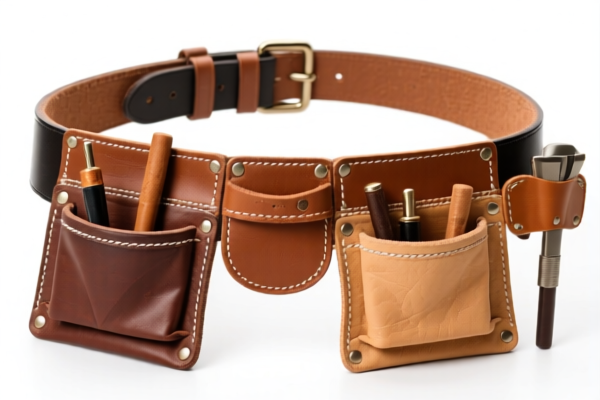
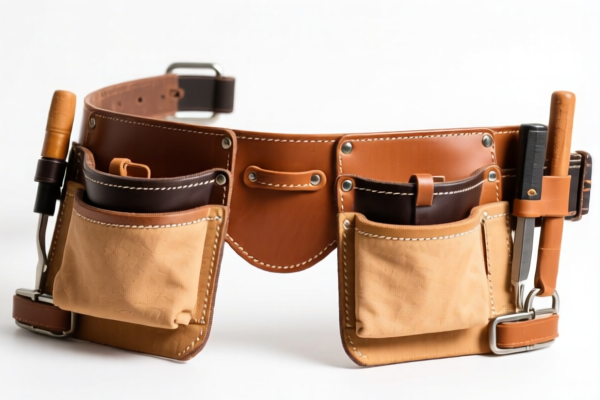
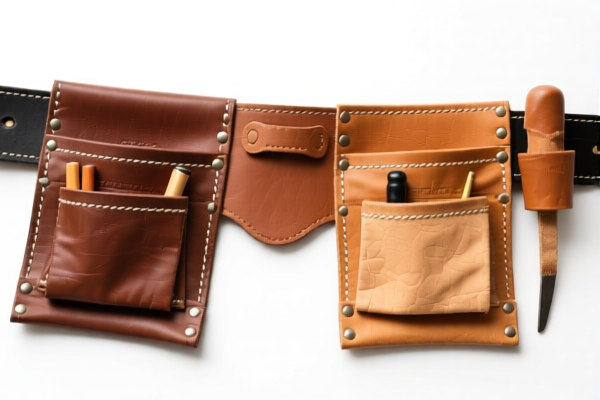
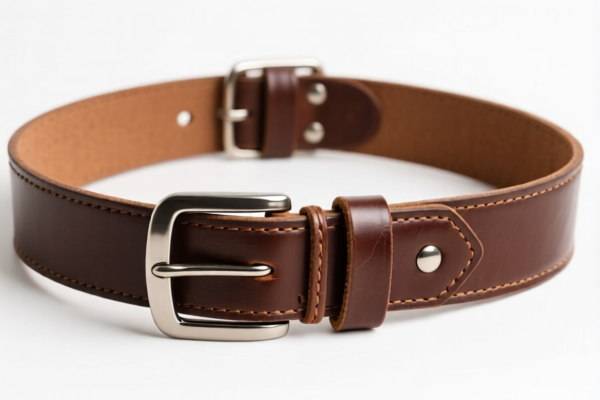
AI Analysis
🧰 Leather Tool Belt (Leather Accessories for Apparel/Industry)
🌐 HS Code Reference & Customs Clearance Guide | 2026 Latest Tariff Analysis | Professional Clearance Strategy
📌 Part I: Product Definition & Classification: What Exactly is a "Leather Tool Belt"?
A Leather Tool Belt is a functional accessory typically worn by artisans, craftsmen, electricians, and tradespeople to carry tools, pouches, and equipment. In international trade, the classification depends heavily on the specific design and intended use (fashion vs. utility) and whether it includes specific hardware like buckles or metal fasteners.
Under the Harmonized System (HS), leather belts and harnesses generally fall under Chapter 42 (Articles of leather; saddlery and harness).
⚠️ Key Distinction Points:
- If the belt is primarily a fashion accessory or simple strap without complex buckle mechanisms → Often 4203.40.
- If the belt is a general leather article (including tool belts without specific buckle classification) → 4205.00.
- If the belt is a leather clothing accessory featuring a specific buckle (带扣) → 4203.30.
📦 Part II: HS Code Classification Details (2026 Latest Tariff Authority Reference)
Based on the provided data, the Leather Tool Belt is classified into three potential HS Codes depending on its structural details. Note that these codes reflect High Tariff Risks due to additional duties.
| HS Code | Product Description | Applicable Scenario | Key Feature |
|--------|----------|--------------------------|
| 4203.40.60.00 | Leather belt, classified as a leather apparel accessory | Standard leather tool belts, simple straps | Basic leather belt |
| 4205.00.80.00 | Leather goods, including other leather articles such as belts | General leather tool belts (generic category) | Broad "Other Leather Articles" |
| 4203.30.00.00 | Leather apparel accessory, buckle belt (带扣腰带) | Tool belts with prominent metal/plastic buckles or fasteners | Contains Buckle (带扣) |
🔍 Critical Reminder:
- The presence of a buckle (带扣) can shift the classification from4205or4203.40to4203.30, which has a higher base tariff (2.7% vs 0%).
- All listed HS Codes are subject to significant additional tariffs (Total 35%-37.7%) due to US-China trade tensions (Section 301 & Section 122).
- Do not classify under footwear or garment chapters (Chapter 61/62); leather belts are strictly Chapter 42.
💰 Part III: 2026 Latest Tariff Rate Breakdown (Including Surtaxes & Policy Surcharges)
✅ Applicable Country: United States (US)
✅ Origin: China (CN)
✅ Effective Time: Current (Post-2025 Trade Policies)
🎯 1. 4203.40.60.00 —— Leather Belt (Leather Apparel Accessory)
| Item | Content |
|---|---|
| Base Tariff | 0.0% |
| Surtax (Section 301) | +25.0% |
| Section 122 Tariff | +10.0% |
| Total Tariff Rate | 35.0% |
| Tax Calculation | CIF Value × 35% |
| De Minimis Eligibility | ❌ Not Eligible (High value/utility items usually excluded) |
| Legal Basis Path | Section 301 → Section 122 → HS:4203.40.60.00 |
📌 Explanation:
- This is the most favorable among the three options provided because the base tariff is 0%.
- However, the 25% Section 301 duty and 10% Section 122 duty are still applied, resulting in a 35% total burden.
🎯 2. 4205.00.80.00 —— Other Leather Articles (Including Belts)
| Item | Content |
|---|---|
| Base Tariff | 0.0% |
| Surtax (Section 301) | +25.0% |
| Section 122 Tariff | +10.0% |
| Total Tariff Rate | 35.0% |
| Tax Calculation | CIF Value × 35% |
| De Minimis Eligibility | ❌ Not Eligible |
| Legal Basis Path | Section 301 → Section 122 → HS:4205.00.80.00 |
📌 Explanation:
- Same rate as4203.40.60.00.
- This code is used when the belt doesn't fit the specific "buckle" definition of 4203.30 but is clearly a leather good.
- Warning: If customs officers determine the belt has a buckle, they may reclassify it to4203.30.00.00.
🎯 3. 4203.30.00.00 —— Leather Apparel Accessory, Buckle Belt
| Item | Content |
|---|---|
| Base Tariff | 2.7% |
| Surtax (Section 301) | +25.0% |
| Section 122 Tariff | +10.0% |
| Total Tariff Rate | 37.7% |
| Tax Calculation | CIF Value × 37.7% |
| De Minimis Eligibility | ❌ Not Eligible |
| Legal Basis Path | Section 301 → Section 122 → HS:4203.30.00.00 |
📌 Explanation:
- This code incurs a 2.7% base tariff in addition to the surtaxes.
- It is classified here if the belt is specifically defined as a "buckle belt" (带扣腰带).
- Total cost is 2.7% higher than the other two options.
🛠️ Part IV: Customs Clearance Practical Advice (Risk Avoidance Guide)
✅ 1. Essential Documentation Checklist (Non-negotiable)
| Document | Required | Explanation |
|---|---|---|
| ✅ Product Specifications | ✔️ | Material (100% Leather), dimensions, weight, buckle material (metal/plastic). |
| ✅ Product Photos | ✔️ | Clear images of the buckle/fastener, stitching, and overall structure. Crucial for distinguishing between 4203.30, 4203.40, and 4205.00. |
| ✅ Commercial Invoice | ✔️ | Must explicitly state "Leather Tool Belt" or "Leather Belt for Tool Carrying". Avoid vague terms like "Leather Accessory". |
| ✅ Packing List | ✔️ | Detail the number of pieces, weight, and packaging type. |
| ✅ Duty Payment Proof | ✔️ | If shipped via DDP, ensure all 35-37.7% duties are accounted for. |
✅ 2. Declaration Tips (Key Strategy)
🔥 “Accurate Description, Correct Code, Avoid Reclassification!”
| Situation | Correct Declaration | Incorrect Practice |
|---|---|---|
| Belt with Metal Buckle | 4203.30.00.00 (Buckle Belt) |
Declare as 4205.00.80.00 to save 2.7% → High Risk of Reclassification & Penalty |
| Simple Leather Strap (No Buckle) | 4203.40.60.00 |
Declare as 4203.30 → Overpaying Tariff |
| General Leather Belt | 4205.00.80.00 |
Vague term "Leather Goods" → Customs Audit Delay |
| Tool Belt with Fabric Pouches | Primary Material Test | Declare as "Textile" → Incorrect Chapter (42 vs 63) |
📌 Note:
- If the tool belt has fabric pockets attached to a leather strap, the classification depends on the essential character. Usually, the leather component determines the classification under Chapter 42.
- Be honest: If the belt has a buckle, declare it as such. Misclassification leads to audits, fines, and delayed shipments.
✅ 3. Special Cases Handling
| Situation | Handling Advice |
|---|---|
| OEM/Custom Design | Provide design drawings showing the buckle mechanism. If the buckle is non-functional (decorative), it may still be classified as 4203.40 or 4205.00. |
| Mixed Materials | If the belt is leather + nylon, ensure the leather is the dominant material. If not, it might fall under Chapter 42 (Leather) or Chapter 63 (Other made-up articles). Stick to Leather for Chapter 42. |
| Sample Shipments | Even for samples, declare correctly. High tariffs apply regardless of quantity. Consider using a freight forwarder who can handle duty accrual. |
🌍 Part V: Global Market Clearance Comparison (2026 Latest)
| Country/Region | Recommended HS Code | Tariff (China Origin) | Certification/Remarks |
|---|---|---|---|
| 🇺🇸 USA | 4203.40.60.00 / 4205.00.80.00 |
35.0% | High tariff due to Section 301 & 122. |
| 🇺🇸 USA | 4203.30.00.00 |
37.7% | Higher if buckle-defined. |
| 🇨🇳 China | 4203.40.60.00 |
0% - 10% | No additional Section 122/301 tariffs. |
| 🇪🇺 EU | 4203.30.00 / 4205.00 |
4.0% - 8.0% | No Section 122/301 tariffs. |
| 🇨🇦 Canada | 4203.40.00 |
0% - 5% | CUSMA may apply if eligible. |
📌 Conclusion:
- USA is the most expensive market for leather belts due to 35-37.7% total tariffs.
- EU and Canada are significantly more cost-effective for leather goods.
- Strategic Suggestion: If targeting the US market, consider tariff engineering (e.g., using fabric as the primary material if allowed) or supply chain diversification (e.g., assembling in a third country like Vietnam or Mexico, if rules of origin are met).
📌 Part VI: Common Errors & Pitfalls (Lessons Learned)
❌ Error 1: Declaring a buckle belt as 4205.00.80.00 to avoid the 2.7% base tariff.
👉 Consequence: Customs reclassifies to 4203.30.00.00 → Back taxes + 2.7% + Penalties.
❌ Error 2: Using vague terms like "Leather Accessory" without specifying "Belt" or "Tool Belt".
👉 Consequence: Customs may delay shipment for clarification, increasing storage fees.
❌ Error 3: Ignoring Section 122 (10%) and Section 301 (25%) in cost calculations.
👉 Consequence: Underquoting, leading to unexpected high costs for the importer.
❌ Error 4: Not providing clear photos of the buckle/fastener.
👉 Consequence: Customs cannot determine if it fits 4203.30 (Buckle) or 4203.40 (Non-buckle) → Audit Risk.
✅ Correct Approach:
"Leather Tool Belt, 100% Cowhide, with Metal Buckle, for Carpenter Use, Model XYZ"
🎯 Part VII: Conclusion: Professional Declaration, Cost Control, Risk Mitigation!
🎯 Remember the Mantra:
🔹 "Base Tariff 0%, Surtax 35%, Buckle Adds 2.7%!"
🔹 "Check the Buckle, Check the Code, Save the 2.7%!"
🔹 "35% Tariff is High, Plan Ahead or Pay the Price!"
📌 Pro Tip:
If your leather tool belts are originating from Vietnam, Mexico, or Thailand, you may apply for IEEPA Exemptions or CUSMA/USMCA Preferences, reducing tariffs to 0%-5%.
Recommendation: Apply for an Advance Ruling (Pre-classification) with US Customs if the design is unique.
📣 Immediate Action:
📞 Contact a professional customs broker + Provide clear product photos + Confirm HS Code pre-classification
🚀 Let your leather tool belts clear customs smoothly, efficiently, and profitably!
✨ Professional Clearance Starts with Accurate Classification!
💼 Every Cent of Your Cost Deserves Precision!
Customer Reviews
About HS Code Classification
The Harmonized System (HS) is an internationally standardized nomenclature developed by the World Customs Organization (WCO) to classify traded products. Over 200 countries use the HS system as the basis for customs tariffs, trade statistics, and import/export regulations.
Each HS code follows a hierarchical structure:
- Chapter (2 digits) — Broad category of goods (e.g., Chapter 84: Machinery and Mechanical Appliances)
- Heading (4 digits) — More specific grouping within the chapter
- Subheading (6 digits) — Internationally standardized breakdown, used by all WCO member countries
- National subdivisions (8-10 digits) — Country-specific extensions for further classification, such as US HTSUS 10-digit codes
Correct HS code classification is essential for smooth customs clearance, accurate duty payment, and compliance with trade regulations. Misclassification can lead to customs delays, overpayment of duties, or penalties.
When importing from CN to US, the applicable tariff rates may include:
- Most-Favored-Nation (MFN) rate — The standard duty rate applied to WTO members
- General rate — Applied to countries without trade agreements
- Trade remedy duties — Additional tariffs such as Section 301 (anti-dumping), Section 232 (national security), or countervailing duties
The information provided on this page is for reference purposes only. For official classification, please consult with your local customs authority or a licensed customs broker.