Leather Travel Organizer Bag
CN → US| HS Code | Tariff Rate | Origin | Destination | Doc |
|---|---|---|---|---|
| 6307909891 | 24.5% | CN | US | Official Doc |
| 4202923131 | 52.6% | CN | US | Official Doc |
| 6307909875 | 24.5% | CN | US | Official Doc |
| 3923290000 | 38.0% | CN | US | Official Doc |
| 4202923120 | 52.6% | CN | US | Official Doc |
Product Images
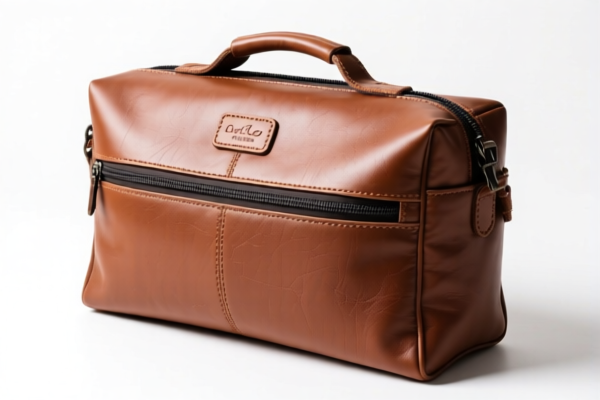
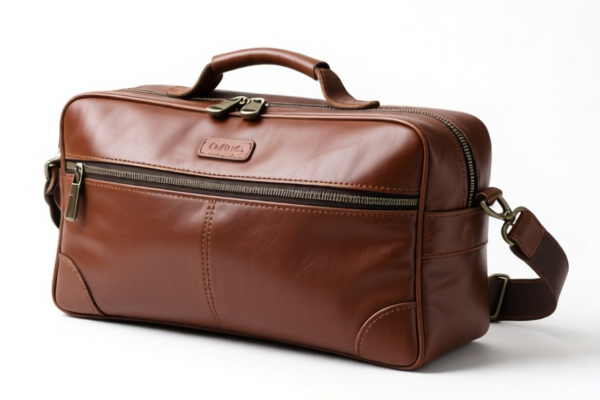
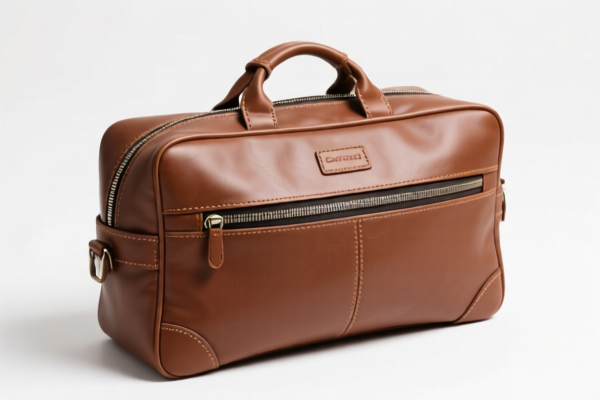
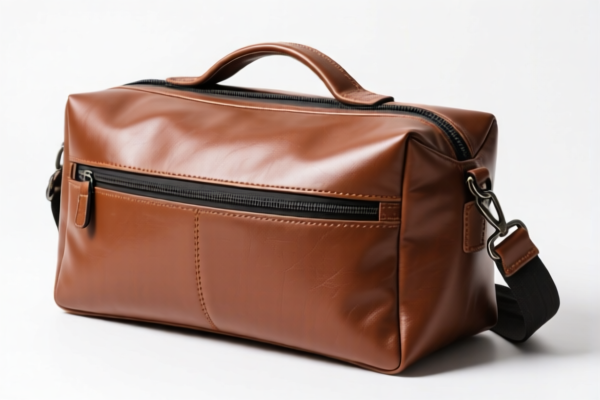
AI Analysis
👜 Leather Travel Organizer Bag (旅行收纳包)
🌐 HS Code Reference & Customs Clearance Guide | 2026 Latest Tariff Breakdown | Professional Entry Strategies
📌 I. Product Definition & Classification: What is a "Leather Travel Organizer"?
A Leather Travel Organizer Bag is a finished consumer good designed for storage and organization during travel. In international trade, its classification depends heavily on its material composition and form. While the name specifies "Leather," customs authorities may classify these goods under Textile or Plastic headings if the material structure or specific sub-category logic dictates, especially when dealing with "兜底" (fallback) categories for specific components or mixed-material goods.
⚠️ Key Distinction:
- Textile-Based Organizers: If the bag is constructed primarily from woven fabric, nylon, or polyester (even with leather accents), it often falls under Chapter 63 (Other Made Up Articles) or Chapter 42 (Articles of Leather/Reconstituted Leather).
- Plastic/PVC-Based Organizers: If the bag is made of plastic sheeting or synthetic fibers resembling plastic, it may fall under Chapter 39 (Plastics and Articles Thereof).
- "Other" Categories: Some HS codes act as "catch-all" for finished goods that don't fit neatly into primary categories, relying on "fallback logic" for textiles or plastics.
📦 II. HS Code Classification Details (2026 Latest Tariff Authority对照)
Based on the provided data, here are the potential HS Codes and their rationale:
| HS Code | Summary / Logic | Material Inference | Total Tax Rate |
|---|---|---|---|
6307.90.98.91 |
Falls under "Other Made Up Articles" (Textile). Fallback logic for finished consumer goods not specified elsewhere. | Textile | 24.5% |
4202.92.31.31 |
Matches Travel Bag use & form. Textile exterior material inferred. | Textile | 52.6% |
6307.90.98.75 |
Matches "Finished Consumer Good Bag". Fallback logic for other made-up articles. | Textile | 24.5% |
3923.29.00.00 |
Form matches "Pouch/Sack" characteristics. Inferred material: Plastic or Synthetic Fiber. No conflict with other plastic categories. | Plastic/Synthetic | 38.0% |
4202.92.31.20 |
Matches Travel Organizer use & form. Inferred material: Textile or Plastic Film. | Textile/Plastic | 52.6% |
🔍 Important Note:
- Code4202.92.31.31and4202.92.31.20are the most precise matches for Travel Bags made of textile materials.
- Codes6307.90.98.91and6307.90.98.75are "fallback" categories for textile goods, often resulting in lower duties than specific bag codes.
- Code3923.29.00.00is relevant if the bag is made of plastic sheeting or has significant plastic components, treating it as a "pouch" rather than a traditional "bag."
💰 III. 2026 Latest Tariff Rate Breakdown (Including Surtaxes & Policy Surcharges)
✅ Applicable Country: United States (US)
✅ Origin: China (CN)
✅ Effective Date: From November 10, 2025 (including subsequent imports)
🎯 1. Textile-Based Categories (6307.90.98.91, 6307.90.98.75)
| Item | Detail |
|---|---|
| Basic Tariff | 7.0% |
| Section 301 Surcharge | 7.5% |
| IEEPA Surcharge (122 Clause) | 10.0% |
| Total Effective Rate | 24.5% |
| Calculation | CIF Value × 24.5% |
| De Minimis Exemption | ❌ Not Eligible (deny_de_minimis) |
| Legal Basis | Base Tariff → Section 301 → IEEPA 122 Clause |
📌 Explanation:
- These codes benefit from a lower base tariff (7%) compared to specific bag codes.
- The 122 Clause IEEPA surcharge (10%) is a significant added cost for Chinese-origin goods.
- Total 24.5% is moderate but still substantial.
🎯 2. Specific Travel Bag Categories (4202.92.31.31, 4202.92.31.20)
| Item | Detail |
|---|---|
| Basic Tariff | 17.6% |
| Section 301 Surcharge | 25.0% |
| IEEPA Surcharge (122 Clause) | 10.0% |
| Total Effective Rate | 52.6% |
| Calculation | CIF Value × 52.6% |
| De Minimis Exemption | ❌ Not Eligible (deny_de_minimis) |
| Legal Basis | Base Tariff → Section 301 (25%) → IEEPA 122 Clause |
📌 Explanation:
- These are high-duty codes due to a high base tariff (17.6%) and the maximum Section 301 surcharge (25%).
- Total 52.6% is extremely high. Misclassification here can drastically increase costs.
- Even if the bag is labeled "Leather," if customs determines the exterior is textile, these codes may apply.
🎯 3. Plastic/Pouch Category (3923.29.00.00)
| Item | Detail |
|---|---|
| Basic Tariff | 3.0% |
| Section 301 Surcharge | 25.0% |
| IEEPA Surcharge (122 Clause) | 10.0% |
| Total Effective Rate | 38.0% |
| Calculation | CIF Value × 38.0% |
| De Minimis Exemption | ❌ Not Eligible (deny_de_minimis) |
| Legal Basis | Base Tariff → Section 301 → IEEPA 122 Clause |
📌 Explanation:
- Despite a low base tariff (3%), the Section 301 surcharge (25%) brings the total to 38.0%.
- This code is applicable if the bag is made of plastic materials or treated as a pouch.
- 38.0% is lower than the textile bag codes (52.6%) but higher than the textile fallback codes (24.5%).
🛠️ IV. Customs Clearance Practical Advice (Pitfall Avoidance Guide)
✅ 1. Preparation Checklist (Essential Documents)
| Document | Required | Notes |
|---|---|---|
| ✅ Product Specification Sheet | ✔️ | Must detail material composition (e.g., 100% Polyester, PVC, Leather) |
| ✅ High-Resolution Photos | ✔️ | Show exterior material, interior lining, zippers, and overall form |
| ✅ Material Test Report | ✔️ | Crucial: Proof that exterior is Textile vs. Plastic vs. Leather |
| ✅ Commercial Invoice | ✔️ | Accurate description: "Leather Travel Organizer Bag" |
| ✅ Packing List | ✔️ | Consistent with invoice and physical goods |
| ✅ Certificate of Origin | ✔️ | Required for origin verification and surcharge application |
📌 Critical Point:
- "Leather" in the name does not guarantee Chapter 42. If the main material is textile, customs may still apply Chapter 63 (Fallback) or Chapter 42 (Bag) based on structure.
- Material Composition Proof is the most important document to avoid misclassification.
✅ 2. Classification Strategy (Key Rules)
| Scenario | Recommended HS Code | Risk Level |
|---|---|---|
| Bag made of Textile (Nylon/Polyester) with Leather accents | 4202.92.31.31 or 6307.90.98.91 |
Medium Choose 6307 for lower tax if structure allows; 4202 if it strictly fits "Bag" definition. |
| Bag made of Plastic/PVC | 3923.29.00.00 |
Low Clear fit for "Plastic Pouch." |
| Bag made of Genuine Leather | 4202.92.31.31 |
Medium Check if customs accepts "Leather" as primary material for Chapter 42. |
| Mixed Material (Textile Body + Leather Trim) | 6307.90.98.91 |
Low Fallback category often used for mixed goods where textile dominates. |
🔥 "Classification Mantra":
"Material First, Form Second, Fallback for Safety, Tax for Profit!"
✅ 3. Special Cases & Handling
| Situation | Handling Advice |
|---|---|
| "Leather" vs. "Faux Leather" | If it’s PU leather (plastic-based), it may fall under 3923 or 4202. Clarify material in specs. |
| Small Cosmetic Pouches | If very small and made of plastic, 3923.29.00.00 is best. |
| Large Travel Organizers | Likely to be classified as 4202 (Bag) if structure is rigid. |
| De Minimis Exemption | ❌ None of these codes qualify for de minimis exemption under current US rules for Chinese goods. |
🌍 V. Global Market Comparison (2026 Latest)
| Country/Region | Recommended HS Code | Estimated Duty | Certification | Notes |
|---|---|---|---|---|
| 🇺🇸 USA | 4202.92.31.31 |
52.6% | None | Highest duty due to 301 + IEEPA. |
| 🇨🇳 China | 4202.92.31.31 |
~5-10% | None | Lower baseline duty. |
| 🇪🇺 EU | 4202.92.31.31 |
~0-4% | CE (if applicable) | No heavy surcharges. |
| 🇬🇧 UK | 4202.92.31.31 |
~0-5% | UKCA | Post-Brexit changes. |
📌 Conclusion:
- USA is the most challenging market for Travel Organizers due to high surcharges (up to 52.6%).
- EU/UK offer more favorable rates but require compliance with local standards.
📌 VI. Common Errors & Pitfall Guide (Lessons Learned)
❌ Error 1: Assuming "Leather" means Chapter 42 always applies.
👉 Result: If the bag is textile-based, customs may still use 4202 or 6307, leading to misclassification disputes.
❌ Error 2: Using 3923 for a textile bag to save taxes.
👉 Result: Customs may reject this as "Plastic" when it’s textile, leading to penalties and back taxes.
❌ Error 3: Ignoring the 122 Clause IEEPA Surcharge.
👉 Result: Underestimating total cost by 10% on every shipment.
❌ Error 4: Not providing Material Test Reports.
👉 Result: Customs delays for additional scrutiny or rejection.
✅ Correct Practice:
Always provide material composition details (e.g., "Exterior: 100% Nylon, Interior: Polyester, Trim: PU Leather") to support the chosen HS Code.
🎯 VII. Conclusion: Professional Classification, Cost Optimization
🎯 Key Takeaway:
- Textile Fallback (
6307): 24.5% – Best for mixed/textile goods.- Plastic Pouch (
3923): 38.0% – Best for PVC/Plastic bags.- Specific Bag (
4202): 52.6% – Highest risk, use only if strictly applicable.
📌 Pro Tip:
- For US imports, prioritize
6307.90.98.91if the product structure allows, as it offers the lowest total duty (24.5%).- Apply for Advance Rulings from US Customs and Border Protection (CBP) to lock in the classification and avoid post-clearance audits.
📣 Immediate Action:
📞 Consult Customs Broker + Provide Material Specs + Request HS Code Pre-Ruling
🚀 Minimize Duty, Maximize Profit, Ensure Smooth Clearance!
✨ Professional Classification Starts with Precision!
💼 Every Dollar Saved on Duty is Pure Profit!
Customer Reviews
About HS Code Classification
The Harmonized System (HS) is an internationally standardized nomenclature developed by the World Customs Organization (WCO) to classify traded products. Over 200 countries use the HS system as the basis for customs tariffs, trade statistics, and import/export regulations.
Each HS code follows a hierarchical structure:
- Chapter (2 digits) — Broad category of goods (e.g., Chapter 84: Machinery and Mechanical Appliances)
- Heading (4 digits) — More specific grouping within the chapter
- Subheading (6 digits) — Internationally standardized breakdown, used by all WCO member countries
- National subdivisions (8-10 digits) — Country-specific extensions for further classification, such as US HTSUS 10-digit codes
Correct HS code classification is essential for smooth customs clearance, accurate duty payment, and compliance with trade regulations. Misclassification can lead to customs delays, overpayment of duties, or penalties.
When importing from CN to US, the applicable tariff rates may include:
- Most-Favored-Nation (MFN) rate — The standard duty rate applied to WTO members
- General rate — Applied to countries without trade agreements
- Trade remedy duties — Additional tariffs such as Section 301 (anti-dumping), Section 232 (national security), or countervailing duties
The information provided on this page is for reference purposes only. For official classification, please consult with your local customs authority or a licensed customs broker.