Leather Trimming Waste (for Gloves)
CN → US| HS Code | Tariff Rate | Origin | Destination | Doc |
|---|---|---|---|---|
| 4112003060 | 12.0% | CN | US | Official Doc |
| 4112003030 | 12.0% | CN | US | Official Doc |
Product Images
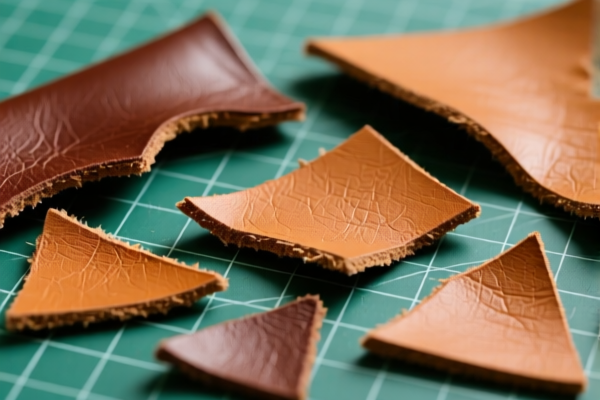

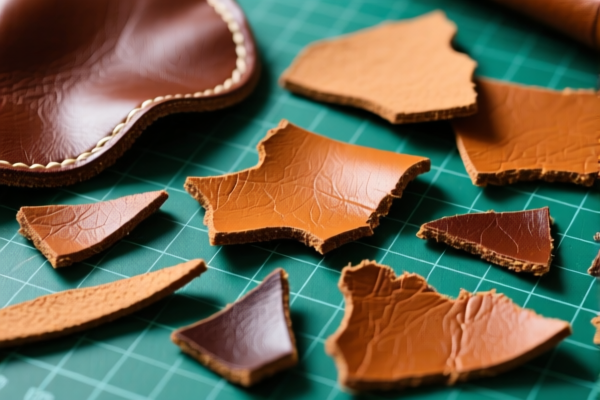
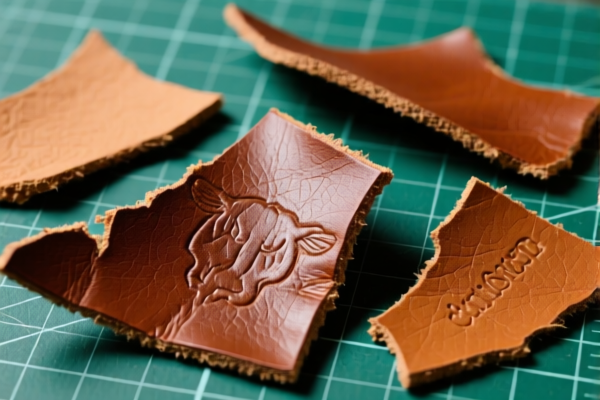
AI Analysis
🧤 Leather Trimming Waste (for Gloves)
🌐 HS Code Reference & Customs Clearance Guide | 2026 Latest Tariff Analysis | Professional Clearance Strategy
📌 I. Product Definition & Classification: Understanding "Leather Waste"
Leather trimming waste, specifically designated for gloves, refers to the scrap pieces, off-cuts, or remnants of leather remaining after the cutting and shaping of glove components. In international trade, these are not considered "finished goods" but rather by-products or raw materials for recycling/re-processing.
However, classification is strict. The key distinction lies in the state of preparation: * Tanned/Prepared Leather Scraps: If the leather has already been tanned, crusted, or further prepared, it falls under Chapter 41. * Raw/Hides: If it is unfinished raw skin, it would fall under Chapter 41 heading 4103-4104 (but rarely called "trimming waste" in commercial invoices).
⚠️ Critical Distinction:
- If the material is sheep or lamb leather (common for gloves) that is tanned/prepared but not fancy/sole leather, it falls under Heading 4112.
- Even if it is "waste" or "trimming," if it retains the characteristics of prepared leather (pliable, tanned), it is classified as Leather, not as general textile waste or industrial scrap (Chapter 53/56).
📦 II. HS Code Classification Details (2026 Latest Tariff Authoritative Comparison)
Based on the provided data, the specific HS codes for Sheep or Lamb Leather Trimming Waste (prepared, without wool) are:
| HS Code | Product Description | Application Scenario | Wool Status |
|---|---|---|---|
4112.00.30.60 |
Leather further prepared after tanning... of sheep or lamb, without wool on... Not fancy Other | General leather scraps, trimmings not specifically for garments, mixed-grade off-cuts | ✅ No Wool |
4112.00.30.30 |
Leather further prepared after tanning... of sheep or lamb, without wool on... Not fancy Garment | Trimmings specifically identified or intended for garment/glove manufacturing, uniform-grade off-cuts | ✅ No Wool |
🔍 Key Insight:
- "Without Wool" is Crucial: If the sheepskin still has wool attached, it belongs to heading 4104 or 4106. These codes explicitly state "without wool on."
- "Garment" vs. "Other":
- Use4112.00.30.30if the trimmings are specifically cut for or used in garment/glove production (often implies higher quality or specific shape).
- Use4112.00.30.60for general leather scraps, mixed sizes, or non-garment specific trimmings.
- Not Fancy: These are not high-end decorative leathers. They are standard prepared leathers.
💰 III. 2026 Latest Tariff Rate Details (Including Additional Taxes)
✅ Applicable Country: United States (US)
✅ Origin: China (CN) (Assumed based on typical trade context, verify if otherwise)
✅ Effective Date: Current 2026 Rates
🎯 1. 4112.00.30.60 – Sheep/Lamb Leather Trimmings (Other)
| Item | Content |
|---|---|
| Basic Tariff Rate | 0.0% |
| Additional Tariff (Section 301) | 0.0% |
| IEEPA Additional Tariff | 0.0% |
| Total Tariff Rate | 0.0% |
| Tax Calculation | CIF Value × 0% = $0 |
| De Minimis Eligibility | ✅ Yes (If value < $800, generally duty-free; if >$800, still 0% duty) |
| Legal Basis Path | USITC:4112.00.30.60 → FOOTNOTE:None (No 301/IEEPA liability for this specific subheading) |
📌 Explanation:
- Zero Duty Advantage: Unlike electronics or steel, prepared sheep/lamb leather (non-fancy) currently enjoys 0% total tariff in the US.
- No 301 Tariff: This specific HS code is exempt from the 25% Section 301 tariffs that apply to many other Chinese goods.
- No IEEPA Surcharge: No additional 10% or 25% emergency powers tariffs apply.
- Result: Highly competitive duty rate. This makes importing leather scraps for recycling or re-processing very cost-effective.
🎯 2. 4112.00.30.30 – Sheep/Lamb Leather Trimmings (Garment)
| Item | Content |
|---|---|
| Basic Tariff Rate | 0.0% |
| Additional Tariff (Section 301) | 0.0% |
| IEEPA Additional Tariff | 0.0% |
| Total Tariff Rate | 0.0% |
| Tax Calculation | CIF Value × 0% = $0 |
| De Minimis Eligibility | ✅ Yes |
| Legal Basis Path | USITC:4112.00.30.30 → FOOTNOTE:None |
📌 Note:
- Identical tax treatment to...30.60.
- The distinction is purely descriptive/functional for customs inventory, not for tax purposes.
- Total Cost Impact: Zero Duties. This is a major advantage for glove manufacturers sourcing trimmings.
🛠️ IV. Customs Clearance Practical Advice (Real-World Pitfall Guide)
✅ 1. Required Documentation Checklist
| Document | Must Provide | Description |
|---|---|---|
| ✅ Commercial Invoice | ✔️ | Must clearly state "Leather Trimming Waste, Sheep/Lamb, Tanned, No Wool" |
| ✅ Packing List | ✔️ | Detail weight, piece count, and condition (e.g., "mixed sizes," "cut scraps") |
| ✅ Material Composition Statement | ✔️ | Confirm: 100% Sheep/Lamb Leather, Tanned, No Wool, No Suede/Fancy Finish |
| ✅ Photos of Goods | ✔️ | Show that material is indeed scrap/trimmings, not finished gloves or raw hides |
| ✅ HS Code Pre-Ruling (Optional but Recommended) | ✔️ | To confirm 4112.00.30.30 vs .60 with CBP |
| ✅ Bill of Lading/Air Waybill | ✔️ | Ensure no misleading descriptions like "Glove Parts" which might trigger different reviews |
⚠️ Critical:
- Do NOT describe as "Raw Hides" or "Furs" → This leads to misclassification and penalties.
- Do NOT claim "Finished Gloves" → These are wastes/trimmings, not finished products.
✅ 2. Declaration Tips (Key Mnemonic)
🔥 "Tanned, No Wool, Sheeplamb, Zero Duty!"
| Situation | Correct Declaration | Wrong Practice |
|---|---|---|
| Sheep leather scraps for gloves | 4112.00.30.30 |
Declare as "Textile Waste" → Wrong Chapter, Penalty |
| Mixed leather scraps (some wool) | Do NOT use 4112.00.30 | Must separate wool-on vs wool-off → Mixed batch may be rejected |
| Fancy/Embossed Leather Scraps | Do NOT use 4112.00.30 | Must use heading 4114 or other fancy leather codes → Higher duty? (Check current rates) |
| Finished Gloves | Wrong HS Entirely | Gloves are Chapter 42 or 61/62 → Different rules |
📌 Key Point:
- "Without Wool" is non-negotiable. If any wool is attached, it is not Heading 4112. It becomes 4104/4106, which may have different duty rates.
- "Garment" (.30) vs "Other" (.60): If you are exporting specifically for glove making, use.30. If it’s general scrap, use.60. Both have 0% duty, so the main difference is compliance accuracy.
✅ 3. Special Handling for Waste/Scrap
| Scenario | Recommendation |
|---|---|
| High Volume Scrap | Ensure packaging is clean, dry, and free of contaminants (oil, chemicals) to avoid USDA/APHIS rejection if mixed with plant material |
| Mixed Species | Clearly separate sheep/lamb from cow/goat. Cow leather is Heading 4110 or 4112 but different subheadings. Mixing can cause valuation disputes |
| Recycling Intent | Declare as "Raw Material for Leather Re-graining" or "Scrap for Recycling" to justify commercial invoice value (often lower than finished goods) |
| Country of Origin | Even if from China, 0% duty applies. No need for complex FTAs, but ensure COO is accurate to avoid fraud flags |
🌍 V. Global Market Comparison (2026 Latest)
| Country/Region | Recommended HS Code | Tariff (China Origin) | Certification | Notes |
|---|---|---|---|---|
| 🇺🇸 USA | 4112.00.30.30 / .60 |
0.0% | None | Best Duty-Free Rate for this item |
| 🇪🇺 EU | 4112 10 90 | ~4% | REACH (if treated with chemicals) | Slightly higher than US |
| 🇨🇳 China | 4112 10 00 | 0% | None | Domestic trade or re-export |
| 🇬🇧 UK | 4112 10 90 | ~4% | UKCA | Post-Brexit rules |
| 🇯🇵 Japan | 4112 10 00 | 5.5% | None | Higher duty than US |
📌 Conclusion:
- The US market offers the best duty advantage (0%) for sheep/lamb leather trimmings.
- This is a strategic advantage for glove manufacturers importing scraps from China for recycling or re-cutting.
📌 VI. Common Mistakes & Pitfalls (Blood Lessons)
❌ Mistake 1: Declaring as "Textile Waste" or "Plastic Scrap"
👉 Consequence: Misclassification → Penalty + Back Duties (Textiles may have different quotas/duties)
❌ Mistake 2: Ignoring the "Without Wool" Clause
👉 Consequence: If wool is present, HS Code changes to 4104/4106 → Potential Duty + Inspection
❌ Mistake 3: Over-Valuing Scrap
👉 Consequence: CBP may question why "scrap" is priced near "finished leather" → Audit Risk
❌ Mistake 4: Mixing Fancy and Non-Fancy Leather
👉 Consequence: "Fancy" leather may fall under Heading 4114 with different duties → Clear Separation Required
✅ Correct Practice:
"Sheep Leather Trimmings, Tanned, Dressed, Without Wool, Cut for Glove Manufacturing, HS 4112.00.30.30"
🎯 VII. Conclusion: Professional Clearance, Cost Optimization!
🎯 Remember the Mnemonic:
🔹 "Tanned, No Wool, Sheep/Lamb, 0% Duty!"
🔹 "Garment vs Other, Both Zero, But Be Accurate!"
🔹 "Scrap is Raw Material, Declare as Such, Avoid Penalties!"
📌 Pro Tip:
If you are importing large volumes of leather trimmings, consider applying for a Binding Ruling from CBP to confirm the
.30vs.60distinction, although both are 0%, accuracy prevents future disputes.
Ensure your supplier provides a Material Safety Data Sheet (MSDS) if the leather was treated with any chemicals, to comply with environmental regulations.
📣 Immediate Action:
📞 Verify "Without Wool" status with your supplier
📄 Prepare Invoice with Exact HS Code4112.00.30.30
🚀 Leverage 0% Duty to Maximize Margins on Leather Recycling!
✨ Professional Clearance Starts with Precise Classification!
💼 Your Cost Savings Are Worth Every Detail!
Customer Reviews
About HS Code Classification
The Harmonized System (HS) is an internationally standardized nomenclature developed by the World Customs Organization (WCO) to classify traded products. Over 200 countries use the HS system as the basis for customs tariffs, trade statistics, and import/export regulations.
Each HS code follows a hierarchical structure:
- Chapter (2 digits) — Broad category of goods (e.g., Chapter 84: Machinery and Mechanical Appliances)
- Heading (4 digits) — More specific grouping within the chapter
- Subheading (6 digits) — Internationally standardized breakdown, used by all WCO member countries
- National subdivisions (8-10 digits) — Country-specific extensions for further classification, such as US HTSUS 10-digit codes
Correct HS code classification is essential for smooth customs clearance, accurate duty payment, and compliance with trade regulations. Misclassification can lead to customs delays, overpayment of duties, or penalties.
When importing from CN to US, the applicable tariff rates may include:
- Most-Favored-Nation (MFN) rate — The standard duty rate applied to WTO members
- General rate — Applied to countries without trade agreements
- Trade remedy duties — Additional tariffs such as Section 301 (anti-dumping), Section 232 (national security), or countervailing duties
The information provided on this page is for reference purposes only. For official classification, please consult with your local customs authority or a licensed customs broker.