Leather and Faux Leather Products
CN → US| HS Code | Tariff Rate | Origin | Destination | Doc |
|---|---|---|---|---|
| 4205001000 | 35.0% | CN | US | Official Doc |
| 4203406000 | 35.0% | CN | US | Official Doc |
| 4202219000 | 44.0% | CN | US | Official Doc |
| 4202110090 | 43.0% | CN | US | Official Doc |
Product Images
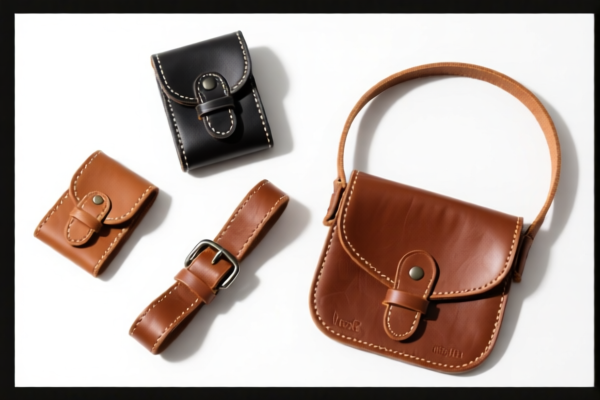
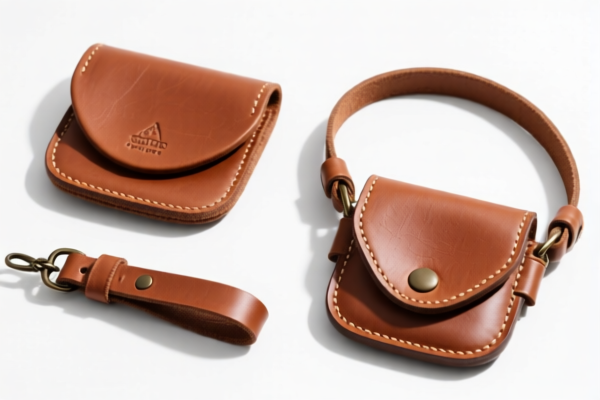
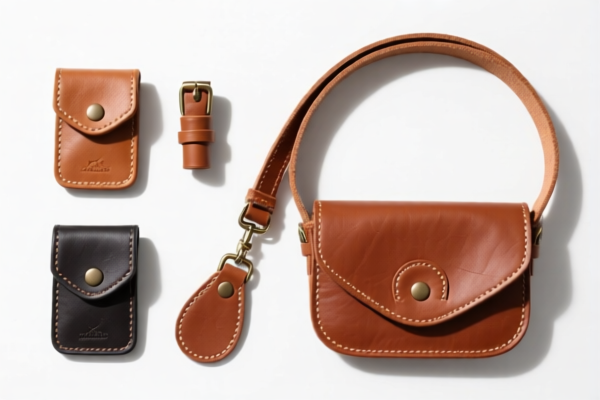
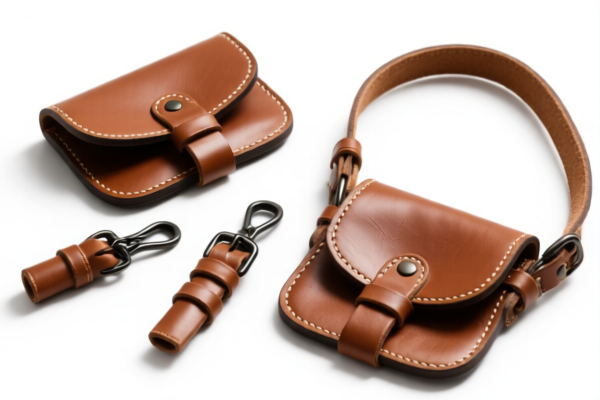
AI Analysis
🧥 Leather & Faux Leather Products: HS Code Classification & Duty Strategy (US Market)
🌐 HS Code Reference & Customs Clearance Guide | 2026 Latest Tariff Analysis | Professional Clearance Strategy
📌 I. Product Definition: What Are "Leather Products"?
In international trade, "Leather Products" (including genuine leather and faux leather/synthetic leather) is a broad category governed primarily by Chapter 42 of the Harmonized System. The classification depends heavily on: 1. Material Composition: Genuine leather vs. Synthetic/Faux leather. 2. End Use: Clothing accessories, luggage, handbags, or general articles. 3. Structure: Is it a finished article or a raw material?
⚠️ Key Distinction:
- Leather Articles of Apparel (e.g., belts, gloves) → Generally fall under 4203.
- Luggage, Handbags, Suitcases → Generally fall under 4202.
- General Leather Articles (no specific use) → Fall under 4205 (Other articles) or 4203.99 as a residual category.
📦 II. HS Code Classification Details (Based on Provided Data)
The following HS codes are derived from the input data for "Leather and Faux Leather Products," tailored for imports into the United States.
| HS Code | Product Description | Key Matching Criteria | Primary Use Case |
|---|---|---|---|
| 4205.00.10.00 | Other articles of leather or composition leather | Material matches "Leather"; General "Other" category; No specific use conflict. | General leather goods (e.g., wallets, keychains, leather straps) not classified elsewhere. |
| 4203.40.60.00 | Other articles of apparel clothing accessories, of leather or composition leather | Material: "Leather" matches exactly. Use: "Apparel Accessories." | Belts, gloves, harnesses, fashion accessories for clothing. |
| 4202.21.90.00 | Trunks, suitcases, vanity cases, etc. with outer surface of leather | Material: "Leather" matches. Form: "Articles" inferred as bags/luggage. | Handbags, purses, cosmetic bags, small leather luggage. |
| 4202.11.00.90 | Trunks, suitcases, handbags with outer surface of leather (other) | Material: "Leather" matches. Form: General "Other" leather articles under luggage heading. | Broad category for leather handbags/luggage not specified in other subheadings. |
🔍 Critical Note:
- "Faux Leather" (Synthetic Leather): In many HS codes (like 4202 and 4203), synthetic leather is often treated similarly to genuine leather for classification purposes, but duty rates may vary depending on specific trade agreements. The provided data assumes "Leather" covers both or is interpreted broadly for matching.
- "Other" Categories (4205, 4202.11.00.90): These are residual classifications. If your product fits a more specific description (e.g., a belt → 4203.40), you must use the specific code to avoid misclassification penalties.
💰 III. 2026 US Tariff Rate Breakdown (Detailed)
✅ Applicable Country: United States (US)
✅ Origin: China (CN) (Assumed based on "122 Clause" and typical trade context in data)
✅ Effective Date: Current rates include Section 301 and IEEPA surcharges.
🎯 1. 4205.00.10.00 & 4203.40.60.00
Product: General Leather Articles / Apparel Accessories
| Item | Rate | Explanation |
|---|---|---|
| Base MFN Rate | 0.0% | Standard Most Favored Nation tariff for many leather articles is often 0% or low. |
| Section 301 Surcharge | +25.0% | Trump-era/Biden-administration tariffs on Chinese goods. |
| IEEPA (Section 122) | +10.0% | Note: Data specifies "122 Clause Tariff 10%". This likely refers to a specific trade remedy or emergency provision. |
| Total Duty Rate | 35.0% | 0% + 25% + 10% |
| Calculation | CIF Value × 35% | Ad valorem duty. |
| De Minimis Exemption | ❌ Not Eligible | Section 301 and IEEPA tariffs generally cannot be avoided via $800 de minimis (if applicable under current enforcement). |
📌 Legal Path:
USITC:4205.00.10.00/USITC:4203.40.60.00→USITC Footnote: 9903.88.01(Section 301) →IEEPA: 10% surcharge.
🎯 2. 4202.21.90.00
Product: Handbags/Luggage with Leather Outer Surface
| Item | Rate | Explanation |
|---|---|---|
| Base MFN Rate | 9.0% | Higher base duty for specific luggage/handbag types. |
| Section 301 Surcharge | +25.0% | Same 301 tariff applied. |
| IEEPA (Section 122) | +10.0% | Additional 10% surcharge. |
| Total Duty Rate | 44.0% | 9% + 25% + 10% |
| Calculation | CIF Value × 44% | Significant cost increase. |
📌 Why Higher?:
Handbags and personal carry items often face higher base duties than general leather accessories or apparel accessories. This is a common trend in US tariffs.
🎯 3. 4202.11.00.90
Product: Other Leather Handbags/Luggage
| Item | Rate | Explanation |
|---|---|---|
| Base MFN Rate | 8.0% | Slightly lower base rate than 4202.21. |
| Section 301 Surcharge | +25.0% | Standard 301 surcharge. |
| IEEPA (Section 122) | +10.0% | Additional 10% surcharge. |
| Total Duty Rate | 43.0% | 8% + 25% + 10% |
| Calculation | CIF Value × 43% |
📌 Comparison:
The difference between4202.21.90.00(44%) and4202.11.00.90(43%) is marginal but critical for high-volume shipments. A 1% difference on a $100,000 shipment equals $1,000 in duties.
🛠️ IV. Customs Clearance Practical Advice
✅ 1. Documentation Checklist (Mandatory)
| Document | Requirement | Why? |
|---|---|---|
| Commercial Invoice | Must clearly state "Leather" or "Synthetic Leather" and "Country of Origin: China". | Determines tariff applicability. |
| Packing List | Detail items by HS Code if multiple codes are used. | Avoids confusion at CBP. |
| Product Photos | Show outer surface material clearly. | CBP may verify if it's genuine vs. faux leather. |
| Bill of Lading/AWB | Standard shipping docs. | |
| FCC/CAUTION | Not typically required for leather, but ensure no embedded electronics (e.g., heated bags) require additional certs. |
✅ 2. Classification Strategy (Key Mnemonic)
🔥 "Material First, Use Second, 'Other' is Last!"
| Scenario | Recommended HS Code | Risk |
|---|---|---|
| Handbag/Purse | 4202.21.90.00 or 4202.11.00.90 |
High base duty (8-9%). Ensure material is explicitly "Leather". |
| Belt/Gloves | 4203.40.60.00 |
Lower base duty (0%). Clear "Apparel Accessory" use. |
| Wallet/Key Fob | 4205.00.10.00 |
Low base duty (0%). General "Other" article. |
| Faux Leather | Check specifically: | Some codes distinguish "Composition Leather" vs. "Leather". Ensure description matches HS definition. |
✅ 3. Common Pitfalls & How to Avoid Them
❌ Pitfall 1: Misclassifying Handbags as "General Leather Articles" (4205) to avoid 8-9% base duty.
👉 Result: CBP will assess 4202 codes retroactively + penalties.
✅ Fix: Always classify bags/luggage under 4202 first. Only use 4205 if the item is truly not a bag, accessory, or apparel item.
❌ Pitfall 2: Ignoring "Section 122" or "IEEPA" surcharges.
👉 Result: Underpayment of 10% duties.
✅ Fix: Ensure your broker includes all surcharges (301 + IEEPA) in the duty calculation.
❌ Pitfall 3: Vague Description ("Leather Goods").
👉 Result: CBP request for information (RFI) delays.
✅ Fix: Use precise descriptions:
- "Women's Handbag, Outer Surface: Genuine Leather, Lining: Fabric"
- "Men's Leather Belt, Width: 3.5cm, Buckle: Metal"
🌍 V. Global Market Comparison (2026)
| Market | Typical HS for Handbags | Base Duty | Additional Surcharges | Total Estimate | Notes |
|---|---|---|---|---|---|
| 🇺🇸 USA | 4202.21.90.00 |
9.0% | +35% (301+IEEPA) | 44% | Highest cost due to trade wars. |
| 🇪🇺 EU | 4202.21.00 |
4.0% | None (if Origin China) | 4% | FTA benefits not available for China. |
| 🇨🇳 China | 4202.21.00 |
20.0% | None | 20% | High import duty for China. |
| 🇬🇧 UK | 4202.21.00 |
12.0% | None | 12% | Post-Brexit tariffs apply. |
📌 Conclusion:
- The US market is the most expensive for leather products from China due to the 35% total surcharge on most codes.
- EU and UK have lower base duties but no additional US-style surcharges.
- Strategy: For US-bound goods, consider Duty Drawback programs or verify if your product qualifies for any USMCA (if manufactured in Mexico/Canada) or other FTAs.
📌 VI. Final Recommendations
- Precise Description: Never use just "Leather Products." Use: "Handbag, Genuine Leather, Outer Surface."
- Verify Material: If using "Faux Leather," ensure it falls under the same HS code (often "Composition Leather"). Some codes explicitly require "Leather" vs. "Composition Leather."
- Calculate Total Landed Cost: Include the 44% or 35% duty in your pricing model. Do not underestimate the impact of Section 301 and IEEPA tariffs.
- Pre-Ruling: For large volumes, apply for a CBP Binding Ruling to lock in the HS Code and avoid future disputes.
📣 Call to Action:
📞 Contact your customs broker with the exact product photos and material composition.
📄 Request a detailed Duty Calculation based on4202.21.90.00or4203.40.60.00.
🚀 Optimize your supply chain to mitigate the 35-44% tariff burden!
✨ Professional Clearance Starts with Accurate Classification!
💼 Every 1% saved in duty is 1% pure profit!
Customer Reviews
About HS Code Classification
The Harmonized System (HS) is an internationally standardized nomenclature developed by the World Customs Organization (WCO) to classify traded products. Over 200 countries use the HS system as the basis for customs tariffs, trade statistics, and import/export regulations.
Each HS code follows a hierarchical structure:
- Chapter (2 digits) — Broad category of goods (e.g., Chapter 84: Machinery and Mechanical Appliances)
- Heading (4 digits) — More specific grouping within the chapter
- Subheading (6 digits) — Internationally standardized breakdown, used by all WCO member countries
- National subdivisions (8-10 digits) — Country-specific extensions for further classification, such as US HTSUS 10-digit codes
Correct HS code classification is essential for smooth customs clearance, accurate duty payment, and compliance with trade regulations. Misclassification can lead to customs delays, overpayment of duties, or penalties.
When importing from CN to US, the applicable tariff rates may include:
- Most-Favored-Nation (MFN) rate — The standard duty rate applied to WTO members
- General rate — Applied to countries without trade agreements
- Trade remedy duties — Additional tariffs such as Section 301 (anti-dumping), Section 232 (national security), or countervailing duties
The information provided on this page is for reference purposes only. For official classification, please consult with your local customs authority or a licensed customs broker.