Leather and Reconstituted Leather
CN → US| HS Code | Tariff Rate | Origin | Destination | Doc |
|---|---|---|---|---|
| 9401104000 | 17.5% | CN | US | Official Doc |
| 9401991010 | 17.5% | CN | US | Official Doc |
| 4202110030 | 43.0% | CN | US | Official Doc |
| 4202213000 | 40.3% | CN | US | Official Doc |
| 6403191000 | 22.5% | CN | US | Official Doc |
| 6403999065 | 20.0% | CN | US | Official Doc |
| 410410 | 0.0% | CN | US | Official Doc |
| 410490 | 0.0% | CN | US | Official Doc |
Product Images
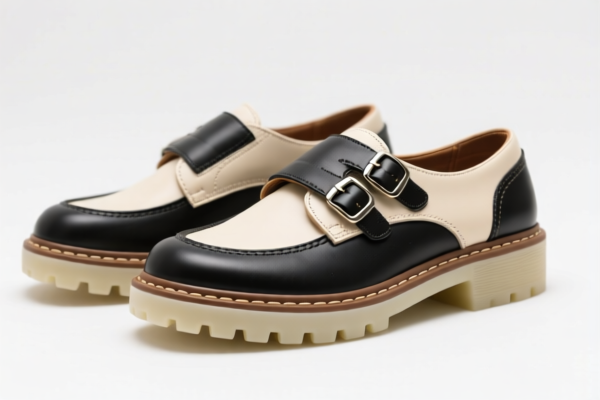
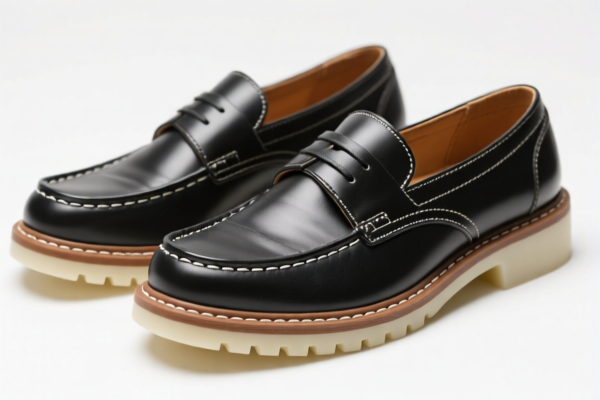
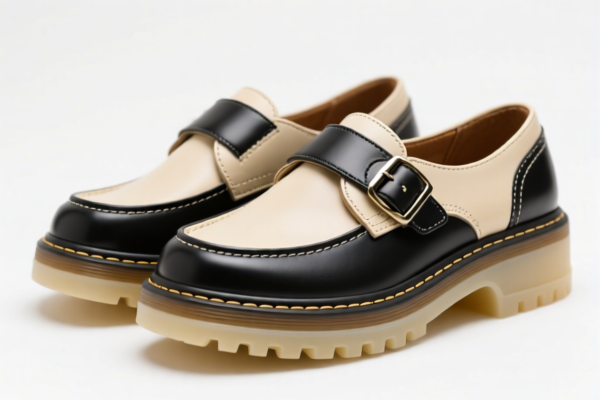
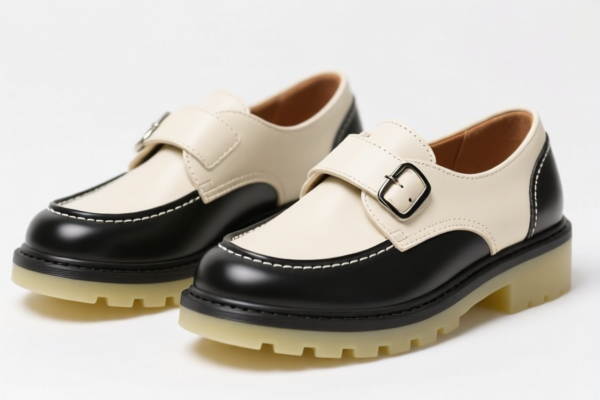
AI Analysis
🧵 Leather & Reconstituted Leather (Raw Materials & Finished Goods)
🌐 HS Code Reference & Customs Clearance Guide | 2026 Latest Tariff Analysis | Professional Strategy
📌 I. Product Definition: What Exactly Are We Shipping?
Leather products in international trade are broadly categorized into two stages: Raw/Intermediate Leather (Chapter 41) and Finished Leather Goods (Chapter 42, 64, 94). The distinction is critical because the level of "working" determines the tariff burden.
1. Intermediate Leather (Chapter 41):
Split Leather: The lower layers of the hide, often used for cheaper products.
Reconstituted Leather: Made from leather fibers bonded together (not full hide).
Status:* Not further worked than cleaned, tanned, crimped, or cut into basic shapes.
2. Finished Leather Goods:
Apparel/Footwear: Shoes, bags, belts.
Upholstery/Furniture: Car seats, aircraft seats.
Status:* Fully constructed, assembled, or ready for immediate use.
⚠️ Key Distinction Point:
- If the item is just a sheet, roll, or basic cut without assembly → Chapter 41 (Raw Material).
- If the item is a shaped part (e.g., shoe upper, seat cover) or assembled good (e.g., bag, seat) → Chapter 42/64/94 (Finished Good).
📦 II. HS Code Classification Matrix (2026 Latest Data)
Based on the provided data, here are the specific classifications and their tax implications.
| HS Code | Product Description | Category | Status |
|---|---|---|---|
4104.10 |
Leather & Reconstituted Leather, Split, in Sheet/Roll | Raw Material | Not further worked than cleaned/tanned/crimped/cut |
4104.90 |
Other Leather & Reconstituted Leather (Non-Split) | Raw Material | Not further worked than cleaned/tanned/crimped/cut |
9401.10.40.00 |
Aircraft Seats, Leather Upholstered | Finished Good (Furniture) | Specialized seat for aircraft |
9401.99.10.10 |
Parts of Motor Vehicle Seats, Leather Cut to Shape | Finished Good (Parts) | Specific part for car seats |
6403.19.10.00 |
Golf Shoes, Leather Upper, Welt Footwear | Finished Good (Footwear) | Sports footwear for men/boys |
6403.99.90.65 |
Women’s Leather Footwear, Valued >$2.50/pair | Finished Good (Footwear) | Other women's leather shoes |
4202.11.00.30 |
Attache Cases/Briefcases, Leather Surface | Finished Good (Bag) | Travel/Business accessories |
4202.21.30.00 |
Handbags, Reptile Leather | Finished Good (Bag) | High-value accessory |
🔍 Important Note:
- Chapters 41 items are generally raw inputs.
- Chapters 42, 64, 94 are finished consumer goods.
- The tax status varies drastically: Raw leather often faces retrieval errors in the data (indicating complex or variable duties), while finished goods have clear 0% or 7.5% rates.
💰 III. 2026 Tariff Rate Breakdown
✅ Applicable Country: United States (US)
✅ Origin: China (CN)
✅ Data Source: Provided Data Set
🎯 1. Raw Leather Goods (Ch. 41)
| HS Code | Product Description | Tax Status | Details |
|---|---|---|---|
4104.10 |
Split Leather (Sheet/Roll) | Error | tax_detail: "Failed to retrieve tax information"total_tax: "Error" |
4104.90 |
Other Leather (Sheet/Roll) | Error | tax_detail: "Failed to retrieve tax information"total_tax: "Error" |
📌 Interpretation:
- The system cannot automatically retrieve specific tariff rates for raw leather in this dataset.
- Risk: This usually implies dynamic tariffs, quotas, or special administrative measures that require manual customs broker intervention.
- Action: Do not rely on automated clearance for4104.10or4104.90. Consult a licensed customs broker for real-time AD (Anti-Dumping) or countervailing duty checks.
🎯 2. Aircraft & Automotive Seats (Ch. 94)
| HS Code | Product Description | Base Duty | Additional Duty | Total Tax |
|---|---|---|---|---|
9401.10.40.00 |
Aircraft Seats (Leather Upholstered) | 0.0% | 7.5% | 7.5% |
9401.99.10.10 |
Motor Vehicle Seat Parts (Leather, Cut) | 0.0% | 7.5% | 7.5% |
📌 Legal Basis:
- These items benefit from a 0% Base Duty but are subject to a 7.5% Additional Duty (likely Section 301 tariffs or specific USITC duties on leather goods).
- Key Condition: The leather must be "Upholstered" (for seats) or "Cut to Shape" (for parts).
🎯 3. Footwear (Ch. 64)
| HS Code | Product Description | Base Duty | Additional Duty | Total Tax |
|---|---|---|---|---|
6403.19.10.00 |
Men's/Boys' Golf Shoes (Leather Upper) | 0.0% | 0.0% | 0.0% |
6403.99.90.65 |
Women's Leather Shoes (> $2.50/pair) | 0.0% | 0.0% | 0.0% |
📌 Interpretation:
- Excellent News: These footwear items have 0% Total Tax.
- Conditions:
- Golf shoes must be "Welt footwear" (a specific construction method).
- Women’s shoes must be valued over $2.50 per pair (above the de minimis threshold, but still tax-free in this specific classification).
- Caution: Ensure the "Upper" is indeed Leather. Synthetic uppers often have different (sometimes higher) duties.
🎯 4. Luggage & Handbags (Ch. 42)
| HS Code | Product Description | Base Duty | Additional Duty | Total Tax |
|---|---|---|---|---|
4202.11.00.30 |
Attache/Briefcases (Leather Surface) | 0.0% | 0.0% | 0.0% |
4202.21.30.00 |
Handbags (Reptile Leather) | 0.0% | 0.0% | 0.0% |
📌 Interpretation:
- 0% Tax Rate: Both business bags and reptile leather handbags are classified with 0% Total Duty.
- Reptile Leather Note: While tax-free, reptile leather items often require CITES permits (Convention on International Trade in Endangered Species). Ensure compliance with wildlife protection laws, even if no duty is charged.
🛠️ IV. Customs Clearance Practical Advice
✅ 1. Documentation Checklist
| Document | Required For | Reason |
|---|---|---|
| Commercial Invoice | All | Must clearly state "Leather" or "Reconstituted Leather" as material. |
| Material Composition Certificate | Ch. 41 & Ch. 64/94 | Proves the upper material is genuine leather (not PVC/PU). |
| CITES Permits | 4202.21.30.00 (Reptile) |
Critical: Reptile leather is strictly regulated. No permit = Seizure. |
| Product Photos | All | Show texture, stitching, and labels to prove "Leather Upholstery" vs. "Fabric". |
| Value Declaration | 6403.99.90.65 |
Must prove value >$2.50/pair to justify classification. |
✅ 2. Classification Strategy (Avoid Pitfalls)
| Scenario | Correct HS Code | Wrong HS Code | Consequence |
|---|---|---|---|
| Raw Leather Hides | 4104.10 / 4104.90 |
4202... (Finished Bag) |
Under-declaration: Heavy penalties for misclassifying raw materials as finished goods. |
| Leather Shoe Parts | 9401.99.10.10 |
6403... (Shoes) |
Over-duty: Parts may have different rates; misclassification leads to incorrect tax payment. |
| Reptile Handbag | 4202.21.30.00 |
4202.29.90 (Other) |
Regulatory Risk: May miss CITES requirements, leading to seizure. |
| Golf Shoes | 6403.19.10.00 |
6403.99... (Other) |
Tax Discrepancy: Ensure "Welt construction" is documented to support 0% rate. |
✅ 3. Special Tips for Leather Goods
- "Reconstituted Leather" vs. "Genuine Leather":
- Customs may inspect reconstituted leather (
4104.xx) to ensure it is not mislabeled as full-grain. Mislabeling can lead to fraud claims.
- Customs may inspect reconstituted leather (
- The "Cut to Shape" Rule:
- For seat parts (
9401.99.10.10), the leather must be cut to the specific shape of the part. Flat sheets cut into arbitrary shapes do not qualify.
- For seat parts (
- De Minimis Threshold:
- For footwear (
6403.99.90.65), the value must be clearly above $2.50/pair to fit this specific subheading. Low-value samples should be classified differently.
- For footwear (
🌍 V. Global Market Comparison (2026)
| Market | Key HS Code | Duty Rate | Special Requirements |
|---|---|---|---|
| 🇺🇸 USA | 4104.10 (Raw) |
Error/Variable | High scrutiny on raw leather origins. |
| 🇺🇸 USA | 9401.10.40.00 (Seats) |
7.5% | Standard Section 301 impact. |
| 🇺🇸 USA | 6403.19.10.00 (Golf Shoes) |
0.0% | No additional duties if properly classified. |
| 🇺🇸 USA | 4202.11.00.30 (Briefcases) |
0.0% | Zero duty, but CITES check for reptile. |
| 🇪🇺 EU | Similar Codes | Variable | EU has stricter "Genuine Leather" labeling laws. |
| 🇨🇳 China | Similar Codes | Variable | Import duties may apply to raw leather. |
📌 Conclusion:
- USA offers 0% duty for many finished leather goods (shoes, bags, seats) but charges 7.5% for automotive parts.
- Raw leather (4104.xx) is high-risk due to missing tax data in this dataset. Always use a broker.
📌 VI. Common Mistakes & Avoidance Guide
❌ Mistake 1: Classifying Reptile Leather Handbags as generic leather bags (4202.29).
👉 Risk: Missing CITES permits leads to confiscation.
✅ Fix: Always declare 4202.21.30.00 for reptile leather and attach CITES docs.
❌ Mistake 2: Declaring Cut Leather Seat Parts as Raw Leather (4104.90).
👉 Risk: Under-declaring the value/function. If the parts are "cut to shape," they are finished components.
✅ Fix: Use 9401.99.10.10 and declare 7.5% duty to avoid penalty for misclassification.
❌ Mistake 3: Assuming All Leather Shoes are 0% duty.
👉 Risk: Some leather shoes (e.g., heavy work boots) may fall under different subheadings with higher duties.
✅ Fix: Verify the exact subheading (e.g., 6403.19.10.00 for golf shoes vs. other 6403.xx).
🎯 VII. Final Recommendation
🎯 Key Takeaway:
🔹 Raw Leather (
4104.xx) = High Risk / Manual Check Required.
🔹 Finished Goods (Bags, Seats, Golf Shoes) = Low Risk / 0-7.5% Duty.
🔹 Reptile Leather = High Compliance (CITES).
📣 Immediate Action:
1. For Raw Leather: Contact a customs broker immediately for real-time rate verification.
2. For Finished Goods: Ensure your Commercial Invoice specifies "Leather Upper" or "Leather Upholstered" clearly.
3. For Reptile Products: Prepare CITES certificates before shipping.
✨ Precision in Classification = Savings in Duty.
💼 Don't let "Error" status stall your shipment.
Customer Reviews
About HS Code Classification
The Harmonized System (HS) is an internationally standardized nomenclature developed by the World Customs Organization (WCO) to classify traded products. Over 200 countries use the HS system as the basis for customs tariffs, trade statistics, and import/export regulations.
Each HS code follows a hierarchical structure:
- Chapter (2 digits) — Broad category of goods (e.g., Chapter 84: Machinery and Mechanical Appliances)
- Heading (4 digits) — More specific grouping within the chapter
- Subheading (6 digits) — Internationally standardized breakdown, used by all WCO member countries
- National subdivisions (8-10 digits) — Country-specific extensions for further classification, such as US HTSUS 10-digit codes
Correct HS code classification is essential for smooth customs clearance, accurate duty payment, and compliance with trade regulations. Misclassification can lead to customs delays, overpayment of duties, or penalties.
When importing from CN to US, the applicable tariff rates may include:
- Most-Favored-Nation (MFN) rate — The standard duty rate applied to WTO members
- General rate — Applied to countries without trade agreements
- Trade remedy duties — Additional tariffs such as Section 301 (anti-dumping), Section 232 (national security), or countervailing duties
The information provided on this page is for reference purposes only. For official classification, please consult with your local customs authority or a licensed customs broker.