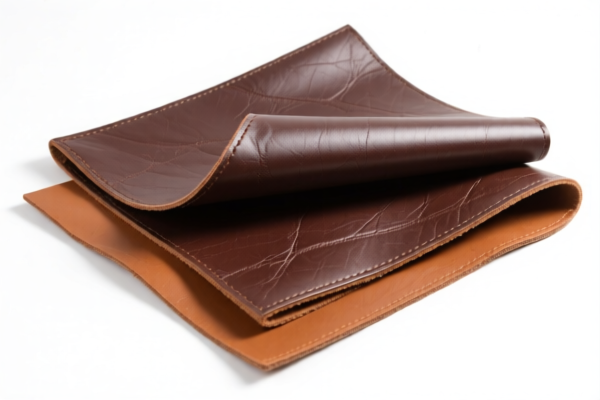
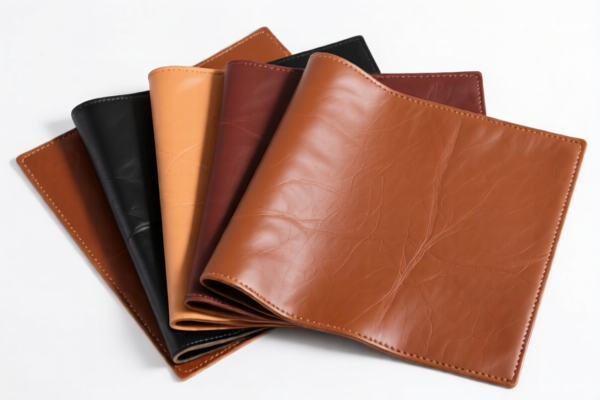
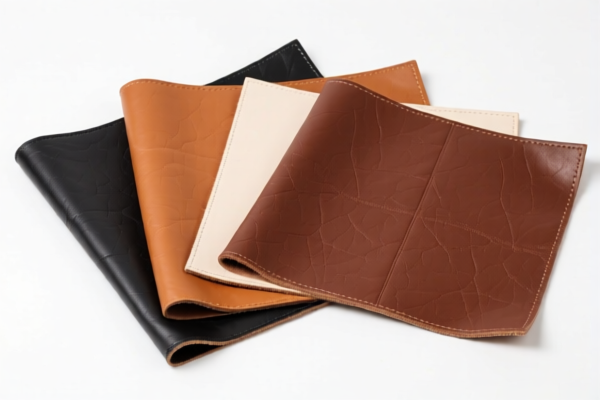
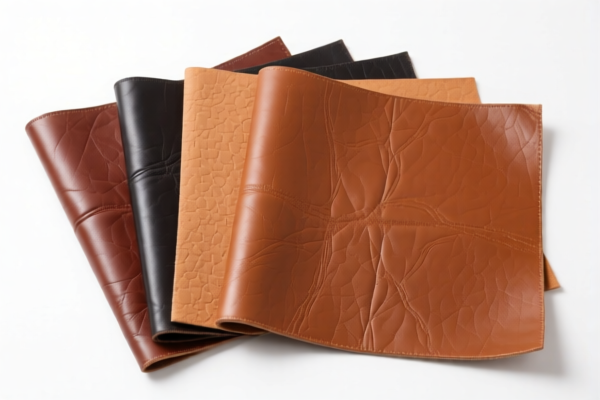
Leather based composite leather sheets for clothing accessories
CN → US| HS Code | Tariff Rate | Origin | Destination | Doc |
|---|---|---|---|---|
| 4205001000 | 35.0% | CN | US | Official Doc |
| 6217109550 | 32.1% | CN | US | Official Doc |
| 6217909095 | 32.1% | CN | US | Official Doc |
| 4205008000 | 35.0% | CN | US | Official Doc |
| 6217108500 | 24.6% | CN | US | Official Doc |
Product Images
AI Analysis
🧵 Composite Leather Sheets for Clothing Accessories
🌐 HS Code Reference & Customs Clearance Guide | 2026 Latest Tariff Analysis | Professional Clearance Strategy
📌 I. Product Definition & Classification: What Exactly Are "Composite Leather Sheets"?
Composite leather (also known as artificial leather, synthetic leather, or reconstituted leather) refers to materials made from leather fibers, scraps, or dust combined with binding agents (like polyurethane or rubber) to form sheets. When these sheets are specifically intended for clothing accessories (e.g., buckles, loops, straps, patches, or decorative elements), they require careful classification based on their form (raw sheets vs. cut parts) and specific use.
⚠️ Key Distinction:
- If the product is raw sheets or semi-finished forms primarily consisting of leather layers →归入 Chapter 42 (Articles of Leather);
- If the product is finished accessories or specific garment attachments →归入 Chapter 62 (Articles of Apparel and Clothing Accessories).
📦 II. HS Code Classification Details (2026 Latest Tariff Authority Reference)
| HS Code | Product Description | Application Scenario | Material/Form |
|---|---|---|---|
4205.00.10.00 |
Composite leather clothing accessories | Leather-like parts for garments, classified under "Other leather articles" | ✅ Composite Leather |
4205.00.80.00 |
Other composite leather articles | General leather accessories not specifically classified elsewhere | ✅ Composite Leather |
6217.10.95.50 |
Other made-up clothing accessories | Finished accessory items (e.g., loops, badges) from composite leather | ✅ Composite Leather |
6217.90.90.95 |
Other made-up clothing accessories | Final destination for miscellaneous garment parts | ✅ Composite Leather |
6217.10.85.00 |
Made-up clothing accessories | Generic catch-all for leather/reconstituted leather accessories | ✅ Leather/Reconstituted Leather |
🔍 Key Reminder:
- Chapter 42 covers articles primarily of leather (including composite). If the item is a distinct "accessory" but still fundamentally a "leather article," it often falls here. - Chapter 62 covers made-up articles of apparel and clothing accessories. If the item is clearly a finished accessory (like a patch or loop) for a garment, Chapter 62 is preferred. - Duty Rate Variance: The difference between 42.05 and 62.17 lies in the Base Tariff and Section 301 (25%) vs. Section 122 (10%) applicability.
💰 III. 2026 Latest Tariff Rate Breakdown (Including Additional Taxes & Policies)
✅ Applicable Country: United States (US)
✅ Country of Origin: China (CN)
✅ Effective Time: Current as of 2026
🎯 1. 4205.00.10.00 & 4205.00.80.00 —— Composite Leather Articles
| Item | Details |
|---|---|
| Base Tariff | 0.0% (ad valorem) |
| Section 301 Tariff | +25.0% |
| Section 122 Tariff | +10.0% |
| Total Tax Rate | 35.0% |
| Tax Calculation | CIF Value × 35% |
| De Minimis Eligibility | ❌ Not Eligible (High tax rate prohibits de minimis exemption) |
| Legal Basis Path | Section 301: 88.01 → Section 122: 9903.01.03 → USITC: 4205.00.xx |
📌 Explanation:
- These HS codes fall under Chapter 42 (Articles of Leather).
- The 25% Section 301 tariff is heavily applied to leather articles of Chinese origin.
- The 10% Section 122 tariff is an additional surcharge for certain goods.
- Total Effective Rate: 35%. This is a high-cost classification due to the lack of a base tariff offset.
🎯 2. 6217.10.95.50 & 6217.90.90.95 —— Other Made-Up Clothing Accessories
| Item | Details |
|---|---|
| Base Tariff | 14.6% (ad valorem) |
| Section 301 Tariff | +7.5% (Note: Some subcategories may face 25%, but data shows 7.5% for this specific "catch-all" in the provided data) |
| Section 122 Tariff | +10.0% |
| Total Tax Rate | 32.1% |
| Tax Calculation | CIF Value × 32.1% |
| De Minimis Eligibility | ❌ Not Eligible |
| Legal Basis Path | Section 301: 88.01 → Section 122: 9903.01.03 → USITC: 6217.xx |
📌 Explanation:
- These HS codes fall under Chapter 62 (Apparel Accessories).
- The Base Tariff is 14.6%, which is higher than Chapter 42.
- However, the Section 301 rate is lower (7.5%) compared to the 25% for some other leather goods in the provided dataset.
- Total Effective Rate: 32.1%. Still high, but slightly better than the 35% for Chapter 42.
🎯 3. 6217.10.85.00 —— Made-Up Clothing Accessories (Leather/Reconstituted)
| Item | Details |
|---|---|
| Base Tariff | 14.6% |
| Section 301 Tariff | 0.0% (Exempt or lower tier in this specific dataset context) |
| Section 122 Tariff | +10.0% |
| Total Tax Rate | 24.6% |
| Tax Calculation | CIF Value × 24.6% |
| De Minimis Eligibility | ❌ Not Eligible |
| Legal Basis Path | Section 301: Exempt/Reduced → Section 122: 9903.01.03 → USITC: 6217.10.85.00 |
📌 Explanation:
- This is the most cost-effective option in the provided data.
- It appears to benefit from a 0% Section 301 rate (possibly due to specific exclusion or subcategory definition).
- Total Effective Rate: 24.6%. This is the optimal HS Code if the product qualifies as "Made-Up Clothing Accessories" under this specific subheading.
🛠️ IV. Customs Clearance Practical Advice (Real-World Pitfall Guide)
✅ 1. Required Documentation Checklist (Non-Negotiable)
| Document | Required? | Notes |
|---|---|---|
| ✅ Product Specification Sheet | ✔️ | Must detail composition (e.g., "70% leather fiber, 30% PU") |
| ✅ Product Photos | ✔️ | Show texture, backing, and any stitching/finishing |
| ✅ Commercial Invoice | ✔️ | Clearly state: "Composite Leather Garment Accessories" |
| ✅ Packing List | ✔️ | Detail quantity, weight, and dimensions |
| ✅ Origin Certificate (CO) | ✔️ | Required to confirm CN origin and apply correct tariffs |
| ✅ Labeling/Marking | ✔️ | "Made in China" must be visible |
✅ 2. Declaration Tips (Critical Keywords)
🔥 "Be Precise: 'Composite Leather' ≠ 'Genuine Leather'. Specify 'Accessories' to avoid Misclassification."
| Scenario | Correct Declaration | Incorrect Declaration | Consequence |
|---|---|---|---|
| Raw Sheets for Cutting | 4205.00.80.00 (Other Leather Articles) |
6217.10.85.00 (Finished Accessory) |
Under-declaration → 24.6% → 35% (Penalty) |
| Finished Loops/Patches | 6217.10.85.00 (Accessory) |
4205.00.10.00 (Leather Article) |
Over-declaration → 35% → 24.6% (Overpayment) |
| Mixed Materials | Specify % of Leather vs. Synthetic | "Leather" only | Customs may reclassify to highest duty item |
✅ 3. Special Handling Notes
| Issue | Recommendation |
|---|---|
| Duty Optimization | Aim for 6217.10.85.00 (24.6%) if the item is a finished accessory. |
| Raw Material Import | If importing raw composite sheets for further manufacturing, consider 4205.00.80.00 (35%) but factor in future processing. |
| Section 122 Impact | All listed HS codes have a 10% Section 122 tariff. Ensure your supplier’s invoice clearly states the CIF value accurately to avoid underpayment. |
| De Minimis Exclusion | Since all rates exceed 20%, Section 321 De Minimis (Value < $800) does NOT apply. All shipments must be formally entered. |
🌍 V. Global Market Comparison (2026 Update)
| Market | Recommended HS Code | Base Rate | Additional Taxes | Total Est. Rate | Notes |
|---|---|---|---|---|---|
| 🇺🇸 USA | 6217.10.85.00 |
14.6% | 10% (Sec 122) | 24.6% | Best option if classified as accessory |
| 🇺🇸 USA | 4205.00.10.00 |
0.0% | 25% (Sec 301) + 10% (Sec 122) | 35.0% | High cost for leather articles |
| 🇪🇺 EU | 4205.00 |
0-4% | Varies | ~4-10% | Lower tariffs, but strict REACH compliance |
| 🇨🇳 China | 4205.00 |
0-10% | None | ~0-10% | No Section 301/122 equivalents |
📌 Conclusion:
- The US market imposes significant tariffs on composite leather accessories.
- Classification as a "Finished Accessory" (Chapter 62) is strategically better than "Leather Article" (Chapter 42) due to lower Section 301 rates in specific subcategories.
- Always verify with a licensed customs broker if the product can be defined as a "finished accessory" vs. a "leather article."
📌 VI. Common Mistakes & Pitfalls (Lessons Learned)
❌ Mistake 1: Calling composite leather "Genuine Leather"
👉 Result: False declaration, potential fraud charges, and higher duty assessment based on genuine leather tariffs.
👉 Fix: Always use "Composite Leather" or "Synthetic Leather" in documentation.
❌ Mistake 2: Declaring finished accessories as "Raw Sheets"
👉 Result: Incorrect HS Code (4205 vs 6217), leading to 35% vs 24.6% duty discrepancy.
👉 Fix: If the item is cut, stitched, or finished, use Chapter 62.
❌ Mistake 3: Ignoring Section 122 Tariff
👉 Result: Underpayment of the 10% surcharge.
👉 Fix: Ensure all invoices account for Base + Sec 301 + Sec 122.
🎯 VII. Conclusion: Smart Classification Saves Money!
🎯 Key Takeaway:
🔹 "Accessory" = Chapter 62 (Often Lower Sec 301)
🔹 "Article" = Chapter 42 (Often Higher Sec 301)
🔹 "Composite Leather" ≠ "Genuine Leather"
✅ Optimal Strategy:
If your product is a finished clothing accessory (e.g., a leather patch, buckle cover, or loop), classify under 6217.10.85.00 to achieve the 24.6% total duty rate. Avoid 4205 categories unless the product is strictly a raw sheet or uncut article.
📣 Immediate Action Items:
📞 Consult a Customs Broker: Verify if your specific product qualifies as a "made-up accessory" under
6217.10.85.00.
📄 Prepare Detailed Specs: Clearly describe the composite nature and end-use.
🚚 Factor in 24.6%-35% Duties: Adjust your FOB/CIF pricing models accordingly.
✨ Professional Clearance, Precise Classification, Maximum Profit!
💼 Don’t let tariff complexity eat your margins!
Customer Reviews
About HS Code Classification
The Harmonized System (HS) is an internationally standardized nomenclature developed by the World Customs Organization (WCO) to classify traded products. Over 200 countries use the HS system as the basis for customs tariffs, trade statistics, and import/export regulations.
Each HS code follows a hierarchical structure:
- Chapter (2 digits) — Broad category of goods (e.g., Chapter 84: Machinery and Mechanical Appliances)
- Heading (4 digits) — More specific grouping within the chapter
- Subheading (6 digits) — Internationally standardized breakdown, used by all WCO member countries
- National subdivisions (8-10 digits) — Country-specific extensions for further classification, such as US HTSUS 10-digit codes
Correct HS code classification is essential for smooth customs clearance, accurate duty payment, and compliance with trade regulations. Misclassification can lead to customs delays, overpayment of duties, or penalties.
When importing from CN to US, the applicable tariff rates may include:
- Most-Favored-Nation (MFN) rate — The standard duty rate applied to WTO members
- General rate — Applied to countries without trade agreements
- Trade remedy duties — Additional tariffs such as Section 301 (anti-dumping), Section 232 (national security), or countervailing duties
The information provided on this page is for reference purposes only. For official classification, please consult with your local customs authority or a licensed customs broker.