Leather based composite leather sheets for garment accessories
CN → US| HS Code | Tariff Rate | Origin | Destination | Doc |
|---|---|---|---|---|
| 4205008000 | 35.0% | CN | US | Official Doc |
| 4205001000 | 35.0% | CN | US | Official Doc |
| 6217109550 | 32.1% | CN | US | Official Doc |
| 6217909095 | 32.1% | CN | US | Official Doc |
| 5513130090 | 49.9% | CN | US | Official Doc |
Product Images
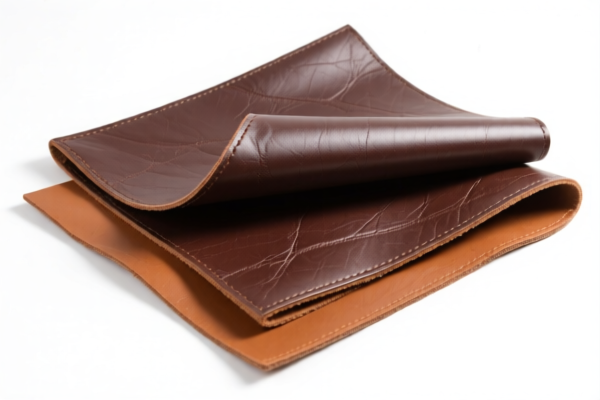
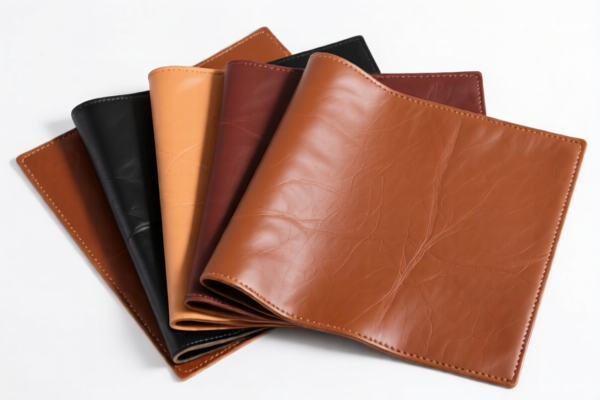
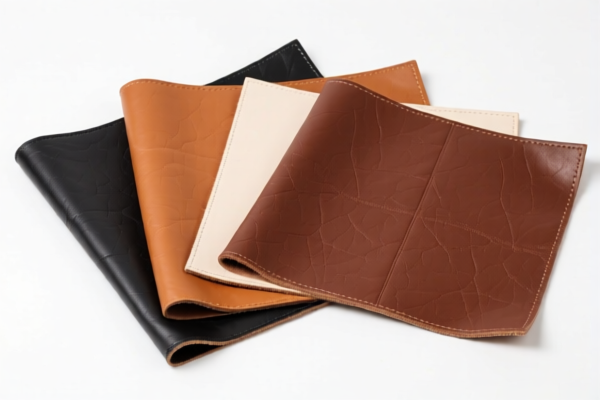
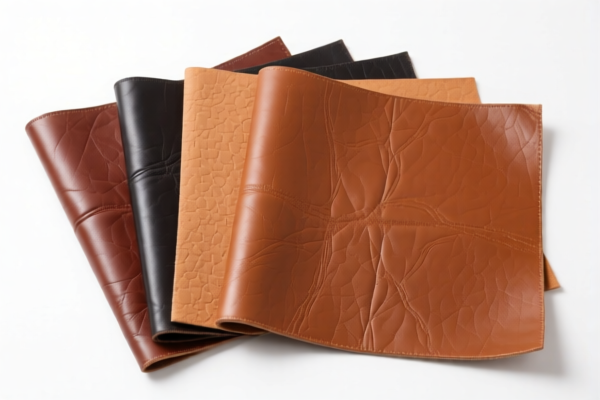
AI Analysis
🧥 Composite Leather Sheets for Garment Accessories
🌐 HS Code Reference & Clearance Guide | 2026 Latest Tariff Analysis | Professional Clearance Strategy
📌 I. Product Definition & Classification: What are "Composite Leather Sheets for Garment Accessories"?
Composite leather sheets for garment accessories refer to manufactured leather products created by bonding a base material (such as fabric, paper, or foam) with a layer of leather or synthetic leather. These are specifically designed as components or accessories for clothing, such as collars, cuffs, pockets, decorative trims, or linings.
⚠️ Key Distinction:
- If the product is a finished accessory (e.g., a pre-cut collar or a specific part), it may fall under Chapter 62 (Articles of Apparel and Clothing Accessories).
- If the product is a raw material/sheet used to make accessories, it often falls under Chapter 42 (Articles of Leather).
- Classification depends heavily on the specific form and intended use declared. The following data provides the most likely classifications based on current trade data.
📦 II. HS Code Classification Details (2026 Latest Tariff Authority Comparison)
| HS Code | Product Description | Application Scenario | Tax Rate (Total) | Tax Breakdown |
|---|---|---|---|---|
4205.00.80.00 |
Composite leather articles, other (General "Other" Category) | General composite leather sheets not specifically listed elsewhere; often used as a residual category for leather accessories. | 35.0% | Base: 0%, Section 301: 25%, Section 122: 10% |
4205.00.10.00 |
Composite leather articles, other (Parts/Components) | Composite leather parts/components for leather goods. Fits the principle of classifying leather parts under Chapter 42. | 35.0% | Base: 0%, Section 301: 25%, Section 122: 10% |
6217.10.95.50 |
Other made-up clothing accessories (Residual Category) | Composite leather treated as a "clothing accessory" rather than a "leather article." Used when the item is definitively a garment part. | 32.1% | Base: 14.6%, Section 301: 7.5%, Section 122: 10% |
6217.90.90.95 |
Other made-up clothing accessories (Parts/Components) | Other made-up clothing accessories, not elsewhere specified. Fits the residual category for garment parts. | 32.1% | Base: 14.6%, Section 301: 7.5%, Section 122: 10% |
5513.13.00.90 |
Synthetic Fiber Fabrics (Reference Category) | Note: While primarily for synthetic fabrics, this code is sometimes referenced for similar-looking synthetic leather-like materials if the composition is debated. | 49.9% | Base: 14.9%, Section 301: 25%, Section 122: 10% |
🔍 Critical Analysis:
- Chapter 42 (4205.00...) vs. Chapter 62 (6217.10...): The biggest debate is whether the sheet is a "Leather Article" (Ch 42) or a "Clothing Accessory" (Ch 62).
- If it’s a bulk sheet for manufacturing → Chapter 42 is more likely.
- If it’s a pre-cut, finished accessory part → Chapter 62 is more likely.
- Tax Implication: Chapter 62 codes have a lower total tax (32.1%) compared to Chapter 42 codes (35.0%), due to a higher base tariff but lower Section 301 rates (7.5% vs. 25%).
- Section 122: All codes listed include a 10% tax under Section 122, which applies to certain textile/leather products from specific countries.
💰 III. 2026 Latest Tariff Rate Breakdown (Including Surcharges)
✅ Applicable Country: United States (US)
✅ Origin: China (CN)
✅ Effective Time: 2025-11-10 onwards (including subsequent imports)
🎯 1. 4205.00.80.00 & 4205.00.10.00 — Composite Leather Articles (Chapter 42)
| Item | Content |
|---|---|
| Base Tariff | 0% (Ad Valorem) |
| USITC Surcharge (Section 301) | +25% (High penalty rate for leather articles) |
| IEEPA Surcharge (Section 122) | +10% (Specific to certain textile/leather imports) |
| Total Tariff | 35.0% |
| Tax Calculation | CIF Value × 35% |
| De Minimis Exemption | ❌ Not Applicable (Deny De Minimis) |
| Legal Basis | IEEPA:9903.01.25 → USITC:4205.00.80.00 → FOOTNOTE:9903.88.01 |
📌 Explanation:
- The 25% Section 301 tariff is the dominant cost driver here.
- Although the base tariff is 0%, the high surcharge makes this category expensive.
- No de minimis exemption: Small packages (under $800) are not exempt from these specific surcharges if they fall under certain controlled categories.
🎯 2. 6217.10.95.50 & 6217.90.90.95 — Clothing Accessories (Chapter 62)
| Item | Content |
|---|---|
| Base Tariff | 14.6% |
| USITC Surcharge (Section 301) | +7.5% (Lower than leather articles) |
| IEEPA Surcharge (Section 122) | +10% |
| Total Tariff | 32.1% |
| Tax Calculation | CIF Value × 32.1% |
| De Minimis Exemption | ❌ Not Applicable |
| Legal Basis | IEEPA:9901.25 → USITC:6217.10.95.50 → FOOTNOTE:9903.88.01 |
📌 Note:
- This category is 2.9% cheaper than Chapter 42.
- However, you must prove the item is a "made-up clothing accessory" and not a "leather article" to qualify for this lower rate.
🎯 3. 5513.13.00.90 — Synthetic Fiber Fabric (Reference Only)
| Item | Content |
|---|---|
| Base Tariff | 14.9% |
| USITC Surcharge (Section 301) | +25% |
| IEEPA Surcharge (Section 122) | +10% |
| Total Tariff | 49.9% |
| Tax Calculation | CIF Value × 49.9% |
| De Minimis Exemption | ❌ Not Applicable |
📌 Warning:
- This is the highest tax rate. Only use this if the product is clearly classified as a synthetic fiber fabric and not leather. Misclassification here can lead to significant overpayment or audit risks.
🛠️ IV. Clearance Practical Advice (Avoiding Pitfalls)
✅ 1. Documentation Checklist (Non-Negotiable)
| Document | Must Provide | Description |
|---|---|---|
| ✅ Product Specification Sheet | ✔️ | Detail composition: % leather, % base material, bonding method. |
| ✅ Product Photos | ✔️ | Show both sides (leather side and base side) and any pre-cut shapes. |
| ✅ Commercial Invoice | ✔️ | Clearly state: "Composite Leather Sheet for Garment Accessories" + HS Code. |
| ✅ Packing List | ✔️ | Indicate weight, dimensions, and number of sheets. |
| ✅ Material Composition Certificate | ✔️ | Third-party lab test to confirm leather vs. synthetic vs. base material. |
| ✅ Bill of Lading/Air Waybill | ✔️ | Standard shipping documents. |
✅ 2. Declaration Tips (Key Rules)
🔥 "Know Your Chapter: Leather (42) vs. Accessory (62)"
| Scenario | Correct HS Code | Wrong Action |
|---|---|---|
| Bulk sheets (unprocessed, for factory use) | 4205.00.80.00 or 4205.00.10.00 |
Declaring as "Clothing Accessory" → Risk of penalty for misclassification. |
| Pre-cut parts (e.g., collars, cuffs) | 6217.10.95.50 or 6217.90.90.95 |
Declaring as "Leather Article" → Higher tax (35% vs 32.1%). |
| Synthetic-only (no real leather) | 5513.13.00.90 (or other Chapter 54/55) |
Declaring as "Leather" → Fraud risk. |
| Mixed shipment (Leather + Synthetic) | Split declaration | Mixing in one line item → Customs seizure or audit. |
✅ 3. Special Case Handling
| Situation | Handling Advice |
|---|---|
| OEM Custom Leather | Provide customer’s design specs to prove it’s a specific "accessory part" → Aim for Chapter 62. |
| High-Value Luxury Leather | Ensure the "leather" content is genuine. Synthetic leather may fall under Chapter 59 or 61. |
| Small Samples | No De Minimis! Even under $800, these items are subject to 301/122 tariffs. Do not try to sneak them through as samples. |
| Origin Marking | Ensure all sheets are marked "Made in China" to avoid additional penalties. |
🌍 V. Global Market Clearance Comparison (2026 Latest)
| Country/Region | Recommended HS Code | Tariff (China Origin) | Certification | Notes |
|---|---|---|---|---|
| 🇺🇸 USA | 4205.00.80.00 / 6217.10.95.50 |
32.1% - 35.0% | None specific | Highest tariffs due to 301 & 122 sections. |
| 🇨🇳 China | 4205.00.80.00 |
0% - 10% | None | Low import duty if exported from CN. |
| 🇪🇺 EU | 4205.00.80.00 |
~4.5% | None | Lower tariffs, but strict REACH compliance for chemicals. |
| 🇦🇺 Australia | 4205.00.80.00 |
~5% | None | Moderate tariffs. |
| 🇯🇵 Japan | 4205.00.80.00 |
~4.5% | None | Stable, low tariffs. |
📌 Conclusion:
- The USA is the most expensive market for composite leather goods due to Section 301 and Section 122 tariffs.
- Chapter 62 (6217.10.95.50) saves 2.9% compared to Chapter 42. If your product is a finished accessory part, declare it as such. If it’s raw sheeting, declare it as a leather article.
📌 VI. Common Mistakes & Pitfalls (Lessons Learned)
❌ Mistake 1: Declaring bulk leather sheets as "Clothing Accessories" to save tax.
👉 Consequence: Customs may reject this if the sheets are uncut/raw. You’ll pay back taxes + interest.
❌ Mistake 2: Ignoring Section 122 (10%).
👉 Consequence: Even if you get a lower base tariff, missing Section 122 leads to 10% underpayment.
❌ Mistake 3: Mixing "Leather" and "Synthetic Leather" in one shipment without clear labeling.
👉 Consequence: Customs may classify the entire shipment under the highest-risk category (e.g., 49.9%).
❌ Mistake 4: Assuming "De Minimis" applies.
👉 Consequence: Small shipments are not exempt from these specific tariffs. Budget for 32-35% tax even on small orders.
✅ Correct Approach:
"Composite Leather Sheet, 1.5mm thick, PU Leather surface on Polyester Base, for Manufacturing Garment Collars, Model CL-100, Made in China."
🎯 VII. Conclusion: Precision Classification, Cost Control!
🎯 Remember the Key Rules:
🔹 "Bulk Sheets = Chapter 42 (35%) | Finished Parts = Chapter 62 (32.1%)"
🔹 "No De Minimis for Leather/Accessories from China!"
🔹 "Section 122 (10%) applies to ALL!"
📌 Pro Tip:
If your composite leather is made with synthetic leather only (no genuine leather), explore Chapter 54/55 codes. While the base tariff might be higher, the Section 301 rate might differ. Always check the exact material composition.
📣 Immediate Action:
📞 Consult a licensed customs broker for Advance Ruling if your product is ambiguous.
🚀 Ensure your Commercial Invoice precisely matches the HS Code description to avoid delays.
✨ Professional Clearance Starts with Accurate Classification!
💼 Every Percentage Point of Tax Counts!
Customer Reviews
About HS Code Classification
The Harmonized System (HS) is an internationally standardized nomenclature developed by the World Customs Organization (WCO) to classify traded products. Over 200 countries use the HS system as the basis for customs tariffs, trade statistics, and import/export regulations.
Each HS code follows a hierarchical structure:
- Chapter (2 digits) — Broad category of goods (e.g., Chapter 84: Machinery and Mechanical Appliances)
- Heading (4 digits) — More specific grouping within the chapter
- Subheading (6 digits) — Internationally standardized breakdown, used by all WCO member countries
- National subdivisions (8-10 digits) — Country-specific extensions for further classification, such as US HTSUS 10-digit codes
Correct HS code classification is essential for smooth customs clearance, accurate duty payment, and compliance with trade regulations. Misclassification can lead to customs delays, overpayment of duties, or penalties.
When importing from CN to US, the applicable tariff rates may include:
- Most-Favored-Nation (MFN) rate — The standard duty rate applied to WTO members
- General rate — Applied to countries without trade agreements
- Trade remedy duties — Additional tariffs such as Section 301 (anti-dumping), Section 232 (national security), or countervailing duties
The information provided on this page is for reference purposes only. For official classification, please consult with your local customs authority or a licensed customs broker.