Leather business card cases
CN → US| HS Code | Tariff Rate | Origin | Destination | Doc |
|---|---|---|---|---|
| 4205008000 | 35.0% | CN | US | Official Doc |
| 4202919090 | 39.5% | CN | US | Official Doc |
| 4202929315 | 52.6% | CN | US | Official Doc |
| 4205001000 | 35.0% | CN | US | Official Doc |
| 4205008000 | 35.0% | CN | US | Official Doc |
Product Images
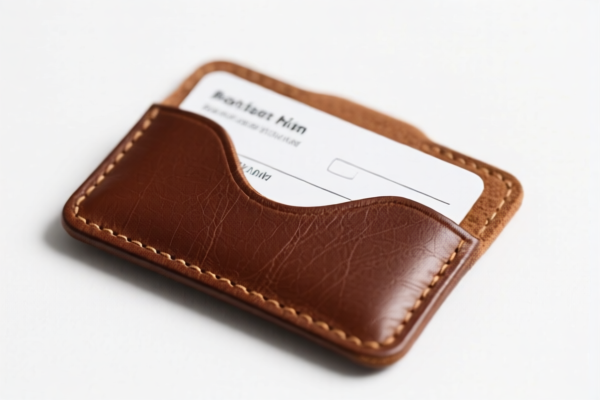
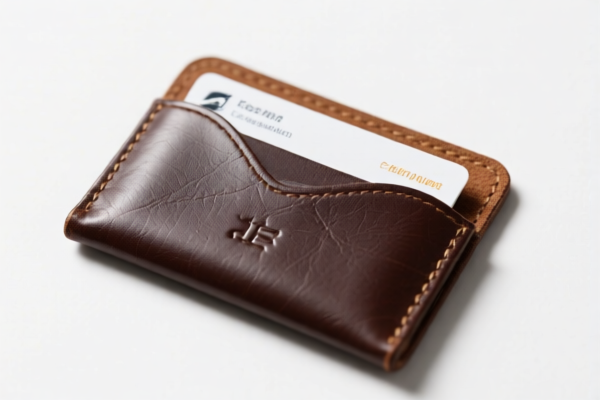
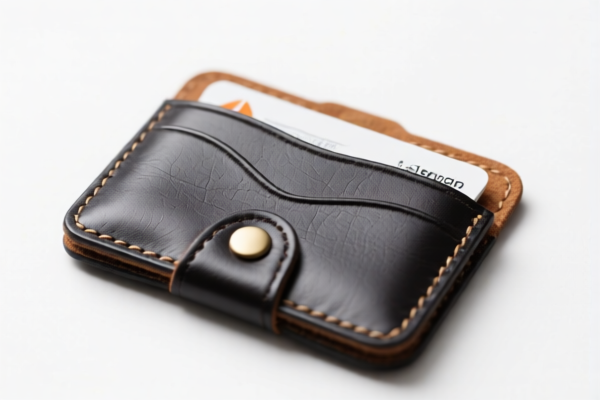
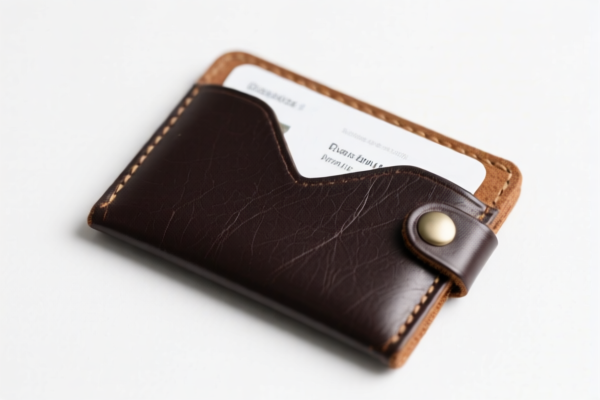
AI Analysis
💼 Leather Business Card Cases (Portfolios & Card Holders)
🌐 HS Code Reference & Customs Clearance Guide | 2026 Latest Tariff Analysis | Professional Clearance Strategy
📌 I. Product Definition & Classification: What Exactly is a "Leather Business Card Case"?
A leather business card case is a small accessory typically made of genuine leather, synthetic leather, or regenerated leather, designed specifically for holding and presenting business cards. In international trade, the classification depends heavily on its material composition, structure, and intended use (e.g., generic storage vs. jewelry/specialized container).
Key Distinctions: 1. General Leather Articles: Simple holders without specific structural features defining them as "containers" under Chapter 42 headings for specific goods. 2. Other Containers: Cases that are clearly defined as containers for miscellaneous items, often carrying a higher base tariff due to specific material descriptions (e.g., plastics vs. leather). 3. Specialized Containers (e.g., Jewelry Boxes): If the card case is marketed or structured specifically for jewelry or high-value items, it may fall under stricter subheadings with significantly higher base duties.
⚠️ Critical Classification Point:
- If it is a simple holder/pouch → Likely 4205.00 (Other articles of leather).
- If it is a structured box/case → Likely 4202.91/92 (Other containers).
- Misclassification Risk: Declaring a structured "box" as a simple "holder" can lead to audits, back-taxes, or penalties.
📦 II. HS Code Classification Matrix (2026 Latest Tariff Authority)
Based on the provided data, here are the five distinct HS Codes applicable to leather business card cases, along with their tax implications.
| HS Code | Summary Description | Application Scenario | Total Tax Rate |
|---|---|---|---|
| 4205.00.80.00 | Other articles of leather (e.g., business card holders) | Generic leather holders, simple pouches, non-structured cases. | 35.0% |
| 4202.91.90.90 | Other containers of leather (e.g., business card cases) | Structured leather cases classified under "Other containers." | 39.5% |
| 4202.92.93.15 | Leather containers, specifically described as jewelry boxes | High-end cases marketed or structured as jewelry boxes holding cards. | 52.6% |
| 4205.00.10.00 | Other articles of leather/regenerated leather (Catch-all) | Generic holders falling under the "catch-all" category for leather goods. | 35.0% |
| 4205.00.80.00 | Duplicate Entry: Other articles of leather | Same as #1; confirms consistency in classification for generic holders. | 35.0% |
🔍 Key Observation:
- 4205.00 codes generally have a 0% base tariff but attract heavy additional duties.
- 4202.91 has a 4.5% base tariff.
- 4202.92 has a 17.6% base tariff, making it the most expensive category due to specific description (Jewelry Box).
💰 III. 2026 Tariff Rate Breakdown (Including Surtaxes & Policy Add-ons)
✅ Applicable Country: United States (US)
✅ Origin: China (CN)
✅ Effective Time: Includes importations after 2025-11-10 (Subject to 122 Clause)
🎯 1. HS Code 4205.00.80.00 & 4205.00.10.00
Description: Other leather articles (Generic Business Card Holders)
Total Tax: 35.0%
| Component | Rate | Source/Reason |
|---|---|---|
| Base Tariff | 0.0% | Standard MFN rate for "Other articles of leather" (Chapter 42 Note 1). |
| Section 301 / Additional Tariff | +25.0% | USITC Footnote 9903.88.01 (China-origin goods). |
| Clause 122 Tariff | +10.0% | Specific add-on tariff for this category (as per provided data). |
| TOTAL | 35.0% |
📌 Interpretation:
- Although the base duty is 0%, the 25% Section 301 surtax is fully applicable.
- The 10% Clause 122 adds further cost.
- De Minimis Exemption: ❌ NOT ELIGIBLE (Section 301 goods are typically denied de minimis status for duty-free entry under $800).
🎯 2. HS Code 4202.91.90.90
Description: Other Containers (Structured Leather Cases)
Total Tax: 39.5%
| Component | Rate | Source/Reason |
|---|---|---|
| Base Tariff | 4.5% | Standard rate for "Other containers" (Chapter 42). |
| Section 301 / Additional Tariff | +25.0% | USITC Footnote 9903.88.01 (China-origin goods). |
| Clause 122 Tariff | +10.0% | Specific add-on tariff for this category. |
| TOTAL | 39.5% |
📌 Interpretation:
- The base duty is higher (4.5%), but the surtaxes remain the same.
- This classification is riskier if the product is deemed a "jewelry box" (see below), which would jump to 52.6%.
🎯 3. HS Code 4202.92.93.15
Description: Leather Containers / Jewelry Boxes (High-End/Specialized)
Total Tax: 52.6%
| Component | Rate | Source/Reason |
|---|---|---|
| Base Tariff | 17.6% | Higher base rate for specific container subheadings. |
| Section 301 / Additional Tariff | +25.0% | USITC Footnote 9903.88.01 (China-origin goods). |
| Clause 122 Tariff | +10.0% | Specific add-on tariff for this category. |
| TOTAL | 52.6% |
📌 Interpretation:
- Highest Cost Scenario.
- If customs determines your card case is structurally identical to a jewelry box (e.g., lined, rigid, designed for precious items), this tariff applies.
- Avoidance Strategy: Ensure marketing materials do NOT use terms like "Jewelry Box," "Watch Box," or "Valuables Case." Use "Business Card Holder" or "Card Case."
🛠️ IV. Customs Clearance Practical Advice (Battle-Tested Strategies)
✅ 1. Documentation Checklist (Non-Negotiable)
| Document | Required? | Notes |
|---|---|---|
| Product Specifications | ✔️ | Must detail dimensions, material (100% leather vs. bonded), and lining. |
| Commercial Invoice | ✔️ | Clearly state "Business Card Holder" or "Card Case." Avoid "Jewelry Box." |
| Product Photos | ✔️ | Show internal structure. If it looks like a simple flap holder, use 4205.00. If rigid box, use 4202.91. |
| Material Declaration | ✔️ | Specify if it is "Genuine Leather," "Synthetic," or "Regenerated." |
| Country of Origin | ✔️ | Must be marked "Made in China" to apply these specific surtaxes. |
✅ 2. Classification Strategy & Warnings
🔥 Rule of Thumb:
"Structure Determines Duty, Not Just Material."
| Scenario | Recommended HS Code | Reason | Risk |
|---|---|---|---|
| Soft Pouch / Flap Holder | 4205.00.80.00 |
No rigid structure; falls under "Other articles." | Low. Common and clear. |
| Rigid Box (Generic) | 4202.91.90.90 |
Structured container, not specifically for jewelry. | Medium. Must prove it's not for jewelry. |
| Rigid Box (Lined/Precious) | 4202.92.93.15 |
Structured + Lined + Marketed for valuables. | HIGH. Avoid if possible. Use "Card Holder" branding only. |
✅ 3. Critical Avoidance Tips
- ❌ DO NOT market the product as a "Jewelry Box" or "Gift Box for Watches" if you want to stay under 40%.
- ❌ DO NOT ship mixed containers (some soft, some hard) in one shipment without clear separation. Customs may audit the highest-rated item for the whole batch.
- ✅ DO use precise English descriptions: "Leather Business Card Case, Soft Touch, No Lining."
- ✅ DO confirm if the product contains plastic components (e.g., clasps, inserts). If >50% by weight, it might shift to Chapter 39, but for small accessories, leather usually dominates.
🌍 V. Global Market Comparison (2026 Snapshot)
| Region | Estimated Duty (China Origin) | Key Certification | Notes |
|---|---|---|---|
| 🇺🇸 USA | 35% - 52.6% | None generally required for leather goods | High surtaxes (301 + Clause 122). Highest Cost. |
| 🇨🇳 China | 8% - 10% | None | Standard import duty. Low risk. |
| 🇪🇺 EU | 6.5% | CE (if electronic, but not here) | No Section 301 equivalent. Much cheaper than US. |
| 🇬🇧 UK | 6.5% | UKCA (if applicable) | Post-Brexit rules apply. Similar to EU. |
| 🇯🇵 Japan | 6.0% | None | FTA benefits may apply if origin is verified. |
📌 Conclusion:
- The US market is the most challenging due to the 301 Tariffs and Clause 122.
- For US exports, ensure your product description strictly avoids "Jewelry Box" terminology to stay at 35% or 39.5% instead of 52.6%.
📌 VI. Common Errors & Pitfalls (Lessons Learned)
❌ Mistake 1: Calling it a "Leather Gift Box"
👉 Result: Customs may reclassify as 4202.92.93.15 (Jewelry Box) → Tax jumps from 35% to 52.6%.
❌ Mistake 2: Ignoring "Clause 122"
👉 Result: Underpaying tax by 10% → Penalties + Interest upon audit.
❌ Mistake 3: Assuming "De Minimis" ($800) applies
👉 Result: Denied. Section 301 goods are generally excluded from de minimis relief. You must pay duties even for small shipments.
✅ Correct Approach:
"Soft Leather Business Card Holder, No Lining, Model BC-01, Made in China"
🎯 VII. Conclusion: Maximize Profit, Minimize Risk
🎯 Key Takeaway:
🔹 Stick to
4205.00if possible (Simple holders) for 35% total tax.
🔹 Avoid4202.92(Jewelry Box classification) to save 17.6% in base duties.
🔹 Always declare accurately. Misclassification leads to delays, seizures, and back-taxes.
📌 Pro Tip:
If you are exporting large volumes to the US, consider pre-ruling with CBP (U.S. Customs and Border Protection) to get an official classification for your specific product design. This provides legal certainty against future audits.
📣 Action Required:
📞 Review your product photos. Does it look like a jewelry box?
📝 Update your invoice description to "Business Card Case" only.
🚀 Calculate landed cost using 35% or 39.5% depending on structure.
✨ Smart Classification = Lower Costs + Faster Clearance!
💼 Don't let customs surprises eat your margins!
Customer Reviews
About HS Code Classification
The Harmonized System (HS) is an internationally standardized nomenclature developed by the World Customs Organization (WCO) to classify traded products. Over 200 countries use the HS system as the basis for customs tariffs, trade statistics, and import/export regulations.
Each HS code follows a hierarchical structure:
- Chapter (2 digits) — Broad category of goods (e.g., Chapter 84: Machinery and Mechanical Appliances)
- Heading (4 digits) — More specific grouping within the chapter
- Subheading (6 digits) — Internationally standardized breakdown, used by all WCO member countries
- National subdivisions (8-10 digits) — Country-specific extensions for further classification, such as US HTSUS 10-digit codes
Correct HS code classification is essential for smooth customs clearance, accurate duty payment, and compliance with trade regulations. Misclassification can lead to customs delays, overpayment of duties, or penalties.
When importing from CN to US, the applicable tariff rates may include:
- Most-Favored-Nation (MFN) rate — The standard duty rate applied to WTO members
- General rate — Applied to countries without trade agreements
- Trade remedy duties — Additional tariffs such as Section 301 (anti-dumping), Section 232 (national security), or countervailing duties
The information provided on this page is for reference purposes only. For official classification, please consult with your local customs authority or a licensed customs broker.