Leather diary covers
CN → US| HS Code | Tariff Rate | Origin | Destination | Doc |
|---|---|---|---|---|
| 4820102010 | 35.0% | CN | US | Official Doc |
| 4820102060 | 35.0% | CN | US | Official Doc |
| 4202316000 | 43.0% | CN | US | Official Doc |
Product Images
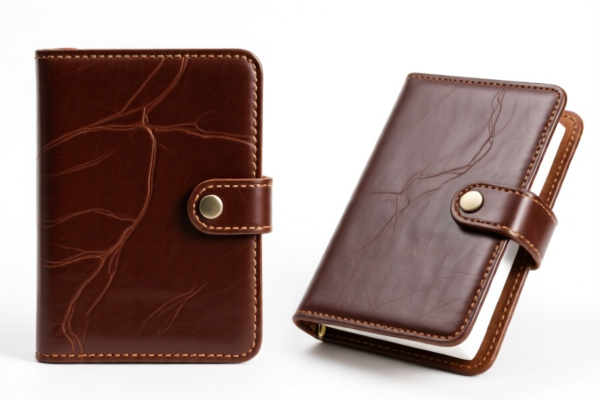
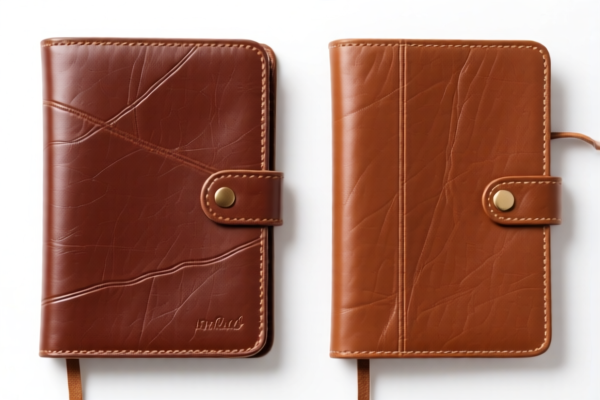

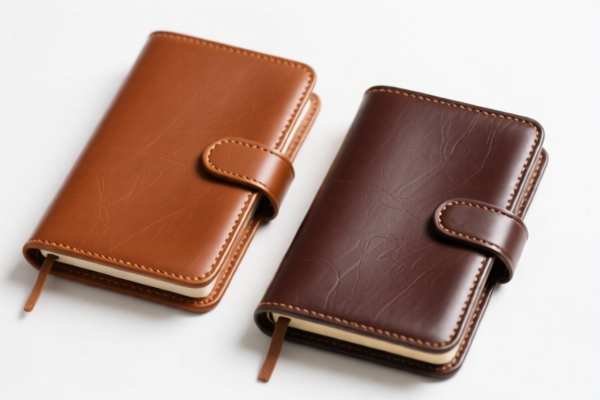
AI Analysis
📘 Leather Diary Covers
🌐 HS Code Reference & Customs Clearance Guide | 2026 Latest Tariff Analysis | Professional Clearance Strategy
📌 I. Product Definition & Classification: Do You Really Know "Leather Diary Covers"?
A "Leather Diary Cover" is a versatile item that straddles the line between office supplies and leather goods. In international trade, its classification depends heavily on whether it is considered a finished notebook (containing paper pages) or a leather accessory (just the cover).
Key Distinction: * Notebook Category: If the item is a bound diary/notebook with paper content, it falls under Chapter 48 (Paper products). The leather is merely a binding material. * Leather Goods Category: If the item is sold as a standalone case/sleeve for a diary or a blank leather-bound book without significant paper content, it may fall under Chapter 42 (Articles of leather).
⚠️ Critical Classification Point:
- If the product is a complete diary/notebook (pages + cover) → It is classified as a Notebook/Record Book (Chapter 48).
- If the product is a standalone leather sleeve/case for a diary → It is classified as a Leather Goods/Other Container (Chapter 42).
📦 II. HS Code Classification Details (2026 Latest Tariff Authority Comparison)
| HS Code | Product Description | Application Scenario | Material Logic |
|---|---|---|---|
4820.10.20.10 |
Diary, with leather cover | Finished diaries/notebooks where leather is the binding material | ✅ Classified as Paper Product (Binding material does not change chapter) |
4820.10.20.60 |
Other record books, account books, memorandum pads, diary pads | Other paper-based notebooks/ledgers, including leather-covered ones | ✅ Classified as Paper Product (General record book category) |
4202.31.60.00 |
Other articles of leather or of composition leather | Standalone leather covers, cases, or sleeves for diaries/electronics | ✅ Classified as Leather Good (Primary material is leather, functional item) |
🔍 Key Reminder:
- For4820.10.20.10and4820.10.20.60: The note explicitly states that the leather surface does not affect the classification. It remains a paper product because its primary function is writing/recording.
- For4202.31.60.00: This code applies if the item is primarily a leather container/accessory (e.g., a bare leather cover sold separately). It is categorized as "Other articles" because it is portable and made of leather.
💰 III. 2026 Latest Tariff Rate Details (Including Surcharges & Policy Add-ons)
✅ Applicable Country: United States (US)
✅ Origin: China (CN)
✅ Effective Time: Including imports from 2025 onwards
🎯 1. 4820.10.20.10 & 4820.10.20.60 —— Diary/Notebook (Leather Bound)
| Item | Content |
|---|---|
| Base Tariff Rate | 0% (ad valorem) |
| USITC Surtax (Section 301) | +25% |
| Section 122 Tariff | +10% |
| Total Tariff Rate | 35.0% |
| Tax Calculation | CIF Value × 35% |
| De Minimis Exemption | ❌ Not Eligible (High tariff threshold) |
| Legal Basis Path | USITC:4820.10.20.10 → FOOTNOTE:301 → Section 122 |
📌 Explanation:
- The base rate is 0% because notebooks generally have low base tariffs.
- The 25% surtax is applied due to Section 301 tariffs on Chinese goods.
- The 10% Section 122 tariff is applied to specific categories of Chinese imports.
- Total Effective Rate: 35%. This is a significant cost factor for leather-bound diaries.
🎯 2. 4202.31.60.00 —— Leather Diary Cover/Case (Standalone)
| Item | Content |
|---|---|
| Base Tariff Rate | 8.0% (ad valorem) |
| USITC Surtax (Section 301) | +25% |
| Section 122 Tariff | +10% |
| Total Tariff Rate | 43.0% |
| Tax Calculation | CIF Value × 43% |
| De Minimis Exemption | ❌ Not Eligible |
| Legal Basis Path | USITC:4202.31.60.00 → FOOTNOTE:301 → Section 122 |
📌 Explanation:
- The base rate is 8% because leather goods generally carry a higher base tariff than paper products.
- The 25% surtax and 10% Section 122 tariff are identical to the notebook category.
- Total Effective Rate: 43%. This is 8 percentage points higher than the notebook classification!
- ⚠️ Strategic Insight: Classifying a leather-bound diary as a "Leather Good" (4202) results in a higher total tax (43%) than classifying it as a "Notebook" (4820, 35%), provided the item contains paper pages.
🛠️ IV. Customs Clearance Practical Advice (Battle-Tested Pitfall Avoidance)
✅ 1. Preparation Checklist (Essential Documents)
| Document | Required | Notes |
|---|---|---|
| ✅ Product Specifications | ✔️ | Must clearly state: "Leather Diary" or "Leather Diary Cover". Specify if it contains paper pages. |
| ✅ Product Photos | ✔️ | Clear images of the front, back, and interior (to show if pages are included). |
| ✅ Commercial Invoice | ✔️ | Description must match the HS Code logic (e.g., "Leather-bound Notebook" vs. "Leather Case"). |
| ✅ Material Composition | ✔️ | Detail the percentage of leather vs. paper/cardboard. |
✅ 2. Classification Strategy (Key Tips)
🔥 "Pages Mean Paper, No Pages Mean Leather!"
| Scenario | Correct HS Code | Tariff Rate | Why? |
|---|---|---|---|
| Diary with Pages + Leather Cover | 4820.10.20.10 |
35% | Primary function is recording. Leather is just binding. |
| Blank Leather Notebook + Pages | 4820.10.20.60 |
35% | Same as above. Fits "Record Book" category. |
| Standalone Leather Cover (No Pages) | 4202.31.60.00 |
43% | Primary material is leather. It is a container/accessory. |
📌 Warning:
- Do NOT classify a filled diary as4202.31.60.00unless you want to pay more tax (43% vs 35%).
- Do NOT classify a bare leather case as4820.10.20.10if there are no pages. Customs may reject it for misclassification.
✅ 3. Special Case Handling
| Scenario | Advice |
|---|---|
| Mixed Bulk Shipment | If shipping both notebooks and bare covers, declare them separately with different HS Codes to avoid valuation disputes. |
| OEM Custom Diaries | Provide design specs showing the leather is only the outer binding. Emphasize "Notebook" in the product name. |
| High-Value Leather | Even if the leather is expensive, if it’s a diary, it stays in Chapter 48. The GRI 3(b) rule (essential character) usually favors the paper/writing function for diaries. |
🌍 V. Global Market Comparison (2026 Latest)
| Country/Region | Recommended HS Code | Tariff (China Origin) | Notes |
|---|---|---|---|
| 🇺🇸 USA | 4820.10.20.10 |
35% | High surtax (25% + 10%). |
| 🇺🇸 USA | 4202.31.60.00 |
43% | Higher base rate (8%) + same surtaxes. |
| 🇪🇺 EU | 4820.10.20.10 |
~0-6.5% | Generally lower tariffs for paper goods. |
| 🇪🇺 EU | 4202.31.60.00 |
~4-6% | Leather goods often have lower base tariffs than US, but check for anti-dumping. |
| 🇨🇳 China | 4820.10.20.10 |
5% | Import duty for finished notebooks. |
📌 Conclusion:
- For US Imports, classification is critical.
- Diaries with pages are cheaper to import under4820(35%) than bare leather covers under4202(43%).
- Always prioritize the function (writing) over the material (leather) for diary products.
📌 VI. Common Mistakes & Pitfalls (Lessons Learned)
❌ Mistake 1: Classifying a full diary as a "Leather Accessory" (4202)
👉 Consequence: Paying 43% instead of 35%. Overpayment of 8% on CIF value.
❌ Mistake 2: Classifying a bare leather case as a "Notebook" (4820)
👉 Consequence: Customs may reject the entry for misclassification, leading to delays, fines, or forced re-classification.
❌ Mistake 3: Ignoring Section 122 Tariffs
👉 Consequence: Forgetting the 10% Section 122 tariff leads to underpayment of duties and penalties.
✅ Correct Practice:
"Leather-bound Diary with Paper Pages, 100 Sheets, A5 Size, Model XYZ" → HS 4820.10.20.10
"Blank Leather Diary Cover, No Pages, Fits A5 Size, Model ABC" → HS 4202.31.60.00
🎯 VII. Conclusion: Precision in Classification Saves Money!
🎯 Remember the Golden Rule:
🔹 "Pages = Paper (35%), No Pages = Leather (43%)"
🔹 "Don't let the leather trick you into paying more tax!"
🔹 "Diary is a writing tool, not just a bag!"
📌 Pro Tip:
If you are shipping small quantities (e.g., samples), ensure you still account for the 35-43% tariff in your cost model. The De Minimis exemption (Section 321) is not available for goods subject to these surcharges from China.
📣 Immediate Action:
📞 Consult with a licensed customs broker.
📸 Provide photos of the interior (to prove page presence).
📝 Declare accurately as "Diary" or "Notebook" if pages are included.
✨ Professional Clearance Starts with Accurate Classification!
💼 Every percentage point counts in cross-border trade!
Customer Reviews
About HS Code Classification
The Harmonized System (HS) is an internationally standardized nomenclature developed by the World Customs Organization (WCO) to classify traded products. Over 200 countries use the HS system as the basis for customs tariffs, trade statistics, and import/export regulations.
Each HS code follows a hierarchical structure:
- Chapter (2 digits) — Broad category of goods (e.g., Chapter 84: Machinery and Mechanical Appliances)
- Heading (4 digits) — More specific grouping within the chapter
- Subheading (6 digits) — Internationally standardized breakdown, used by all WCO member countries
- National subdivisions (8-10 digits) — Country-specific extensions for further classification, such as US HTSUS 10-digit codes
Correct HS code classification is essential for smooth customs clearance, accurate duty payment, and compliance with trade regulations. Misclassification can lead to customs delays, overpayment of duties, or penalties.
When importing from CN to US, the applicable tariff rates may include:
- Most-Favored-Nation (MFN) rate — The standard duty rate applied to WTO members
- General rate — Applied to countries without trade agreements
- Trade remedy duties — Additional tariffs such as Section 301 (anti-dumping), Section 232 (national security), or countervailing duties
The information provided on this page is for reference purposes only. For official classification, please consult with your local customs authority or a licensed customs broker.