Leather for Binding
CN → US| HS Code | Tariff Rate | Origin | Destination | Doc |
|---|---|---|---|---|
| 411410 | 0.0% | CN | US | Official Doc |
| 411490 | 0.0% | CN | US | Official Doc |
Product Images
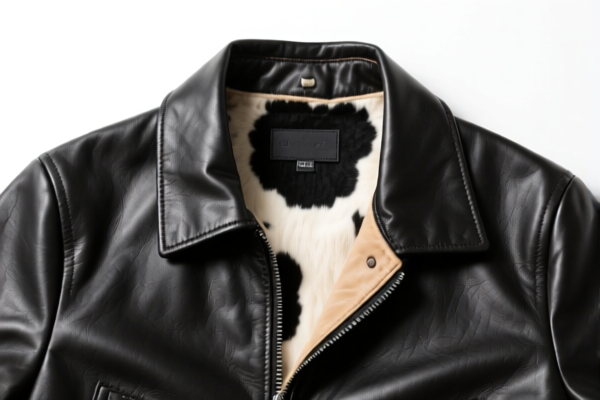
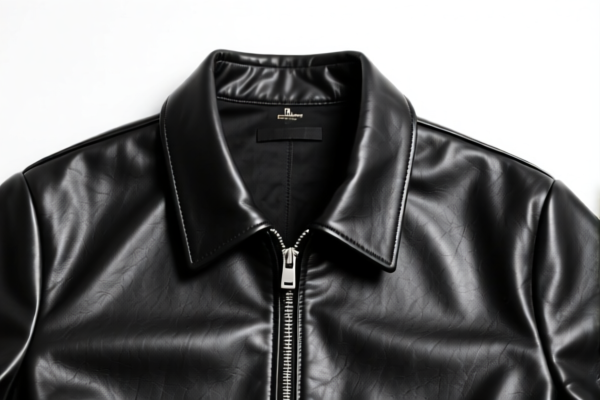


AI Analysis
📚 Leather for Binding (Bookbinding & Similar Uses)
🌐 HS Code Reference & Customs Clearance Guide | 2026 Latest Tariff Analysis | Professional Strategy
📌 I. Product Definition & Classification: What Exactly is "Leather for Binding"?
In international trade, "Leather for Binding" refers specifically to animal skins or leather treated and prepared exclusively or primarily for the purpose of binding books, documents, journals, or similar items. It is distinct from general upholstery leather or footwear leather due to its specific physical characteristics (e.g., finish, thickness, flexibility) and end-use.
Key Distinction: * Leather for Binding (Chapter 41): Tanned or crust leather specifically prepared for bookbinding. * Finished Book Covers/Products: If the leather is already cut, shaped, and assembled into a finished book cover, it may fall under Chapter 49 (Printed matter/Books) or other chapters depending on the composition. However, raw/prepared leather for this use remains in Chapter 41.
⚠️ Critical Classification Point:
- If the leather is split or unsplit and prepared for binding → HS 4114.10
- If the leather is not elsewhere specified (e.g., other tanned leathers used for binding but not meeting the strict "binding" definition) → HS 4114.90
📦 II. HS Code Classification Details (2026 Authoritative Reference)
Based on the provided data, the classification is limited to two primary codes within heading 4114.
| HS Code | Product Description | Application Scenario | Key Characteristics |
|---|---|---|---|
4114.10 |
Leather and other animal skins, whether or not split, for binding (Including leather for bookbinding and similar uses) |
Book publishers, archival services, custom bookbinders | Specifically tanned/prepared for flexibility, durability, and aesthetic appeal in book covers. May be split (layered) or unsplit. |
4114.90 |
Other leather and other animal skins, whether or not split, not elsewhere specified (Including leather for binding purposes) |
General industrial binding, non-standard binding materials, other uses | Leather that does not fit the specific definition of 4114.10 but is still used for binding or similar non-specified purposes. "Catch-all" for other tanned leathers. |
🔍 Important Note:
- The provided data indicates "Failed to retrieve tax information" for both codes. This means actual tax rates (import duty, VAT, etc.) are UNKNOWN in this specific dataset. - Do not assume a tax rate. You must consult the local customs authority or a licensed customs broker for the specific country of import to determine the actual duty, VAT, and any surcharges. - The description explicitly includes "whether or not split," meaning both full-grain and split leather used for binding fall under these codes.
💰 III. Tax Rate Analysis & Customs Advice (Crucial Warning)
✅ Applicable Data Status:
Tax Information: Failed to retrieve
✅ Implication: No official tax rate is available in the provided dataset.
🎯 1. 4114.10 – Leather for Binding
| Item | Content |
|---|---|
| Tax Detail | ❌ Failed to retrieve |
| Total Tax | ⚠️ Error / Unknown |
| Action Required | Must verify with local customs. Do not rely on this data for cost calculation. |
🎯 2. 4114.90 – Other Leather (Not Elsewhere Specified)
| Item | Content |
|---|---|
| Tax Detail | ❌ Failed to retrieve |
| Total Tax | ⚠️ Error / Unknown |
| Action Required | Must verify with local customs. |
📌 Why is Tax Data Missing?
- Tax rates vary significantly by country of origin, trade agreements (e.g., GSP, FTA), and annual tariff updates. - Some countries may impose anti-dumping duties, countervailing duties, or environmental fees on leather products. - You cannot proceed with clearance without accurate tax data.
🛠️ IV. Customs Clearance Practical Advice (Avoiding Pitfalls)
✅ 1. Required Documentation (Essential)
| Document | Mandatory? | Purpose |
|---|---|---|
| ✅ Commercial Invoice | ✔️ | Must clearly state "Leather for Binding" and HS Code 4114.10 or 4114.90. |
| ✅ Packing List | ✔️ | Detail weight, dimensions, and number of hides/skins. |
| ✅ Certificate of Origin | ✔️ | Critical for determining if preferential tariffs apply (if tax data is available). |
| ✅ Product Specification | ✔️ | Detail type of animal (cow, sheep, goat), tanning method (vegetable, chrome), and finish. |
| ✅ Bill of Lading/Air Waybill | ✔️ | Standard shipping document. |
| ✅ Customs Broker Declaration | ✔️ | Essential for navigating the "tax error" and ensuring correct classification. |
✅ 2. Declaration Tips (Key Mnemonics)
🔥 "Be Specific: 'Binding Leather', Not Just 'Leather'"
| Situation | Correct Declaration | Incorrect Declaration |
|---|---|---|
| Leather for books | HS 4114.10 – "Leather for binding" |
HS 4106 – "Leather for upholstery" (Wrong!) |
| Generic tanned leather | HS 4114.90 – "Other leather" |
HS 4108 – "Chrome-tanned leather" (May be misclassified) |
| Finished book covers | Check Chapter 49 or 42 | ❌ Do not declare as raw leather |
📌 Why Precision Matters:
- Misclassifying "binding leather" as general "leather" can lead to higher duties or rejection. - Some countries impose stricter environmental regulations on chrome-tanned leather. Specifying the tanning method in the invoice is crucial.
✅ 3. Special Considerations
| Situation | Handling Advice |
|---|---|
| Chrome-Tanned vs. Vegetable-Tanned | Specify in documentation. Chrome-tanned may have different environmental levies. |
| Split vs. Unsplit | The HS code 4114 covers both. No need to split further unless local rules require it. |
| Artificial/Synthetic Leather | ❌ Not eligible for HS 4114. Must be classified under Chapter 39 (Plastics) or 5903 (Textiles) depending on composition. |
| Tax Data Error | Immediately contact a customs broker. Do not attempt self-clearing without verified tax rates. |
🌍 V. Global Market Comparison (General Guidance)
Note: Since specific tax data is unavailable, the following is general guidance. Always verify with local authorities.
| Country/Region | Recommended HS Code | Typical Duty Range* | Notes |
|---|---|---|---|
| 🇺🇸 USA | 4114.10 / 4114.90 |
3.4% - 6.7% | Check for USTR exclusions if applicable. |
| 🇪🇺 EU | 4114.10 / 4114.90 |
6.5% | Standard Common Customs Tariff. |
| 🇨🇳 China | 4114.10 / 4114.90 |
20% - 30% | Higher duty on animal skins. |
| 🇬🇧 UK | 4114.10 / 4114.90 |
6.5% | Post-Brexit tariff schedule. |
📌 Conclusion:
- Tax data is critically missing.
- Classification is clear:4114.10for specific binding leather,4114.90for others.
- Action: Engage a customs broker to retrieve current tax rates and ensure compliance with environmental and labeling regulations.
📌 VI. Common Errors & Pitfalls (Lessons Learned)
❌ Error 1: Declaring synthetic leather as "Leather for Binding" (HS 4114)
👉 Consequence: Misclassification, penalty, return of goods. Synthetic materials fall under Chapter 39 or 59.
❌ Error 2: Failing to specify "for binding" in the invoice
👉 Consequence: Customs may classify under a different, potentially higher-duty heading (e.g., general leather).
❌ Error 3: Assuming tax rate is 0% due to missing data
👉 Consequence: Underpayment of duties, fines, and delays. Always verify tax rates.
✅ Correct Practice:
"Tanned Cowhide Leather, Vegetable-Tanned, for Bookbinding Use, HS Code 4114.10, Certificate of Origin Attached"
🎯 VII. Conclusion: Precision in Classification & Tax Verification
🎯 Key Takeaway:
🔹 "Binding Leather goes to 4114, but TAX DATA IS MISSING – VERIFY NOW!"
🔹 "Don't guess the duty. Consult a broker. Avoid penalties."
📌 Tip:
If you are importing from a country with a Free Trade Agreement (FTA), check if leather products are eligible for preferential rates. Even if the base rate is low, missing tax data means you cannot calculate the final landed cost.
📣 Immediate Action:
📞 Contact a Licensed Customs Broker
📄 Provide Product Specifications (Tanning method, animal type, finish)
🔍 Request Current Tax Rates for HS4114.10and4114.90in your target country
✨ Professional Clearance Starts with Accurate Classification & Verified Taxes!
💼 Your Cost Efficiency Depends on It!
Customer Reviews
About HS Code Classification
The Harmonized System (HS) is an internationally standardized nomenclature developed by the World Customs Organization (WCO) to classify traded products. Over 200 countries use the HS system as the basis for customs tariffs, trade statistics, and import/export regulations.
Each HS code follows a hierarchical structure:
- Chapter (2 digits) — Broad category of goods (e.g., Chapter 84: Machinery and Mechanical Appliances)
- Heading (4 digits) — More specific grouping within the chapter
- Subheading (6 digits) — Internationally standardized breakdown, used by all WCO member countries
- National subdivisions (8-10 digits) — Country-specific extensions for further classification, such as US HTSUS 10-digit codes
Correct HS code classification is essential for smooth customs clearance, accurate duty payment, and compliance with trade regulations. Misclassification can lead to customs delays, overpayment of duties, or penalties.
When importing from CN to US, the applicable tariff rates may include:
- Most-Favored-Nation (MFN) rate — The standard duty rate applied to WTO members
- General rate — Applied to countries without trade agreements
- Trade remedy duties — Additional tariffs such as Section 301 (anti-dumping), Section 232 (national security), or countervailing duties
The information provided on this page is for reference purposes only. For official classification, please consult with your local customs authority or a licensed customs broker.