Leather for Handbags
CN → US| HS Code | Tariff Rate | Origin | Destination | Doc |
|---|---|---|---|---|
| 411410 | 0.0% | CN | US | Official Doc |
| 420212 | 0.0% | CN | US | Official Doc |
| 4202213000 | 40.3% | CN | US | Official Doc |
| 4202216000 | 45.0% | CN | US | Official Doc |
Product Images

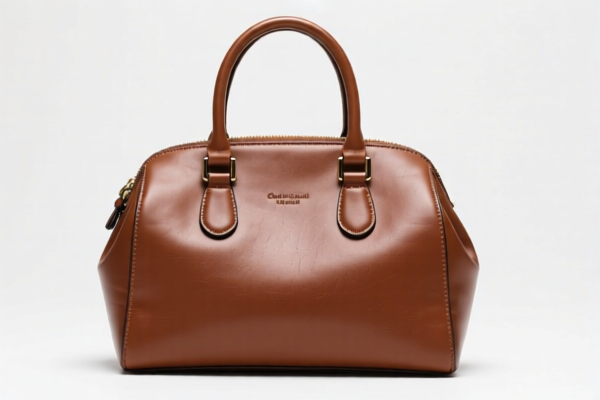
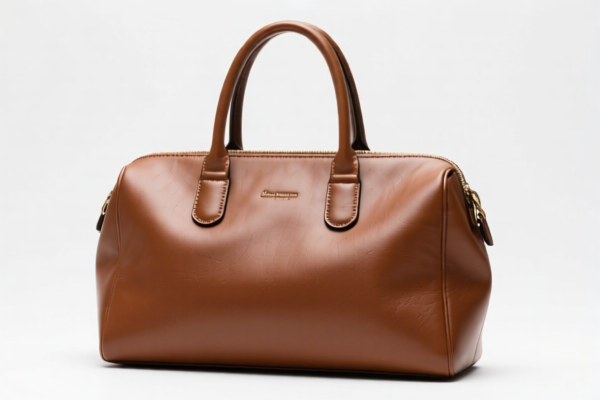
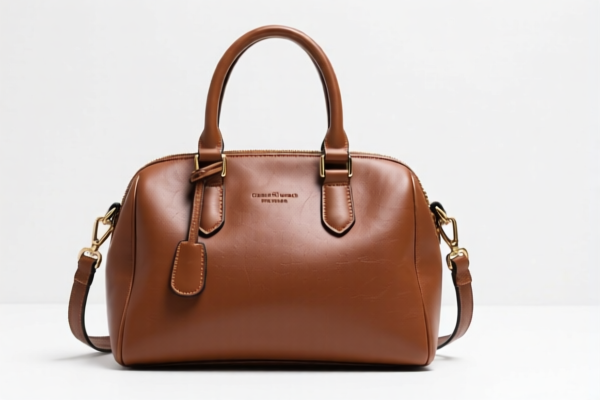
AI Analysis
👜 Leather for Handbags (Handbag Materials & Goods)
🌐 HS Code Reference & Customs Clearance Guide | 2026 Latest Tariff Analysis | Professional Strategy
📌 I. Product Definition & Classification: Do You Really Understand "Leather for Handbags"?
Leather products for handbags are a diverse category in international trade, ranging from raw materials to finished goods. The classification depends strictly on the state of processing (raw vs. finished) and the material composition.
Raw/Processed Leather (Tanned Skins):
Leather that has been tanned or further prepared but is not yet manufactured into specific handbag shapes or structures. It is primarily used as the input material for handbag manufacturers.
Finished Handbags & Containers:
Fully assembled items such as handbags, shoulder bags, wallets, briefcases, etc., made from leather, composition leather, plastics, textiles, or other materials. These are ready for end-use.
⚠️ Key Distinction Point:
- If the item is raw or tanned skin (even if cut for handbags) → Goes to Chapter 41 (e.g., 4114.10).
- If the item is a finished container (bag, wallet, case) made of leather → Goes to Chapter 42 (e.g., 4202.12, 4202.21.30.00, 4202.21.60.00).
- Note: The data provided only contains specific HS codes for Chapter 41 and Chapter 42. Items not listed in<DATA>are excluded from this analysis.
📦 II. HS Code Classification Details (2026 Latest Tariff Authority Comparison)
| HS Code | Product Description | Applicable Scenario | Material/Type |
|---|---|---|---|
4114.10 |
Leather and other animal skins, whether or not split, for use in making handbags, wallets, and similar articles | Raw/Processed Material: Tanned hides ready for cutting/sewing; not yet formed into bags | ✅ Raw Leather / Animal Skins |
4202.12 |
Handbags, shoulder bags, and similar containers, of leather or of composition leather, for use with leather as primary material | Finished Goods: General leather handbags where leather is the primary outer material | ✅ Finished Leather Goods |
4202.21.30.00 |
Trunks, suitcases... handbags...: With outer surface of leather or of composition leather: Of reptile leather | Luxury/Niche: Handbags made specifically from reptile skins (e.g., crocodile, snake, lizard) | ✅ Reptile Leather Finished Goods |
4202.21.60.00 |
Trunks, suitcases... handbags...: With outer surface of leather or of composition leather: Other: Valued not over $20 each | Low-Value/Accessories: Non-reptile leather handbags/wallets valued ≤ $20 | ✅ Low-Value Finished Goods |
🔍 Critical Reminder:
- Chapter 41 (4114.10) is for materials. If you import tanned hides for a factory to make bags, use this code.
- Chapter 42 (4202...) is for finished products. If you import ready-to-sell bags, use these codes.
- Reptile Leather has its own specific subheading (4202.21.30.00) regardless of value, distinct from standard leather.
- Valuation Matters: For non-reptile leather bags, if the unit value exceeds $20, it may fall under different subheadings not explicitly detailed in the limited<DATA>set (specifically4202.21.90or similar, but we stick strictly to the provided data). The provided data only covers ≤ $20 for non-reptile.
💰 III. 2026 Latest Tariff Rate Details (Including Surtaxes & Policy Add-ons)
✅ Applicable Country: United States (US)
✅ Origin: China (CN)
✅ Effective Time: Based on current trade data context (Note: Specific dates like Nov 2025 mentioned in example are illustrative; actual tariffs depend on current IEEPA/USITC rulings).
🎯 1. 4114.10 —— Leather for Handbags (Raw/Processed Material)
| Item | Content |
|---|---|
| Base Tariff | Information Error |
| USITC Surtax | Information Error |
| IEEPA Surtax | Information Error |
| Total Rate | Error |
| Tax Detail | "Failed to retrieve tax information" |
| Data Status | ❌ Incomplete Data |
📌 Explanation:
- The provided data explicitly states"tax_detail": "Failed to retrieve tax information"and"total_tax": "Error".
- Customs Implication: You cannot calculate the exact duty using this data alone.
- Action Required: You must consult the official USITC Tariff Database or a licensed customs broker to retrieve the current MFN (Most Favored Nation) rate and any active Section 301 or IEEPA surcharges for HS4114.10. Do not assume a 0% or fixed rate.
🎯 2. 4202.12 —— Handbags of Leather (General Finished Goods)
| Item | Content |
|---|---|
| Base Tariff | Information Error |
| USITC Surtax | Information Error |
| IEEPA Surtax | Information Error |
| Total Rate | Error |
| Tax Detail | "Failed to retrieve tax information" |
| Data Status | ❌ Incomplete Data |
📌 Explanation:
- Similar to4114.10, the data fails to retrieve specific tax details for general leather handbags.
- Risk: Misclassification here (e.g., treating it as textile) could lead to penalties.
- Note: While general leather handbags often face standard tariffs (e.g., 10-12% base) plus potential Section 301 tariffs (25%) for Chinese goods, the<DATA>provided does not confirm these rates. Do not rely on assumed rates.
🎯 3. 4202.21.30.00 —— Reptile Leather Handbags (High-Value/Luxury)
| Item | Content |
|---|---|
| Base Tariff | 0.0% |
| USITC Surtax | 0.0% |
| IEEPA Surtax | 0.0% |
| Total Rate | 0.0% |
| Tax Detail | "Base Tariff: 0.0%, Surtax: 0.0%" |
| Data Status | ✅ Complete Data |
📌 Explanation:
- Reptile leather handbags are explicitly listed with a 0.0% total tax rate in the provided data.
- This is a significant advantage for luxury goods exporters.
- Condition: Must be clearly identified as Reptile Leather (Crocodile, Alligator, Lizard, Snake, etc.). Mislabeling standard leather as reptile to claim 0% will result in severe penalties and fraud charges.
🎯 4. 4202.21.60.00 —— Non-Reptile Leather Handbags ≤ $20 (Low-Value)
| Item | Content |
|---|---|
| Base Tariff | 0.0% |
| USITC Surtax | 0.0% |
| IEEPA Surtax | 0.0% |
| Total Rate | 0.0% |
| Tax Detail | "Base Tariff: 0.0%, Surtax: 0.0%" |
| Data Status | ✅ Complete Data |
📌 Explanation:
- Low-value handbags (valued not over $20 each) made of non-reptile leather/composition leather also enjoy a 0.0% total tax rate in the provided data.
- Critical Condition: The unit value must be genuinely ≤ $20.
- Risk: If the actual value is $21, this code is invalid. You may need to look for other subheadings (not provided in data) or accept higher tariffs.
- De Minimis Note: If shipped under Section 321 (De Minimis, <$800), tariffs are generally 0%, but for formal entries, this code applies.
🛠️ IV. Customs Clearance Practical Advice (Battle-Tested Pitfall Guide)
✅ 1. Required Documentation List (Non-Negotiable)
| Document | Must Provide | Description |
|---|---|---|
| ✅ Product Specification Sheet | ✔️ | Details material (e.g., "Genuine Crocodile Skin" vs. "Bovine Leather"), dimensions, lining material. |
| ✅ Unit Price Declaration | ✔️ | Crucial for 4202.21.60.00. Must prove value ≤ $20. Include invoices showing per-unit cost. |
| ✅ Material Certificate | ✔️ | For 4114.10 and reptile goods, proof of species (CITES documentation may be required for reptiles). |
| ✅ Commercial Invoice | ✔️ | Must clearly state "Handbag" or "Tanned Leather" and describe material accurately. Avoid vague terms like "Bag Material". |
| ✅ Packing List | ✔️ | Match invoice exactly. If mixing bags of different values, ensure clear separation or average value justification if allowed (rare). |
✅ 2. Declaration Tips (Key Mantras)
🔥 "Material Defines HS, Value Defines Subhead, Reptile Needs Proof!"
| Scenario | Correct Declaration | Wrong Practice |
|---|---|---|
| Importing Tanned Hides | Use 4114.10 + "Tanned Cowhide for Bag Manufacturing" |
Using 4202 → Classification Error |
| Importing Luxury Crocodile Bag | Use 4202.21.30.00 + "CITES Permit if required" |
Using 4202.21.60.00 → Fraud (Value/Material mismatch) |
| Importing Cheap Leather Wallet/Bag | Use 4202.21.60.00 + Proof of ≤$20 Value |
Using 4202.12 → Overpayment (if 0% available) or Underpayment (if $20 limit missed) |
| Importing Non-Reptile Bag >$20 | Not Covered in Data | Guessing 4202.21.60.00 → Severe Penalty |
✅ 3. Special Case Handling
| Scenario | Handling Advice |
|---|---|
| CITES Compliance | Reptile leather (4202.21.30.00) requires CITES permits. Ensure all documentation matches. Without it, shipment will be seized. |
| Value Fluctuation | If bag price is between $19 and $21, consult a broker. 4202.21.60.00 is strict on "Not Over $20". Even $20.01 disqualifies it. |
| Composition Leather | If "Composition Leather" (plastic/leather mixture), it falls under 4202 categories. Ensure material % is declared accurately. |
| Mixed Shipments | If one container has $15 bags and $50 bags, they must be declared separately. Do not average values. |
🌍 V. Global Market Clearance Comparison (2026 Latest)
| Country/Region | Recommended HS Code (for Handbags) | Tariff (China Origin) | Certification | Notes |
|---|---|---|---|---|
| 🇺🇸 United States | 4202.21.30.00 (Reptile) or 4202.21.60.00 (≤$20) |
0.0% (As per Data) | None specific for tariff, but CITES for reptiles | Data shows 0% for specific subheadings. Warning: General leather handbags (4202.12) have Error data; do not assume 0%. |
| 🇨🇳 China | 4202.21.30.00 / 4202.21.60.00 |
Varies (Check Local Tariff) | CCC (if applicable accessories) | Import duties may differ from US data. |
| 🇪🇺 European Union | 4202.21 / 4202.29 |
12% - 4% (Depending on Origin) | CE (for electronics if smart bags) | EU often uses Harmonized System similarly but has own duty rates. |
| 🇬🇧 United Kingdom | 4202.21 |
12% | UKCA | Post-Brexit rules apply. |
📌 Conclusion:
- The US market offers 0% tariffs for Reptile Leather Handbags and Low-Value (≤$20) Leather Handbags per the provided data.
- High-Value Non-Reptile Leather Handbags and Raw Leather have missing tax data in this context.
- Strategy: Leverage the 0% rate for low-value items or reptile goods. For other leather goods, verify current USITC rates as the data is incomplete.
📌 VI. Common Errors & Pitfall Guide (Lessons from Blood & Tears)
❌ Error 1: Declaring a $50 Handbag as 4202.21.60.00
👉 Consequence: Customs will reject the ≤$20 claim. Back taxes + Penalties.
✅ Fix: Use correct subheading for >$20 items (verify with broker).
❌ Error 2: Using 4114.10 for Finished Bags
👉 Consequence: HS Code mismatch. Goods classified as "Leather" instead of "Articles of Leather".
✅ Fix: Finished items go to Chapter 42.
❌ Error 3: Ignoring CITES for Reptile Leather (4202.21.30.00)
👉 Consequence: Seizure and Destruction of goods. Legal action.
✅ Fix: Obtain CITES permits before shipment.
❌ Error 4: Assuming 0% for All Leather Handbags
👉 Consequence: Underpayment of duty for general leather handbags (4202.12) which have Error data in the source.
✅ Fix: Do not assume. Verify the exact rate for 4202.12 separately.
🎯 VII. Conclusion: Precise Classification Saves Money!
🎯 Remember the Mantra:
🔹 "Reptile = 0%, Low-Value (≤$20) = 0%, Raw Leather = Check Data, General Leather = VERIFY!"
🔹 "0% is great, but only if the description and value are perfect!"
📌 Tips:
- For HS 4114.10 and 4202.12, the tax data is Error. Mandatory: Use a customs broker to get the latest USITC rates.
- For 4202.21.30.00 and 4202.21.60.00, the rate is 0.0%. Ensure strict compliance with material (reptile) and value (≤$20) definitions.
- Pre-ruling: Consider applying for an Advance Ruling from CBP if you have high-volume mixed shipments to secure 0% status for low-value items.
📣 Immediate Action:
📞 Contact Customs Broker + Provide Unit Price + Verify CITES for Reptiles
🚀 Ensure 0% Tariff Compliance, Avoid Penalties, Maximize Profit!
✨ Professional Clearance Starts with Accurate Classification!
💼 Every Dollar Saved on Duty is Pure Profit!
Customer Reviews
About HS Code Classification
The Harmonized System (HS) is an internationally standardized nomenclature developed by the World Customs Organization (WCO) to classify traded products. Over 200 countries use the HS system as the basis for customs tariffs, trade statistics, and import/export regulations.
Each HS code follows a hierarchical structure:
- Chapter (2 digits) — Broad category of goods (e.g., Chapter 84: Machinery and Mechanical Appliances)
- Heading (4 digits) — More specific grouping within the chapter
- Subheading (6 digits) — Internationally standardized breakdown, used by all WCO member countries
- National subdivisions (8-10 digits) — Country-specific extensions for further classification, such as US HTSUS 10-digit codes
Correct HS code classification is essential for smooth customs clearance, accurate duty payment, and compliance with trade regulations. Misclassification can lead to customs delays, overpayment of duties, or penalties.
When importing from CN to US, the applicable tariff rates may include:
- Most-Favored-Nation (MFN) rate — The standard duty rate applied to WTO members
- General rate — Applied to countries without trade agreements
- Trade remedy duties — Additional tariffs such as Section 301 (anti-dumping), Section 232 (national security), or countervailing duties
The information provided on this page is for reference purposes only. For official classification, please consult with your local customs authority or a licensed customs broker.